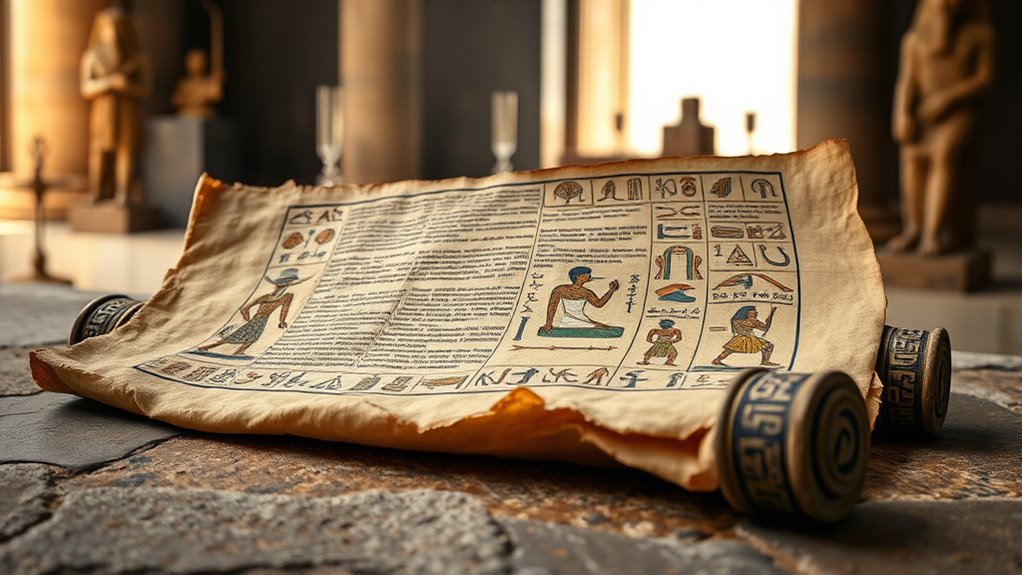
The Book of the Dead is an ancient Egyptian guide that helps you navigate the challenges of the afterlife. It contains spells and instructions to guide your spirit safely through the underworld and face judgment. Your heart is weighed against Ma’at’s feather to determine your worthiness, and the book offers moral and spiritual guidance to guarantee a positive outcome. To discover more about this fascinating journey beyond life, keep exploring these ancient secrets.
Key Takeaways
- The Book of the Dead contains spells and instructions to guide the soul through the afterlife.
- It helps the deceased navigate the underworld and face judgment by the gods.
- The text emphasizes moral conduct and spiritual purity for a favorable outcome.
- It includes prayers and rituals to ensure safe passage and rebirth in the afterlife.
- The Book was used as a vital guide to reach the world of the gods and achieve eternal life.
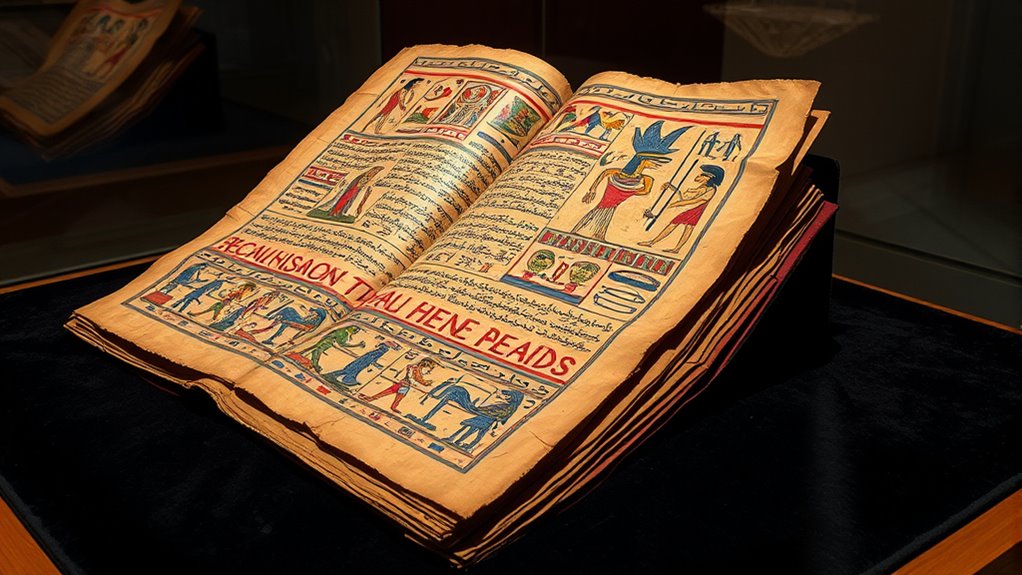
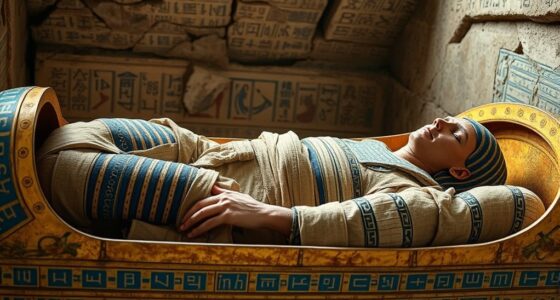
Have you ever wondered what happens after you die? Many ancient cultures believed there was more beyond the physical world, and their funeral rituals reflected these ideas. In ancient Egypt, for example, funerary practices weren’t just about saying goodbye; they were intricate ceremonies designed to ensure a safe journey to the afterlife. These rituals involved offerings, prayers, and elaborate mummification processes, all aimed at guiding your spirit through the perilous underworld. The Book of the Dead, a collection of spells and instructions, served as a vital guide for navigating this journey. It helped the soul face judgment and reach the world of the gods, emphasizing the importance of moral conduct and purity. Your heart was weighed against the feather of Ma’at, the goddess of truth, to determine if you were worthy of eternal life. If found lacking, your soul would be devoured by Ammit, condemning you to oblivion. These funeral rituals underscore the ancient Egyptians’ belief that death was not the end but a transition into another realm, one that required preparation and protection.
Understanding the beliefs about afterlife and the rituals involved offers insight into how cultures seek to address mortality and the unknown. Moving beyond Egypt, many other traditions viewed death through the lens of reincarnation beliefs. In Hinduism and Buddhism, death marks a phase in the endless cycle of rebirth, where your soul is reborn into a new body based on your karma—the sum of your actions in previous lives. If you’ve lived righteously, your soul might be reborn into a fortunate form, like a human or even divine being. If you’ve accumulated negative karma, you might find yourself reborn into a less desirable existence, such as an animal or in a challenging situation. The goal in these faiths is to escape this cycle altogether through enlightenment or spiritual liberation. The concept of reincarnation influences how adherents approach life and death, encouraging moral behavior and spiritual growth, with the hope of eventually achieving union with the divine.
Understanding these beliefs and rituals reveals how different cultures interpret the mystery of death. Whether through elaborate funeral ceremonies or the hope of reincarnation, they all reflect a desire to make sense of what happens after you die. The Book of the Dead and reincarnation beliefs serve as guides—maps and philosophies that help you navigate the unknown, offering comfort and purpose in the face of mortality. So, when contemplating the afterlife, consider how these ancient perspectives continue to shape ideas about what lies beyond this life.
Frequently Asked Questions
How Did the Book of the Dead Influence Modern Spiritual Beliefs?
You see, the Book of the Dead shaped modern spiritual beliefs by influencing funeral rituals and the use of spiritual symbolism. It introduced ideas about the soul’s journey and the importance of rituals to guarantee safe passage to the afterlife. Today, many spiritual practices incorporate symbols and rituals that echo these ancient concepts, reminding you of the enduring power of beliefs about life, death, and what comes after.
Are There Surviving Original Copies of the Ancient Texts?
You’ll find some surviving original copies of ancient papyri, but preservation challenges mean most are fragmentary. Imagine unrolling a scroll only to discover faded ink and brittle pages—this is common. Despite efforts, many texts have deteriorated over millennia. Still, discoveries like the Papyrus of Ani offer invaluable insights, showing that some original copies do survive, allowing us to glimpse the ancient world through these fragile, precious remnants.
What Rituals Accompany the Use of the Book of the Dead?
You perform funeral rites and recite ritual inscriptions from the Book of the Dead to guarantee safe passage to the afterlife. These rituals often include prayers, offerings, and spells written on scrolls or tomb walls. You might also use amulets and perform specific gestures to invoke protection from gods. By actively engaging in these rituals, you align yourself with divine forces, helping to guide your soul through judgment and into eternal life.
How Did Ancient Egyptians Prepare the Deceased for the Afterlife?
You might think ancient Egyptians only relied on mummification rituals, but they also carefully prepared the deceased by inscribing funerary texts like the Book of the Dead. These texts guided them through the afterlife, ensuring they could navigate challenges and reach the afterworld. You see, the mummification process preserved the body, while the funerary texts provided spiritual instructions, preparing the soul for its journey beyond life.
Can the Book of the Dead Be Used for Personal Spiritual Guidance Today?
Yes, you can use the Book of the Dead for personal reflection and spiritual practices today. It offers rich symbolism and ancient wisdom that encourage introspection about life, death, and your spiritual journey. By studying its texts, you may deepen your understanding of mortality and find guidance for your own path. Incorporate its themes into meditation or rituals to connect with timeless spiritual insights and enhance your personal growth.
Conclusion
Now that you’ve uncovered the secrets of the Book of the Dead, you’re like a seasoned traveler ready to navigate the mysterious afterlife. Remember, this guide is your compass through the unknown, helping you avoid pitfalls and find peace. Think of it as a treasure map, guiding you safely home. With this knowledge in hand, you’ll face the beyond with confidence, knowing you hold the key to unfastening your eternal journey.