Hieroglyphics is a unique, artistic writing system that uses symbols to represent sounds, words, and ideas. You’ll see how each symbol can have multiple meanings based on its context, combining visual storytelling with language. These inscriptions often portray objects from daily life or mythology, revealing cultural beliefs and history. Understanding hieroglyphics is like solving a puzzle, and continuing exploring will open even more secrets of ancient Egyptian civilization.
Key Takeaways
- Hieroglyphics combine visual art and language, using symbols to represent sounds, words, or concepts.
- Decoding hieroglyphics involves interpreting symbols within their cultural and contextual framework.
- The writing system includes phonetic signs and ideograms, forming complex messages through symbol combinations.
- Hieroglyphics serve as visual storytelling, depicting objects, beliefs, and daily life from ancient Egypt.
- Mastery of hieroglyphics unlocks insights into Egyptian history, religion, and cultural beliefs.
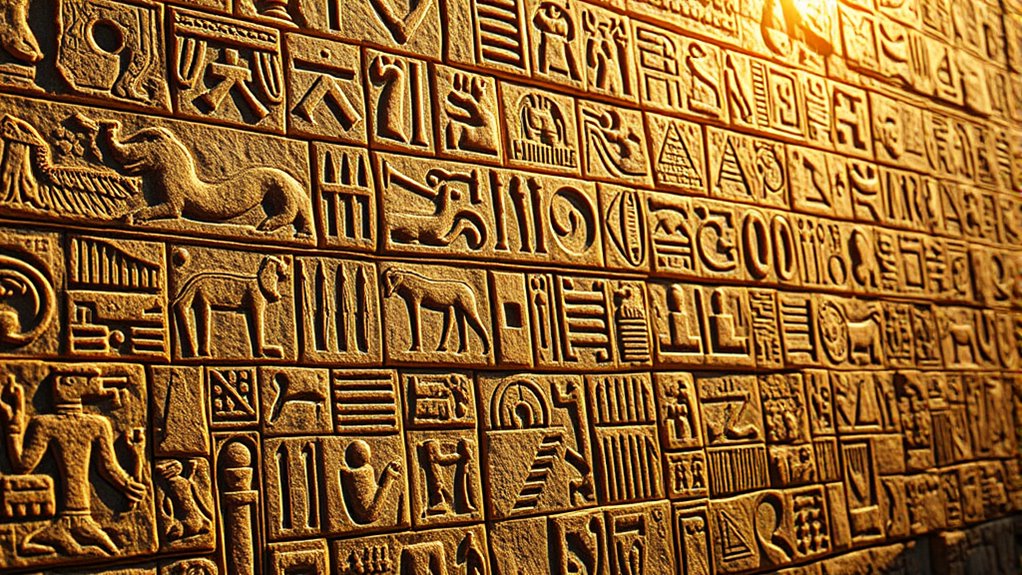
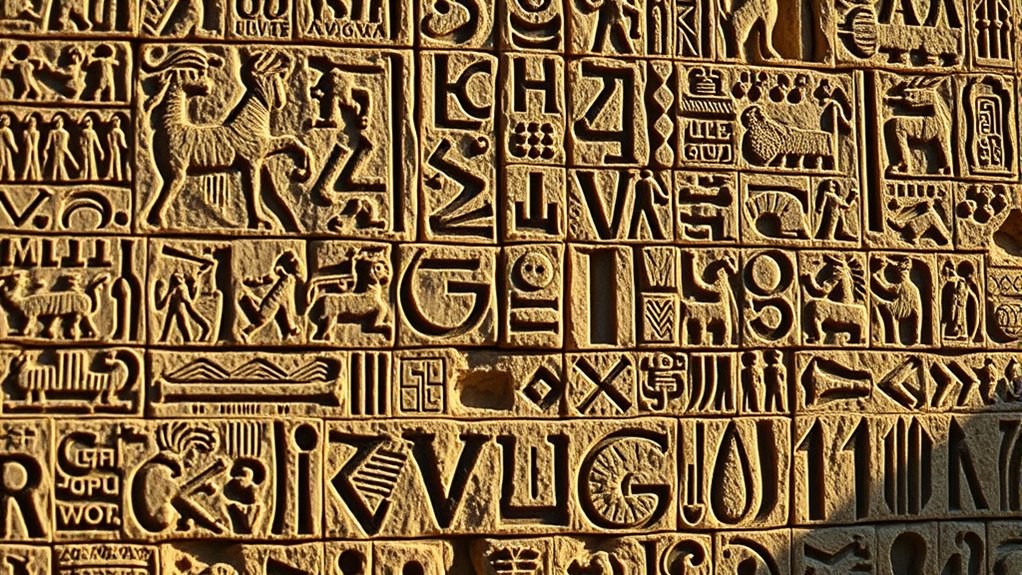
Have you ever wondered how ancient Egyptians communicated their stories and beliefs? The answer lies in their unique writing system—hieroglyphics. These symbols are more than just pictures; they are a sophisticated form of communication that combines art and language. Ancient Egyptian art often features hieroglyphic inscriptions, giving us a visual record of their history, religion, and daily life. Each symbol, or hieroglyph, can represent a sound, a word, or even an entire concept. To understand ancient Egyptian culture, you need to learn the art of hieroglyphic decoding. This process involves interpreting the symbols accurately and understanding their context within the artwork or inscription.
Ancient Egyptian hieroglyphics blend art and language, revealing stories and beliefs through visual symbols.
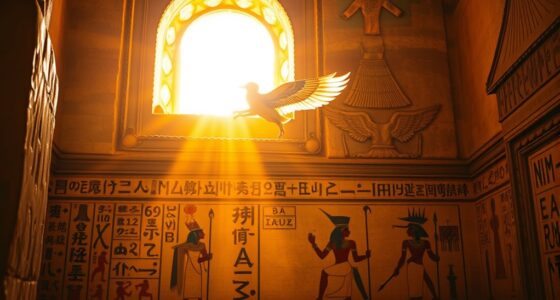
When you look at ancient Egyptian art, you’ll notice how hieroglyphic writing is seamlessly integrated into sculptures, tomb paintings, and temple walls. These symbols weren’t just decorative; they served as a way to preserve stories and religious beliefs for eternity. The art itself helps you grasp the significance of each hieroglyph, as many symbols depict objects from everyday life, gods, and mythological creatures. By studying these images, you can begin to decode the messages the ancient Egyptians wanted to convey. For example, a bird symbol might represent the sound “A” or a concept like freedom or the soul. Understanding the multiple layers of meaning behind each hieroglyph is essential for accurate decoding.
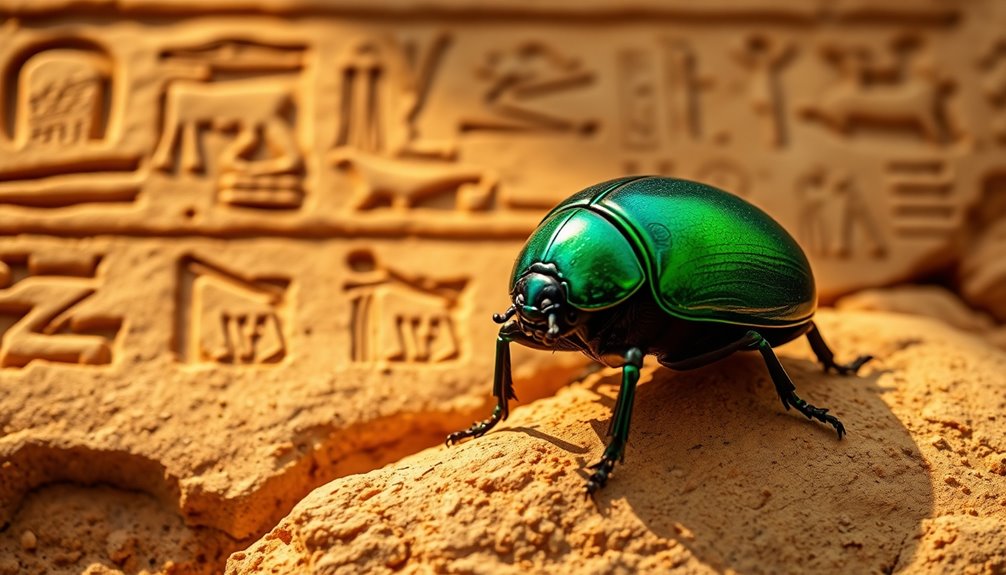
Learning hieroglyphic decoding is like solving a puzzle. You start by recognizing individual symbols and then piece them together to form words and sentences. Context is vital—certain symbols can have different meanings depending on where they appear. For instance, a symbol representing a plant might also symbolize growth or rebirth in a religious context. As you deepen your knowledge, you’ll discover that hieroglyphics are a blend of phonetic signs and ideograms, making the language complex yet logical once you grasp its rules. The more you explore, the more you’ll see how hieroglyphic art provides a visual language that communicates complex ideas using simple yet powerful symbols. Unique black coat of some hieroglyphs highlights the artistic diversity present in their writing.
In essence, hieroglyphics are a bridge to understanding ancient Egyptian civilization. They reveal stories, beliefs, and the worldview of a society that prioritized symbolism and visual storytelling. Decoding these symbols offers you a glimpse into their spiritual life and history. It’s a fascinating journey—an adventure to interpret a language where art and words are one and the same. By mastering hieroglyphic decoding, you unlock the secrets of a civilization that communicated through a vivid, symbolic language rooted in timeless art.
Frequently Asked Questions
How Did Hieroglyphics Influence Modern Writing Systems?
Hieroglyphics influenced modern writing systems by shaping symbolic communication and enhancing visual literacy. You can see their impact in the development of alphabets and characters that use images to represent sounds or ideas. This visual approach makes reading more intuitive. As a result, your ability to interpret symbols and understand written language benefits from the ancient Egyptians’ innovations, which laid the groundwork for clearer, more effective communication today.
Are There Still Undiscovered Hieroglyphic Symbols?
Yes, there are still undiscovered hieroglyphic symbols. You might find ancient symbol discoveries that challenge current understanding, as many hieroglyphs remain undeciphered. These ongoing decoding challenges mean new symbols could emerge from archaeological finds, offering fresh insights into ancient Egyptian language and culture. Researchers continue to explore tombs and artifacts, hoping to unseal hidden meanings behind symbols that have yet to be be fully understood.
What Materials Were Used to Carve Hieroglyphics?
You carve hieroglyphics using stone, often sandstone or limestone, with tools like chisels and hammers. For writing, ancient Egyptians used ink made from soot or other natural pigments, and they applied paint to enhance visibility. Sometimes, they etched symbols directly into stone surfaces. The combination of stone carving and the use of ink and paint allowed hieroglyphics to stand the test of time, revealing their rich stories and meanings.
How Long Did It Take to Master Hieroglyphic Writing?
Mastering hieroglyphic writing is a journey that varies for each person. The learning curve can be quite gentle for those who dedicate consistent effort, often taking several years to reach proficiency. With patience and practice, you might find yourself comfortable in a few years, but true mastery could take a decade or more. Remember, it’s a gradual process, and each step brings you closer to fluency.
Were Hieroglyphics Used for Religious or Administrative Purposes?
You’ll find that hieroglyphics were mainly used for religious and administrative purposes. Their rich hieroglyphic symbolism conveyed complex ideas, especially in temples and tombs, reflecting spiritual beliefs. During hieroglyphic decipherment, scholars uncovered how these symbols served both sacred and practical roles. Learning their meanings took time, but understanding their purpose helps you see how ancient Egyptians communicated their divine and daily life through intricate symbols.
Conclusion
Now, as you glimpse into the world of hieroglyphics, imagine each symbol as a shining star in the night sky, guiding you through ancient mysteries. These symbols are more than mere pictures; they’re whispers from the past, inviting you to open stories etched in time. By understanding hieroglyphics, you hold a key to a world where language becomes art, and history dances in every carved line—waiting for you to explore its timeless beauty.

Under Kirsti’s gentle guidance, each insight and interpretation is thoughtfully crafted to uplift, educate, and encourage personal transformation. Whether you’re a dedicated seeker on a lifelong spiritual quest or taking your very first step into the mystical, we offer a wealth of knowledge and supportive community to illuminate your unique journey.