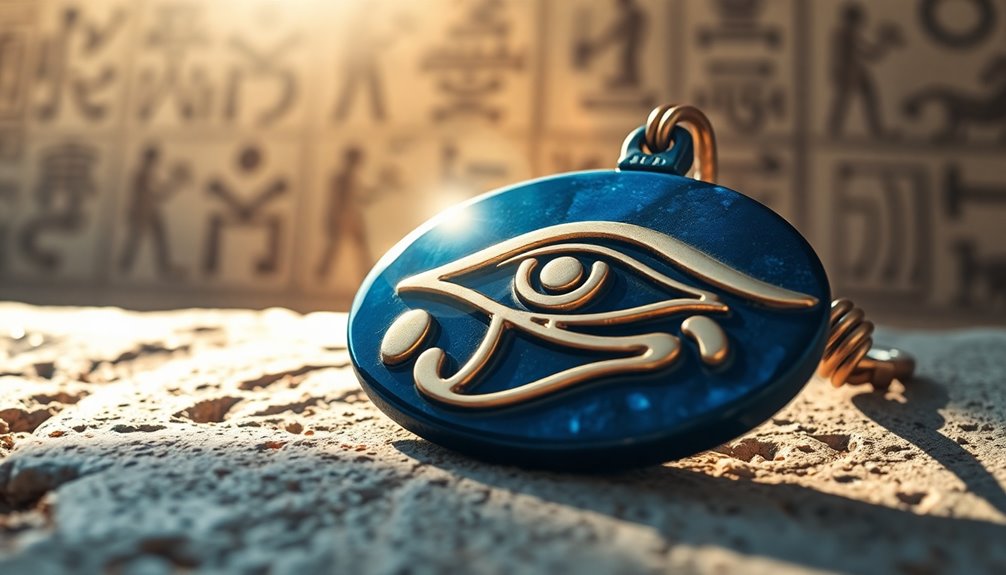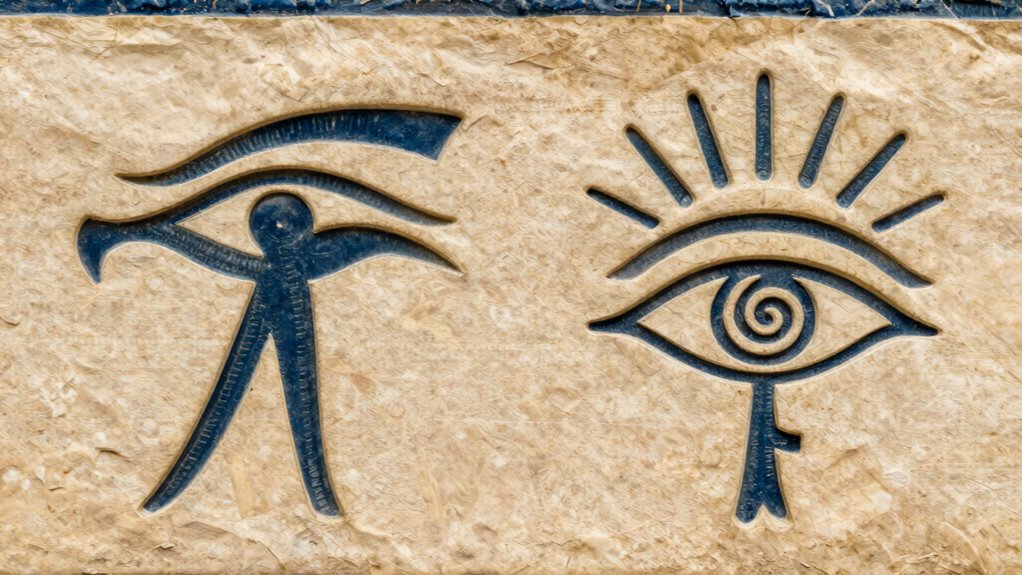

The Eye of Horus and the Eye of Ra are often confused, but they have distinct meanings. The Eye of Horus symbolizes protection, healing, and restoration, linked to the sky god Horus and his mythological battles. The Eye of Ra, on the other hand, represents divine authority, power, and the fierce energy of the sun god Ra. Both hold deep cultural significance, and understanding their differences reveals more about Egyptian mythology and symbolism. Keep exploring to uncover their true origins and meanings.

Get art and craft supplies delivered free with Prime
- Fast, free delivery on millions of items
- Prime Video, Amazon Music and more included
- Member-only deals all year
Key Takeaways
- The Eye of Horus symbolizes protection and healing, while the Eye of Ra represents divine power and solar authority.
- The Eye of Horus has a curved, stylized shape resembling a falcon’s eye; the Eye of Ra is more angular, often with a sun disc.
- The Eye of Horus is linked to mythological stories of restoration and safeguarding; the Eye of Ra embodies kingship and solar energy.
- The Eye of Horus is associated with health and protection in amulets; the Eye of Ra signifies divine authority and rulership.
- Many confuse the two because both are protective symbols, but they serve distinct mythological and symbolic roles.
As an affiliate, we earn on qualifying purchases.
Where Do the Eye of Horus and Eye of Ra Come From?
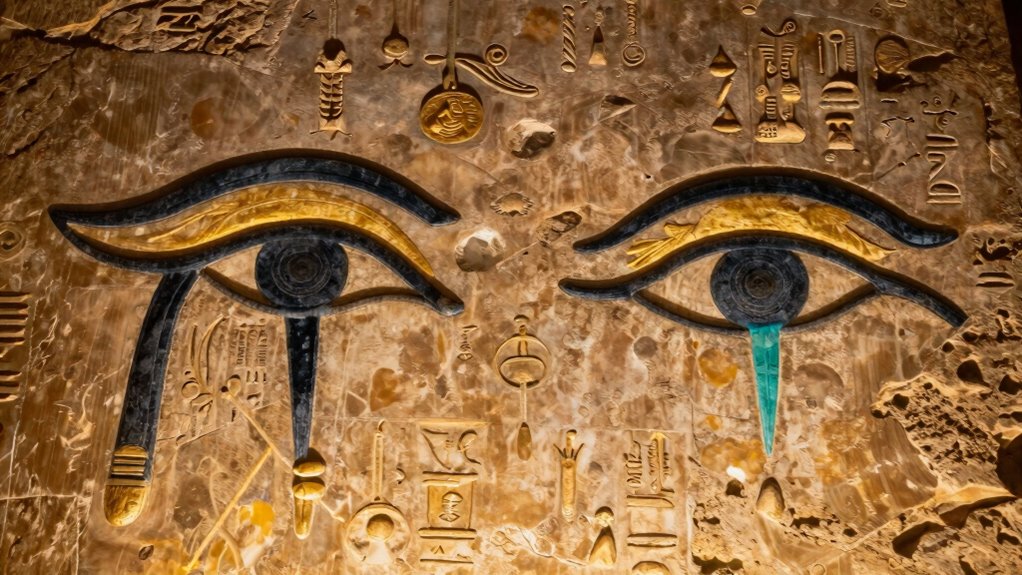
Have you ever wondered where the Eye of Horus and the Eye of Ra originate from? These symbols are rooted in ancient symbolism, reflecting profound cultural significance in Egyptian society. The Eye of Horus is linked to protection, health, and restoration, while the Eye of Ra symbolizes power and royal authority. Both symbols appear in ancient artifacts, amulets, and hieroglyphs, emphasizing their importance. Their origins are steeped in mythology and religious beliefs, yet their influence extends beyond mythology into daily life and royal iconography. Understanding their roots offers insight into how ancient Egyptians viewed divine protection and kingship. Their symbolic meanings have endured through centuries, maintaining their cultural significance and continuing to intrigue those interested in Egypt’s rich history. Additionally, the evolution of these symbols can be seen in their artistic representations, revealing how ancient artisans incorporated them into various mediums over time. The cultural symbolism associated with these eyes highlights their role in spiritual and political contexts, making them enduring emblems of Egyptian identity. Moreover, the study of these symbols can shed light on ancient Egyptian religious practices, demonstrating their integral role in society. Recognizing these symbols’ significance can also deepen our understanding of Egyptian mythology and theology, enriching the appreciation of their spiritual worldview.
What Are the Mythology and Origins Behind These Egyptian Eyes?
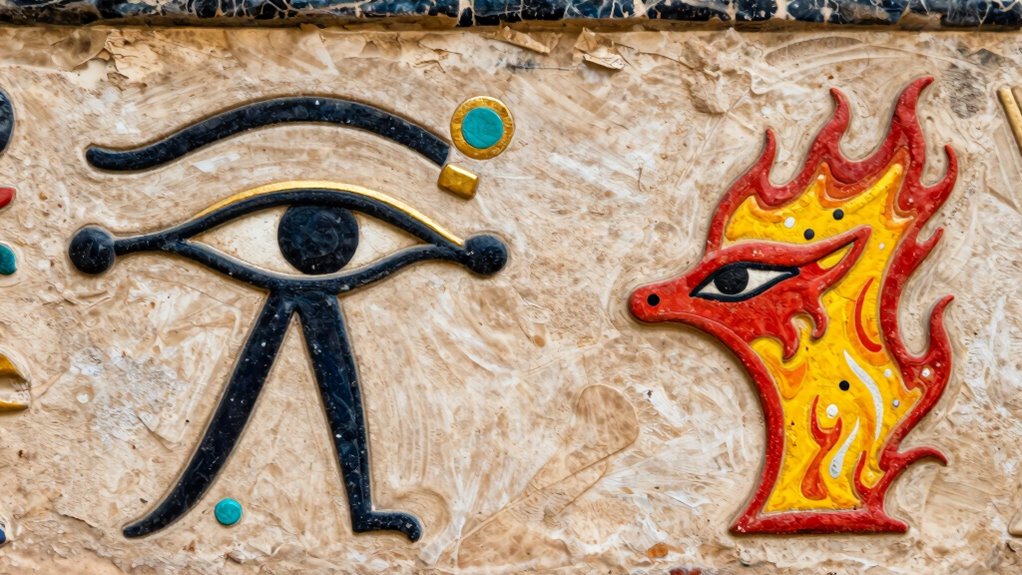
The origins of the Eye of Horus and the Eye of Ra are deeply rooted in Egyptian mythology, revealing stories that explain their symbolic meanings. These symbols embody ancient symbolism related to protection, royal power, and divine authority. The mythological origins tell of Horus, the sky god, who lost his eye during a battle with Seth, symbolizing sacrifice and healing. Meanwhile, the Eye of Ra represents the sun god Ra’s fierce protection against chaos. These eyes became powerful symbols in Egyptian culture, often used in amulets and funerary art. Their mythological stories reflect themes of restoration, divine insight, and the eternal struggle between order and chaos. Understanding their symbolism helps you grasp their significance beyond mere decorative motifs. Additionally, these symbols were believed to carry spiritual power and were integral to Egyptian religious practices. The mythological stories also serve as allegories for natural phenomena and cosmic balance, emphasizing their importance in daily life and spiritual beliefs.
How Do the Eye of Horus and Eye of Ra Differ in Appearance and Design?

While both the Eye of Horus and the Eye of Ra are powerful symbols in Egyptian mythology, their designs reveal distinct differences that reflect their unique origins. The Eye of Horus features a stylized, curved shape with prominent markings resembling a brow, a teardrop, and a falcon’s eye, emphasizing mythological symbolism. Conversely, the Eye of Ra appears more angular and sharp, often including a spiral or sun disc, symbolizing solar power. Hieroglyphic symbols illustrate these differences clearly. The following table highlights their visual distinctions: visual distinctions. Additionally, these symbols are often associated with specific mythological meanings that further distinguish their significance within Egyptian culture.
What Do the Eye of Horus and Eye of Ra Symbolize in Egyptian Culture?
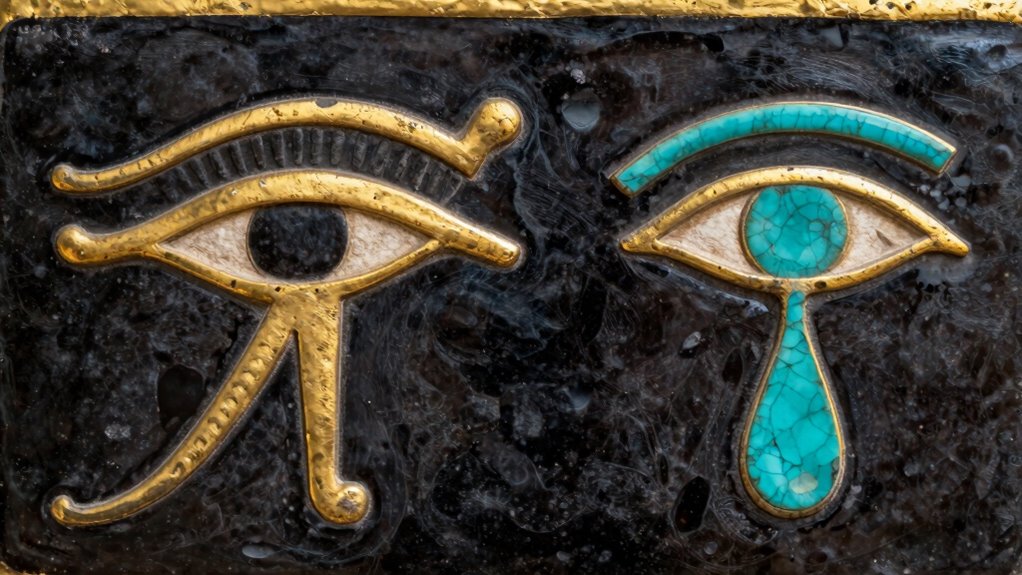
You can see that the Eye of Horus and the Eye of Ra hold deep symbolic meanings in Egyptian culture. These symbols represent protection, power, and spiritual insight, influencing many aspects of daily life and religion. By understanding their significance, you grasp how ancient Egyptians believed these eyes offered divine guidance and safety. Additionally, these symbols are often associated with ancient Egyptian beliefs, emphasizing their importance in spiritual and cultural practices. The symbolic meanings of these eyes continue to resonate in modern interpretations of Egyptian mythology and art. Their use in Egyptian artifacts and jewelry further exemplifies their enduring cultural relevance. Recognizing the role of mythological symbolism helps deepen our appreciation of their historical significance.
Symbolic Meanings
In Egyptian culture, both the Eye of Horus and the Eye of Ra carry profound symbolic meanings that reflect their divine associations and cultural significance. The Eye of Horus is a symbol of protection, healing, and restoration, often linked to health and well-being. Conversely, the Eye of Ra represents power, authority, and the sun’s life-giving energy. Today, these symbols influence astrological interpretations, where they embody clarity and spiritual insight. They also inspire modern jewelry design, with intricate motifs symbolizing protection and divine strength. Visualize:
- The Eye of Horus as a guardian watching over you
- The Eye of Ra embodying the sun’s fierce energy
- Both used in contemporary adornments to channel ancient power
Additionally, understanding their symbolic meanings helps appreciate how these symbols continue to inspire various cultural and spiritual practices today.
Religious Significance
The Eye of Horus and the Eye of Ra hold deep religious significance in Egyptian culture, serving as powerful symbols of divine protection and authority. As ancient symbolism, they represent the gods’ ability to safeguard and maintain order in the universe. Mythological symbolism plays a key role, with the Eye of Horus linked to healing, restoration, and protection, while the Eye of Ra signifies the sun god’s power and rulership. Egyptians believed these eyes embodied the gods’ watchful presence, warding off evil and chaos. They often appeared in amulets, tombs, and religious texts, emphasizing their spiritual importance. These symbols reinforced the divine authority of pharaohs and gods, illustrating the divine intervention believed to sustain life, uphold morality, and ensure cosmic balance. Additionally, understanding the symbolic meanings behind these eyes helps us appreciate their significance in rituals and art, highlighting their role in conveying divine authority and protection. The mythological stories associated with each eye further deepen their cultural importance and spiritual symbolism in ancient Egypt. Furthermore, these symbols served as protective talismans believed to bring good fortune and spiritual safeguarding to their wearers. The rituals and ceremonies involving these symbols also played a vital role in maintaining the spiritual well-being of individuals and the community. Recognizing the cultural symbolism behind these eyes allows us to better understand their enduring legacy in Egyptian spiritual practices.
Protective Powers
Both the Eye of Horus and the Eye of Ra are renowned for their protective powers in Egyptian culture. They serve as powerful symbols of protection symbolism, believed to ward off evil and harm. Mythological symbolism plays a key role, as these eyes represent divine watchfulness and strength. When you carry or wear these symbols, you’re tapping into their protective energies. Imagine:
- The Eye of Horus acting as a guardian for health and safety, warding off danger.
- The Eye of Ra embodying divine authority to repel enemies and evil spirits.
- Both eyes serving as talismans that provide spiritual security, safeguarding your well-being.
Their mythological symbolism reinforces their role as shields against harm, making them revered amulets of protection in ancient Egyptian culture. Protective symbols like these continue to inspire modern jewelry and spiritual practices, emphasizing their enduring significance.
Additionally, these symbols are often associated with spiritual protection and personal empowerment, further enhancing their significance in both ancient and contemporary contexts.
Understanding the symbolic meanings behind these images can deepen your appreciation of their protective qualities and cultural importance.
Which Gods Are Associated With the Eye of Horus and the Eye of Ra?
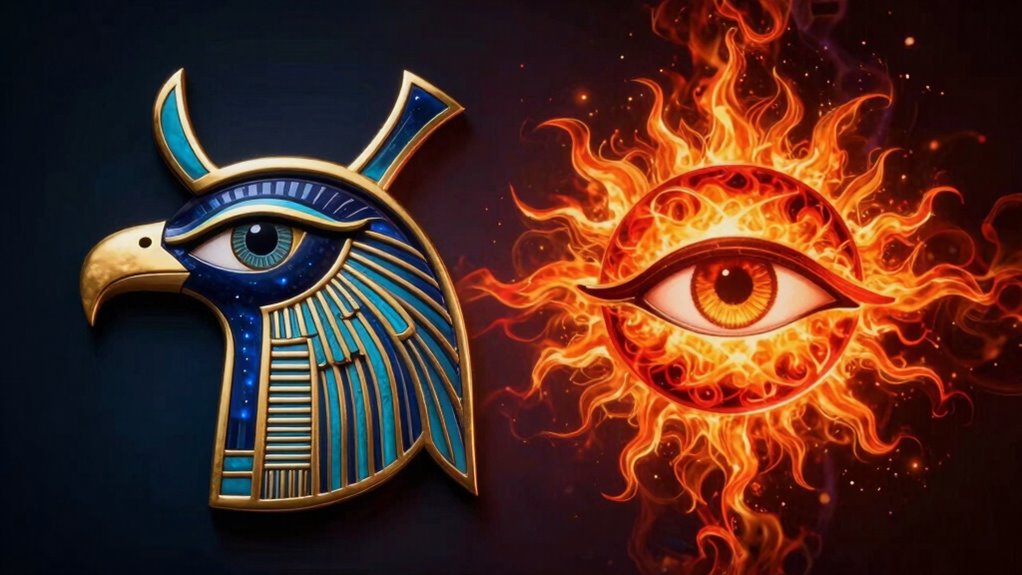
Many ancient Egyptian gods are closely linked to the Eye of Horus and the Eye of Ra, serving as symbols of protection, power, and divine authority. The Eye of Horus is associated with Horus himself, the sky god often depicted as a falcon, representing kingship and restoration. The Eye of Ra is connected to Ra, the sun god, symbolizing royal power and divine authority. These symbols are rooted in ancient symbolism and mythological battles, where gods used their eyes to ward off chaos and protect creation. For example, Hathor and Sekhmet are linked with the Eye of Ra, embodying fierce protection. Understanding these associations helps you see how each god’s mythological battles shaped their connection to these powerful symbols.
How Were These Symbols Used in Egyptian Art and Amulets?
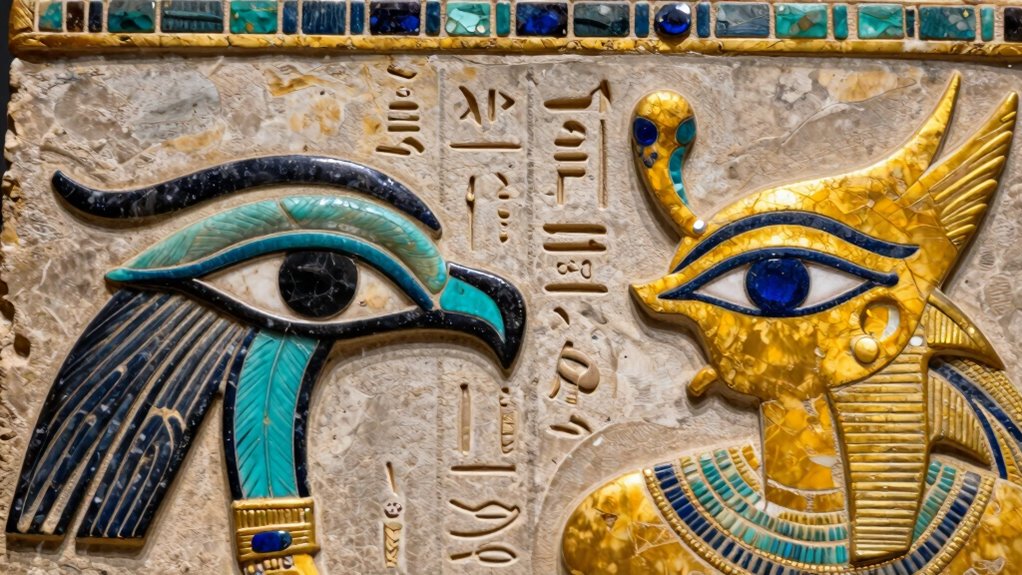
You’ll notice the Eye of Horus and the Eye of Ra often appear in Egyptian art and jewelry, symbolizing protection and power. These symbols weren’t just decorative; they carried deep spiritual meaning and were believed to ward off evil. By understanding their use in amulets and artwork, you see how they served as essential tools for safeguarding the wearer and honoring the gods.
Symbolic Significance in Art
How did ancient Egyptians incorporate the Eye of Horus and Eye of Ra into their art and amulets? They used these symbols to convey deep meanings rooted in ancient symbolism and cultural influence. These eyes appeared in paintings, carvings, and jewelry, serving as powerful visual cues of protection, healing, and divine authority. Their striking designs helped tell stories of gods and myths, reinforcing societal values and spiritual beliefs. The symbols’ strong visual impact made them ideal for amulets meant to safeguard or bless their wearers. Their recurring presence in tombs, temples, and everyday items highlights their importance in Egyptian culture. Overall, the Eye of Horus and Eye of Ra played a crucial role in shaping the visual language of ancient Egyptian art, reflecting their spiritual worldview.
Amulet Use and Protection
Ancient Egyptians believed that the Eye of Horus and the Eye of Ra held powerful protective energies, so they incorporated these symbols into amulets worn daily or placed in tombs. These amulets served as talismans to ward off evil and ensure safety in the afterlife. Today, their protective qualities are still valued, especially in meditation practices, where people use these symbols to enhance focus and spiritual protection. In modern jewelry design, the Eye of Horus and the Eye of Ra continue to be popular, often crafted into necklaces, bracelets, and charms. Wearing these symbols allows you to carry their protective energies with you, blending ancient tradition with contemporary fashion. Their timeless appeal makes them a meaningful choice for anyone seeking spiritual security.
What Are the Main Differences Between the Eye of Horus and the Eye of Ra?

What are the main differences between the Eye of Horus and the Eye of Ra? The Eye of Horus symbolizes protection, health, and restoration, often seen in hieroglyphic writing as a sign of healing. In contrast, the Eye of Ra represents power, royal authority, and the sun’s might, emphasizing mythological symbolism connected to kingship. The Eye of Horus is linked to mythological stories about healing and safety, while the Eye of Ra reflects dominance and the sun god’s fierce energy. Visually, the Eye of Horus has a distinctive, stylized shape resembling a falcon’s eye, whereas the Eye of Ra often appears more aggressive and fiery. Their main differences lie in their symbolic meanings and their roles within Egyptian myth and hieroglyphic writing.
Can You Use the Eye of Horus and Eye of Ra Symbols Today?
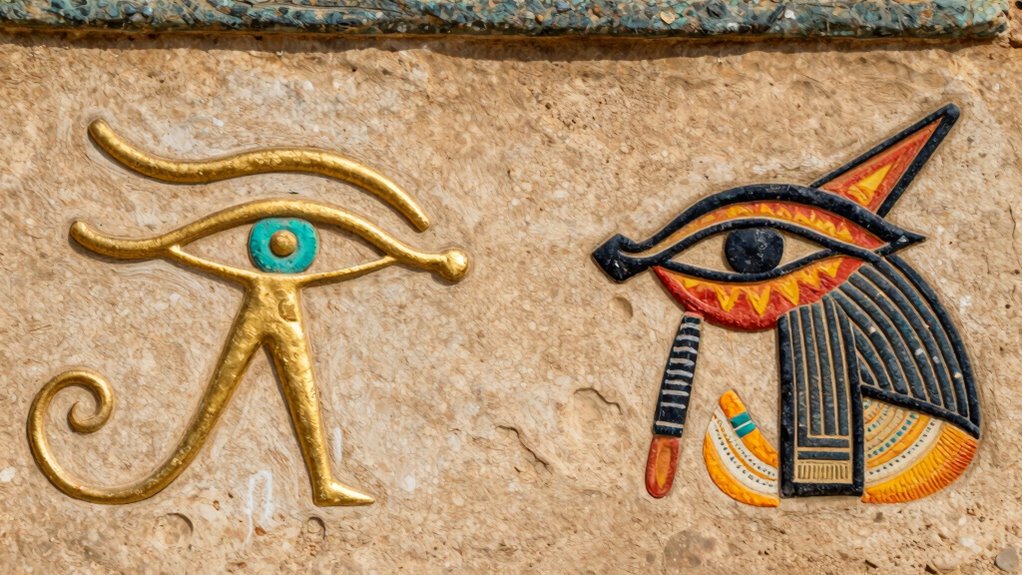
You can definitely incorporate the Eye of Horus and the Eye of Ra symbols into your modern life, as they continue to hold cultural and spiritual significance today. Many choose to use these symbols for protection, healing, or as talismans rooted in ancient symbolism. Their modern interpretations often reflect personal meanings, blending historical context with contemporary beliefs. Here’s a visual guide to ideas for usage:
| Purpose | Symbol Choice | Context |
|---|---|---|
| Personal protection | Eye of Horus | Jewelry, tattoos |
| Spiritual healing | Eye of Horus | Meditation, rituals |
| Power and authority | Eye of Ra | Emblems, branding |
| Cultural appreciation | Both symbols | Art, decor |
| Modern spirituality | Both symbols | Mindfulness practices |
Why Understanding These Symbols Enhances Our Appreciation of Egyptian Mythology
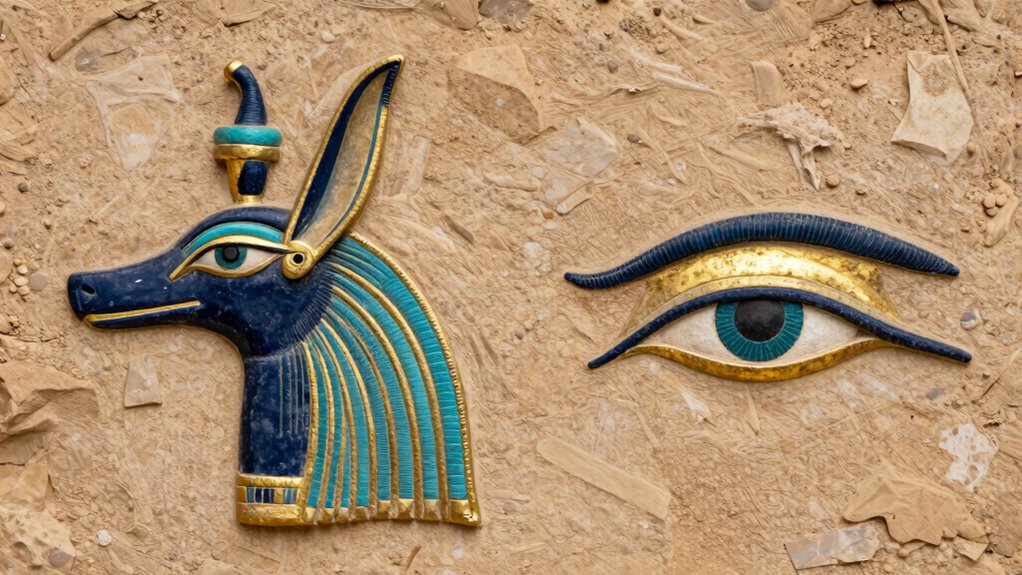
Understanding the meanings behind the Eye of Horus and Eye of Ra deepens your appreciation for Egyptian mythology by revealing their rich symbolism and cultural significance. These symbols embody cosmic symbolism, connecting divine power to the universe’s order. Recognizing their role in ancient iconography helps you see how Egyptians visualized protection, health, and kingship. Their intricate designs reflect complex spiritual concepts, emphasizing harmony between gods and humans. By understanding these symbols, you gain insight into Egyptian beliefs about balance, renewal, and divine authority. This knowledge enriches your perspective, making mythological stories more meaningful. You begin to see how these symbols served as potent tools for conveying spiritual truths and cultural values that still resonate today.
Frequently Asked Questions
Are the Eye of Horus and Eye of Ra Used in Modern Jewelry?
Yes, you’ll find the Eye of Horus and Eye of Ra used in modern jewelry. They carry rich cultural significance, symbolizing protection and power. Designers adapt these symbols into contemporary styles, blending ancient meanings with modern trends. Whether as pendants, earrings, or charms, these symbols connect you to history while adding a meaningful touch to your look. Their enduring appeal keeps them popular in jewelry today.
Do the Eye of Horus and Eye of Ra Have Specific Colors?
You might notice the Eye of Horus often sports vibrant blue or green, symbolizing protection and health, while the Eye of Ra is typically depicted in fiery reds and golds, representing power and divine authority. These colors carry deep cultural symbolism, enhancing their mystical allure. Their hues aren’t just aesthetic—they embody symbolic color meanings that deepen their significance in jewelry, connecting you to ancient traditions and timeless protection.
How Do These Symbols Influence Contemporary Egyptian Art?
You see, these symbols influence contemporary Egyptian art through their symbolic significance, representing protection, power, and spiritual insight. Artists incorporate the Eye of Horus and Eye of Ra in modern works, giving them new life via artistic reinterpretation. This blending of ancient symbolism with current styles helps you connect with Egypt’s rich cultural heritage, making these symbols both timeless and relevant in today’s artistic expressions.
Are There Differences in the Symbolism Across Different Egyptian Periods?
You’ll notice that the symbolism of the Eye of Horus and the Eye of Ra evolved over different periods. During early Egypt, they held distinct meanings, but later, archaeological variations blended their symbolism, emphasizing protection and power. This symbolic evolution reflects cultural shifts, with some periods emphasizing divine authority while others focus on healing. Understanding these differences helps you appreciate how ancient Egyptian beliefs adapted across time.
Can These Symbols Be Found in Other Cultures Outside Egypt?
You’ll find similar symbols in other cultures, showcasing cross-cultural symbolism and adaptations. For example, the Eye of Horus appears in Greek and Roman art as a protective symbol, while the evil eye in Mediterranean cultures shares protective qualities. These cultural adaptations reflect universal themes of protection and spiritual insight. While not identical, these symbols reveal how different societies adopt and reinterpret powerful imagery to fit their beliefs and traditions.
Conclusion
By understanding the differences between the Eye of Horus and the Eye of Ra, you reveal the rich storybook of Egyptian mythology. Think of these symbols as two sides of the same coin, each telling its own story of protection, power, and divine connection. When you grasp their meanings, you see Egyptian culture as a vibrant tapestry woven with symbols that continue to illuminate our understanding of ancient beliefs and artistry.
Halloween Picks
halloween
As an affiliate, we earn on qualifying purchases.