Horus, the falcon-headed god of kingship, symbolizes divine protection, vision, and authority in ancient Egypt. As a representation of the divine right of pharaohs, he embodies cosmic order and stability. His outstretched wings and the Eye of Horus stand for vigilance, healing, and royal power. His mythology highlights his battles with chaos and his role as a rightful ruler. Staying with us will reveal more about his rich symbolism and mythological significance.
Key Takeaways
- Horus is a falcon-headed deity symbolizing kingship, protection, and divine authority in ancient Egypt.
- His imagery, including the Eye of Horus, signifies protection, healing, and royal power.
- Mythologically, Horus fought and defeated Set, representing the triumph of order over chaos.
- As a sky god, Horus embodies divine oversight and the legitimacy of Egyptian pharaohs.
- His iconography emphasizes divine kingship, cosmic balance, and the divine right of rulers.

Horus, the falcon-headed god, is a central figure in ancient Egyptian mythology, symbolizing kingship and protection. As you explore his mythology, you’ll find that his divine symbolism runs deep, representing the very essence of Egyptian sovereignty. The mythological origins of Horus trace back to early Egyptian beliefs, where he emerged as a powerful deity associated with the sky, kingship, and divine authority. His image as a falcon embodies the qualities of vision, agility, and keen perception, which are key elements in his role as protector and ruler.
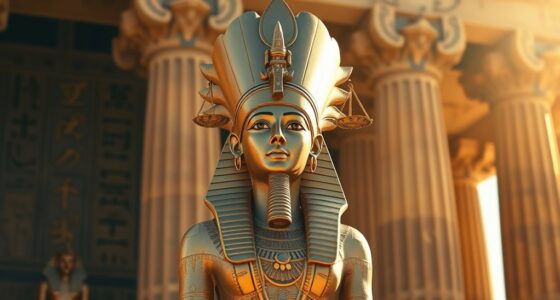
Understanding Horus’s divine symbolism helps you grasp why he was so revered in ancient Egypt. The falcon head is not just an animal form; it’s a divine emblem signifying divine oversight from the heavens. His outstretched wings often symbolize protection, while his keen eyesight represents insight and vigilance over the land and its people. As a symbol of kingship, Horus embodies the divine right of the pharaohs, who were believed to be the earthly embodiments of this god. When you see depictions of Horus, you recognize the divine authority bestowed upon the ruler, emphasizing that the king’s power is rooted in divine origin.
Horus’s falcon head symbolizes divine oversight, protection, and the divine right of kings in ancient Egypt.
The mythological origins of Horus are intertwined with stories of cosmic struggle and divine succession. You’ll learn that Horus is often depicted in conflict with Set, the god of chaos and disorder. This mythological battle symbolizes the eternal struggle between order and chaos, with Horus representing stability, justice, and divine rule. The story of Horus’s victory over Set signifies the triumph of divine order and the legitimacy of the pharaoh’s rule. These stories serve to reinforce the divine symbolism of Horus as the rightful ruler, chosen by the gods and connected to the cosmic balance.
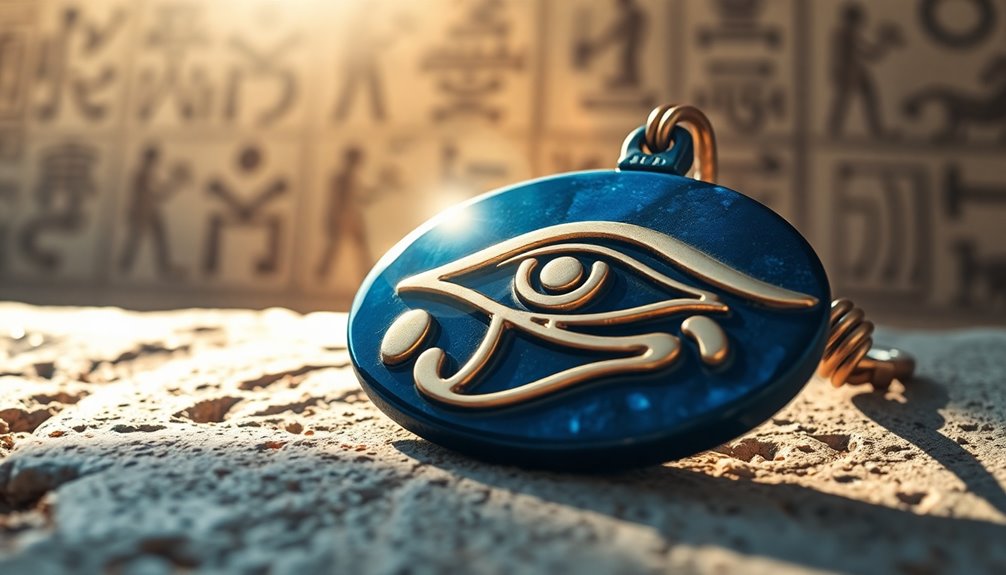
As you explore his mythology, you’ll notice that Horus’s iconography—like the eye known as the “Eye of Horus”—further emphasizes his divine symbolism. The eye is a powerful symbol of protection, healing, and royal authority. It’s no coincidence that Horus’s mythology and divine symbolism are woven into the very fabric of Egyptian kingship, reinforcing the idea that the pharaoh’s authority is rooted in divine origins. Additionally, understanding the symbolism of the eye can deepen your appreciation of how divine power and protection were conveyed in ancient Egyptian culture. Understanding these elements helps you appreciate why Horus remained a central figure in Egyptian culture, embodying divine power, protection, and the eternal legitimacy of kingship.
Top picks for "horu falcon kingship"
Open Amazon search results for this keyword.
As an affiliate, we earn on qualifying purchases.
Frequently Asked Questions
How Did Horus Become Associated With Kingship in Egyptian Mythology?
You see, Horus became linked to kingship through mythological symbolism representing divine sovereignty. As the falcon, he embodies the sky and protection, signifying authority and power. In Egyptian mythology, Pharaohs are seen as Horus in human form, reinforcing their role as divine rulers. This connection emphasizes the divine right to rule, making Horus a central symbol of kingship and sovereignty in ancient Egypt.
What Symbols Are Most Commonly Used to Represent Horus?
You’ll most often see Horus represented through ancient hieroglyphs and falcon symbolism. The falcon, with its keen eyesight and soaring flight, symbolizes protection, kingship, and divine power. In hieroglyphs, Horus is depicted as a falcon or with a falcon head, emphasizing his connection to the sky and kingship. These symbols highlight his role as a protector and divine ruler in Egyptian mythology.
Are There Different Forms or Representations of Horus Across Egyptian History?
You’ll notice that Ancient depictions of Horus vary across Egyptian history, reflecting different mythological variants. Early on, he’s shown as a falcon or with a falcon head, symbolizing kingship and divine power. Later, some images depict him as a child or with a double crown. These variations highlight his evolving role in mythology, emphasizing different aspects like protection, rulership, and divine authority through time.
How Is Horus Worshiped in Modern Times?
You can see Horus worshiped today through modern adaptations of ancient rituals, such as festivals and ceremonies that honor his legacy. People participate in these rituals to connect with Egypt’s spiritual heritage, often incorporating prayers, offerings, and symbolic acts. While the practices have evolved, they preserve the essence of ancient worship, allowing you to experience a connection to Horus’s divine kingship and protection in contemporary culture.
What Stories Explain Horus’s Rivalry With Set?
You find that mythological conflicts, like the divine sibling rivalry between Horus and Set, are central to Egyptian stories. These tales explain Horus’s struggle to claim kingship after Set’s chaos, highlighting his victory through divine battles and cunning. The rivalry symbolizes the eternal battle between order and chaos, emphasizing Horus’s role as protector of Ma’at. These stories were passed down to reinforce the divine right of kings and moral values.
Conclusion
So, next time you see a falcon soaring high, remember it’s not just eyeing lunch—it’s eyeing your throne too. Horus, the feathered ruler of kingship, reminds you that even gods have a flair for drama and a penchant for watching over you. Perhaps it’s time to bow to your avian overlord, or at least, keep your crown secure—lest a bird of prey decides your reign isn’t quite up to snuff.