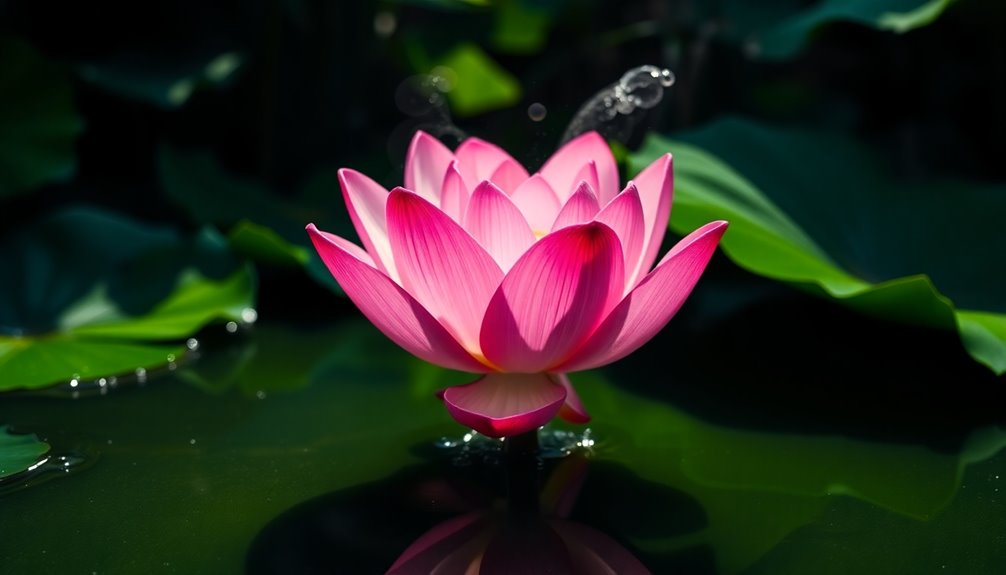
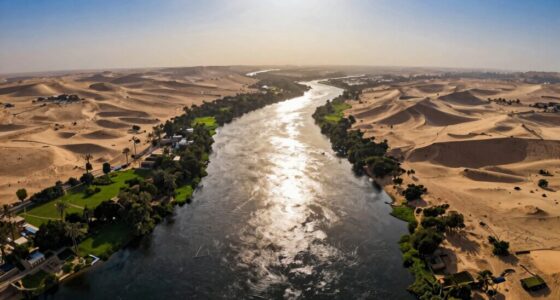
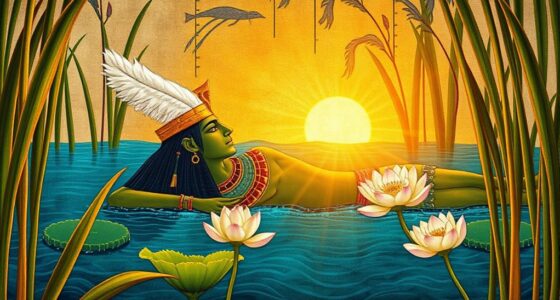
In Egypt, papyrus and lotus symbolize the country’s geographic and cultural split. You’ll see papyrus associated with Lower Egypt’s fertile delta, representing life and renewal, while the lotus links to Upper Egypt’s arid environment and themes of rebirth and spirituality. These plants embody the duality of Egypt’s landscape and identity, reflecting the harmony between the Nile’s lush and barren regions. If you keep exploring, you’ll uncover how each plant’s symbolism shaped Egypt’s worldview and beliefs.

Get art and craft supplies delivered free with Prime
- Fast, free delivery on millions of items
- Prime Video, Amazon Music and more included
- Member-only deals all year
Key Takeaways
- Papyrus symbolizes Lower Egypt’s fertile delta, associated with green, vitality, and renewal, reflecting its ecological and cultural identity.
- Lotus represents Upper Egypt’s arid environment, symbolizing rebirth, spiritual awakening, and divine beauty through its white and pink petals.
- Papyrus is linked to creation, wisdom, and order, embodying the cultural significance of Lower Egypt’s lush landscape.
- Lotus signifies themes of rebirth, the sun’s cycle, and the spiritual richness of Upper Egypt’s desert environment.
- Together, they illustrate Egypt’s duality, balancing fertility and spiritual depth, reflecting societal unity and interconnectedness.
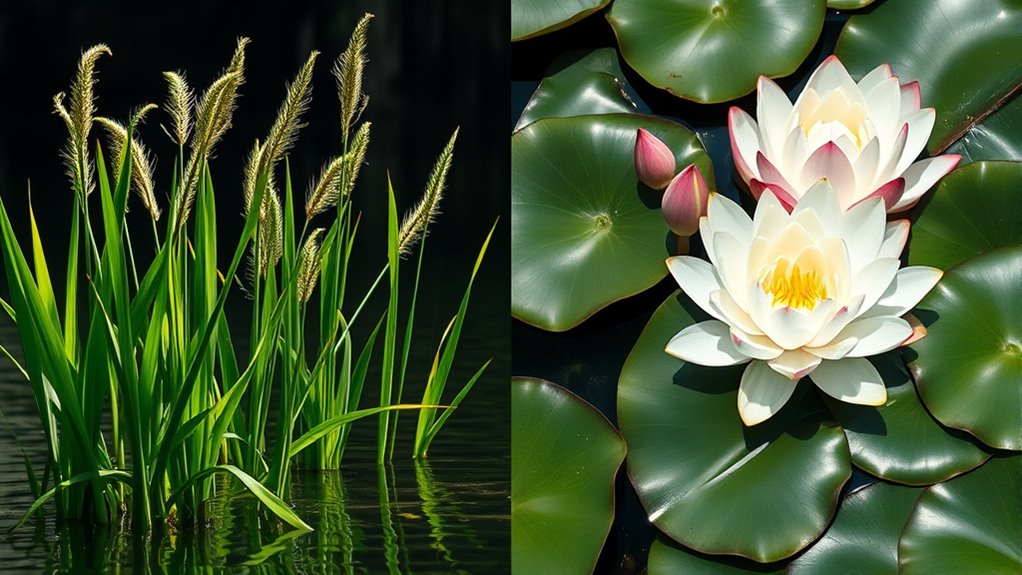
Have you ever wondered why papyrus and lotus plants hold such significance in Egyptian culture? These two plants are more than just natural elements; they symbolize the duality of Upper and Lower Egypt, embodying cultural, spiritual, and mythological meanings. As you explore their roles, you’ll see how each plant’s symbolism of color and mythological associations reveal deeper insights into ancient Egyptian identity and beliefs.
Papyrus, which flourished along the Nile Delta in Lower Egypt, was essential for daily life and symbolism. Its green stems and brownish-yellow reeds reflect themes of fertility, growth, and stability. The green hue of papyrus symbolizes renewal and vitality, reinforcing its connection to life and sustenance. In mythological terms, papyrus was associated with the creation of the world, often linked to the goddess Seshat, the goddess of wisdom, writing, and measurement. This association elevates papyrus from a mere plant to a divine symbol of knowledge and order. Its use in writing materials, scrolls, and ritual objects further cements its role in preserving history and religious practices, emphasizing its importance in Egyptian society.
Papyrus symbolizes fertility, growth, and divine wisdom, linked to creation and the goddess Seshat in Egyptian culture.
On the other hand, the lotus, which thrived in the waters of Upper Egypt, carries powerful symbolism of rebirth and divine beauty. Its pure white petals and vibrant pink varieties evoke a sense of purity and spiritual awakening. The lotus’s mythological associations run deep; it was believed to symbolize the sun’s journey across the sky, opening at dawn and closing at night. This cycle of blooming connected the lotus to the sun god Ra, representing creation, rebirth, and eternal life. The flower’s ability to emerge beautifully from muddy waters further emphasizes themes of purity and transcendence—qualities highly valued in Egyptian mythology. The lotus’s vibrant colors and elegant form made it a favorite motif in art and jewelry, reinforcing its divine significance.
Together, these plants embody the essence of Egypt’s duality: papyrus representing Lower Egypt’s fertile delta and the color green associated with life and growth, and lotus representing Upper Egypt’s arid yet spiritually rich environment, with its mythological ties to rebirth and divine renewal. Their symbolism of color and mythological associations reveal how ancient Egyptians viewed the world—interconnected through nature, spirituality, and cultural identity. As you explore into their stories, you’ll see how each plant served as a symbol of continuity and balance, reflecting the harmonious coexistence of Upper and Lower Egypt in their collective consciousness.
As an affiliate, we earn on qualifying purchases.
Frequently Asked Questions
How Did Papyrus Influence Ancient Egyptian Writing Systems?
You see, papyrus greatly influenced ancient Egyptian writing systems by serving as the primary material for hieroglyphic inscriptions and scrolls. You can imagine how this plant’s availability allowed scribes to create detailed records, religious texts, and administrative documents on papyrus scrolls. Its smooth, durable surface made writing easier and more efficient, shaping how Egyptian culture preserved knowledge and communicated across generations.
What Symbolic Meanings Are Associated With the Lotus in Egyptian Mythology?
Did you know that the lotus is one of Egypt’s most sacred symbols? In Egyptian mythology, it represents rebirth significance and sacred symbolism, often associated with the sun’s daily renewal. You’ll find it in art and rituals, symbolizing creation, purity, and resurrection. The lotus’s blooming cycle mirrors spiritual rebirth, reminding you of life’s eternal cycle and the divine’s influence on renewal and growth in ancient Egyptian culture.
Were Papyrus and Lotus Used in Egyptian Religious Rituals?
You’ll find that papyrus and lotus played essential roles in Egyptian religious rituals. They were used as ritual offerings, symbolizing fertility, rebirth, and sacred symbolism. In ceremonies, these plants appeared in temple decorations and sacred scenes, emphasizing their spiritual significance. Their presence reinforced the connection between the natural world and divine power, helping worshippers connect with gods and the sacred mysteries of life and death.
How Did Climate Affect the Growth of Papyrus and Lotus?
Think of climate zones as the stage where plants perform. Your growth of papyrus and lotus hinges on water availability; in humid zones, they flourish like stars in the night sky. Hot, dry areas hinder their development, much like a desert without rain. Climate directly impacts their thriving or decline, shaping the lush landscapes of Egypt’s riverbanks and shaping their cultural significance.
Are Papyrus and Lotus Found in Egyptian Art Beyond Symbolism?
You see that papyrus and lotus appear in Egyptian art beyond symbolism, reflecting their cultural significance. Artists often depict these plants in daily life scenes, emphasizing their importance in agriculture, economy, and religious rituals. Their artistic representations highlight how deeply intertwined they are with Egyptian identity. By portraying these plants, ancient Egyptians celebrate their natural environment and its essential role, making them symbols of life, renewal, and divine connection.
Conclusion
In the dance between papyrus and lotus, you see Egypt’s duality like day and night—each one essential, yet contrasting. Papyrus’s sturdy green stands firm, while the lotus blooms with delicate grace. Together, they symbolize life’s balance, guiding you through the rich tapestry of Upper and Lower Egypt. Just as river and land flow in harmony, these plants remind you that opposites often create the most beautiful harmony, like a melody woven into the fabric of history.
Halloween Picks
halloween
As an affiliate, we earn on qualifying purchases.