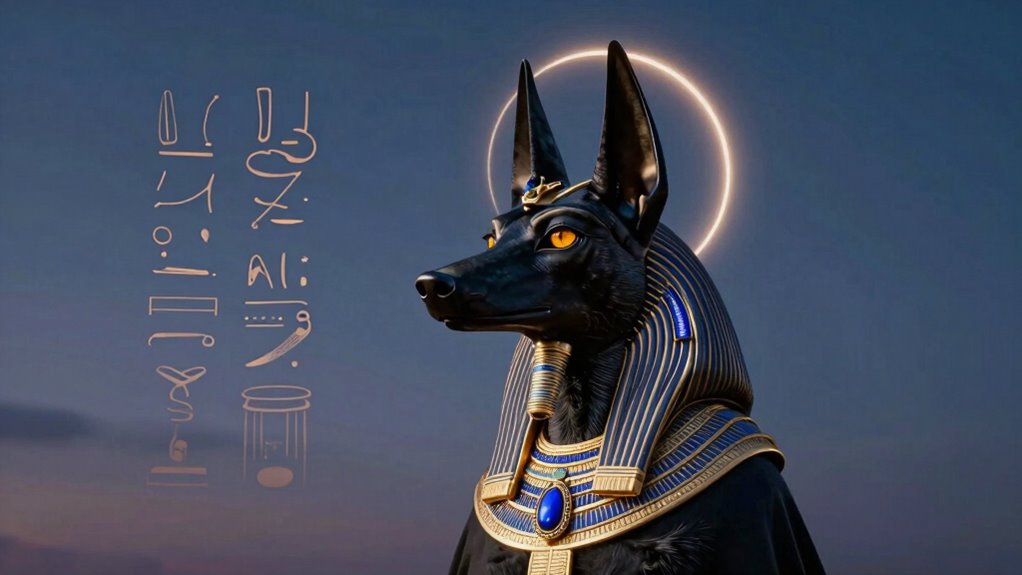
Anubis is an ancient Egyptian god known as a protector and guide of the dead. With a jackal head, he oversees funerary rites, helping souls navigate the underworld. His symbolism includes scales, ankh, and protective tools, emphasizing justice and preservation. Today, Anubis represents protection, mystery, and guidance in modern culture. If you’re curious about how his symbolism impacts spiritual practices and his relevance now, you’ll find plenty more to explore.

Get art and craft supplies delivered free with Prime
- Fast, free delivery on millions of items
- Prime Video, Amazon Music and more included
- Member-only deals all year
Key Takeaways
- Anubis is the Egyptian god of funerary rites, guiding souls and weighing hearts in the afterlife judgment process.
- Recognized by his jackal head, symbolizing vigilance, protection, and guardianship of the dead.
- In modern culture, he appears in art, media, and spirituality as a protector and symbol of guidance.
- His role emphasizes divine justice, morality, and the importance of sacred rituals in Egyptian beliefs.
- Contemporary interpretations connect Anubis’s symbolism to themes of protection, inner guidance, and facing the unknown.
Popular right now

LG 85-inch QNED75B Mini LED Smart TV Bundle with HDMI and CPS Protection Plan

Dyson Big Ball Multi Floor Canister Vacuum, Yellow

eufy E25 Robot Vacuum and Mop Combo with HydroJet Roller Mop
As an affiliate, we earn on qualifying purchases.
Who Was Anubis? Origins of the Jackal God in Egyptian Mythology
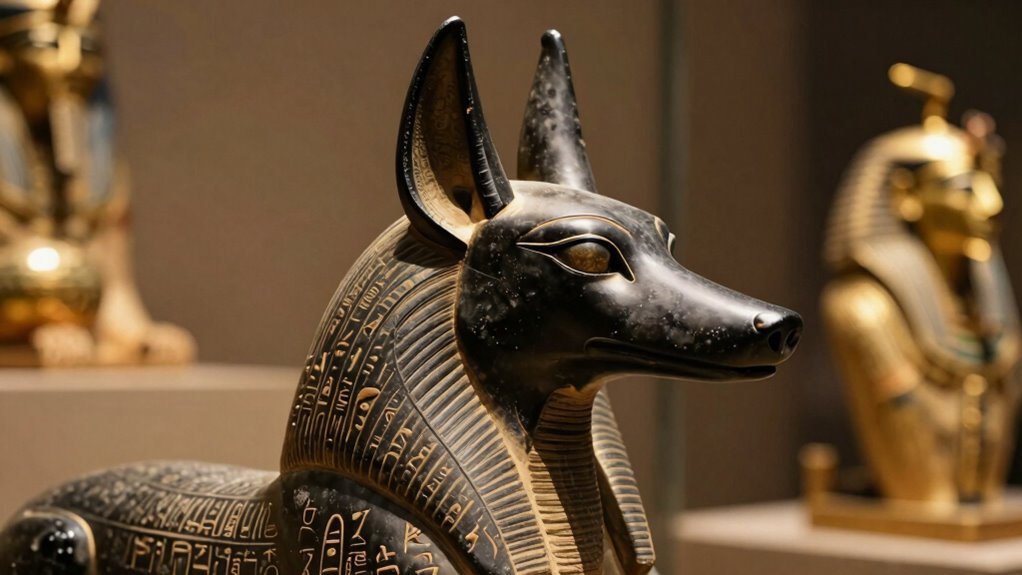
Anubis is one of the most recognizable gods in Egyptian mythology, known primarily as the guardian of the dead and the protector of tombs. His origins trace back to ancient Egypt, where he played a pivotal role in funerary rituals. As a deity associated with mummification and the afterlife, Anubis’s image often features a jackal or a man with a jackal head, symbolizing his connection to cemeteries and the dead. Early Egyptian texts suggest that Anubis was originally a god of the city of Cynopolis, where jackals were common. Over time, he became central to Egyptian mythology as the divine guide for souls, ensuring safe passage and guarding the sanctity of burial sites. His presence underscores the importance of funerary rituals in Egyptian culture.
What Was Anubis’s Role in Egyptian Funeral Rites?
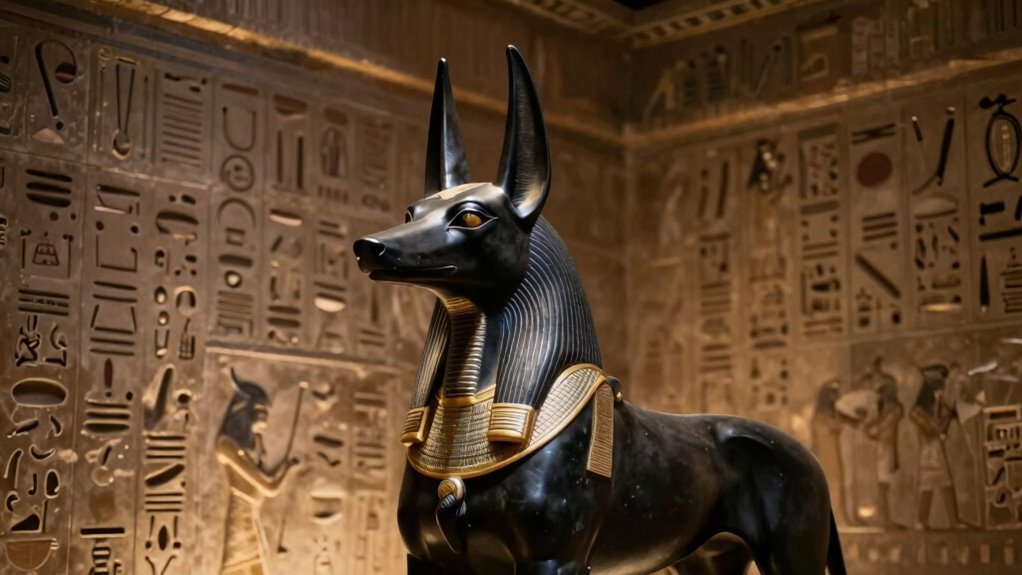
In Egyptian funeral rites, Anubis played a crucial role as the divine overseer of the entire process, ensuring that the deceased received proper treatment and protection. During funeral ceremonies and mummification rituals, Anubis was believed to guide the soul through the afterlife, weighing the heart against maat’s feather to determine worthiness. His presence assured a smooth progression from life to eternity.
Anubis guided souls, protected mummies, and ensured a smooth journey to eternity in Egyptian funeral rites.
Understanding his significance helps you see how ancient Egyptians viewed death as a sacred journey. Anubis’s role symbolized:
- The judgment of the soul, emphasizing morality and justice
- The protective guardian of the mummification process
- The guide leading the deceased toward divine acceptance
What Symbols and Attributes Are Associated With Anubis?

Symbols and attributes associated with Anubis often highlight his role as a protector and guide in the afterlife. You’ll notice hieroglyphic symbols like the jackal head, representing vigilance and guardianship. Ritual attributes include the scales used in weighing hearts, symbolizing judgment and fairness. Anubis is also linked to specific ritual tools, such as the cleaning scepter and flail, emphasizing his role in purification and protection. The following table summarizes key symbols and attributes:
| Hieroglyphic Symbols | Ritual Attributes | Symbolic Meaning |
|---|---|---|
| Jackal head | Scales for weighing | Judgment |
| Ankh (life symbol) | Ceremonial scepters | Protection |
| Crook and flail | Ritual offerings | Authority |
| Canopic jars | Embalming tools | Preservation |
These symbols and attributes reinforce Anubis’s essential role in guiding and safeguarding souls. Additionally, ancient Egyptian beliefs highlight how these symbols were used in rituals to invoke his protection and guidance during the journey to the afterlife. Understanding the symbolic meanings behind these artifacts can deepen our appreciation of his significance in Egyptian culture.
How Did Anubis Guide Souls in the Underworld?
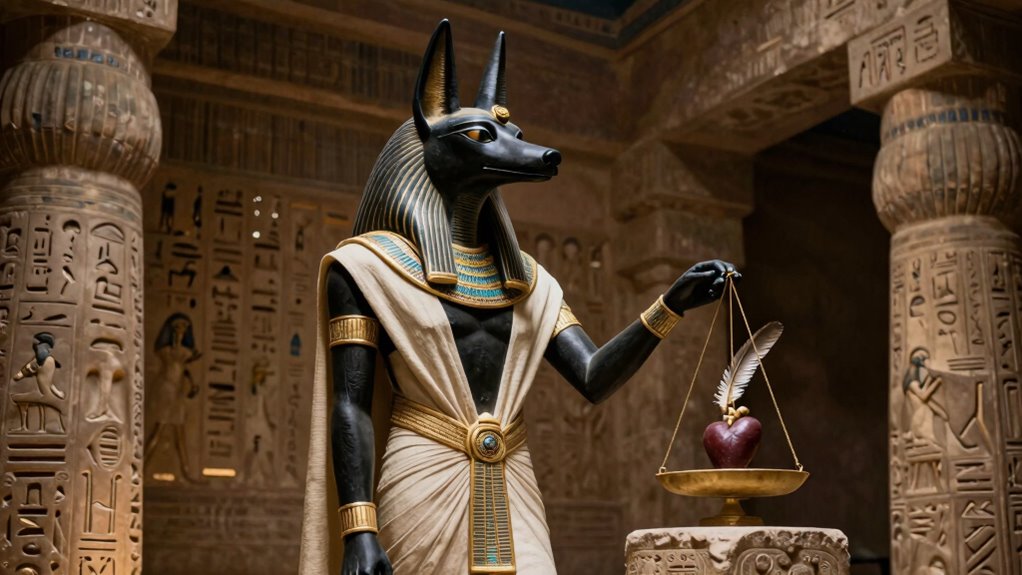
Have you ever wondered how souls navigated the perilous journey through the underworld? Anubis played a crucial role as a guide, guaranteeing the deceased reached the afterlife safely. During funeral rituals, priests invoked Anubis’s mythological symbolism to protect and prepare the soul. He helped souls find their way by weighing their heart against the feather of Ma’at, symbolizing truth and justice. This process determined their fate, guiding them toward reward or punishment. Anubis’s guidance was indispensable for a smooth passage, offering reassurance amid uncertainty. His presence in these rituals emphasized his role as a protector and guide. By guiding souls with divine wisdom, Anubis ensured the spiritual journey reflected the ancient Egyptians’ beliefs in justice, morality, and eternal life. The symbolism associated with Anubis also underscores the importance of funerary rites in maintaining the social and spiritual order. Understanding the mythological symbolism of Anubis reveals how ancient Egyptian beliefs about death and the afterlife shaped their culture and practices. Exploring new frontiers in digital content and research continues to shed light on how mythological figures like Anubis embody core concepts of ancient Egyptian culture.
Why Is the Jackal Head a Key Symbol for Anubis?

The distinctive jackal head of Anubis serves as a powerful visual connection to his role as a guide and protector of the dead. In Egyptian myth, jackals were associated with cemeteries and the afterlife, symbolizing watchfulness and protection. The jackal’s keen senses and nocturnal nature made it a fitting emblem for guardianship over souls. The symbolism of the jackal also extends to its role in ancient Egyptian rituals, emphasizing its spiritual significance. Spiritually, the jackal head signifies vigilance, guidance, and the passage from life to afterlife. It reminds you of Anubis’s role in safeguarding and weighing hearts during the judgment process. The iconography connects the divine with the earthly domain, emphasizing his duty to oversee spiritual journeys. As a symbol of guardianship, the jackal head embodies essential spiritual symbolism, reinforcing Anubis’s identity as a protector and guide within Egyptian myth. Additionally, the association of jackals with cemeteries underscores their connection to the afterlife, making the jackal head an even more potent emblem of divine protection in the spiritual realm. Furthermore, the spiritual symbolism of the jackal highlights its importance as a protector of sacred spaces and spiritual thresholds. This connection to sacred spaces also reflects the importance of building and legal considerations in ensuring that spiritual and cultural practices are respected and preserved.
How Has Anubis Been Portrayed in Modern Culture and Media?
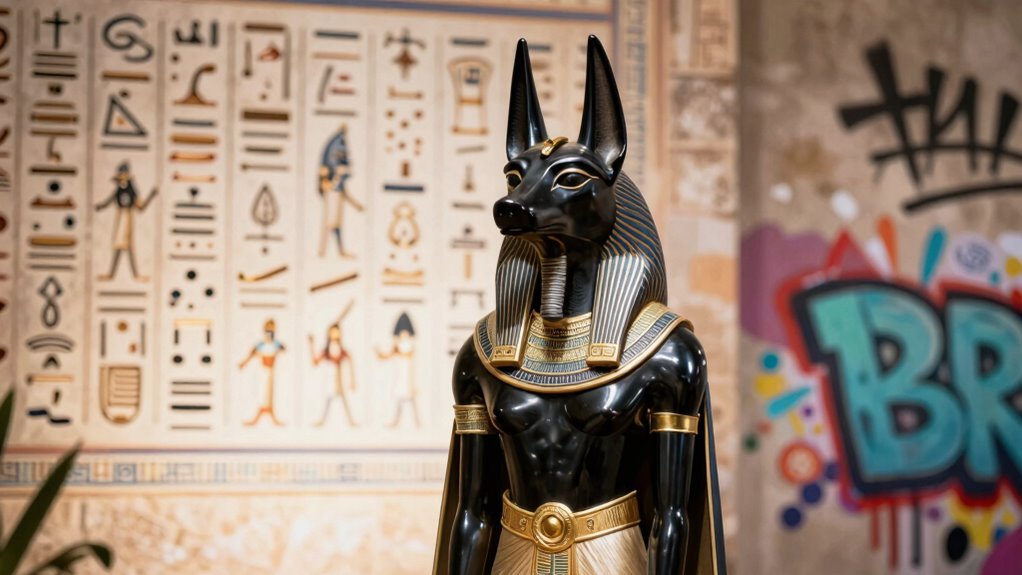
You’ve probably seen Anubis symbols in movies and artwork that draw inspiration from ancient Egypt. Modern films often depict him as a mysterious or menacing figure, blending ancient symbols with contemporary storytelling. Artists today also reinterpret Anubis through bold and innovative styles, keeping his image relevant and intriguing.
Ancient Symbols in Films
Anubis often appears in modern films as a symbol of death, mystery, or the supernatural, reflecting its ancient role as the guardian of the afterlife. Filmmakers use mythological symbolism to evoke themes of judgment, changeover, and the unknown. You might see Anubis depicted as a menacing guardian or a wise guide, echoing its function in ancient funerary practices. These portrayals often emphasize its connection to fate and morality, inviting viewers to contemplate life’s final journey. The portrayal of Anubis also highlights color accuracy, as filmmakers aim to create authentic and visually compelling representations of this mythological figure. This reflects the importance of cultural symbolism in shaping viewers’ perceptions of divine justice and protection. Additionally, modern adaptations sometimes incorporate modern symbolism, blending traditional imagery with contemporary themes to resonate with today’s audiences.
Modern Artistic Interpretations
Have artists and creators truly embraced the mystery and symbolism of Anubis in their modern works? Many incorporate animal symbolism, portraying him as a sleek, black jackal or a towering figure of mythological guardianship. In comics, movies, and video games, Anubis often appears as a protector of the dead or a guide through the afterlife, highlighting his role as a mythological guardian. Contemporary artists explore his dual nature—both intimidating and compassionate—blending traditional elements with modern aesthetics. Some depict him with glowing eyes or futuristic armor, emphasizing his timeless relevance. Overall, these interpretations honor his ancient symbolism while reimagining him as a powerful figure in modern culture, bridging the gap between myth and contemporary art. Additionally, modern portrayals often incorporate cultural adaptations to reflect diverse perspectives on his mythological significance. As digital media continues to evolve, more artists are experimenting with mythological iconography to deepen the connection between ancient symbols and modern storytelling.
What Does Anubis Represent Today? Symbols of Protection and Mystery
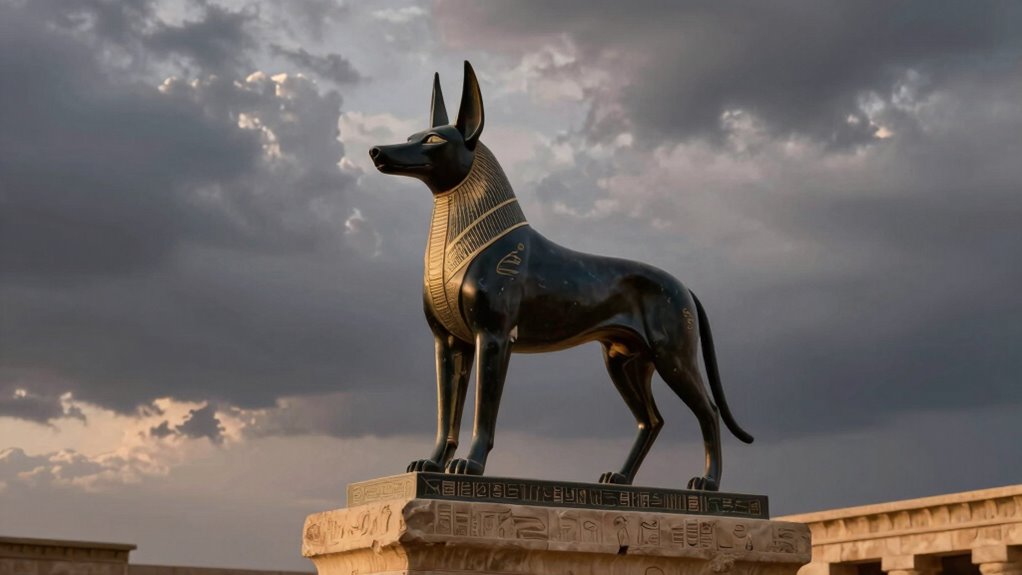
Today, Anubis continues to symbolize protection and mystery in popular culture and spiritual practices. His image embodies the essence of modern spiritual symbolism, reminding you of the importance of safeguarding your inner self and facing the unknown with courage. Anubis’s representation encourages you to trust in unseen forces that guide and protect you through life’s uncertainties. Recognizing the symbolic significance of Anubis can help you harness his qualities of guidance and guardianship in your daily life. Developing a spiritual awareness can further deepen your connection to these protective energies, allowing you to draw strength from their presence. Embracing these protective symbols can enhance your sense of security and inner peace in challenging times.
How Can You Incorporate Anubis’s Symbolism Into Your Spiritual Practice?
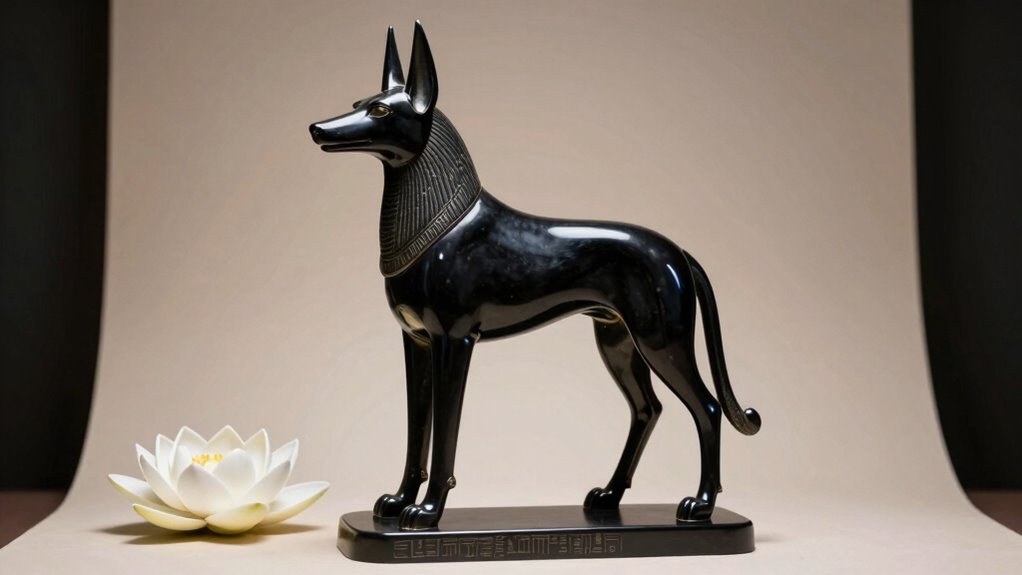
To incorporate Anubis’s symbolism into your spiritual practice, start by creating a space that honors protection and mystery. Use ritual symbolism like black candles, Anubis statues, or amulets to evoke his protective energy. Incorporate images or symbols of Anubis into your altar or meditation area to serve as focal points for spiritual integration. When performing rituals, focus on themes of guidance through passages, such as life changes or facing fears. Visualize Anubis’s qualities of protection and mystery guiding your intentions. By consciously integrating these symbols during meditation or ritual work, you deepen your connection to his energy, fostering a sense of safety and spiritual awareness. Recognizing the significance of time symbolism can enhance your understanding of Anubis’s role in guiding transitions and transformations in your life. This approach helps you align with Anubis’s role as a guardian and guide in your spiritual journey, emphasizing the importance of ritual practices in fostering a meaningful connection.
How Does Anubis Compare to Other Guardians of the Underworld?
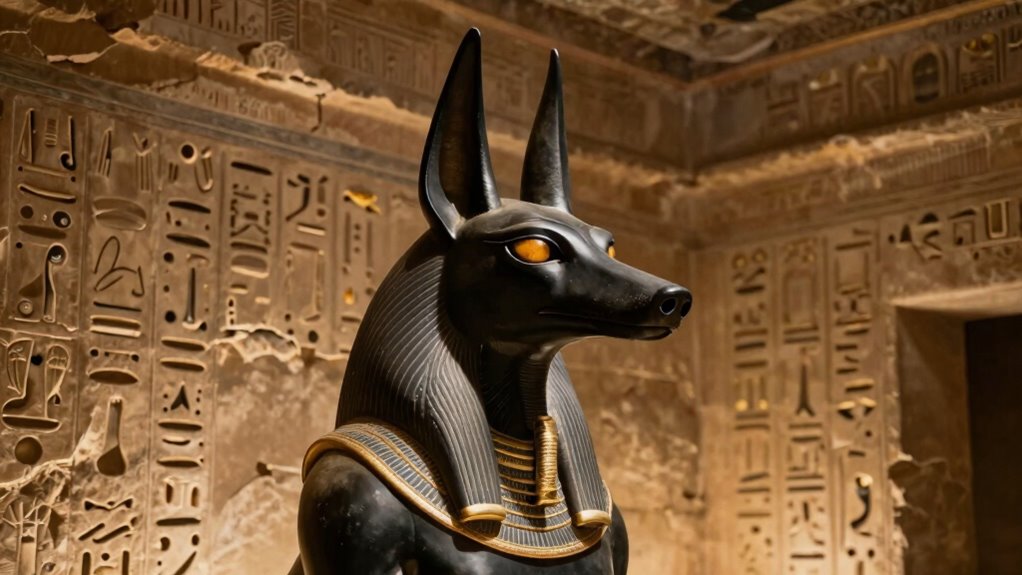
Anubis stands out among the guardians of the underworld because of his unique role in Egyptian mythology as both protector and psychopomp. Unlike other mythological protectors, he actively guides souls through judgment and into the afterlife. While Hades rules the Greek underworld with authority and sometimes sternness, Anubis offers compassion and support during the soul’s journey. The differences highlight diverse cultural views on death and protection.
- Role in Judgment: Anubis weighs hearts, emphasizing moral integrity.
- Compassionate Guidance: He helps souls transition peacefully.
- Symbolic Focus: His image reinforces the importance of spiritual purity.
As a mythological protector, Anubis embodies a nuanced approach to death, contrasting with other underworld guardians who often serve as stern gatekeepers or judges. His unique qualities deepen your understanding of how cultures interpret life, death, and protection.
Why Learning About Anubis Enhances Our Understanding of Ancient and Modern Beliefs
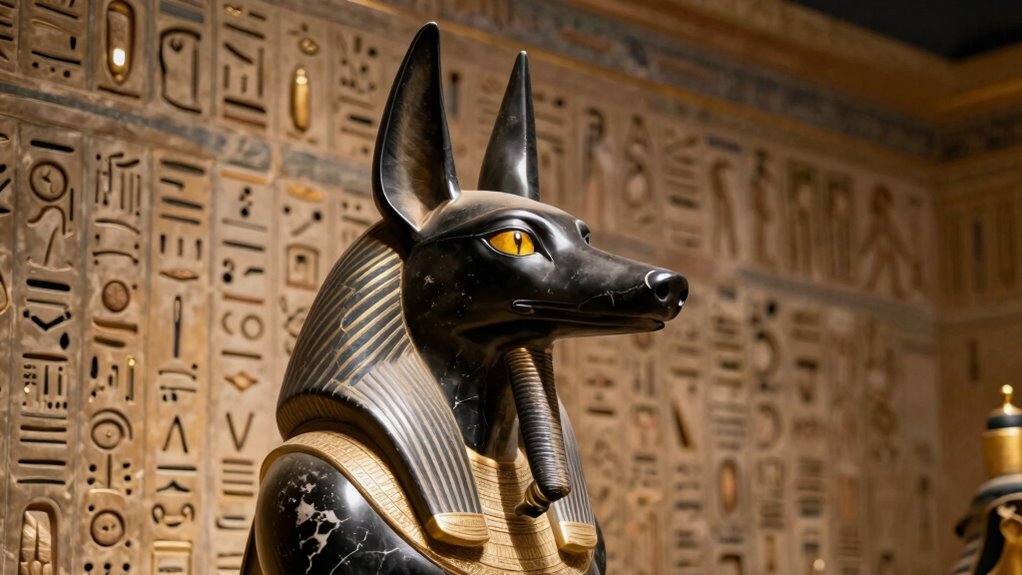
Learning about Anubis deepens your understanding of how ancient Egyptians viewed death and the afterlife, revealing their values and spiritual beliefs. It also shows how modern interpretations adapt these ideas, shaping contemporary discussions about mortality and protection. By exploring Anubis, you connect past beliefs with present perspectives, enriching your overall understanding.
Cultural Significance Deepened
Understanding Anubis deepens your appreciation of how ancient Egyptians viewed death and the afterlife, revealing their complex beliefs about morality, protection, and spiritual passage. Anubis embodies the sacred rituals that guaranteed safe passage for souls, connecting mythological themes with real-world practices. His role as a guardian highlights the importance of moral judgment in their culture. Recognizing his place among mythical creatures emphasizes the layered symbolism behind death and rebirth. This knowledge enriches modern perspectives on spiritual protection and moral integrity.
- Highlights the significance of sacred rituals in ensuring safe passage
- Connects mythological creatures with spiritual symbolism
- Demonstrates how morality influenced ancient Egyptian beliefs
Modern Interpretations Evolved
As modern interpretations of Anubis continue to develop, their significance extends beyond ancient Egyptian rituals to influence contemporary ideas about spirituality and morality. Today, Anubis symbolizes more than just the ancient funerary rituals; he embodies the enduring power of spiritual symbolism that guides personal growth and ethical choices. You might see Anubis as a metaphor for inner strength, protection, or the journey through life’s moral challenges. These evolving interpretations help you connect ancient beliefs with modern values, emphasizing the importance of balance, justice, and self-awareness. By understanding how Anubis’s symbolism has adapted over time, you gain insight into how ancient concepts of the afterlife still resonate, shaping modern perspectives on morality, spirituality, and the human experience.
Frequently Asked Questions
How Did Anubis Influence Ancient Egyptian Views on Death?
Anubis shaped your understanding of death by emphasizing the importance of proper funeral practices and the afterlife. As the protector of graves and guide for souls, he encouraged you to follow rituals that ensured safe passage to the afterworld. His role reinforced beliefs that death wasn’t the end but a journey requiring respect and preparation, influencing how ancient Egyptians approached life, death, and the spiritual domain.
Are There Rituals Today That Honor Anubis?
Like a shadow guiding your steps, you can still find rituals honoring Anubis today. Many people incorporate funeral practices and spiritual offerings to pay homage, such as lighting candles or presenting symbolic items. These acts serve as modern echoes of ancient traditions, helping you connect with the deity’s role as protector and guide in the journey beyond life. Even now, Anubis’s spirit influences your understanding of death and the afterlife.
What Are Common Misconceptions About Anubis?
You might think Anubis is solely a god of death, but mythological misconceptions often exaggerate his role. Cultural misinterpretations sometimes portray him as a scary or evil figure, when in fact, he’s more of a protector and guide for souls. Don’t forget, ancient Egyptians saw him as a crucial part of the afterlife process, symbolizing protection and passage, not just fear or darkness.
How Does Anubis Compare to Other Mythological Guardians?
Think of Anubis as the vigilant lighthouse keeper among mythological guardians, guiding souls safely through the dark waters of the afterlife. Unlike other guardians, his mythological roles emphasize not just protection but also guidance and judgment. His guardian symbolism blends compassion with authority, making him unique. You’ll find him standing firm, much like a steadfast sentinel, embodying a balance of strength and wisdom that sets him apart from other mythological protectors.
Can Anubis’s Symbolism Be Used for Personal Protection Today?
Yes, you can use Anubis’s symbolism for personal protection today. Many people wear protective amulets featuring Anubis to ward off negative energy and connect with spiritual guidance. By embracing his role as a protector and guide, you can find comfort and strength in his symbolism. Incorporate images or symbols of Anubis into your daily life to help foster a sense of safety and spiritual connection.
Conclusion
As you explore Anubis’s story, it’s fascinating how a jackal’s image can symbolize protection, guidance, and mystery across time. Coincidentally, just like how ancient Egyptians believed in his watchful presence, you might find his symbolism quietly guiding your own spiritual journey today. Embracing his qualities can bring a sense of safety and insight, reminding you that sometimes, the most unexpected symbols hold the deepest wisdom for your life’s path.