
Mummification is an ancient Egyptian art that involves carefully preserving the body for eternity, reflecting their spiritual beliefs and focus on the afterlife. You’ll see that it starts with removing internal organs and drying the body with natron, then wrapping it in linen with amulets tucked inside for protection. Priests perform rituals with prayers to guarantee the soul’s safe journey. To discover the full process behind this fascinating craft, keep exploring the secrets of Egyptian embalming.
Key Takeaways
- Embalming aimed to preserve bodies for the afterlife, reflecting Egyptians’ spiritual beliefs in rebirth.
- Internal organs were removed, stored in canopic jars, and the body dehydrated using natron and other chemicals.
- The body was wrapped in multiple linen layers with amulets, symbolizing protection and the journey into the afterlife.
- Rituals performed by priests, including prayers and spells, were essential to the embalming process.
- Egyptian embalming techniques created iconic mummies, showcasing their mastery of preservation and spiritual devotion.

Have you ever wondered how ancient Egyptians turned bodies into mummies? It’s a fascinating process rooted in their complex funeral rituals, which were designed to ensure a smooth journey into the afterlife. Central to these rituals were the embalming techniques that transformed a lifeless body into a preserved mummy, ready to face eternity. The Egyptians believed that preserving the body was essential because the soul needed a physical home in the afterlife, so they developed meticulous methods to achieve this goal.
The process began with removing internal organs, which were often stored separately in canopic jars. They believed these organs could decay quickly and pose a threat to the body if left inside. To prevent decomposition, embalmers used a variety of chemicals and drying agents, like natron, a naturally occurring salt mixture, to dehydrate the body. This step was pivotal in embalming techniques, as it slowed down bacterial activity and preserved the tissues. Once the body was thoroughly dried, the embalmers would then carefully wash and treat it with resins and oils, which helped prevent decay and added a protective layer.
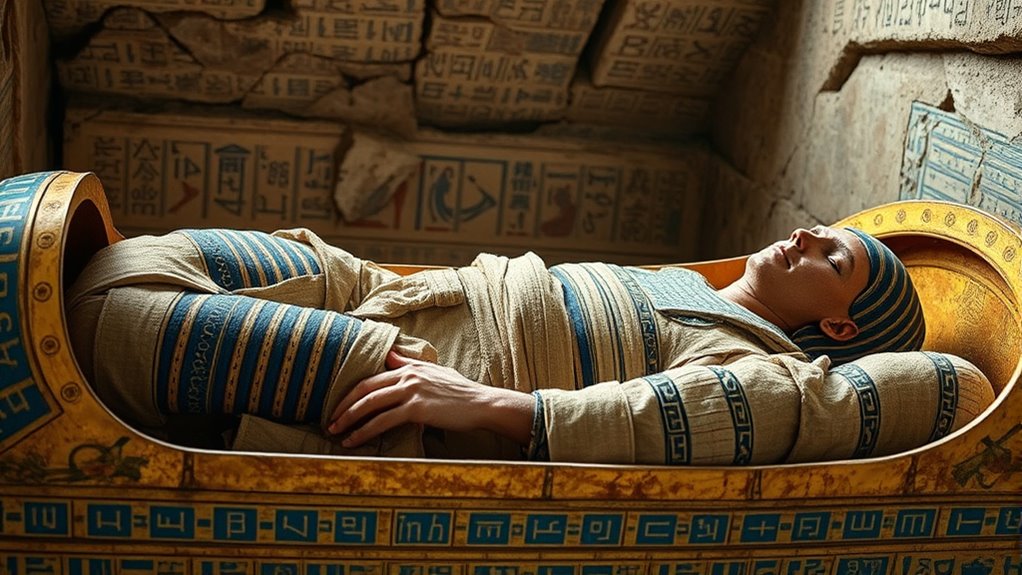
After the dehydration and cleaning, they would stuff the body with linen or sawdust to maintain its shape. The next step involved wrapping the body in multiple layers of linen bandages, often with amulets and charms tucked in between for protection. These wrappings weren’t just practical; they played a symbolic role, representing the journey into the afterlife and safeguarding the deceased from evil spirits. The entire embalming process was deeply ritualistic, often performed by priests who followed specific prayers and spells to invoke divine protection. Additionally, the importance of specialized tools in embalming cannot be understated, as they allowed for precise and careful handling throughout the process.
Throughout the embalming techniques, it was clear that the Egyptians regarded death as a transitional phase rather than an end. Their funeral rituals were elaborate, involving offerings, prayers, and ceremonies that reinforced their beliefs in rebirth. These rituals underscored the importance of having a well-preserved body, as it was considered imperative for the deceased’s soul to recognize its body and continue its journey beyond death.
In essence, the ancient Egyptians’ mastery of embalming techniques and their detailed funeral rituals allowed them to create some of history’s most iconic mummies. Their dedication to preserving the body reveals a culture deeply rooted in spiritual beliefs and a desire to secure eternal life for their loved ones. Today, their methods continue to fascinate and inspire, offering a glimpse into a civilization that truly understood the importance of bodily preservation.
Frequently Asked Questions
How Did Mummification Vary Across Different Ancient Cultures?
You’ll notice that mummification varies across cultures due to cultural differences and ritual significance. For example, Egyptians meticulously removed organs and used resin, emphasizing the afterlife. In contrast, the Chinchorro in South America mummified entire bodies with natural materials, focusing on ancestor veneration. These methods reflect each society’s beliefs, values, and spiritual practices, highlighting how mummification adapts to different cultural contexts to serve specific ritual purposes.
Were Animals Ever Mummified in Ancient Egypt?
Like treasures hidden in a tomb of time, animals were indeed mummified in ancient Egypt. You may find it fascinating that this practice echoed early forms of animal conservation and pet embalming, reflecting their spiritual bond. These mummified creatures, from cats to crocodiles, served as guides for the afterlife or offerings. You can imagine the care taken, turning animals into eternal symbols of devotion and reverence.
What Tools Were Used for the Mummification Process?
You use antique embalming tools like knives, hooks, and spatulas to carefully remove organs and prepare the body. Preservation chemicals, such as natron and resin, are applied to dry and protect the body from decay. These tools and chemicals work together to guarantee the body’s preservation, reflecting the ancient Egyptians’ skilled approach to mummification. Your careful work helps maintain the body’s form for eternity.
How Long Did the Mummification Process Typically Take?
The embalming duration for mummification typically lasted about 70 days, allowing enough time for proper preservation. During this preservation timeline, you’d see skilled priests removing internal organs, treating the body with resins, and wrapping it carefully. The whole process was meticulous, ensuring the body was well-preserved for the afterlife. It’s a lengthy, detailed ritual that reflects their deep beliefs in life after death.
Are There Modern Practices Similar to Ancient Mummification?
Yes, modern preservation techniques like embalming share similarities with ancient mummification. You see, embalming involves using chemicals to preserve the body, much like how ancient Egyptians used resins and drying methods. While modern practices focus on temporary preservation for funerals, some techniques aim for long-term preservation, echoing ancient methods. Advances in science continue to improve these techniques, but the core goal remains: preserving the body for viewing or study.
Conclusion
As you explore mummification, it’s fascinating to see how ancient artisans transformed bodies into timeless relics. Imagine, like the famous Egyptian mummies, a carefully preserved figure lying silent, whispering stories of a civilization long gone. You can almost feel the reverence and skill poured into each step. This ancient art reminds you that, through preservation, history endures—allowing us to connect with those who lived thousands of years ago, forever frozen in time.