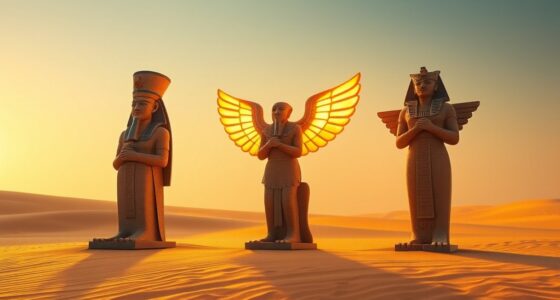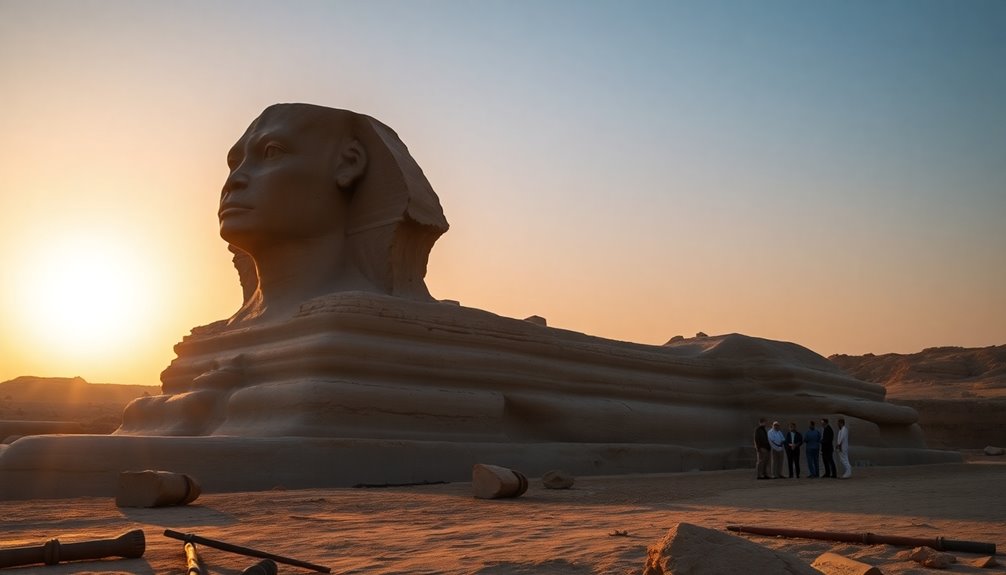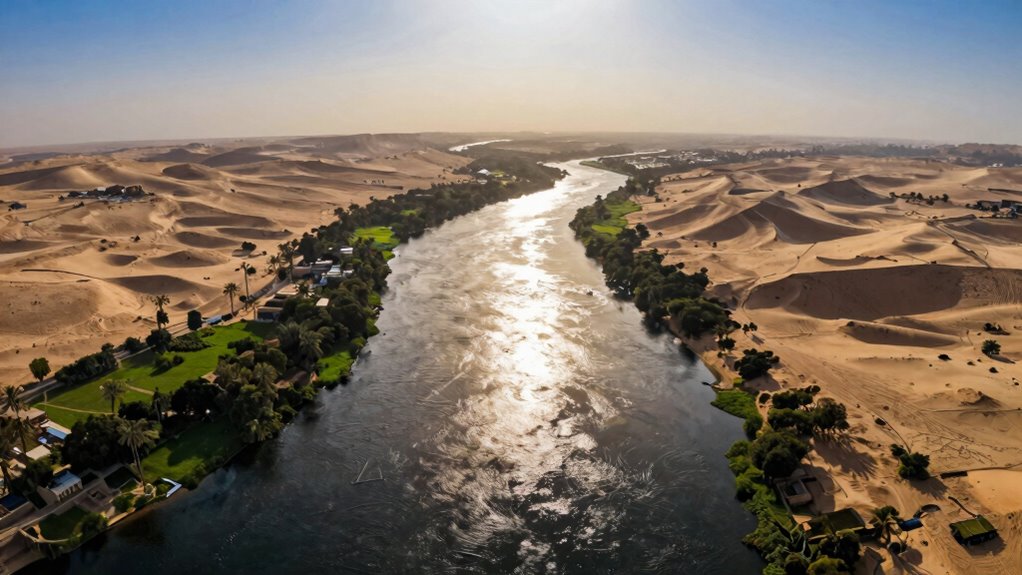

The Nile shapes your understanding of Egyptian spirituality by embodying divine order and cosmic balance. Its predictable floods inspire myths and rituals that honor gods like Hapi, Osiris, and Isis, emphasizing renewal and eternal life. Temples along the river connect humans to divine forces, reflecting the river’s sacred role in creation, death, and rebirth. This profound link influences Egyptian beliefs about harmony, society, and the universe—exploring it further reveals the depth of their spiritual imagination.

Get art and craft supplies delivered free with Prime
- Fast, free delivery on millions of items
- Prime Video, Amazon Music and more included
- Member-only deals all year
Key Takeaways
- The Nile’s predictable flooding inspired myths and reinforced divine order and harmony in Egyptian spirituality.
- Rituals during the inundation period aimed to ensure the river’s continued life-giving flow and divine favor.
- Temples and tombs were aligned with the Nile, symbolizing the sacred connection between humans and gods.
- The river’s cycles shaped beliefs about creation, rebirth, and the afterlife, emphasizing renewal and cosmic balance.
- The Nile was viewed as a divine force central to Egyptian cosmology, influencing their spiritual worldview and societal stability.
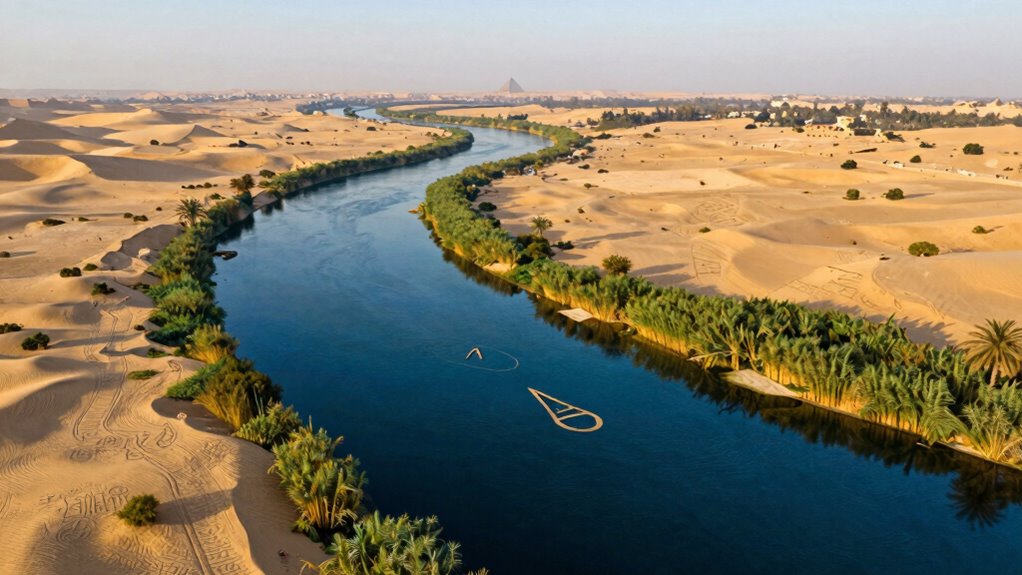
The Nile River has long been the lifeblood of Egyptian civilization, shaping not only their economy and daily life but also their spiritual beliefs. Its predictable flooding cycle and abundant resources inspired a deep sense of divine order, influencing how Egyptians understood the universe. You might find it fascinating that ancient mythology grew around the Nile’s rhythms, with gods and stories designed to explain its behavior. For example, the river’s annual rise was seen as a gift from gods like Hapi, the deity of inundation, who controlled the life-giving floods. These myths reinforced the idea that the Nile’s fertility was a blessing from divine forces, encouraging Egyptians to honor and appease these gods through ritual practices.
As you explore Egyptian spiritual life, you’ll notice how rituals centered on the Nile’s cycles. During the inundation season, people performed ceremonies to guarantee the river’s continued generosity. These rituals often involved offerings and processions, where priests played a key role, acting as intermediaries between the divine and mortal worlds. You might see priests invoking gods like Osiris and Isis, who symbolized renewal and fertility, emphasizing the river’s role in sustaining life. Such ritual practices weren’t just about maintaining the river’s flow—they reflected a broader belief that harmony with divine forces was essential for societal stability. The divine order was seen as maintained through these ritual acts, ensuring the universe remained balanced. Additionally, the Egyptians believed that these rituals helped sustain the cosmic harmony, which was essential for the prosperity of their society. The importance of the Nile’s spiritual significance is also evident in their mythological stories, which often integrated the river as a central element in their cosmology. In fact, the Nile’s influence extended into their understanding of creation and rebirth, shaping their views on life and afterlife.
The importance of the Nile’s spiritual significance is also evident in the way Egyptians built their temples and tombs. Many monuments faced the river, aligning with its path to symbolize the connection between the divine and the earthly realm. You could imagine the rituals performed at these sites, where priests would recite prayers and perform offerings to guarantee the continued favor of the gods. These practices reinforced the idea that the Nile was a sacred artery, linking the human world to the divine, and that maintaining this connection through ritual was vital for prosperity and eternal life. Additionally, the Nile’s cycles influenced their concept of cosmology, shaping their understanding of creation, death, and rebirth. The river’s role in the cycle of life and death was deeply woven into their beliefs about afterlife, which emphasized rebirth and eternal continuation.
In essence, the Nile’s influence on Egyptian spirituality is woven into their mythologies and religious practices. The river was more than just a water source; it was a divine force that shaped their understanding of creation, death, and rebirth. By participating in rituals aligned with the Nile’s natural cycles, Egyptians expressed their devotion to the gods and their belief in a universe governed by divine order. Your journey into Egyptian spirituality reveals how intimately their faith was tied to the life-giving power of the Nile, making it a central thread in their cultural and spiritual fabric.
As an affiliate, we earn on qualifying purchases.
Frequently Asked Questions
How Did the Nile Influence Egyptian Daily Life Beyond Spirituality?
The Nile influences your daily life beyond spirituality by providing fertile land for agriculture, which sustains your food supply and economy. Its predictable flooding allows for successful Nile agriculture, ensuring stability. You also rely on Nile trade routes for transporting goods, connecting you to other regions and boosting trade. The river’s presence shapes your community’s structure, livelihood, and economic activities, making it the backbone of Egypt’s prosperity and daily existence.
Were There Specific Rituals Dedicated Solely to the Nile?
Yes, there were specific rituals dedicated solely to the Nile. Every year, Egyptians performed sacred rituals like the “Festival of the Nile,” which drew thousands to honor the river’s life-giving power. In Nile mythology, the river was seen as a divine force, and these rituals reinforced its sacred status. You’d participate in offerings and prayers, believing the Nile’s blessings would guarantee prosperity and stability for your community.
How Did Nile Flooding Impact Egyptian Religious Festivals?
Nile flooding greatly impacted Egyptian religious festivals by reinforcing Nile symbolism and mythological narratives. You’d observe festivals celebrating the inundation, viewing it as a divine gift from gods like Hapi. These events honored the Nile’s life-giving power, reinforcing its sacred status. The mythological stories of gods controlling the Nile’s flow inspired rituals, ensuring annual inundations, prosperity, and spiritual renewal, deeply embedding the Nile’s significance into Egypt’s religious consciousness.
Did the Nile Inspire Egyptian Art and Architecture?
You’ll be amazed to know that over 1,000 Nile-related symbols appear in Egyptian art. The Nile’s significance inspired intricate depictions of river deities and scenes of flooding, shaping their architecture and artwork. Nile symbolism influenced everything from temple designs to tomb carvings, emphasizing the river’s divine role. You can see its impact in the grandeur of structures like the Karnak Temple, where river deities are prominently featured, reflecting the Nile’s spiritual importance.
Were There Deities Exclusively Associated With the Nile?
Yes, there were Nile gods exclusively associated with the sacred river. You’ll find deities like Hapi, the god of the Nile’s inundation, and Osiris, linked to fertility and the Nile’s life-giving waters. These Nile gods embodied the river’s essential role in Egyptian life, agriculture, and spirituality. Their worship highlights how deeply the sacred river influenced the Egyptian spiritual imagination, shaping their beliefs about life, death, and rebirth.
Conclusion
As you reflect on the Nile’s profound influence, you realize its waters are more than just life-giving; they’re woven into Egypt’s very soul. Yet, beneath its serene surface lies secrets yet to be uncovered—mysteries that continue to shape spiritual beliefs and inspire awe. Will future generations discover the full depth of what the Nile holds? Only time will tell, but one thing’s certain: its power to inspire and mystify remains endless.
Halloween Picks
halloween
As an affiliate, we earn on qualifying purchases.