The Festival of Opet is an ancient Egyptian celebration that highlights the divine authority of the pharaoh through elaborate rituals and mythological symbols. As you follow the grand procession of Amun-Ra’s statue from Karnak to Luxor and back, you’ll see how the festival reaffirms cosmic harmony and kingship. This vibrant event transforms the city into a sacred space rooted in renewal and myth, inviting you to explore more about its powerful spiritual significance.
Key Takeaways
- The Festival of Opet honors the divine connection between the pharaoh and gods, especially Amun-Ra, symbolizing kingship and spiritual renewal.
- It features a ceremonial procession of Amun-Ra’s statue from Karnak to Luxor, reenacting divine union and cosmic harmony.
- Rituals and symbolic gestures evoke themes of creation, rebirth, and the cyclical nature of natural and spiritual renewal.
- The festival reinforces the pharaoh’s divine legitimacy and the social order through sacred chants, offerings, and mythological symbolism.
- Celebrating Egypt’s spiritual worldview, the festival emphasizes renewal, harmony, and the eternal relationship between gods, the king, and nature.
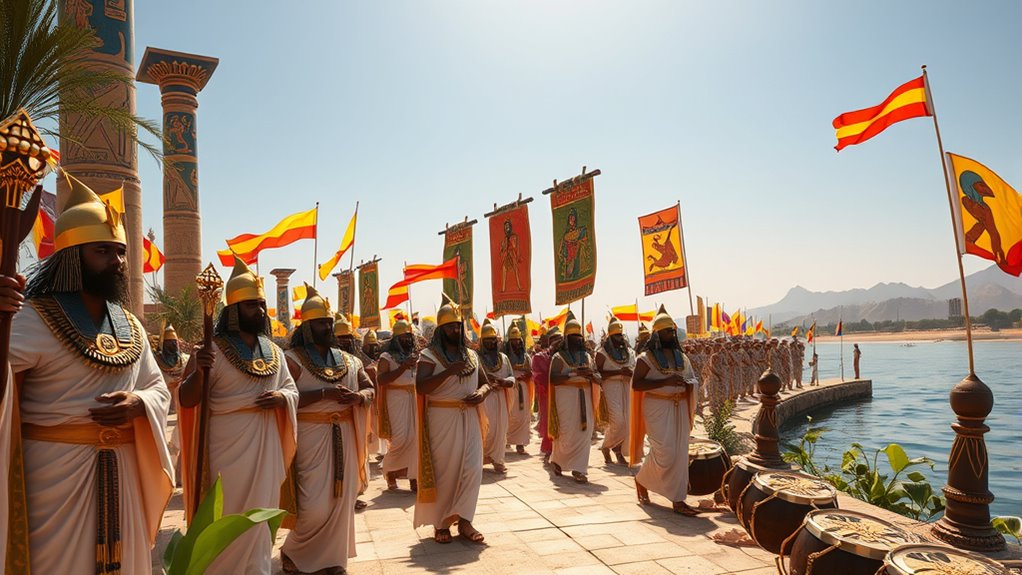
The Festival of Opet was an ancient Egyptian celebration that honored the connection between the pharaoh and the gods, particularly Amun-Ra. During this grand event, you witness a powerful display of religious devotion, where ancient rituals bring mythological symbolism to life, emphasizing the divine authority of the king. As you observe, you’ll see how the festival transforms the city into a sacred space, where every processional step echoes stories from myth and legend. The rituals performed are deeply rooted in mythological symbolism, representing the eternal cycle of renewal and kingship.
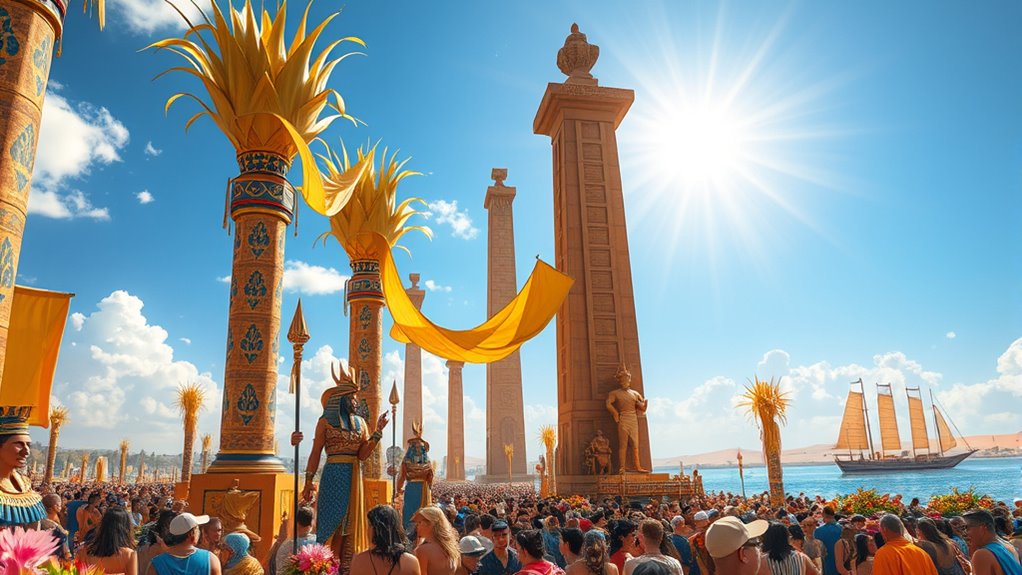
The core of the festival involves the ceremonial procession of the statue of Amun-Ra from the Temple of Karnak to the Temple of Luxor and back. This procession isn’t just a parade; it’s a reenactment of divine union and cosmic harmony. You can imagine how the priests, dressed in elaborate garments, carry out ancient rituals that have been passed down through centuries. These rituals are designed to invoke the gods’ blessings and reaffirm the pharaoh’s divine right to rule. The symbolism embedded in each step of the procession reflects the mythological themes of creation, rebirth, and eternal kingship. Every movement and gesture is meticulously choreographed to evoke the gods’ favor and to remind the people of the divine order sustaining Egypt.
The mythological symbolism surrounding the festival is rich and layered. For example, the sacred barques symbolize the sun god’s journey across the sky, embodying the idea of renewal each day. The festival’s rituals often include offerings, prayers, and rituals that depict the pharaoh’s divine role as the earthly embodiment of the gods. You’ll notice that the festival’s timing coincides with the inundation of the Nile, a natural event that itself symbolizes rebirth and fertility. This connection underscores the belief that the pharaoh’s power sustains the harmony of nature and the cosmos. By participating in or witnessing these ancient rituals, you experience a living history where mythological symbolism reinforces the divine authority of the king and the eternal cycle of renewal.
Throughout the festival, the atmosphere is charged with spiritual significance. The ancient rituals serve not only to honor the gods but also to reaffirm the social and cosmic order. As you observe, you see how every detail— from the sacred chants to the symbolic gestures— serves to connect the divine with the earthly domain. The Festival of Opet becomes a vivid reminder that kingship is intertwined with divine power, and renewal is an ongoing process rooted in myth and tradition. It’s a powerful celebration that encapsulates Egypt’s deep spiritual worldview, linking mythological symbolism with the enduring legitimacy of the pharaoh’s divine rule. Additionally, the festival highlights the importance of sustainable practices in maintaining the natural harmony that the rituals seek to preserve.
Frequently Asked Questions
How Did the Festival of Opet Originate Historically?
You might find that the Festival of Opet originated as a royal procession to reinforce sacred symbolism and divine kingship. During this event, statues of gods and the pharaoh were carried along a ceremonial route, symbolizing renewal and unity. This tradition likely began in the New Kingdom to legitimize the ruler’s divine authority, emphasizing the connection between the king, gods, and eternal life through elaborate rituals and sacred symbolism.
What Specific Rituals Were Performed During the Festival?
During the festival, you witness sacred boat processions where the statue of the god is carried along the Nile, symbolizing divine kingship. You see priests performing offerings to gods, presenting food, incense, and other gifts to honor them. These rituals reinforce the ruler’s divine authority and renewal of kingship. The processions and offerings create a powerful spiritual connection, celebrating the god’s presence and the king’s divine right to rule.
How Did the Festival Influence Ancient Egyptian Society?
Imagine yourself at the heart of a grand river, where a royal procession flows, carrying the hope of renewal and divine blessing. The festival’s religious symbolism reinforced the divine authority of kings, uniting society in shared reverence. As you witness the procession, you see how it strengthens social cohesion, affirms the divine right of rulers, and sustains the cultural fabric of ancient Egypt, inspiring loyalty and stability.
Were There Any Regional Variations in Opet Celebrations?
Yes, there were regional variations in Opet celebrations. You’ll notice that local customs influenced how cities like Thebes and other regions conducted the festival. These variations included differences in rituals, processions, and offerings, reflecting local traditions and beliefs. While the core themes of kingship and renewal remained consistent, these local variations allowed communities to express their unique cultural identities within the broader festival.
How Did the Festival Evolve Over Different Egyptian Dynasties?
You see that over different Egyptian dynasties, the Festival of Opet evolved through Dynastic transformations, adapting to changing political and religious contexts. Despite these shifts, ritual continuity remained central, preserving core ceremonies like processions and offerings. These enduring traditions helped reinforce the king’s divine authority, while regional variations occasionally emerged, reflecting local customs. Overall, the festival’s evolution highlights both adaptation and tradition across Egypt’s long history.
Conclusion
As you step into the vibrant heart of the Festival of Opet, you become part of a living tapestry woven with kingship and renewal. Like the Nile’s eternal flow, this celebration refreshes your spirit and links you to Egypt’s divine past. Feel the thunder of drums and the glow of lanterns, knowing you’re dancing in a sacred chorus that keeps the ancient kingship alive. Embrace this timeless rebirth—your soul’s own festival of renewal.

Under Kirsti’s gentle guidance, each insight and interpretation is thoughtfully crafted to uplift, educate, and encourage personal transformation. Whether you’re a dedicated seeker on a lifelong spiritual quest or taking your very first step into the mystical, we offer a wealth of knowledge and supportive community to illuminate your unique journey.