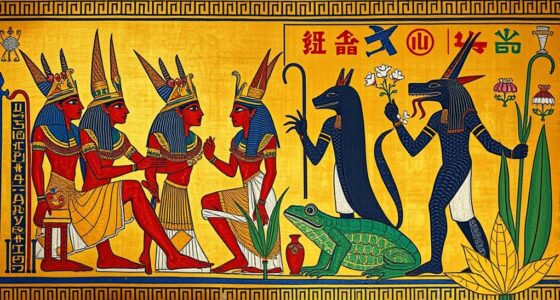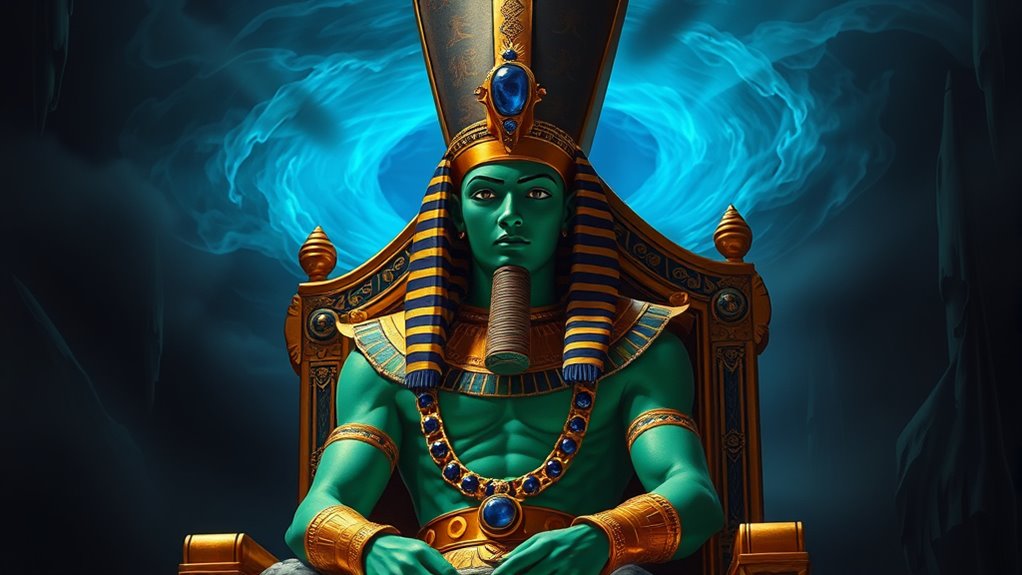

Osiris is the Egyptian god who rules the underworld and symbolizes death and rebirth. He oversees the journey of souls and presides over their trials, weighing hearts against the feather of Ma’at. His myth involves death at the hands of Set, followed by resurrection through Isis’s magic, representing hope and renewal. His story emphasizes life’s cyclical nature and the promise of eternal life. Keep exploring to uncover more about his powerful role in Egyptian beliefs.
Key Takeaways
- Osiris is the Egyptian god of the underworld, death, and rebirth, symbolizing life’s cyclical nature.
- As judge of the dead, he evaluates souls by weighing their hearts against Ma’at’s feather.
- His myth involves murder by Set and resurrection through Isis’s magic, embodying hope and renewal.
- Osiris’s worship and rituals focus on rebirth, emphasizing moral righteousness and eternal life.
- His legacy inspires concepts of afterlife, spiritual rebirth, and divine promise in Egyptian mythology.
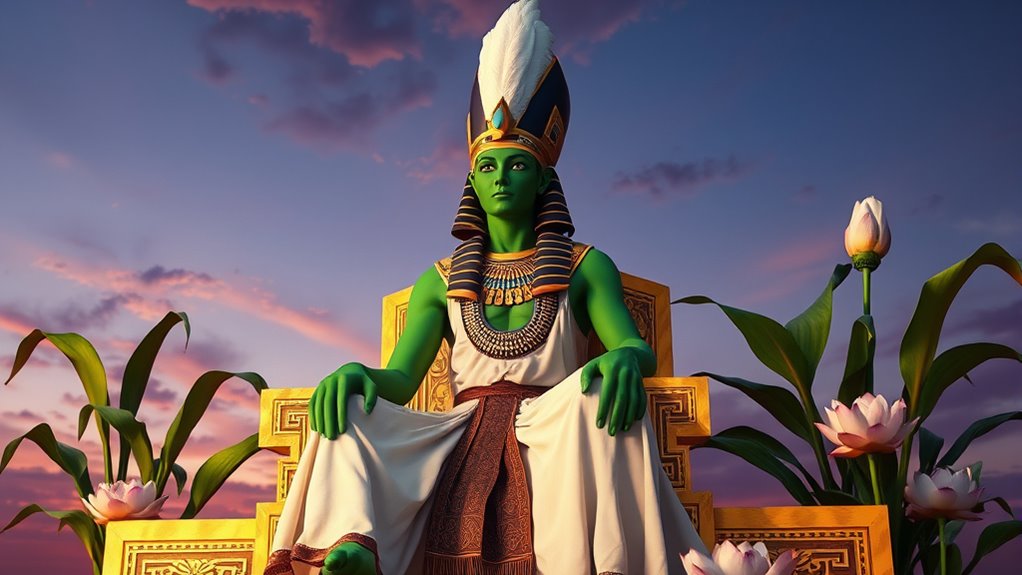
Osiris, one of the most important gods in ancient Egyptian mythology, rules over the underworld and symbolizes death and rebirth. As a central figure in ancient Egyptian mythology, Osiris embodies the cycle of life, death, and renewal that shapes their understanding of the afterlife. His story is deeply intertwined with the Egyptians’ afterlife beliefs, which emphasize eternal life for those who lead a righteous existence. You might find it fascinating how Osiris’s myth reflects their hope for resurrection and moral accountability, guiding the way they prepare for the afterlife.
Osiris symbolizes death, rebirth, and the eternal cycle of life in ancient Egyptian mythology.
In ancient Egyptian mythology, Osiris plays a essential role as the judge of the dead. When a person dies, their soul journeys through the underworld, where Osiris presides over their fate. Your soul’s journey involves passing through a series of trials, many of which are overseen by Osiris or his attendants. The Egyptians believed that your heart would be weighed against the feather of Ma’at, symbolizing truth and justice. If your heart is pure, you’re granted passage into the eternal paradise. If not, you face destruction or being devoured by Ammit, the devourer. This process underscores the importance of living a moral life aligned with truth, which directly influences your afterlife experience.
You should also understand that Osiris’s death and resurrection myth is at the heart of ancient Egyptian religion. According to the myth, Osiris was murdered by his brother Set, who wanted to seize his throne. You can see this story as a metaphor for the natural cycle of the seasons, with Osiris representing new life emerging after death. His resurrection, brought about by his wife Isis’s magic, symbolizes hope and renewal. This myth reassures you that death isn’t the end but rather a transition to another existence, reinforcing the Egyptians’ belief in eternal life. The story is further reinforced by the symbolism of rebirth, which played a crucial role in their religious rituals and beliefs.
Furthermore, Osiris’s significance extends beyond myth; he became a symbol of hope and spiritual rebirth. As you explore ancient Egyptian religious practices, you’ll notice that temples and rituals dedicated to Osiris emphasize rebirth and renewal. Priests and followers believed that participating in these rites could help guarantee their own resurrection. The myth and worship of Osiris served as a reminder that death is a part of life’s cycle, and through righteousness and devotion, you could attain everlasting life. His story continues to inspire the idea that life after death is not only possible but also a divine promise rooted in ancient Egyptian mythology and their profound afterlife beliefs.
Top picks for "osiri lord underworld"
Open Amazon search results for this keyword.
As an affiliate, we earn on qualifying purchases.
Frequently Asked Questions
How Did Osiris Become the Ruler of the Underworld?
You see, Osiris became the ruler of the underworld through mythological origins that emphasize his divine authority. After being betrayed and murdered by his brother Seth, Osiris was resurrected by his wife Isis, symbolizing renewal and divine power. His resurrection and subsequent reign reflect his divine authority over death and the afterlife, making him the ultimate judge and ruler in the mythological domain of the dead.
What Symbols Are Associated With Osiris?
You’ll find that Osiris is associated with symbols like the ankh, representing life, and the scepter, signifying authority. Ancient amulets often depict his scarab beetle, symbolizing rebirth, while sacred icons show him with the Atef crown and white crown of Upper Egypt. These symbols help protect and honor him, reflecting his role as ruler of the underworld and the cycle of resurrection.
How Does Osiris’s Story Relate to Egyptian Funeral Practices?
Your understanding of Osiris’s story reveals how it shapes Egyptian funeral rituals and afterlife beliefs. His myth emphasizes rebirth and eternal life, encouraging you to perform specific funeral rites to guarantee a safe passage into the afterlife. By honoring Osiris, you align with the cultural belief that proper rituals and offerings help the soul achieve immortality, reinforcing the importance of these practices in Egyptian society.
Are There Any Festivals Dedicated to Osiris Today?
Yes, there are modern celebrations dedicated to Osiris today. You might participate in contemporary rituals during certain Egyptian festivals or cultural events honoring ancient gods. These festivals serve as a powerful reminder of Egypt’s rich spiritual heritage, connecting you to history and tradition. Though less widespread, they evoke deep emotions, allowing you to experience the ancient reverence for Osiris and his role in rebirth and the afterlife.
How Is Osiris Depicted in Ancient Egyptian Art?
You see Osiris depicted in ancient Egyptian art through vivid hieroglyphic depictions and detailed ritual scenes. He’s often shown as a mummified figure with a white crown, holding a crook and flail, symbolizing kingship. In ritual scenes, you might notice him emerging from the Nile or participating in ceremonies. These images emphasize his role in resurrection and the afterlife, highlighting his importance in Egyptian religious beliefs.
Conclusion
You see how Osiris embodies both death and rebirth, ruling the underworld while guiding souls to the afterlife. His story reminds you that endings are also beginnings, that decay gives way to renewal. You recognize that in embracing both darkness and light, Osiris teaches you resilience, transformation, and hope. In his eternal cycle, you find a reflection of your own journey—facing fears, embracing change, and rising anew from every fall.