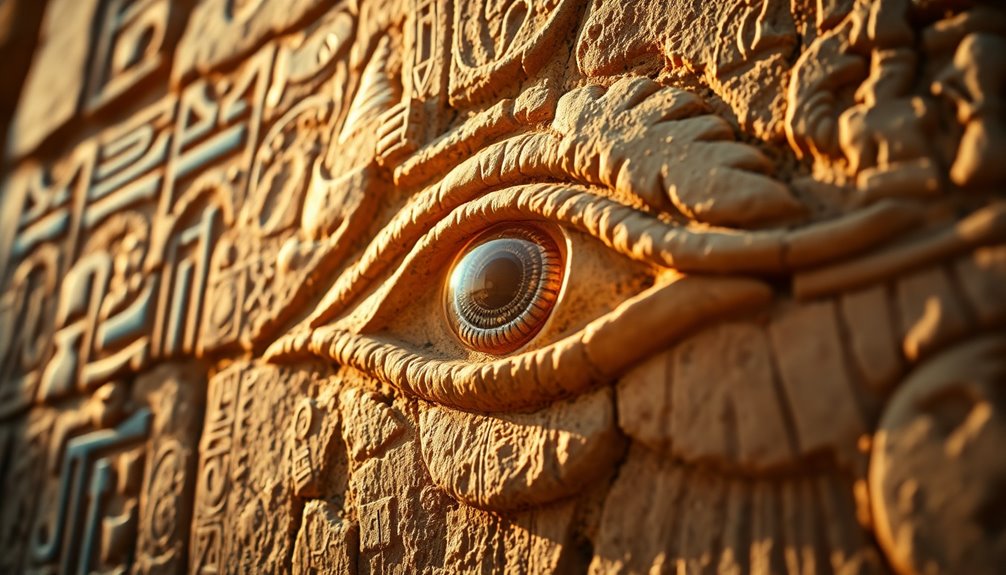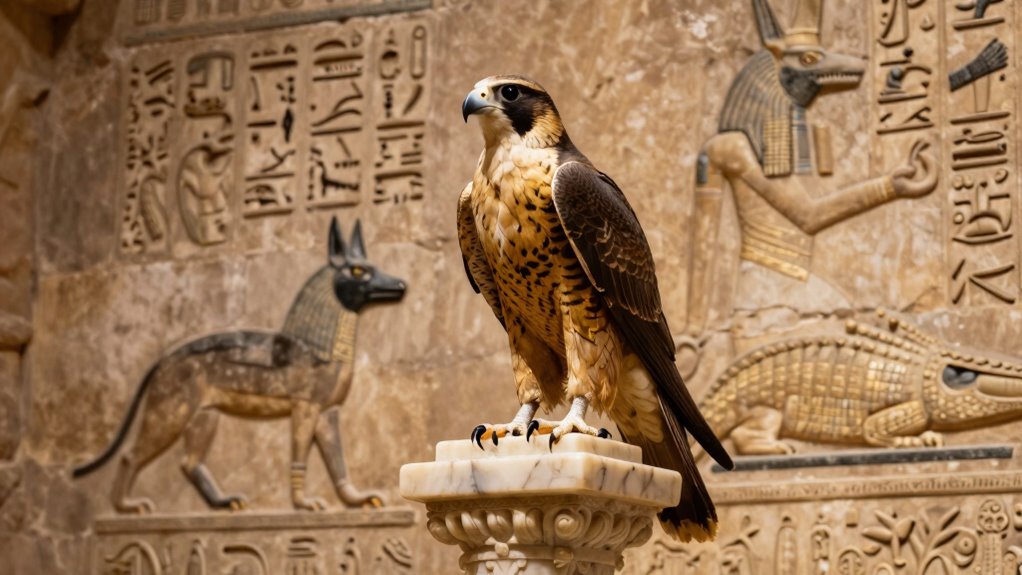

In Egyptian mythology, sacred animals symbolize divine qualities and act as messengers between humans and gods. You’ll notice animals like cats, crocodiles, lions, and ibises embody traits such as agility, strength, wisdom, and protection. They’re deeply connected to cosmic principles and reflect cultural values like justice and sovereignty. By understanding these symbols, you gain insight into how ancient Egyptians saw the divine in nature. Keep exploring to uncover the deeper spiritual meanings behind these fascinating creatures.

Get art and craft supplies delivered free with Prime
- Fast, free delivery on millions of items
- Prime Video, Amazon Music and more included
- Member-only deals all year
Key Takeaways
- Sacred animals embody divine qualities and cosmic principles, serving as symbols of gods and spiritual truths in Egyptian mythology.
- They act as intermediaries between humans and gods, representing divine attributes through their natural traits.
- Specific animals like cats, crocodiles, lions, and ibises are linked to gods, symbolizing qualities such as protection, strength, wisdom, and power.
- Animal symbolism reinforces cultural values like justice, sovereignty, and protection, reflecting divine virtues and cosmic order.
- Their natural behaviors and mythological roles deepen the spiritual connection between humans, nature, and divine principles.
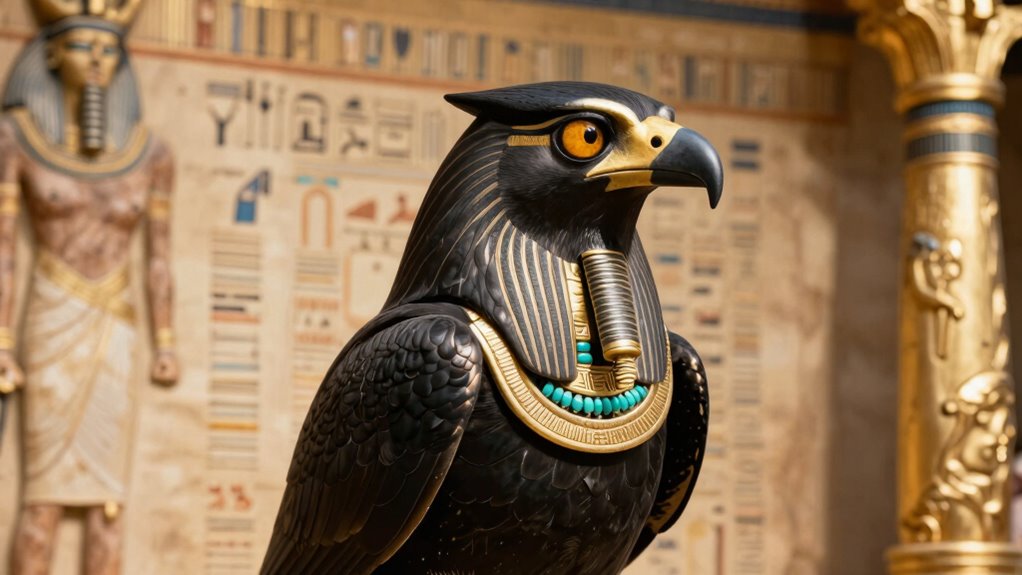
Have you ever wondered why certain animals held such special significance in Egyptian mythology? It’s because these creatures embodied deeper meanings through animal symbolism, acting as living representations of gods, virtues, and cosmic principles. Each sacred animal was more than just a living being; it was a mythological creature that conveyed specific qualities, powers, or connections to divine domains. Their significance went beyond the physical, serving as symbols that communicated complex spiritual truths to the people. When you see a falcon, for example, you’re not just observing a bird—you’re witnessing the embodiment of Horus, the sky god, symbolizing kingship, protection, and divine authority. The mythological creature significance here lies in the bird’s association with the sky and kingship, making it a powerful emblem in religious art and royal iconography.
Animals in Egyptian mythology symbolize divine qualities, embodying gods and cosmic principles beyond their physical form.
In Egyptian mythology, animals were often seen as intermediaries between humans and gods. Their unique traits made them ideal symbols of divine attributes. The cat, revered for its agility, independence, and protective nature, became a symbol of Bastet, goddess of home, fertility, and protection. Its animal symbolism highlights qualities like vigilance and nurturing, which the Egyptians believed were essential virtues. Similarly, the crocodile was linked to Sobek, representing strength, chaos, and primal power. Its mythological creature significance lies in its dual nature—both feared and worshipped—serving as a reminder of the balance between chaos and order in the universe. Additionally, these animals were often associated with specific divine qualities, which reflected their mythological roles and helped reinforce cultural values. Recognizing the animal symbolism in Egyptian mythology provides insight into how animals served as divine messengers and spiritual symbols.
The lion, with its regal presence and formidable strength, represented power and authority, often associated with gods like Sekhmet. Its animal symbolism conveyed fierce protection and divine wrath, making it a fitting symbol for kings and warriors. The lion’s symbolic role in Egyptian mythology exemplifies the way animals embodied divine characteristics that extended into leadership and justice. The lion’s majestic nature also reinforced the idea of divine sovereignty, emphasizing the connection between rulers and the gods. The ibis, linked to Thoth, the god of wisdom and knowledge, symbolizes intelligence and learning. Its long beak and distinctive appearance serve as visual cues for the importance of wisdom and communication in Egyptian culture. These sacred animals were not randomly chosen; their mythological creature significance was rooted in their natural behaviors and traits, which the Egyptians saw as reflections of divine qualities.
Understanding the meaning behind these animals reveals how profoundly Egyptian mythology intertwined with daily life, spirituality, and governance. Their animal symbolism was a way for people to connect with divine principles, seeing living creatures as sacred signs of greater cosmic truths. Each animal’s role in myth and religion reinforced the belief that nature itself was imbued with divine power, making these creatures revered symbols that continue to fascinate us today.
Egyptian mythology animal figurines
As an affiliate, we earn on qualifying purchases.
As an affiliate, we earn on qualifying purchases.
Frequently Asked Questions
How Did Animals Become Sacred in Egyptian Culture?
You see, animals became sacred in Egyptian culture through their animal symbolism and the sacred animal roles they played in religion and myth. Egyptians believed certain animals embodied divine qualities, so they revered them as divine messengers or representations of gods. By honoring these animals, they connected with the divine, ensuring protection, power, and spiritual harmony in their lives. Their sacred status reflected deep respect for nature’s spiritual significance.
Were Sacred Animals Only Associated With Gods or Also With Humans?
Think of sacred animals as bridges between worlds, embodying Animals’ spiritual significance. These creatures weren’t only linked to gods but also held meaning for humans, symbolizing qualities to aspire to or protect against. Sacred animal symbolism extended to everyday life, guiding individuals’ morals and actions. You see, these animals connected both divine and human spheres, serving as spiritual messengers, protectors, and symbols of divine attributes for all Egyptians.
Did the Symbolism of Sacred Animals Change Over Time?
Yes, the symbolism of sacred animals did change over time. Throughout Egyptian history, the animal symbolism evolution reflected cultural significance shifts, often influenced by political, religious, and societal changes. You’ll notice that meanings associated with animals like the lion or crocodile evolved, symbolizing different divine attributes or societal values across different periods. These shifts highlight how Egyptian culture continuously reinterpreted sacred animals to align with new spiritual and cultural ideals.
Were There Specific Rituals for Honoring Sacred Animals?
Yes, there were specific rituals for honoring sacred animals. You would participate in ritual practices like offerings, prayers, and ceremonies, reflecting animal symbolism deeply embedded in Egyptian culture. These rituals aimed to show reverence and seek protection or favor from the divine associated with each animal. Sacred animals were often mummified and kept in temples, emphasizing their spiritual significance and the importance of maintaining harmony between humans and the divine domain.
How Did Egyptians Protect and Care for Their Sacred Animals?
Protecting and caring for sacred animals was like guarding treasures, reflecting their divine role. You’d see animal worship in ritual practices, where offerings, prayers, and mummification honored these creatures. Egyptians kept them in temples or special enclosures, ensuring their safety and well-being. They believed these animals embodied gods, so they treated them with reverence, compassion, and meticulous care, ensuring their sacred status was preserved through daily rituals and respect.
Conclusion
You see, understanding the sacred animals of Egyptian mythology helps you grasp their deep spiritual connection. Imagine visiting a temple where a revered cat is worshipped, symbolizing protection and divine grace. Just like that cat, these animals weren’t just creatures—they embodied gods and held powerful meaning. Recognizing this, you’ll appreciate how ancient Egyptians wove animals into their daily lives, making their beliefs both tangible and enduring.
Halloween Picks
halloween
As an affiliate, we earn on qualifying purchases.