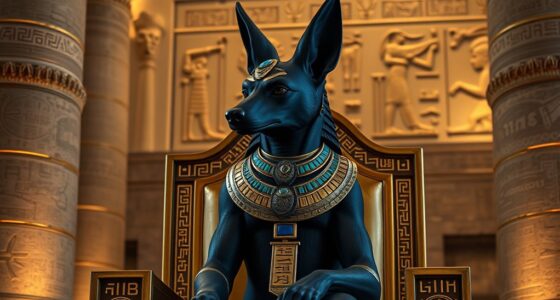

In Egyptian belief, solar symbolism shows that the sun is the divine source of life, power, and renewal. It represents the eternal cycle of death and rebirth, symbolizing hope and spiritual growth. The sun’s journey influences daily rituals, kingship, and art, emphasizing the connection between the divine and natural worlds. This powerful imagery underscores how the sun’s light sustains and energizes everything. If you’re curious, exploring further reveals the deeper significance behind these symbols and their role in Egyptian culture.

Get art and craft supplies delivered free with Prime
- Fast, free delivery on millions of items
- Prime Video, Amazon Music and more included
- Member-only deals all year
Key Takeaways
- The sun symbolizes life, power, and divine authority, central to Egyptian cosmology and kingship.
- Solar deities like Ra, Horus, and Atum embody different aspects of the sun’s divine energy.
- Sun worship influenced religious practices, temple alignment, and festivals celebrating solar cycles.
- Sun symbolism in art and architecture reflects themes of rebirth, eternal life, and cosmic order.
- The sun represents divine sustenance and the interconnectedness of natural and spiritual worlds.

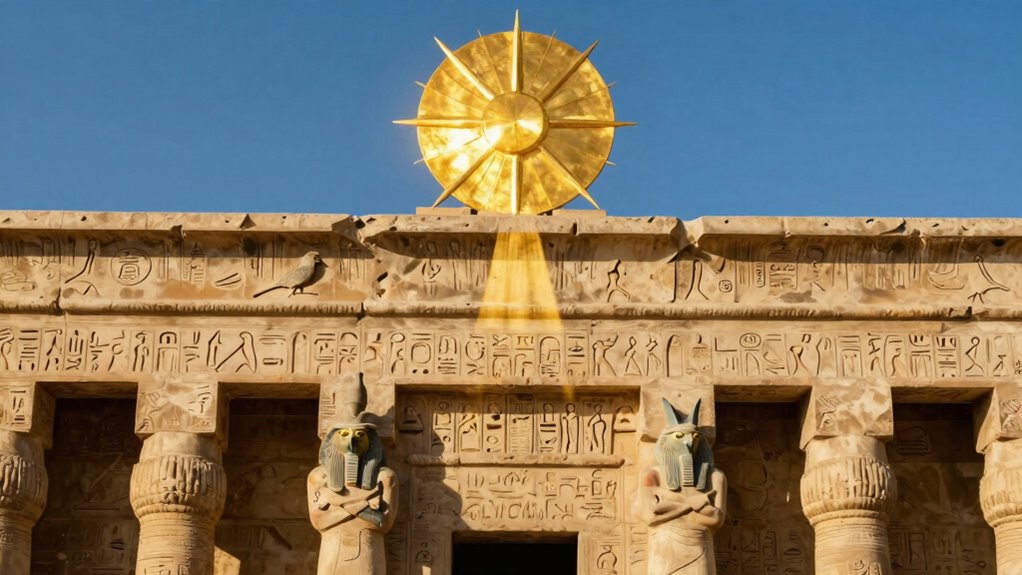
The sun held a central place in Egyptian belief, symbolizing life, power, and divine authority. Its radiant presence was seen as the source of all vitality, fueling both the natural world and the spiritual domain. As you explore Egyptian mythology, you’ll notice how solar deities played a pivotal role in shaping their understanding of the universe. These gods, like Ra, Horus, and Atum, embodied different aspects of the sun’s power, and their stories reveal a deep respect for its life-giving energy. Sun worship wasn’t just a religious practice; it was a fundamental part of daily life, guiding rituals and influencing kingship. The Egyptians believed that the sun’s journey across the sky mirrored the cycle of life, death, and rebirth, which is why they built temples and sacred sites aligned with its movement. You might see how solar deities were often depicted with falcon heads or sun disks, emphasizing their connection to the sky and the divine. Ra, considered the supreme sun god, was viewed as the creator of all life, and his daily voyage across the heavens symbolized the eternal cycle of renewal. The pharaohs, seen as divine representatives of Ra, used sun symbolism to legitimize their rule, asserting that their authority was granted by the divine power of the sun god. Sun worship in Egypt extended beyond mythology; it shaped their art, architecture, and religious practices. Temples like the Sun Temple at Heliopolis were designed to honor the sun god, allowing worshipers to connect with the divine energy of the sun. During specific festivals, like the Feast of the New Year, the rising of the sun marked a time of renewal and hope, reinforcing the idea that the sun’s presence was essential for cosmic and societal order. You’ll find that solar symbolism also permeated their funerary practices, as the deceased were often associated with the sun’s journey through the afterlife, guaranteeing rebirth and eternal life. The concept of the sun as a divine force is woven into almost every aspect of Egyptian culture, illustrating how integral sun worship was to their worldview. It’s not just that they revered the sun as a celestial body; they saw it as a fundamental force that sustains, empowers, and connects everything in the universe. This deep-rooted belief in solar deities and their significance highlights how the Egyptians understood the cosmos—interconnected, divine, and inextricably linked to the sun’s eternal light. Additionally, their solar symbolism influenced the development of their religious iconography and the way they visualized divine authority. The importance of the solar cycle in Egyptian culture underscored their understanding of natural and spiritual renewal, reinforcing their connection to the divine forces governing their world.
As an affiliate, we earn on qualifying purchases.
Frequently Asked Questions
How Did Solar Symbolism Influence Egyptian Daily Life?
Solar symbolism deeply influenced your daily life by shaping your participation in solar festivals and reinforcing the importance of the sun god, Ra. You might have celebrated the sunrise or traveled in a sun chariot during festivals, symbolizing divine power and renewal. These rituals and symbols kept the sun’s significance alive, reminding you of its essential role in sustaining life, guiding your actions, and honoring the gods every day.
Were Solar Symbols Used in Egyptian Architecture and Art?
Solar symbols shine brightly in Egyptian architecture and art, like the sun itself. You’ll see ancient solar myths reflected in grand temples, where sun disks and rays adorn walls and columns. Solar symbolism in jewelry also echoes this reverence, with sun disks and scarabs symbolizing rebirth and power. These artifacts and structures serve as eternal reminders of the sun’s essential role, making the divine tangible and inspiring awe in all who behold them.
Did Solar Beliefs Vary Across Different Egyptian Regions?
Yes, solar beliefs did vary across Egyptian regions, influencing local practices and interpretations of solar symbolism. You’ll notice differences in regional solar festivals, with some areas emphasizing specific deities or solar aspects. These regional interpretations shaped unique rituals, art, and architecture, reflecting local traditions and beliefs. The diversity in solar symbolism highlights how Egyptians adapted their spiritual practices to their environment, creating a rich tapestry of solar-related cultural expressions throughout ancient Egypt.
How Did Solar Deities Evolve Over Egypt’s History?
You see, solar deity transformations evolved markedly throughout Egypt’s history, reflecting shifts in religious beliefs and political powers. During ancient sun worship, gods like Ra were central, symbolizing the sun’s life-giving force. Over time, these deities merged with others, like Amun, evolving into complex forms. This progression highlights how Egyptian civilization continually redefined their solar gods, emphasizing the sun’s eternal importance and adapting beliefs to changing cultural landscapes.
What Rituals Were Associated With Solar Worship in Egypt?
You participate in vibrant solar festivals, where priests perform solar rituals at dawn, emphasizing rebirth and renewal. These rituals often include offerings, prayers, and processions honoring Ra’s journey across the sky. During these celebrations, you might witness the raising of the scarab emblem or recitation of hymns, all designed to guarantee the sun’s continued blessing. Such ceremonies reinforce the divine connection between the pharaoh, the people, and the life-giving power of the sun.
Conclusion
As you explore Egyptian solar symbolism, you begin to see how the sun’s radiant power shaped their beliefs and myths. But beneath these shining symbols lies a deeper mystery—what secrets does the eternal sun hold about life, death, and rebirth? Imagine the sun’s journey across the sky, its light revealing hidden truths, waiting for you to uncover its true meaning. The story isn’t finished yet; it’s just beginning.
Halloween Picks
halloween
As an affiliate, we earn on qualifying purchases.