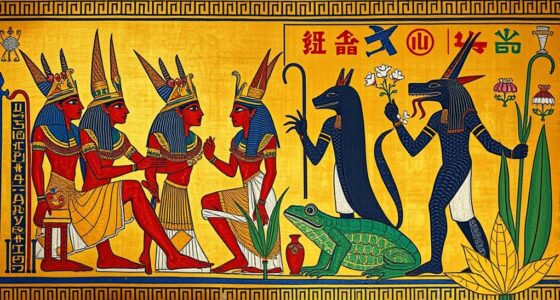
The weighing of the heart ceremony is an ancient Egyptian ritual where your heart is weighed against the feather of Ma’at, representing truth and justice. If your heart is light and pure, you’re judged worthy to enter the afterlife of eternal happiness. If it’s heavy with sins, the goddess Ammit consumes your soul, condemning you to oblivion. This profound test highlights how morality and actions in life shape your spiritual destiny—if you want to learn more, keep exploring.
Key Takeaways
- The ceremony evaluates the soul’s morality by weighing the heart against the feather of Ma’at.
- Anubis oversees the process, with the heart’s size reflecting ethical life and spiritual purity.
- A balanced heart signifies righteousness, leading to eternal life; an unbalanced heart results in condemnation.
- Ammit consumes the soul if the heart is heavier than the feather, causing a second death.
- The ritual emphasizes morality’s importance in determining one’s fate in the afterlife.

The Weighing of the Heart Ceremony is a central ritual in ancient Egyptian belief, where the soul’s morality is judged after death. As you navigate this sacred process, you become part of a spiritual journey that determines your fate in the afterlife. The Egyptians believed that your heart holds the record of your actions, thoughts, and intentions during your lifetime. In this ritual, your heart is weighed against the feather of Ma’at, the goddess of truth, justice, and order. This act of moral judgment isn’t just about weighing physical weight; it’s a profound test of your spiritual integrity. The concept of spiritual symbolism shines here, as the heart’s size and content symbolize your ethical life. If your heart is light and pure, it aligns with the feather, signifying righteousness and harmony with Ma’at’s principles. If it’s heavy with sin, it tips the scales, marking a life filled with wrongdoing.
During the ceremony, you stand before the gods, knowing that the outcome will determine whether your soul moves forward into eternal bliss or faces eternal oblivion. The weighing process involves a sacred balance, operated by the deity Anubis, who carefully assesses the heart and the feather. A positive judgment affirms that you have led a morally upright life, and therefore, your soul is deemed worthy of paradise. Conversely, if your heart is judged to be heavier than the feather, the goddess Ammit, the Devourer, awaits. Her role is to consume the soul of those who have failed the moral test, condemning them to a second death in the underworld. This act underscores the importance of moral judgment in Egyptian spirituality: your actions in life directly impact your afterlife experience.
This ritual encapsulates the core spiritual symbolism of Egyptian culture—that morality isn’t just a human virtue but a cosmic principle that influences your destiny. Every element in the ceremony emphasizes the importance of living a just and truthful life. The heart, as the seat of morality, becomes a mirror of your soul’s purity or corruption. The gods’ scrutiny reminds you that your life’s choices resonate beyond the physical realm, affecting your spiritual eternity. The Weighing of the Heart isn’t merely a judgment; it’s a profound affirmation that morality and spiritual integrity are key to achieving eternal life. It serves as a reminder that your deeds, intentions, and values are essential in shaping your destiny in the afterlife. Additionally, the use of symbols and rituals in this ceremony highlights the Egyptians’ deep belief in the interconnectedness of physical actions and spiritual consequences.
Top picks for "weigh heart ceremony"
Open Amazon search results for this keyword.
As an affiliate, we earn on qualifying purchases.
Frequently Asked Questions
How Did the Ceremony Influence Ancient Egyptian Society?
You see, the ceremony shaped Egyptian society by emphasizing the importance of funeral rituals, encouraging people to live morally upright lives. It reinforced the social hierarchy, as only the wealthy and powerful could afford elaborate burial practices. This belief motivated individuals across all classes to uphold justice and righteousness, knowing their afterlife depended on their actions. Ultimately, it kept societal order and spiritual harmony central to Egyptian culture.
Were There Variations of the Ceremony Across Different Regions?
You’d be amazed to learn that the ceremony varied so wildly across regions that it could almost seem like different worlds! Regional variations and religious influences shaped how the weighings were performed, with some areas emphasizing specific gods or rituals. These differences reflect the rich diversity of beliefs in ancient Egypt, showing how local customs and religious influences transformed this pivotal ceremony into unique experiences across the land.
What Materials Were Used for the Weighing Scales?
You notice that the balancing methods for the scales involved precise techniques to guarantee accuracy. The scale materials often included wood or metal, with the weighing pans made of copper or bronze. These durable materials provided stability and reliability during the ceremony. The ancient Egyptians valued craftsmanship, so the scales were carefully constructed, reflecting the importance of justice and truth in their judgment process.
How Was the Heart Prepared for the Ceremony?
You prepare your heart for the ceremony through a process of heart purification, which involves cleansing rituals to remove impurities. Before the weighing, you might offer ritual offerings to the gods, seeking their favor and protection. These acts symbolize your readiness and purity, ensuring your heart is properly prepared for judgment. By doing so, you demonstrate your sincerity and respect, aligning yourself with the divine standards required for a favorable outcome.
Are There Similar Practices in Other Ancient Cultures?
They say, “What’s sauce for the goose is sauce for the gander,” and many ancient cultures had similar practices. In funeral rituals across civilizations like Greece, Mesopotamia, and China, they used symbolic offerings and rites to honor the dead and guarantee safe passage to the afterlife. These practices emphasize respect and remembrance, showing that caring for the soul transcends time, connecting us through shared beliefs and rituals.
Conclusion
As you step into the ancient chamber, you notice the scale waiting silently, almost as if it’s been there forever. The feather of Ma’at glimmers softly, and you realize that, just like the moments in your life, everything hinges on balance. In this quiet, timeless space, it feels as though the universe itself holds its breath—for your fate hangs delicately in the balance, guided by justice and unseen hands.