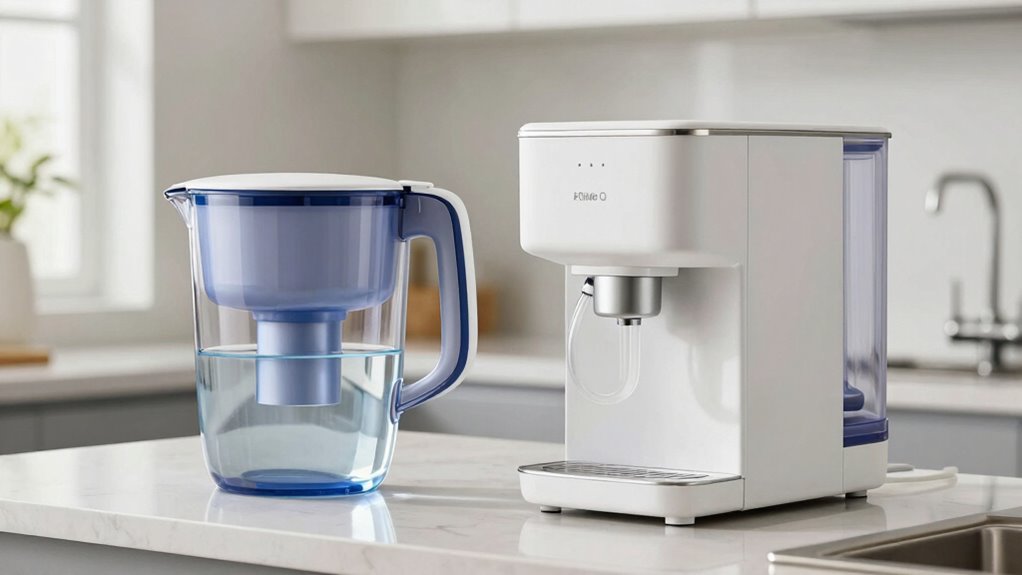

Countertop water filters are easy to set up and usually just sit on your counter, using activated carbon to improve water quality by removing chlorine, sediment, and some contaminants. Reverse osmosis systems offer a higher level of purification, removing a wider range of impurities like heavy metals and dissolved salts, but they involve more complex installation and maintenance. If you’re curious about which option suits your needs best, you’ll find detailed differences as you explore further.

Get art and craft supplies delivered free with Prime
- Fast, free delivery on millions of items
- Prime Video, Amazon Music and more included
- Member-only deals all year
Key Takeaways
- Countertop filters are simple to install, usually just placing on the counter and connecting to a faucet, while RO systems require plumbing modifications.
- RO systems remove a broader range of impurities, including heavy metals and dissolved salts, offering higher water purity than countertop filters.
- Countertop filters are low-maintenance with filter replacements every few months; RO systems need more frequent part changes and system flushing.
- RO systems typically cost more upfront and are more complex to install, often requiring professional help, unlike the easy setup of countertop filters.
- The choice depends on water quality needs, with RO systems better suited for heavily contaminated water and countertop filters for basic purification.
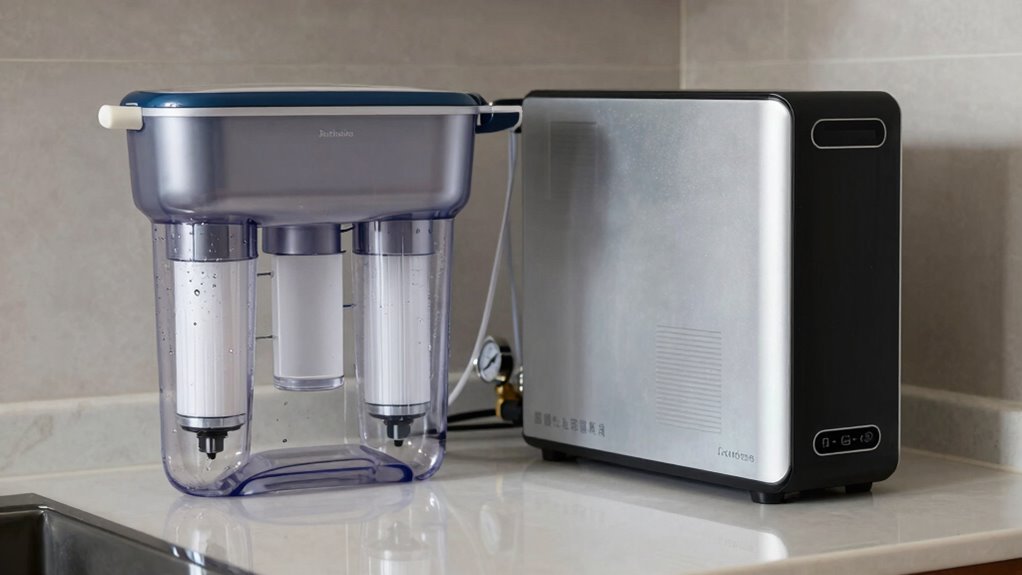
Are you wondering whether a countertop water filter or a reverse osmosis system is the better choice for your home? Both options aim to improve water quality, but they do so in different ways and with different levels of effort. When considering water purification, it’s important to understand how each system works and what’s involved in their installation process. A countertop water filter is typically straightforward to set up, often just requiring you to place it on your countertop and connect it to your faucet. It’s a plug-and-play solution that doesn’t usually involve any plumbing modifications. This makes it ideal if you want a quick, easy way to improve your water quality without much hassle. You’ll find that many models use activated carbon filters to remove chlorine, sediment, and certain contaminants, providing cleaner water for drinking and cooking. On the other hand, a reverse osmosis (RO) system involves a more complex installation process. It usually requires mounting under your sink and connecting to your plumbing, which might involve drilling and some basic plumbing skills. The process can take more time and might be more costly if you hire a professional to install it. Once set up, an RO system uses a semi-permeable membrane to remove a broad spectrum of impurities, including heavy metals, dissolved salts, and many chemicals. This results in water that’s notably purer than what most countertop filters can provide. While the installation process for an RO system is more involved, it offers a higher level of water purification, which is especially important if your local water supply contains contaminants that simpler filters can’t handle. Additionally, water filtration systems can help reduce indoor air pollution when integrated with ventilation solutions, contributing to healthier indoor environments. It’s also important to consider the cost of maintenance, as upkeep can impact your long-term satisfaction with the system. You should also consider your maintenance routine. Countertop filters generally require filter replacements every few months, which is simple and inexpensive. Reverse osmosis systems, however, might need more frequent filter and membrane changes, along with periodic system flushing, making maintenance a bit more involved. To ensure optimal performance, it’s essential to follow the manufacturer’s guidelines for system upkeep. It’s worth noting that some systems incorporate additional filtration stages to further enhance water quality. Ultimately, your choice depends on your budget, your water quality needs, and how much effort you’re willing to put into installation and upkeep. If you want quick, easy-to-install water purification, a countertop filter is your best bet. But if you’re seeking the highest level of filtration and don’t mind a more involved setup, investing in an RO system could be worth it. Both systems can considerably improve your water quality, but weigh the installation process and your specific water needs to decide which suits your home best.
countertop water filter with activated carbon
As an affiliate, we earn on qualifying purchases.
As an affiliate, we earn on qualifying purchases.
Frequently Asked Questions
Which System Is More Energy-Efficient for Daily Use?
A countertop water filter is more energy-efficient for daily use because it consumes less energy, reducing overall energy consumption. Reverse osmosis systems require more power to operate their pumps and filters, which increases energy use and costs over time. So, if you’re focused on cost efficiency and minimizing energy consumption, a countertop water filter is the better choice for everyday use. It offers a simpler, more energy-conscious solution.
Are There Any Health Risks Associated With Reverse Osmosis Systems?
Think of reverse osmosis systems as a double-edged sword—while they strip away contaminants like a diligent gatekeeper, they can also sweep away essential minerals, sparking health concerns. Mineral loss may lead to issues like weakened bones or electrolyte imbalance. However, if you’re cautious and supplement your diet, you can enjoy clean water without risking your health. Just stay aware of potential mineral depletion and consider re-mineralization options.
How Often Do Filters Need Replacement in Each System?
You should replace filters in countertop water filters every 2 to 6 months, depending on usage and water quality, to guarantee proper filter maintenance and system longevity. Reverse osmosis systems typically require filter replacements every 6 to 12 months, with the membranes lasting up to 2-3 years. Regularly checking and maintaining filters keeps your system efficient, prolongs its lifespan, and guarantees clean, safe drinking water.
Can These Systems Remove Specific Contaminants Like Lead or Chlorine?
Yes, both systems can remove specific contaminants like lead and chlorine, but their effectiveness varies based on contaminant specificity. Reverse osmosis systems are highly effective at eliminating lead, chlorine, and other heavy metals, while countertop water filters may target chlorine and certain sediments more efficiently. Regular filter maintenance is essential to guarantee maximum removal, especially for contaminants like lead, which require filters with specific capabilities.
What Is the Typical Lifespan of Each Filtration System?
Think of your filtration system as a trusty garden tool—its lifespan depends on proper care. Countertop filters typically last one to two years, while reverse osmosis units can serve you up to three years, sometimes longer. Regular maintenance schedules, like changing filters, keep them humming smoothly. Installation complexities vary: countertop filters are simple plug-and-play, but reverse osmosis systems need more involved setup, ensuring your water stays pure and your system lasts longer.
Conclusion
Choosing between a countertop water filter and a reverse osmosis system is like picking between a gentle stream and a powerful river—each offers unique benefits. If simplicity and convenience are your priorities, a countertop filter is your trusty companion. But if you’re after pure, crystal-clear water, a reverse osmosis system is a mighty force of filtration. Whichever you choose, remember, clean water is the foundation of a healthy life—your well-being depends on it.
Halloween Picks
halloween
As an affiliate, we earn on qualifying purchases.