To guarantee healthy indoor air, focus on monitoring CO2, VOCs, and PM2.5 levels. High CO2 indicates poor ventilation, so keeping it below 800 ppm helps maintain fresh air. Tracking VOCs reveals harmful chemicals from household products, while monitoring PM2.5 alerts you to fine particles that can impact your lungs. Understanding these metrics helps you improve air quality effectively. Keep exploring to discover how these measurements can protect your health and comfort.
Key Takeaways
- CO2 levels indicate ventilation efficiency and comfort; high readings suggest poor air exchange requiring improved ventilation.
- VOC measurements reveal emissions from household products, helping identify sources and reduce exposure to harmful chemicals.
- PM2.5 levels assess fine particle pollution from indoor activities and outdoor pollution, impacting respiratory health.
- Monitoring all three metrics offers a comprehensive view of indoor air quality and guides effective intervention strategies.
- Prioritizing sensors for CO2, VOCs, and PM2.5 ensures a well-rounded approach to maintaining a healthy indoor environment.
Why Indoor Air Quality Matters for Your Health
Indoor air quality directly impacts your health, yet many people underestimate its importance. Poor air quality can cause headaches, fatigue, and respiratory issues. By using air purification devices, you can substantially reduce airborne pollutants and allergens, creating a healthier environment. Allergen reduction is especially vital if you suffer from allergies or asthma, as it minimizes triggers like dust, pollen, and pet dander. Clean air helps your body function at its best and improves sleep quality. Investing in air quality monitors allows you to identify problem areas and maintain a safe indoor environment. Understanding the significance of high-quality filtration in air purifiers can further enhance your efforts. Additionally, focusing on natural filtration systems can promote a more sustainable and eco-friendly approach to maintaining clean indoor air. Incorporating air quality metrics into your routine can help you track improvements and adjust your strategies effectively. Regularly assessing airborne pollutants enables you to make informed decisions about your indoor air management. Recognizing the impact of indoor environmental factors can help you implement more comprehensive air quality improvements. When you prioritize air purification and allergen reduction, you’re actively protecting your health and well-being, making your home a safer, more comfortable space for you and your loved ones.
Understanding CO2 Levels and How They Affect Ventilation
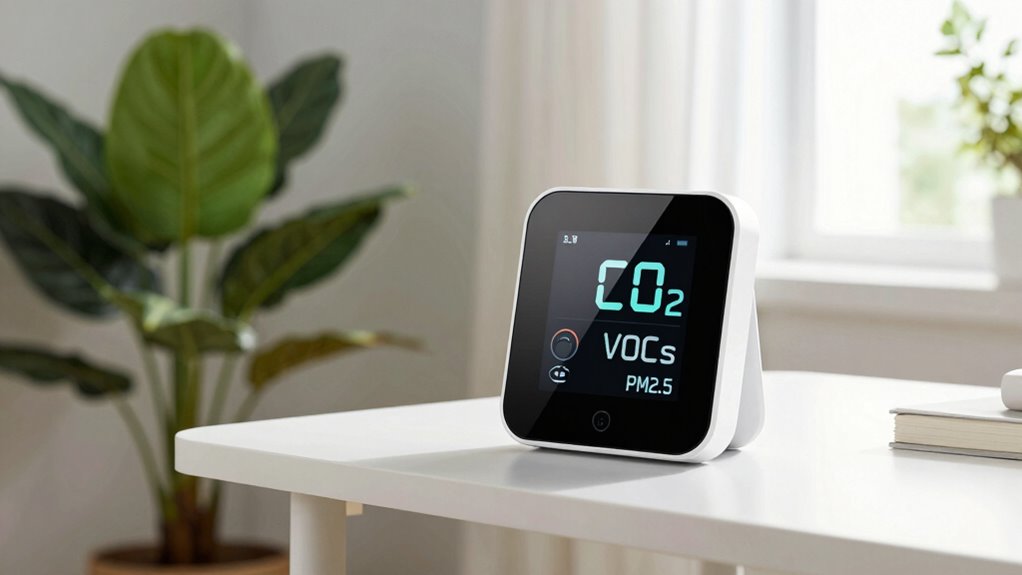
Since carbon dioxide (CO2) is a natural byproduct of breathing, high CO2 levels indoors can quickly indicate inadequate ventilation. Elevated CO2 signals that your space isn’t exchanging air effectively, which can impact comfort and health. To improve air exchange, consider implementing ventilation strategies like opening windows or upgrading HVAC systems. Monitoring CO2 levels helps you identify when ventilation needs adjustment. Proper ventilation is essential to prevent air quality deterioration and maintain a healthy indoor environment. Indoor air quality can be optimized by maintaining appropriate CO2 concentrations, ensuring a healthier environment overall. Regularly checking ventilation effectiveness allows for timely adjustments and better indoor air management. Additionally, understanding air exchange rates can help you quantify how well your space is ventilated.
What Are VOCs and Why Should You Monitor Them?
VOCs, or volatile organic compounds, are gases released from everyday household products and building materials. They can pose health risks, especially with long-term exposure, including headaches and respiratory issues. Monitoring VOC levels helps you maintain a healthier indoor environment and catch potential problems early.
What Are VOCs?
Have you ever wondered what invisible substances could be lingering in your home’s air? VOCs, or Volatile Organic Compounds, are gases emitted by many household items and activities. These compounds originate from sources like cleaning products, paints, furniture, air fresheners, and cooking. VOC measurement helps you understand the levels of these harmful gases and assess indoor air quality. Monitoring VOCs is essential because even low concentrations can affect your health over time. Recognizing VOC sources enables you to reduce exposure and improve your indoor environment. Indoor air pollutants can also include other harmful substances like particulate matter, which further impact air quality and health. Additionally, understanding cryptid sightings and other folklore phenomena can enhance awareness of how cultural stories influence perceptions of the unknown.
Health Risks Involved
Understanding the health risks linked to VOCs highlights why monitoring their levels in your home matters. VOCs can exacerbate indoor allergens, making allergy symptoms worse, and contribute to mold growth by providing a food source for mold spores. Prolonged exposure to high VOC levels may cause headaches, dizziness, respiratory issues, or even more severe health problems over time. Children, the elderly, and those with respiratory conditions are especially vulnerable. When VOCs accumulate, they can create a stuffy, unhealthy environment, increasing the risk of indoor air pollution. Monitoring VOCs is a fundamental step toward improving your indoor air quality and overall well-being. Additionally, air quality monitoring can help identify sources of VOCs and prevent long-term health issues. Being aware of indoor air pollutants helps you take proactive measures to reduce exposure and improve your living environment. Regular ventilation practices can significantly reduce VOC concentrations and improve overall air quality in your home. Incorporating proper filtration systems can further enhance air quality by capturing VOCs and other pollutants effectively. Enhancing your knowledge about air quality standards can guide you in maintaining healthier indoor environments.
Monitoring Benefits
Monitoring VOCs offers a clear advantage by helping you identify and control harmful airborne chemicals before they reach dangerous levels. By tracking VOC levels, you can optimize your air purifier benefits and implement effective ventilation strategies. This proactive approach guarantees better indoor air quality and reduces health risks. When you monitor VOCs, you gain insights into sources like cleaning products, paints, or furniture emissions, allowing you to take targeted actions. Regular monitoring also helps you maintain a healthier environment, especially in spaces with poor airflow or high chemical use. Additionally, understanding VOC levels empowers you to make informed decisions that protect your health and improve comfort. Indoor air quality monitoring can also help identify unexpected chemical sources that might otherwise go unnoticed, supporting the creation of cozy spaces with wellness in mind. Staying aware of VOC levels can also assist in adhering to air quality guidelines, ensuring a safer indoor environment and promoting overall well-being. Recognizing these chemical emissions is essential for maintaining a safe and comfortable living space.
The Importance of Tracking PM2.5 Particles Indoors

Tracking PM2.5 particles indoors is crucial because these tiny airborne pollutants can considerably impact your health. PM2.5 particles are small enough to penetrate deep into your lungs and even enter your bloodstream, increasing the risk of respiratory and cardiovascular issues. Monitoring these particles helps you identify when air quality drops, so you can improve particle filtration and maintain a healthier environment. Effective air purification systems target PM2.5, removing harmful particles and reducing health risks. By tracking PM2.5 levels, you gain insight into how indoor activities, cooking, or outdoor pollution affect your air quality. This knowledge empowers you to take action, whether by enhancing filtration, increasing ventilation, or deploying air purifiers to keep your indoor air safe and clean. Understanding air quality metrics allows you to make better decisions for a healthier indoor space. Incorporating air quality standards into your monitoring strategy can further refine your approach to indoor air health.
How to Choose the Best Indoor Air Quality Monitor for Your Home or Office
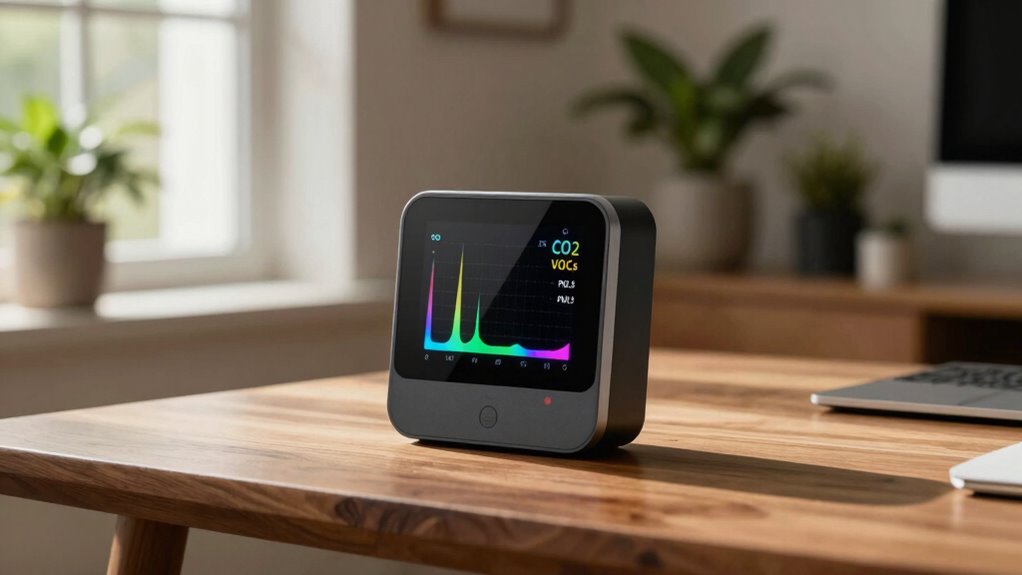
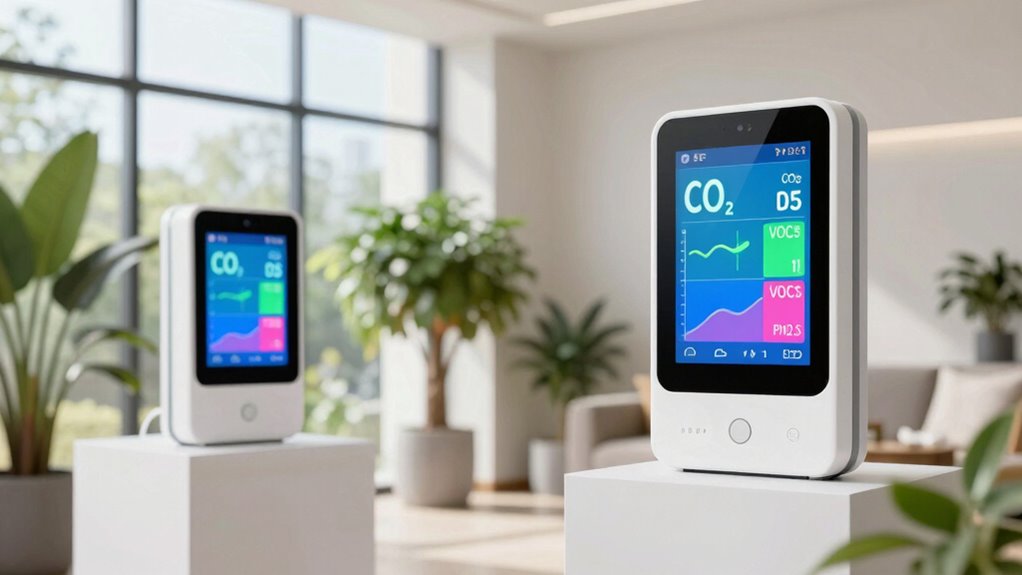
Choosing the right indoor air quality monitor involves considering several key factors to guarantee it meets your specific needs. First, evaluate the types of air quality sensors it offers—look for monitors that track CO2, VOCs, and PM2.5 to get a thorough view. Next, think about monitor placement; ensure it’s easy to position in common areas without interference. Consider connectivity options like Wi-Fi for real-time data access. Check the device’s display and alert features to stay informed at a glance. Also, assess power sources and battery life for continuous monitoring.
- Compatibility with your smart home system
- Ease of calibration and maintenance
- Sensor accuracy and response time
- Data logging and analysis options
- Customer support and warranty
How to Read and Interpret Your Air Quality Data
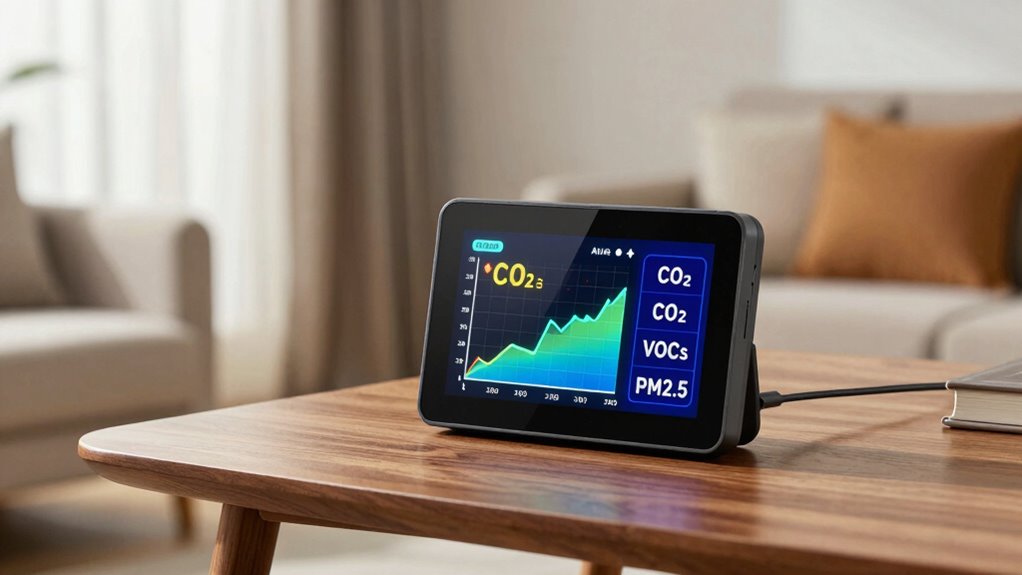
When you look at your air quality data, you’ll want to understand what the numbers mean for your environment. Recognizing safe levels helps you know when action is necessary, and noticing changes alerts you to potential issues. By learning how to interpret these readings, you can keep your indoor air healthy and safe.
Understanding Your Readings
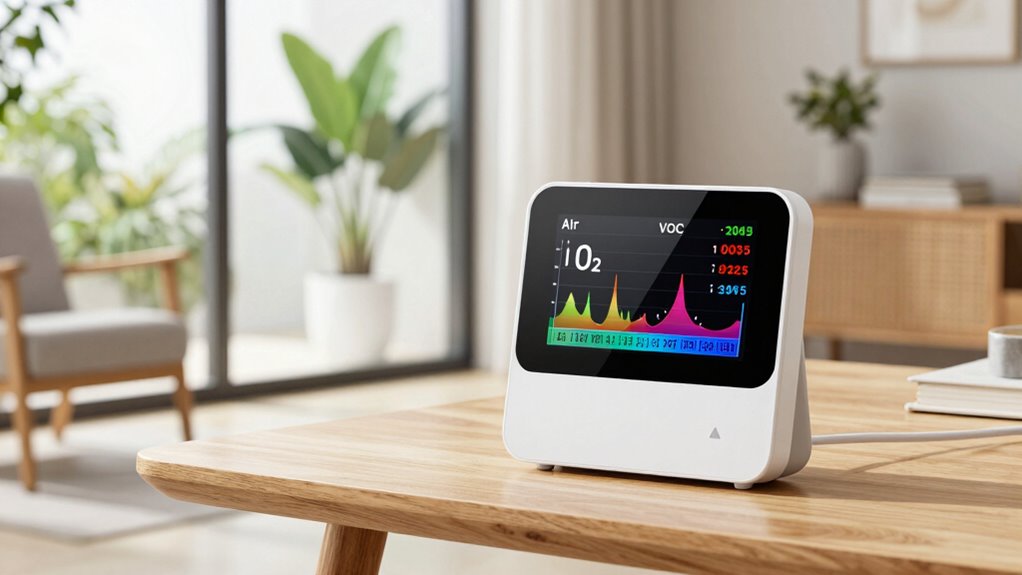
Understanding your air quality readings is essential for maintaining a healthy indoor environment. Accurate interpretation depends on ensuring your sensor is properly calibrated, which helps avoid misleading data. Use data visualization tools like graphs or color-coded alerts to spot trends and fluctuations quickly. Pay attention to the units and reference ranges provided by your monitor, as these indicate whether levels are normal or require action. Keep in mind that readings can vary based on sensor placement and environmental factors. Regularly check calibration settings to ensure accuracy. Remember, consistent monitoring and clear visualization empower you to make informed decisions about ventilation and air quality improvements. Proper understanding of your data helps you maintain a safer, healthier indoor space.
Recognizing Safe Levels
To determine if your indoor air quality is safe, you need to recognize the established reference levels for various pollutants. Ventilation standards recommend specific air exchange rates to ensure fresh air replaces stale indoor air effectively. For CO2, levels below 800 ppm typically indicate adequate ventilation, while levels above 1000 ppm suggest poor air exchange. VOC concentrations should stay below safety thresholds set by health agencies, usually measured in parts per billion (ppb). PM2.5 levels should be below 12 µg/m³, according to air quality guidelines. Understanding these benchmarks helps you interpret your monitor’s data accurately. If readings surpass these safe levels, it indicates your indoor environment may need improved ventilation or other corrective measures to maintain healthy air quality.
Responding to Changes
Monitoring your indoor air quality involves more than just checking the numbers; it requires actively interpreting what those readings mean for your environment. Pay attention to air quality trends over time to identify patterns, such as rising CO2 or VOC levels during certain activities. Regular sensor calibration is essential to guarantee accurate data, preventing false alarms or missed issues. When you notice sudden changes, evaluate whether ventilation or cleaning can improve conditions. Keep an eye on cumulative exposure, especially if readings fluctuate frequently. Consistently tracking these metrics helps you respond promptly and make informed decisions to maintain a healthy indoor environment. Remember, understanding the context behind the data empowers you to take meaningful action and improve air quality effectively.
Simple Steps to Improve Indoor Air Based on Your Monitor Readings
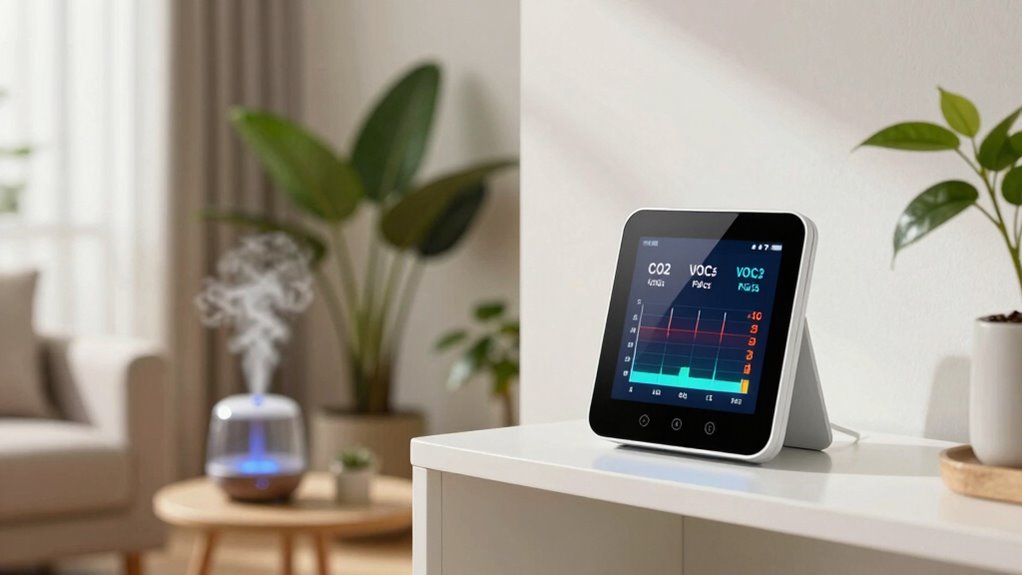
When your indoor air quality monitor detects elevated levels of pollutants or allergens, taking targeted actions can make a noticeable difference. Start by increasing ventilation, opening windows to let fresh air in and dilute indoor pollutants. Incorporate indoor plants, which naturally help absorb VOCs and improve air quality. Consider using air filtration devices, such as HEPA filters, to remove fine particles like PM2.5. Regularly dust and clean surfaces to reduce dust, allergens, and mold spores that can worsen air quality. Avoid smoking indoors and limit the use of strong chemicals or fragrances. By combining these steps, you actively reduce harmful pollutants and create a healthier indoor environment based on your monitor’s readings. Simple, consistent actions make a real difference.
Maintaining and Calibrating Your Air Quality Monitor Over Time

Regular maintenance and calibration are essential to guarantee your indoor air quality monitor provides accurate readings over time. Proper sensor placement ensures reliable data, avoiding interference from walls or sources of pollution. Calibration frequency depends on your device, but most monitors benefit from annual or semi-annual checks. To maintain accuracy, regularly verify sensor performance against known standards. Keep sensors free of dust and debris, and store your monitor in a stable environment. Use manufacturer-recommended calibration procedures or professional services when needed. Proper calibration helps detect drift or sensor degradation, ensuring your readings remain trustworthy. Consistent maintenance prolongs your monitor’s lifespan and provides peace of mind, so you can make informed decisions about your indoor air quality.
- Correct sensor placement for precise accuracy
- Regular calibration schedule adherence
- Keeping sensors clean and unobstructed
- Monitoring for sensor drift or failure
- Using manufacturer guidelines or professionals
Frequently Asked Questions
How Often Should I Test My Indoor Air Quality?
You should test your indoor air quality at least once a month to maintain a good Monitoring schedule. If you notice symptoms like headaches or allergies, increase testing frequency. For high-traffic or new renovations, test more often to catch issues early. Regular indoor testing helps you identify pollutants like VOCs, CO2, and PM2.5, ensuring your environment stays healthy and safe. Stay proactive by adjusting your testing based on your home’s needs.
Are There Health Risks From Low-Level VOC Exposure?
Did you know that even low-level VOC exposure can contribute to headaches, dizziness, and respiratory issues? Yes, VOC health risks exist at small concentrations, so maintaining indoor air safety is essential. While short-term effects are common, long-term exposure might increase the risk of more serious health problems. Staying aware of VOC levels helps you protect your health, ensuring your indoor environment remains safe and comfortable.
Can Air Quality Monitors Identify Specific VOCS?
Yes, air quality monitors can identify specific VOCs through VOC detection, but sensor specificity varies. Some monitors use advanced sensors that can distinguish between different VOC types, while others provide only total VOC levels. If you need detailed information about particular VOCs, look for monitors with sensors designed for VOC detection and high sensor specificity, ensuring you get accurate data to address potential health concerns effectively.
Do All Air Quality Monitors Measure PM2.5 Accurately?
Not all air quality monitors measure PM2.5 accurately, but many do if they’re well-calibrated and have high-quality sensors. While calibration accuracy can drift over time, choosing a device with sensor longevity ensures consistent readings. Don’t worry—regular calibration and maintenance help keep your monitor dependable, so you can confidently track particulate levels and improve your indoor air quality.
What Are the Best Practices for Ventilating to Improve Air Quality?
To improve air quality, you should prioritize natural ventilation by opening windows and doors regularly. This allows fresh air to circulate and dilutes indoor pollutants. Keep an eye on air exchange rates, aiming for at least 4-6 air changes per hour in occupied spaces. Use exhaust fans in kitchens and bathrooms, and consider air purifiers to supplement ventilation, especially when outdoor air quality isn’t ideal.
Conclusion
By keeping an eye on CO2, VOCs, and PM2.5 levels, you’re like a detective uncovering hidden threats to your health. Regular monitoring helps you breathe easier and create a safer space, just like a gardener tending to delicate plants. Stay proactive, interpret your data wisely, and make simple changes to improve your indoor air quality. Your home or office will become a sanctuary where every breath feels as invigorating as a cool breeze.