Sleep trackers can give you quick insights into your sleep duration, awakenings, and stages like REM and deep sleep. They use movement and heart rate data, but they can’t directly measure brain activity, so their estimates aren’t always accurate. They also can’t track factors like stress, caffeine, or noise that affect your sleep. If you want to understand what’s really happening and how to improve, stay with us to explore more about their limitations and potential.
Key Takeaways
- Sleep trackers estimate sleep duration and stages but cannot directly measure brain activity or diagnose sleep disorders.
- They can monitor movement and heart rate to infer sleep patterns but may misinterpret restlessness or brief awakenings.
- They do not assess external factors like stress, caffeine, or environmental noise affecting sleep quality.
- Sleep trackers support behavioral improvements by identifying patterns and encouraging better sleep habits.
- Ongoing advancements aim to improve accuracy, but these devices remain tools, not replacements for professional sleep assessments.

Sleep trackers have become popular tools for monitoring your nightly rest, offering insights into your sleep patterns with just a few taps. These devices, often worn as wristbands or integrated into other wearable technology, can give you a detailed overview of how long you sleep, how often you wake up, and even how much time you spend in different sleep stages. While they can be valuable for understanding your sleep habits, it’s important to know what they can and cannot tell you about your rest.
Sleep trackers offer quick insights into sleep duration, awakenings, and sleep stages, but have limitations in accuracy.
When it comes to sleep hygiene, these trackers can serve as a helpful reminder to establish better habits. They might alert you if you’re consistently getting less than the recommended hours of sleep or waking up frequently during the night. This information can motivate you to improve your bedtime routine, avoid screens before sleep, or create a more relaxing environment. In this way, wearable technology becomes a useful tool for making small adjustments that could lead to better overall sleep quality.
However, sleep trackers aren’t perfect. They rely on movement and heart rate data to estimate sleep stages, which means they can sometimes be inaccurate. For example, a device might interpret restlessness as wakefulness, or miss brief awakenings altogether. They don’t measure brain activity directly, so while they can suggest when you’re in REM or deep sleep, these assessments are estimates rather than precise readings. Consequently, if you’re trying to diagnose a sleep disorder, a tracker alone isn’t enough. You’ll need a professional sleep study for a thorough diagnosis.
Additionally, these devices don’t capture all factors affecting sleep, such as stress, caffeine intake, or environmental noise. They can tell you if you’re not sleeping well, but not necessarily why. That’s where understanding sleep hygiene becomes vital. Improving your sleep hygiene involves creating habits and an environment conducive to restful sleep—things that a tracker can’t measure but are essential for genuine improvement. It’s also important to recognize that sleep stages estimation based on movement and heart rate can sometimes be misleading. Moreover, understanding the limitations of sleep trackers helps set realistic expectations for what they can provide. Furthermore, ongoing advancements in sleep monitoring technology aim to improve the accuracy and reliability of these devices over time.
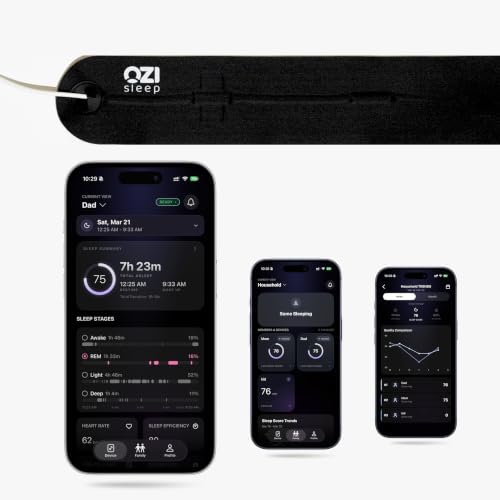
OZI Smart Sleep Tracker, Non-Wearable Contactless Under-Sheet Sleep Monitor
- No Wearable Needed: Slides under sheet to track sleep
- Comprehensive Sleep Data: Sleep stages, heart rate, breathing, movement
- Real-Time Alerts: Notifications for bed exits and health changes
As an affiliate, we earn on qualifying purchases.
As an affiliate, we earn on qualifying purchases.
Frequently Asked Questions
Can Sleep Trackers Diagnose Sleep Disorders?
Sleep trackers can’t diagnose sleep disorders directly, but they can give you useful insights into your sleep quality and consistency. You’ll see patterns and disruptions that might suggest underlying issues, prompting you to seek professional help. Keep in mind, while trackers are helpful tools for monitoring sleep, only a healthcare provider can provide a proper diagnosis and treatment plan for sleep disorders.
Do Sleep Trackers Accurately Measure REM Sleep?
Sleep trackers generally do a decent job with REM detection, but they’re not perfect when it comes to sleep stage accuracy. You might get a good idea of when you’re in REM, but don’t rely on them for pinpoint precision. Think of it as a rough sketch rather than a detailed portrait. They can offer helpful insights, but for detailed sleep analysis, a sleep study remains the gold standard.
How Do Sleep Trackers Impact Overall Sleep Quality?
Sleep trackers can positively impact your overall sleep quality by helping you identify patterns in your sleep habits and refine your bedtime routines. When you use them consistently, you become more aware of factors affecting your rest, prompting you to make healthier choices. This awareness encourages better sleep habits, leading to improved sleep quality over time. Just remember, trackers are tools, so combining their insights with good sleep practices maximizes benefits.
Are Sleep Tracker Results Affected by Different Sleep Environments?
In a flash, sleep tracker results are influenced by your sleep environment, just like a 1920s speakeasy affects jazz music. If your sleep environment varies—like noise levels, light, or temperature—it can skew the data. Consistent sleep environments help trackers provide more accurate insights. So, maintaining a stable sleep environment and sticking to routines enhances the reliability of your sleep data, helping you better understand your sleep habits.
Can Sleep Trackers Predict Future Health Issues?
Sleep trackers can give you insights into your sleep quality, but they can’t reliably predict future health issues. They analyze data accuracy based on movement and heart rate, helping you understand your current sleep patterns. However, predicting health problems requires more all-encompassing medical assessments. Use sleep trackers as a helpful tool for awareness, but don’t rely solely on them for health forecasting. Consult healthcare professionals for personalized advice.
Conclusion
Sleep trackers are helpful tools, but they’re not crystal balls revealing every detail of your sleep. They can give you a general picture, like a rough map, but can’t navigate every twist and turn of your nightly rest. Remember, they’re guides, not the entire story. Trust your body’s signals and habits alongside the data to truly understand your sleep. After all, your sleep is a puzzle, and trackers are just one piece of the picture.