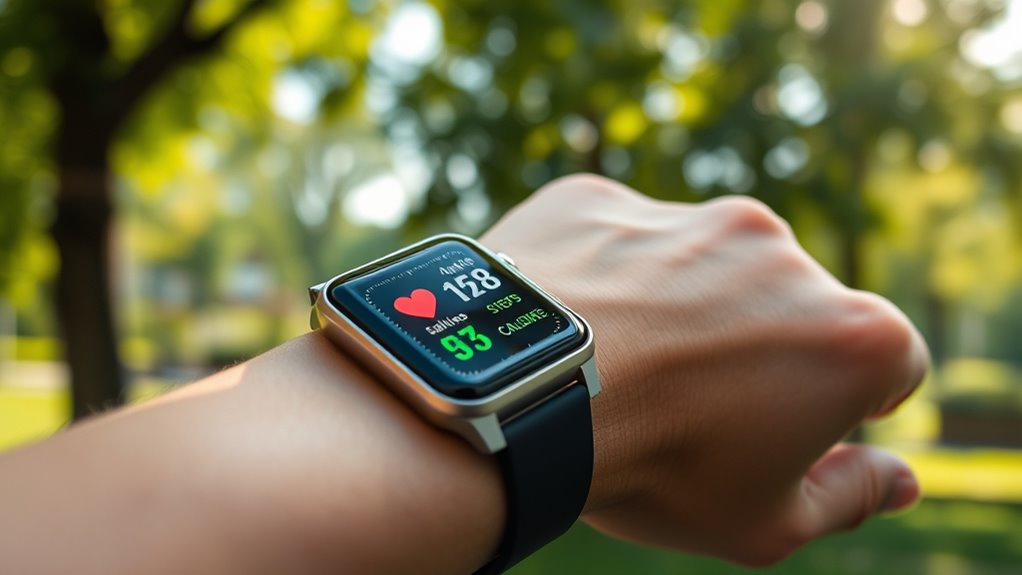

Wearable health technology helps you track your wellness in real time, giving you instant access to crucial health data like heart rate, activity levels, and sleep quality. These devices empower you to take control of your health and stay motivated through goal setting and progress visualizations. While they offer great benefits, it’s important to be mindful of privacy concerns and data security. Keep exploring to discover how to get the most out of your wearable device safely.
Key Takeaways
- Wearable devices enable real-time health monitoring, providing instant data on vital signs, activity levels, and sleep patterns.
- They empower users to manage their wellness proactively through personalized insights and goal tracking.
- Privacy concerns arise from data collection, requiring transparent policies and encryption to protect sensitive health information.
- User engagement is enhanced through visual dashboards, gamification, and feedback features that motivate healthy habits.
- Balancing data privacy with seamless integration into health ecosystems ensures safe, effective wellness tracking.

Have you ever wondered how wearable health technology is transforming the way we monitor and manage our well-being? These devices, from smartwatches to fitness bands, give you instant access to crucial health data, empowering you to take control of your health like never before. But as you become more engaged with your health metrics, issues around data privacy come into play. Companies collect vast amounts of personal information, including heart rate, activity levels, sleep patterns, and even GPS location. While this data can help tailor health advice and improve your overall wellness, it also raises concerns about who has access to your private information and how securely it’s stored. You need to be aware of these privacy risks and choose devices and apps that prioritize data protection. Look for those with transparent privacy policies and strong encryption measures, ensuring your sensitive health data isn’t vulnerable to breaches or misuse. Additionally, understanding the data privacy landscape can help you make more informed choices about your wearable technology. User engagement is another key factor driving the success of wearable health tech. When you actively participate in tracking your health, you’re more likely to stay motivated and committed to your wellness goals. These devices make it easy to set targets, receive real-time feedback, and visualize your progress through intuitive dashboards. The gamification features—like badges or challenges—further boost your involvement, turning health monitoring into an interactive experience. As you see tangible results, your motivation increases, reinforcing healthy habits. Furthermore, many wearables integrate with other health apps and platforms, creating a seamless ecosystem that keeps you connected and informed. This level of engagement turns passive monitoring into an empowering journey, helping you make smarter decisions about your lifestyle. However, the more you rely on these devices, the more important it becomes to understand the balance between data privacy and user engagement. Manufacturers often update their policies and features, sometimes at the expense of your privacy, in pursuit of better user experience. It’s up to you to stay informed about how your data is being used and to set privacy preferences that align with your comfort level. Being proactive in managing your privacy settings not only protects your personal information but also ensures that your engagement with wearable technology remains safe and beneficial. Ultimately, wearable health devices are revolutionizing wellness by providing real-time insights and motivating ongoing participation. When used wisely, they help you stay healthier and more aware of your body’s needs, all while respecting your right to privacy.
Frequently Asked Questions
How Accurate Are Wearable Health Devices Compared to Medical-Grade Equipment?
You might find wearable health devices quite accurate, but their precision depends on proper device calibration and consistent data synchronization. While they offer real-time insights and can track trends effectively, they may not match medical-grade equipment’s accuracy for critical measurements. Always verify important health data with professional medical tests, especially if your readings influence medical decisions. Wearables are great for monitoring daily wellness but shouldn’t replace professional healthcare assessments.
What Privacy Measures Protect User Health Data in Wearables?
You might wonder if your health data stays private, and the answer is yes—if the device follows strict measures. Data encryption protects your sensitive information from hackers, ensuring it stays secure. Plus, user consent is essential; companies must ask for your approval before collecting or sharing data. These protections work together to keep your health details private, giving you peace of mind as you monitor your wellness in real time.
Can Wearables Predict Future Health Issues Before Symptoms Appear?
Yes, wearables can predict future health issues before symptoms appear through predictive analytics. By continuously monitoring your essential signs and health data, these devices analyze patterns to enable early detection of potential problems. This proactive approach helps you identify risks sooner, allowing for timely intervention and better management of your health. Wearables are becoming valuable tools in preventing serious conditions by providing insights that catch issues early.
How Long Do Wearable Health Devices Typically Last Before Needing Replacement?
Think of your wearable like a trusty companion, lasting about 2 to 5 years. Battery lifespan and device durability vary, but most devices need replacement or battery swaps within this timeframe. I once knew someone whose fitness tracker stopped working after three years, showing how wear and tear take their toll. To keep it running smoothly, follow manufacturer guidelines and consider upgrades when performance declines.
Are There Any Health Risks Associated With Long-Term Wearable Device Use?
You might experience skin irritation or discomfort from prolonged wearable device use, especially if your skin is sensitive. Additionally, electromagnetic exposure from continuous device use raises concerns, though current evidence suggests minimal risk. To stay safe, take breaks, keep your skin clean, and choose devices with low electromagnetic emissions. If you notice irritation or other issues, consult a healthcare professional to make certain your long-term health isn’t compromised.
Conclusion
As you embrace wearable health technology, you’re opening a window into your body’s orchestra, tuning into its every note in real time. This device becomes your loyal compass, guiding you through the landscape of your wellness with precision and care. Think of it as a trusted partner walking alongside you, illuminating the path to healthier living. With each step, you’re not just tracking data—you’re orchestrating a symphony of well-being that’s uniquely yours.

Under Kirsti’s gentle guidance, each insight and interpretation is thoughtfully crafted to uplift, educate, and encourage personal transformation. Whether you’re a dedicated seeker on a lifelong spiritual quest or taking your very first step into the mystical, we offer a wealth of knowledge and supportive community to illuminate your unique journey.