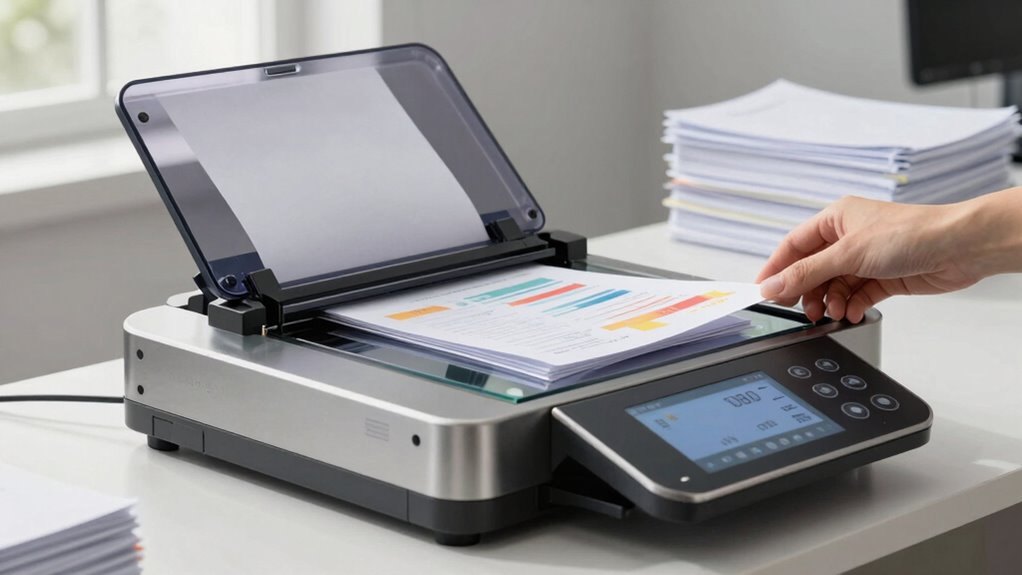

Document scanners are key tools for shifting to paperless workflows by quickly digitizing receipts, contracts, and other documents. They help you reduce physical storage needs, improve document retrieval, and enhance security through digital backups. Cloud integration makes sharing and accessing files easier from anywhere, boosting collaboration. Plus, they support sustainability goals by cutting paper waste and lowering costs. If you want to discover how these devices can transform your work, there’s more to explore ahead.

Get art and craft supplies delivered free with Prime
- Fast, free delivery on millions of items
- Prime Video, Amazon Music and more included
- Member-only deals all year
Key Takeaways
- Document scanners enable quick digitization, reducing reliance on physical paper and supporting paperless workflows.
- Digital storage and cloud integration streamline document access, sharing, and collaboration in a paperless environment.
- Scanning technology minimizes physical storage needs, promoting eco-friendly practices and cost savings.
- Secure digital backups protect documents from physical damage, enhancing data security in paperless systems.
- Scalability of digital solutions ensures growth and future-proofing within sustainable, paperless organizational workflows.

In today’s digital age, the push toward paperless workflows is transforming how businesses handle documentation, and document scanners play a vital role in that shift. As you adopt scanning solutions, you start to see how digital storage becomes essential for organizing and accessing your files efficiently. Instead of cluttered paper piles, you can digitize documents quickly and store them securely in a digital format. This transition not only saves physical space but also streamlines your workflow, making retrieval faster and more reliable. With high-quality scanners, you can convert everything from receipts to contracts into clear, searchable digital files, reducing the risk of losing important information.
Digital storage transforms document management, making retrieval fast, secure, and reducing clutter efficiently.
Cloud integration takes this process a step further by connecting your scanned documents directly to cloud platforms. When your scanner is integrated with cloud services, you can upload files instantly, bypassing the need for manual transfers or external storage devices. This seamless connection allows your team to access documents from anywhere, whether they’re in the office, working remotely, or on the go. You gain flexibility and agility, which are crucial in today’s fast-paced business environment. Cloud storage also enhances collaboration because multiple users can view, comment, or edit documents simultaneously, increasing productivity and reducing delays.
By leveraging document scanners with cloud integration, you eliminate many traditional barriers associated with paper-based workflows. No longer do you need to worry about misplaced files or physical damage to important documents. Instead, you can rely on digital backups stored securely in the cloud, ensuring your data is protected against theft, fire, or other disasters. Additionally, the ability to search through digital files saves you time. Instead of sifting through papers or folders, you can quickly locate a document by keywords, dates, or tags. This efficiency boosts your overall operational effectiveness and allows your team to focus on more strategic tasks.
Furthermore, digital storage and cloud integration foster a more environmentally friendly workspace. You reduce paper consumption and waste while also lowering costs associated with printing, filing, and physical storage. The convenience of scanning and uploading documents directly from your scanner encourages a habit of digital-first thinking, which aligns with modern sustainability goals. Incorporating digital storage and cloud connectivity also ensures your data is scalable and adaptable to future growth or technological changes. Embracing Biodiversity and sustainability principles into your digital practices can also support your organization’s commitment to environmental responsibility. Additionally, adopting sustainable digital workflows can contribute to your organization’s overall environmental impact reduction.
document scanner with cloud integration
As an affiliate, we earn on qualifying purchases.
As an affiliate, we earn on qualifying purchases.
Frequently Asked Questions
How Secure Are Digital Documents Stored After Scanning?
Digital documents stored after scanning can be quite secure if you use digital encryption and choose reputable cloud storage providers. Encryption protects your files from unauthorized access, while secure cloud services often include multi-factor authentication and regular security updates. However, you must keep your login credentials safe and stay updated on security practices to guarantee your digital documents stay protected against potential cyber threats.
What Are the Environmental Benefits of Going Paperless?
Going paperless is like hitting two birds with one stone, offering significant environmental benefits. Digital storage reduces paper consumption, cutting down on deforestation and waste. It also minimizes the energy and resources needed for printing, shipping, and disposing of paper documents. This eco sustainability effort helps lower carbon footprints and conserves natural resources, making your workflow not just efficient but also environmentally responsible, contributing to a greener planet.
How Do Scanners Handle Fragile or Damaged Documents?
You can trust scanners to handle fragile or damaged documents with care. They often use specialized settings for fragile preservation, reducing physical contact and minimizing further damage. Some scanners incorporate damage repair features, like image enhancement and stabilization, to improve readability. By carefully scanning fragile items, you preserve their integrity while creating digital copies, making it easier to access and share without risking additional harm to delicate documents.
Can Document Scanners Integrate With Existing Office Software?
Yes, document scanners can integrate seamlessly with your existing office software. Many models offer cloud integration, allowing you to upload scanned documents directly to platforms like Google Drive or Dropbox. Additionally, they use high OCR accuracy, making it easy to convert scanned images into editable text. This integration streamlines your workflow, reduces manual data entry, and enhances collaboration across your office, making paperless processes more efficient.
What Is the Cost Comparison Between Scanners and Traditional Printing?
Think of scanner investments as planting seeds for savings—initial costs might seem high, but they grow into long-term benefits. When you do a cost analysis, scanners often cost less than ongoing printing expenses, ink, paper, and maintenance. Over time, the savings stack up like a tower, making scanners a smart investment for your office. So, ditch the paper trail and watch your costs shrink with smarter, eco-friendly technology.
Conclusion
Imagine your office as a cluttered attic, filled with stacks of paper waiting to be sorted. Embracing a document scanner is like installing a powerful, organized filing system—transforming chaos into clarity. Studies show that digital workflows can boost productivity by up to 30%. By turning paper into digital files, you’re not just decluttering; you’re creating a streamlined space where information flows effortlessly, making your workday smoother and more efficient.
Halloween Picks
halloween
As an affiliate, we earn on qualifying purchases.