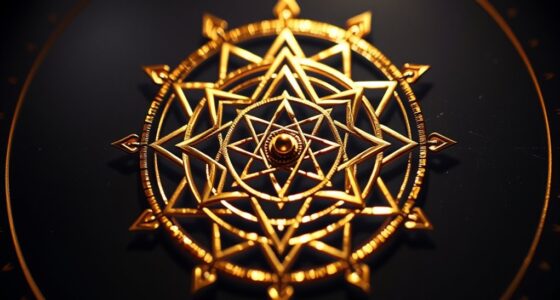
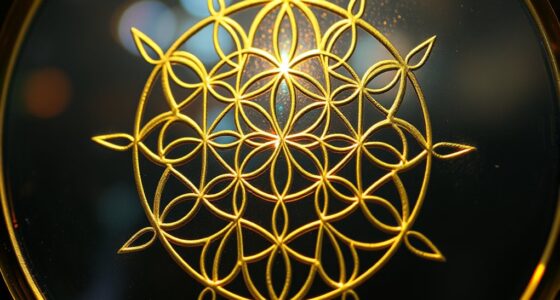
The compass and square symbolize core moral principles in Freemasonry, guiding you toward truth, fairness, and integrity. Their origins in ancient craftsmanship and sacred geometry highlight the importance of moral boundaries and divine order. By understanding these symbols, you see how they represent balance between passions and reason, promoting harmony and virtue. Continuing your exploration will reveal even deeper meanings behind this powerful geometric language.
Key Takeaways
- The compass and square symbolize moral boundaries and virtues guiding ethical behavior in Freemasonry.
- They represent the pursuit of truth, balance, and divine order through sacred geometry.
- Their origins in craftsmanship emphasize integrity, stability, and moral uprightness.
- The symbols reflect the harmony between passions and reason essential for moral development.
- They serve as visual tools for spiritual growth, emphasizing universal principles of morality and righteousness.

A compass and square are essential tools that have shaped the way we design and build structures. But beyond their practical use in architecture and engineering, they hold a profound symbolic significance, especially within the domain of Freemasonry. These tools are more than mere instruments; they embody core virtues and principles that guide moral and ethical behavior. Understanding their symbolic significance allows you to see how geometry extends beyond measurement, becoming a metaphor for moral integrity, balance, and harmony. When you hold a compass and square, you’re engaging with symbols that represent the pursuit of truth and virtue, guiding you to live a life of fairness, honesty, and righteousness.
The historical origins of these symbols trace back thousands of years, deeply rooted in ancient civilizations. The square, with its right angles, was used by builders and artisans to create precise, stable structures, symbolizing morality and rectitude. It’s a reminder that your actions should be just and upright, aligning with the moral standards of fairness and honesty. The compass, on the other hand, was used to draw circles and arcs, representing the infinite and the divine. Historically, these tools were associated with craftsmen and stonemasons who built the great cathedrals and temples, where the tools became symbols of divine order and perfection. Over time, their meanings expanded into spiritual and philosophical domains, especially within Freemasonry, where they represent the moral boundaries you should observe and the pursuit of knowledge beyond the material world. Additionally, the use of these tools in symbolic contexts highlights the importance of natural techniques like organic and sustainable practices to maintain moral and environmental harmony.
When you think about the compass and square, consider how their origins influence their deeper significance. The square’s origins in practical craftsmanship highlight the importance of integrity and moral uprightness. Meanwhile, the compass’s roots in sacred geometry point to the pursuit of higher truths and understanding the divine blueprint of creation. Together, these tools serve as a visual language that reminds you to balance your passions with reason, to act with justice, and to seek harmony in your life. Their symbolic significance has persisted through centuries because they encapsulate universal ideals—truth, morality, and harmony—that remain relevant today.
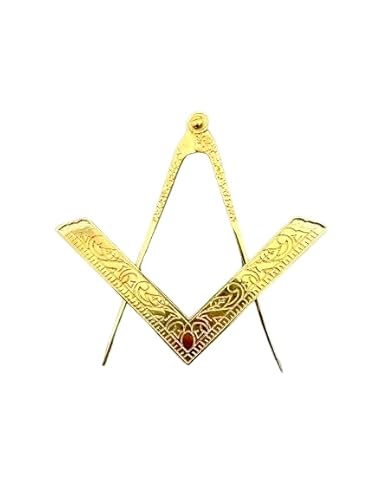
Masonic Lodge Ceremonial Large Freemason Square and Compass Premium Look – Golden
Masonic Square N Compass
As an affiliate, we earn on qualifying purchases.
As an affiliate, we earn on qualifying purchases.
Frequently Asked Questions
How Does Masonic Geometry Influence Modern Ethical Practices?
The current question explores how geometry influences ethics today. You can see that principles like balance, harmony, and precision shape your approach to ethical decision making. By understanding geometric concepts, you’re encouraged to develop moral awareness and integrity. This connection helps you navigate complex situations with clarity, fostering moral development. Fundamentally, geometric ideas serve as a foundation for creating a thoughtful, consistent framework for your ethical behavior.
What Are the Historical Origins of Compass and Square Symbolism?
Imagine holding a simple tool that shapes not just wood, but ideas—like the compass and square. Their historical origins trace back to ancient Egypt and Greece, where geometric symbolism represented order and divine truth. These symbols later became central in Freemasonry, embodying moral principles. You see, their enduring power lies in how they remind us to build a life grounded in balance, integrity, and harmony—fundamentals rooted in ancient geometric wisdom.
Are There Secret Teachings Associated With Masonic Geometric Principles?
You might wonder if secret teachings are linked to Masonic geometric principles. Hidden symbols often hold esoteric knowledge that members believe conveys deeper moral truths. These teachings aren’t openly shared, but initiates explore how geometry reflects universal principles of morality and integrity. By studying these patterns, you can access insights about harmony, balance, and moral development, making the geometric symbols a gateway to hidden knowledge within the tradition.
How Do Different Masonic Jurisdictions Interpret These Symbols?
Imagine a secret code everyone claims to understand but no one agrees on—welcome to Masonic symbolism. You’ll find ritual symbolism varies wildly because different jurisdictions interpret these symbols through their unique lenses. Some see the compass and square as moral guides, while others view them as deeper spiritual truths. It’s a fascinating patchwork, where jurisdictional variations keep the meaning alive, if not always consistent.
Can Non-Masons Learn About the Moral Lessons of Masonic Geometry?
You can definitely learn about the moral lessons of Masonic geometry through symbolic interpretation and educational accessibility. Many resources, books, and lectures explain these concepts in an understandable way. While some symbols hold secret meanings for members, the core moral teachings are often shared openly. By exploring these materials, you gain insight into the ethical principles behind the symbols, making Masonic morality accessible without formal membership.

Freemasonry Masonic Symbol Wooden Scroll Wall Art, Modern Minimalist Polyester Canvas Print with Hanging Kit 16"x24"
Natural Pine Wood Scrolls: Features Two Solid Pine Wood Rods (Top And Bottom) For An Authentic, Rustic Aesthetic…
As an affiliate, we earn on qualifying purchases.
As an affiliate, we earn on qualifying purchases.
Conclusion
As you reflect on the compass and square, it’s almost as if their timeless symbolism guides you toward moral clarity. Perhaps it’s no coincidence that their geometric harmony mirrors the balance you seek within yourself. When you recognize these patterns, you realize morality isn’t just a tradition; it’s a universal language woven into the very fabric of your choices. In that quiet moment, the ancient symbols seem to whisper, guiding you toward the truth you’ve always known.
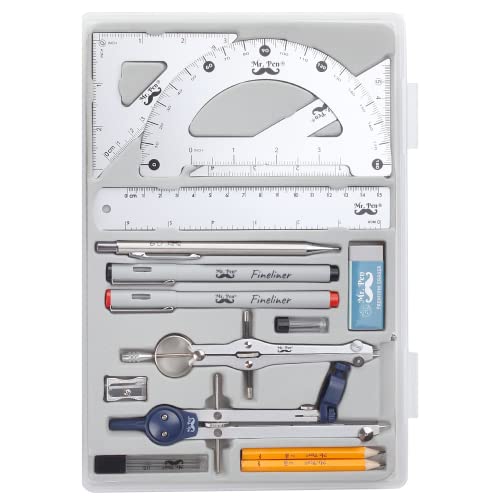
Mr. Pen- Professional Geometry Set, 15 pcs, Geometry Kit for Artists and Students, Geometry Set, Metal Rulers and Compasses, Drawing Tools, Drafting Supplies, Drafting Set, Drafting Tools and Kits
Package includes 2 Compasses, 2 triangles, 1 6-inch ruler, 1 protractor, 2 pencils for compass, 2 fineliners, 1…
As an affiliate, we earn on qualifying purchases.
As an affiliate, we earn on qualifying purchases.

Meditations on Masonic Symbolism (Masonic Symbols)
As an affiliate, we earn on qualifying purchases.
As an affiliate, we earn on qualifying purchases.