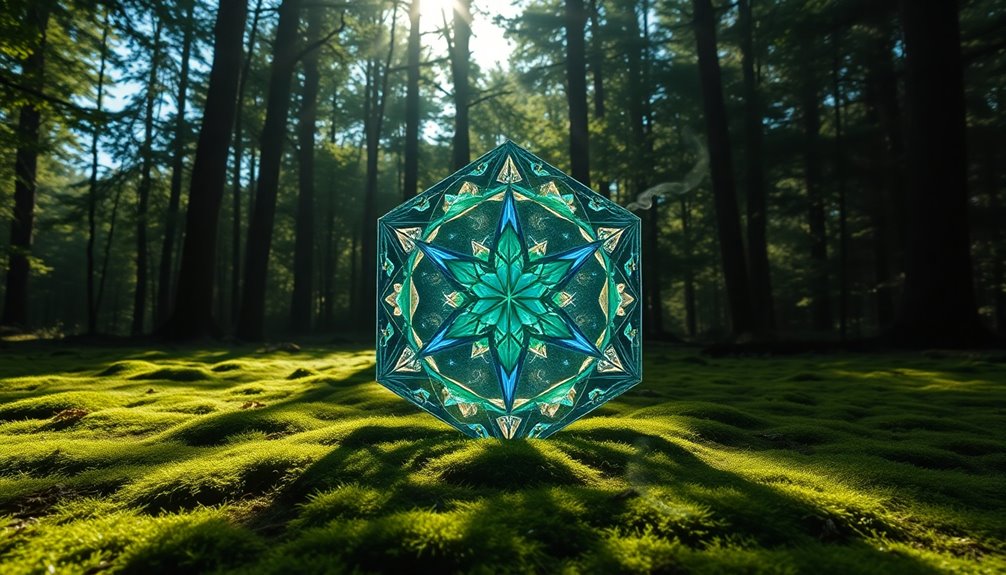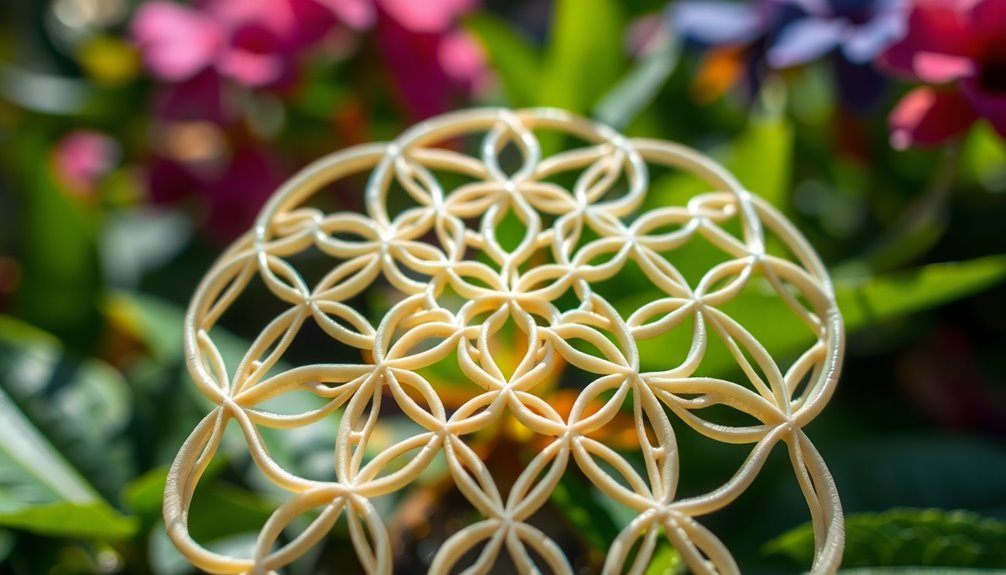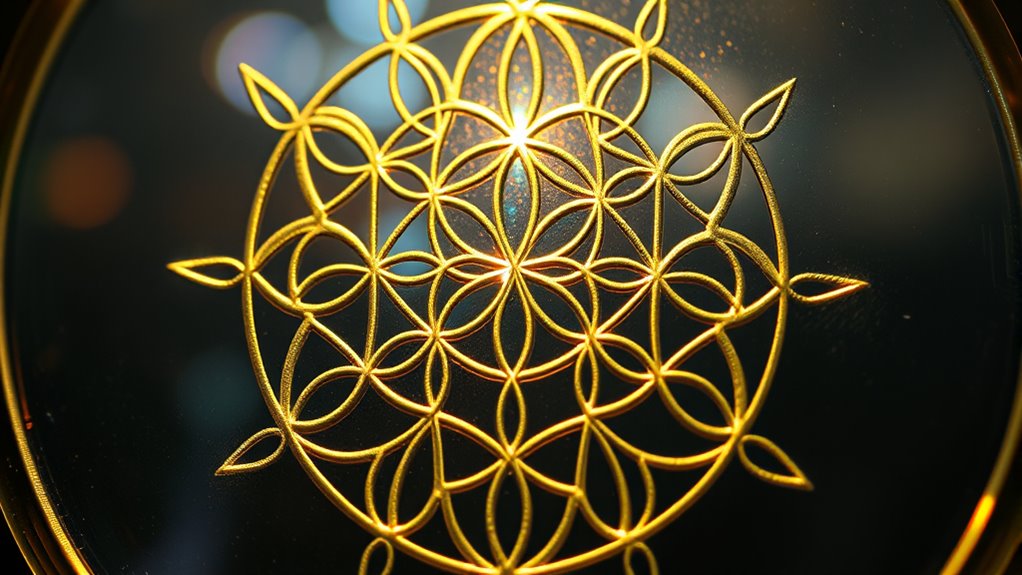

The Flower of Life is a powerful geometric pattern made of overlapping circles that symbolize unity and interconnectedness. It visually maps the structure of the universe, illustrating how everything is connected through divine proportions and harmonic principles. This ancient symbol has been used in spiritual practices to open higher consciousness and explore universal truths. If you want to discover how this intricate design reflects the cosmos and the deeper meanings behind it, keep exploring its mysteries.
Key Takeaways
- The Flower of Life is a sacred geometric pattern composed of overlapping circles symbolizing unity and interconnectedness.
- It encodes universal principles and serves as a blueprint reflecting the structured harmony of the cosmos.
- Used in spiritual practices, it helps access higher consciousness and reveals deeper insights into existence.
- The pattern illustrates that the universe is a beautifully ordered system rooted in divine proportions.
- Its geometric design functions as a map of interconnected systems, linking ancient wisdom with modern understanding of universal harmony.
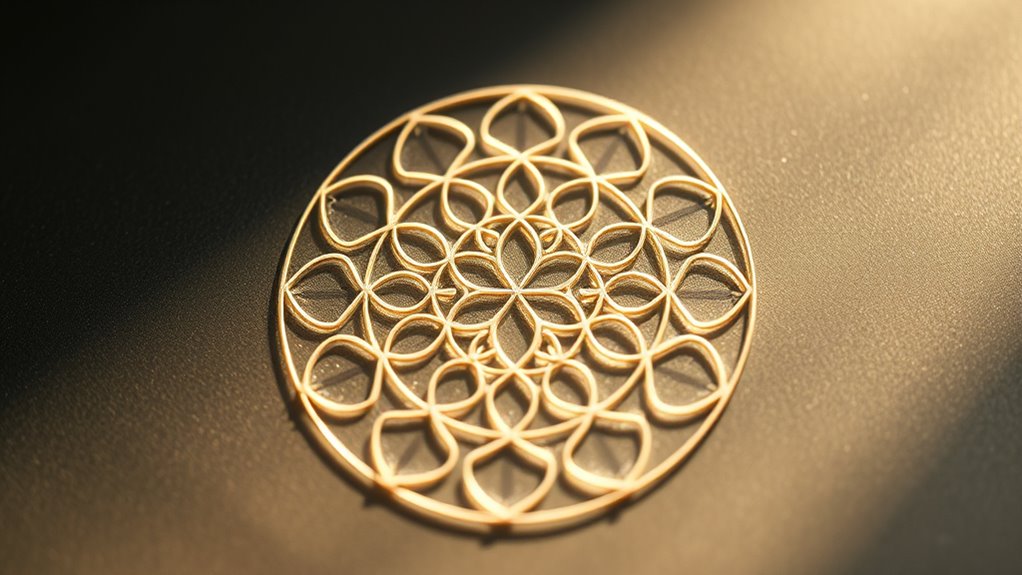
Have you ever wondered about the meaning behind the intricate patterns known as the Flower of Life? This ancient design isn’t just a beautiful geometric pattern; it’s a symbol rich in sacred symbolism that has captivated cultures across the ages. When you look at the Flower of Life, you’re gazing into a complex arrangement of overlapping circles, each perfectly aligned to create a mesmerizing web of symmetry and harmony. These geometric patterns aren’t random—they’re thought to embody fundamental truths about the universe and our place within it.
The Flower of Life’s significance goes beyond its visual appeal. Many believe it encodes sacred symbolism that connects to the very fabric of existence. Each circle represents a moment, a point of creation, overlapping to form a pattern that symbolizes unity and interconnectedness. As you explore its layers, you might see it as a blueprint of life itself—showing how everything is intertwined, from the smallest particles to the vast cosmos. Its presence in temples, art, and spiritual teachings suggests it’s been revered as a divine symbol, representing the cycle of creation, the harmony of nature, and the interconnectedness of all living things.
These geometric patterns are more than just aesthetic; they serve as a universal language of sorts. When you study the Flower of Life, you’re engaging with a form of sacred geometry that has been used in spiritual practices for thousands of years. Many believe that understanding these patterns can help you tap into higher consciousness, offering insights into the unseen structures of reality. It’s thought that the Flower of Life contains the building blocks of existence—each circle a stepping stone towards understanding the cosmos on a deeper level. Additionally, the principles of international finance can be seen as a modern reflection of interconnected systems that mirror the harmony found in sacred geometry.
In essence, the Flower of Life acts as a map of the universe, illustrating how everything is interconnected through sacred symbolism and geometry. It’s a visual reminder that the universe isn’t random but rather a beautifully ordered system rooted in divine proportions and harmonic patterns. When you contemplate its design, you’re invited to see beyond the surface—acknowledging the deep spiritual truths embedded within these ancient geometric patterns. Whether you view it as a mystical emblem or a scientific blueprint, the Flower of Life continues to inspire curiosity and wonder, inviting you to explore the timeless connection between shape, meaning, and reality.

Fourth Level MFG 33" Flower of Life, Sacred Geometry Wood Wall Art, Seed Of Life Sculpture, Zen Home Decor for Yoga and Meditation, Chakra Crystal Grid Board, Good Energy Spiritual Altar Decoration
STAND OUT: Perfect for home decorations, office decorations, apartment gifts, relationship gifts, symbolic gifts, DIY art projects, stencils,…
As an affiliate, we earn on qualifying purchases.
As an affiliate, we earn on qualifying purchases.
Frequently Asked Questions
How Ancient Is the Flower of Life Symbol?
The Flower of Life symbol‘s ancient origins date back thousands of years, making it one of the oldest known geometric symbols. You’ll find its roots in various ancient cultures, where it held deep historical symbolism representing creation, interconnectedness, and universal harmony. Its widespread appearance across different civilizations highlights its enduring significance, reminding you how humans have long sought to understand the universe’s fundamental patterns through this powerful and timeless design.
Can the Flower of Life Be Used for Spiritual Healing?
You can use the Flower of Life for spiritual healing by focusing your meditation benefits on its sacred geometry. As you meditate with this symbol, it may help align your energy and promote emotional balance. Many believe it enhances energy healing by activating your body’s natural chakras. Incorporating the Flower of Life into your practice can deepen your connection to universal energy, fostering greater harmony and spiritual growth.
Is There Scientific Evidence Supporting the Flower of Life’S Cosmic Significance?
Did you know that only 5% of the universe is understood through current science? When you ask if there’s scientific evidence supporting the Flower of Life’s cosmic significance, the answer is nuanced. While some see mathematical patterns within it aligning with quantum physics concepts, mainstream science hasn’t confirmed it as a universal blueprint. Instead, it remains a fascinating symbol that inspires exploration of the universe’s geometric and energetic mysteries.
How Is the Flower of Life Related to Sacred Geometry?
You see, sacred geometry uses symbolic representations based on geometric principles to symbolize universal concepts. The Flower of Life exemplifies this by illustrating interconnected patterns that reflect life’s fundamental structure. It embodies harmony, unity, and balance, making it a powerful visual tool in sacred geometry. When you explore these patterns, you tap into a deeper understanding of the universe’s interconnectedness, revealing the hidden order behind life’s complexity.
Are There Variations of the Flower of Life in Different Cultures?
You’ll notice variations of the Flower of Life in different cultures, each reflecting unique cultural symbolism and artistic interpretations. In Egyptian, Chinese, and Indian traditions, these patterns appear with distinct styles and meanings, illustrating diverse spiritual beliefs and aesthetic values. These variations highlight how universal geometric principles adapt to cultural contexts, enriching the shared language of sacred geometry. Embracing these differences deepens your understanding of global spiritual expressions.

Flower of Life Necklace Sterling Silver 925 – Sacred Geometry Circle Mandala Pendant with 20 Inch Chain – Spiritual Esoteric Amulet – Boho Hippie Yoga Jewelry for Women – Handmade (Flower of Life)
🕉️ AUTHENTIC DESIGN: Flower of Life Necklace featuring Sacred Geometry Jewelry Design, meaning unity and harmony is made…
As an affiliate, we earn on qualifying purchases.
As an affiliate, we earn on qualifying purchases.
Conclusion
As you gaze into the Flower of Life, you’re invited to see it as a mirror of your own soul, a delicate web connecting every heartbeat and breath. Its endless petals hold the secrets of creation, whispering that you are part of a grand, unfolding pattern. Embrace this sacred geometry, and realize that within each intricate line lies the universe’s story—your story—woven into the infinite dance of life itself.

EUEAVAN Fibonacci Spiral Necklace Golden Ratio Necklace Golden Ratio Pendant Fibonacci Numbers Jewelry Sacred Geometry Math Teacher Architect Gifts Women Men (fibonacci gold2)
Golden Ratio Necklace – The golden ratio is also known as the Fibonacci sequence, the divine proportion, the…
As an affiliate, we earn on qualifying purchases.
As an affiliate, we earn on qualifying purchases.

Curawood Crystal Grid Board for Stones – 10" Diameter Flower of Life Sacred Geometry Board – Amplify the Power of Your Crystals – Chakra Grid Plate, Altar Decor – Flor de la Vida
Amplify Your Crystals Power — Reach your full intentions, cleanse, heal, and protect others by amplifying your crystals…
As an affiliate, we earn on qualifying purchases.
As an affiliate, we earn on qualifying purchases.