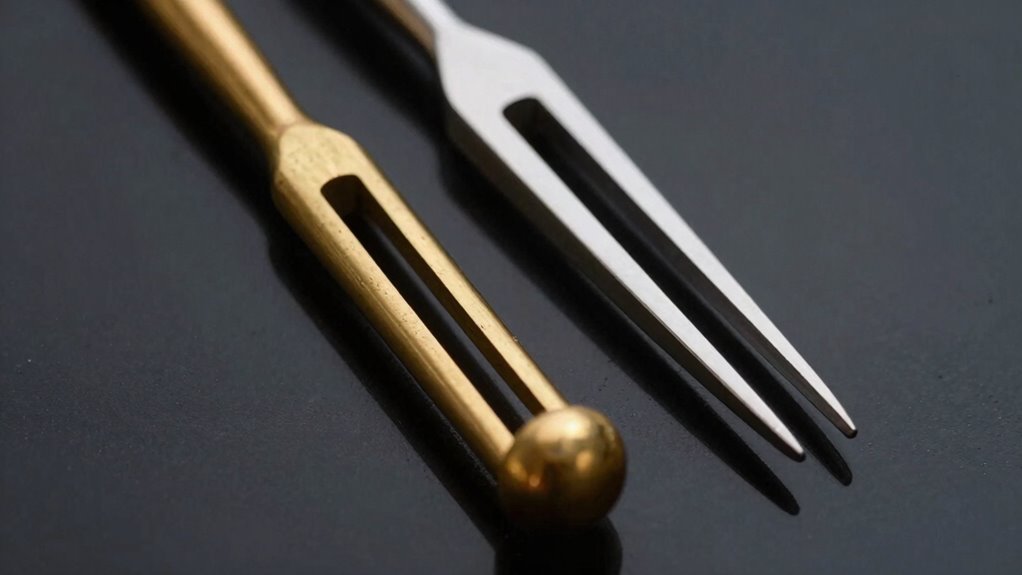

Weighted tuning forks have a small mass attached, producing deeper, grounding vibrations suitable for deep tissue work and energy balancing. Unweighted forks have no added mass, resulting in higher-pitched, precise vibrations ideal for targeting specific energy centers. Your choice depends on whether you want a stronger, lower resonance or a clearer, more focused tone. To understand how material and design influence these differences further, keep exploring the details below.

Get art and craft supplies delivered free — and shop member deals
- Fast, free delivery on millions of items
- Access to Prime Big Deal Days deals on October 6–7
- Prime Video, Amazon Music and more included
Key Takeaways
- Weighted forks produce deeper, grounding vibrations with lower resonance frequency, ideal for deep tissue work; unweighted forks generate higher-pitched, precise vibrations for energy points.
- Material choice affects durability, resonance stability, and sound clarity in both weighted and unweighted forks.
- Weighted forks tend to dampen sound clarity but sustain vibrations longer, while unweighted forks offer clearer, more focused tones.
- Design influences vibration transmission; weighted forks are better for energy balancing, unweighted for targeting specific energy centers.
- Proper maintenance extends the lifespan and preserves the effectiveness of both types, depending on material and construction quality.

When choosing between weighted and unweighted tuning forks, understanding their differences can substantially impact your acoustic or therapeutic work. The primary distinction lies in their design and how they deliver sound. Weighted tuning forks incorporate a small mass—usually a metal bead or disc—attached to the prongs, which affects their resonance frequency and how they vibrate. Unweighted forks, on the other hand, are simpler, with no added mass, allowing their prongs to vibrate freely. This difference influences the sound produced and the way you apply them during therapy or sound therapy sessions.
Resonance frequency plays an essential role in your choice. Weighted tuning forks tend to have a slightly lower resonance frequency due to the added mass, which can be beneficial if you seek deeper, more grounding vibrations. Conversely, unweighted forks often produce higher-pitched sounds, suitable for stimulating specific energy points or producing more precise vibrations. Your selection depends on your intended use—whether you want to target deeper tissue, promote relaxation, or stimulate specific energy centers. The material composition of the forks also markedly influences their performance. Most tuning forks are made from durable metals like steel or aluminum, with some crafted from alloys designed to optimize resonance and durability. The material affects not only durability but also how well the fork transmits vibrations and maintains its resonance frequency over time.
With weighted tuning forks, the added mass can sometimes dampen the clarity of the sound slightly but enhances their effectiveness in creating sustained vibrations. This makes them ideal for applications involving deeper tissue work or energy balancing. Unweighted forks, with their lighter design, tend to produce clearer, more focused tones, allowing you to precisely target specific areas or energy points. The choice of material composition also impacts how the forks respond to your touch and how durable they remain with frequent use. High-quality materials ensure the forks hold their resonance frequency longer and provide consistent sound quality, which is essential for effective therapy sessions. Additionally, the design and material influence the vibration transmission, and overall longevity of the forks, making quality construction a key consideration. Proper maintenance and care can further optimize their performance and extend their lifespan.
Furthermore, material composition influences not only the durability but also the overall sound quality and response of the forks, which can be crucial for sensitive applications. It is also important to consider how the sound quality may vary between different types based on their construction and material. The resonance frequency of each fork can also be affected over time by environmental factors, so selecting high-quality materials can help maintain consistent performance. Ultimately, your decision should consider both the resonance frequency and material composition, aligning with your goals—whether that’s deep tissue therapy, energy balancing, or precise sound therapy. Both weighted and unweighted tuning forks offer unique benefits, and understanding their differences will help you select the right tools for your practice. Properly chosen, they can enhance your effectiveness and deliver more targeted, harmonious results.
weighted tuning forks for energy healing
As an affiliate, we earn on qualifying purchases.
As an affiliate, we earn on qualifying purchases.
Frequently Asked Questions
How Do Weighted Tuning Forks Affect Vibration Longevity?
Weighted tuning forks tend to increase vibration longevity because they enhance vibration amplitude, allowing the fork to produce stronger, more sustained sound waves. The added weight helps maintain energy within the fork, reducing energy dissipation over time. As a result, your weighted fork produces longer-lasting vibrations, making it ideal for applications requiring extended resonance and more effective sound transmission.
Are Weighted Tuning Forks More Durable Than Unweighted Ones?
Weighted tuning forks are generally more durable than unweighted ones because of material differences, such as using stronger metals or reinforced constructions. However, they tend to be more expensive due to these materials and manufacturing complexities. If you prioritize longevity and robustness, weighted forks might be worth the extra cost. Still, consider your specific needs and budget, as unweighted forks can be sufficient for lighter or occasional use.
Can Weighted Tuning Forks Be Used for Different Therapeutic Purposes?
Yes, weighted tuning forks can be used for different therapeutic purposes. You can incorporate them into alternative healing techniques and sound therapy applications, as their added weight provides a different resonance and vibrational intensity. This makes them suitable for targeting specific areas or balancing energy in various modalities. You’ll find that their versatility allows you to explore multiple healing methods, enhancing your overall practice and offering more tailored treatments.
Do Weighted Tuning Forks Require Special Maintenance or Storage?
Weighted tuning forks don’t require special maintenance, but proper care extends their lifespan. You should follow maintenance guidelines like cleaning with a soft, damp cloth and avoiding harsh chemicals. For storage considerations, keep them in a padded case or a cool, dry place to prevent damage or corrosion. Regularly check for any cracks or dents, ensuring they stay in good condition for effective therapeutic use.
Are There Specific Brands Known for High-Quality Weighted Tuning Forks?
You should look for brands with a strong reputation for quality and durability, such as Peterson or Roffler, known for their high standards. These brands use premium materials like stainless steel or aluminum, ensuring accurate vibrations and longevity. When selecting a weighted tuning fork, prioritize those from trusted manufacturers, as their reputation and material quality guarantee better performance and durability, making your investment worthwhile.
Conclusion
Choosing between weighted and unweighted tuning forks depends on your needs. While weighted forks offer richer, deeper vibrations, unweighted ones provide clearer, more precise tones. You might prefer the subtlety of unweighted forks for detailed tuning, or the robustness of weighted forks for more resonant sound therapy. Ultimately, it’s a balance—like a delicate dance between subtlety and strength—so pick what resonates best with your practice.
Halloween Picks
halloween
As an affiliate, we earn on qualifying purchases.