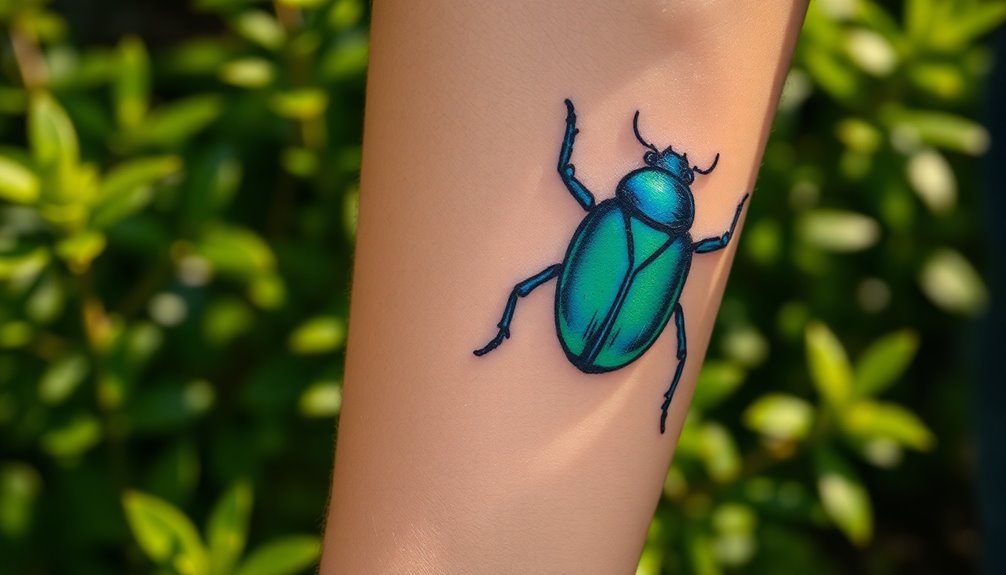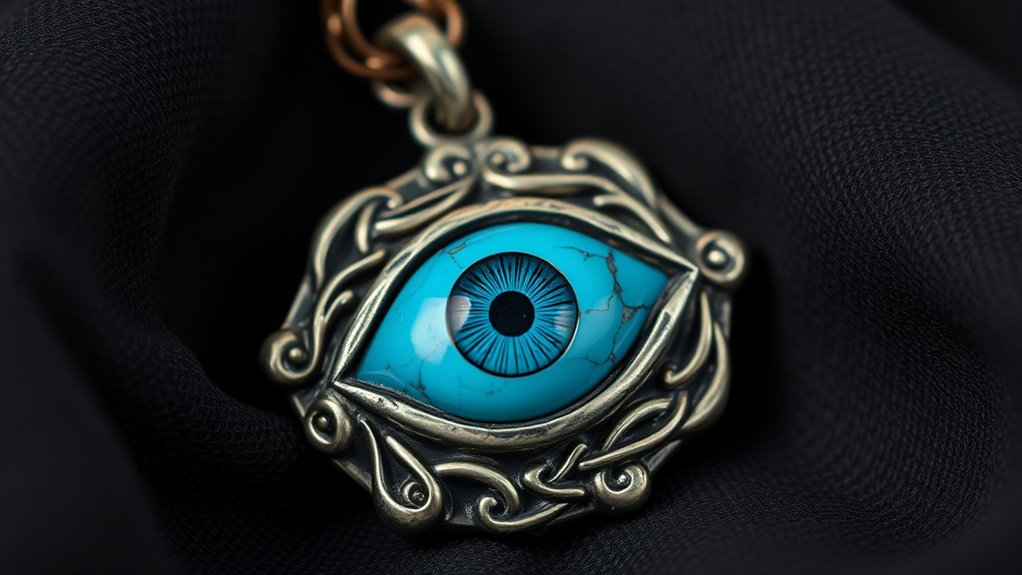

The eye symbolizes awareness, insight, and protection across many cultures. It’s believed to ward off evil, envy, and malevolent spirits, serving as a spiritual and physical safeguard. The “all-seeing eye” represents higher consciousness and inner truth. Its enduring power shows how sight signifies perception, influence, and understanding in both ancient symbols and modern security. If you keep exploring, you’ll uncover even deeper meanings behind this universal emblem and its lasting significance.
Key Takeaways
- The eye symbolizes divine insight, wisdom, and spiritual perception across cultures, representing protection and understanding beyond physical sight.
- Eye motifs serve as amulets or charms believed to ward off evil spirits, envy, and malevolent forces, ensuring safety and well-being.
- The “all-seeing eye” signifies higher consciousness, vigilance, and awareness, emphasizing the importance of perception for protection and insight.
- Eyes reflect inner truth and self-awareness, encouraging deeper understanding and safeguarding of both external and internal realities.
- The enduring power of the eye symbol underscores its role as a universal emblem of perception, influence, and protection throughout history.
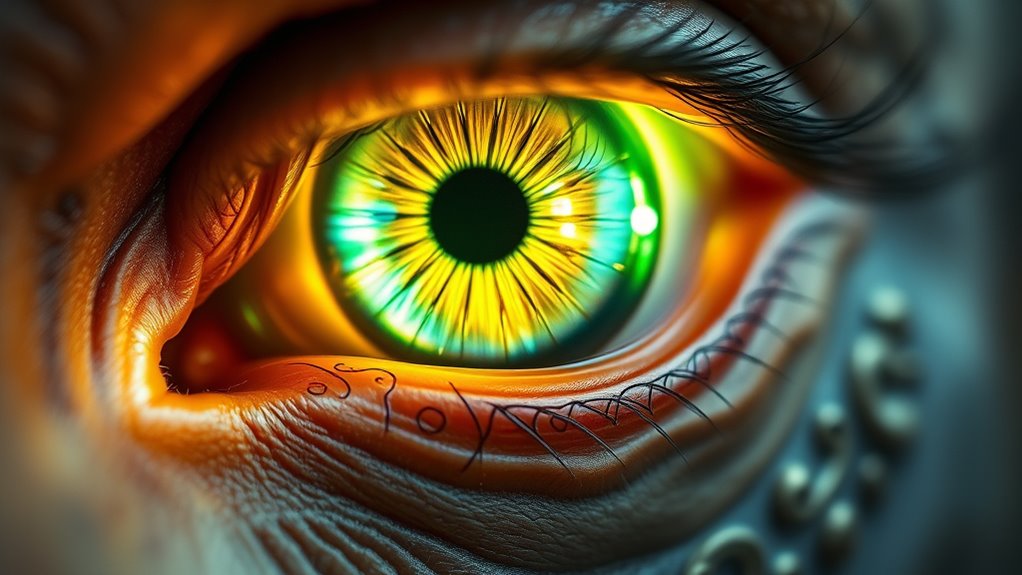
Have you ever wondered why the eye is such a powerful symbol across cultures? Throughout history, people have looked at eyes as more than just organs of sight; they’ve seen them as gateways to deeper truths, protectors, and even spiritual connectors. In many ancient beliefs, the eye represented divine insight, wisdom, and the ability to ward off evil. Cultures from Egypt to Greece placed great importance on eye symbols, believing they held protective powers and held the key to understanding hidden knowledge. Today, in modern interpretations, the eye continues to symbolize protection and perception, but it’s also a reflection of self-awareness and inner truth. This enduring symbolism comes from a long-standing human fascination with vision—how we see the world, ourselves, and the unseen forces that influence both.
In ancient beliefs, the eye was often seen as a spiritual tool. For example, the Egyptian Eye of Horus was considered a symbol of protection, health, and royal power. People believed that by wearing or displaying the eye symbol, they could ward off evil spirits and misfortune. Similarly, in Greek and Roman traditions, the “evil eye” was feared as a curse that could bring harm through envy or malevolence. To guard against this, amulets and charms featuring eye motifs were worn or placed in homes. These beliefs weren’t just superstitions—they reflected a deep understanding that eyes are powerful symbols of perception and influence. They embodied the idea that what we see and how we interpret it can affect our well-being and safety. Additionally, modern AI security measures utilize visual recognition technologies to enhance protection and cybersecurity, demonstrating how the symbolism of the eye extends into contemporary safety practices.
Fast forward to today, and modern interpretations of the eye still carry these ideas of protection but expand into new *realms*. The eye symbol now often appears in logos, tattoos, and art as a sign of awareness, intuition, and insight. It’s associated with mindfulness and the pursuit of truth, encouraging us to look beyond appearances and seek deeper understanding. The “all-seeing eye,” for instance, is popular in contemporary culture as a symbol of consciousness or higher knowledge. Additionally, the eye is seen as a protector in digital spaces—think of security icons or privacy symbols that use eye imagery to signify surveillance or safeguarding personal information. Despite changing contexts, the core idea remains: the eye symbolizes protection, perception, and the quest for clarity. Whether in ancient rituals or modern design, the eye continues to remind us that sight is not just physical—it’s a powerful symbol of insight, awareness, and safeguarding against unseen dangers.
Frequently Asked Questions
How Does Eye Symbolism Vary Across Different Cultures?
You’ll find that cultural interpretations of eye symbolism vary widely across societies. In some cultures, like ancient Egypt, the eye represents protection and divine insight due to its historical significance in religious symbolism. In others, such as Western traditions, the eye often symbolizes awareness and vigilance. Recognizing these differences helps you appreciate how the eye’s symbolism reflects unique cultural beliefs, values, and historical significance around the world.
What Are the Psychological Implications of Eye Imagery?
You might find that eye imagery influences your psychological perception, often triggering subconscious associations like awareness, insight, or vulnerability. When you see eyes, your mind may subconsciously interpret them as signals of trust or scrutiny, affecting your emotional state. This imagery can evoke feelings of being watched or understood, shaping your reactions and perceptions without you consciously realizing it. The eye’s symbolism deeply taps into your subconscious, affecting your mental and emotional responses.
Are There Scientific Explanations for Protective Eye Symbols?
Yes, there are scientific explanations for protective eye symbols. When you see these symbols, your neurophysiological responses kick in, triggering a sense of safety or alertness. Cultural interpretation amplifies this effect, making the symbols powerful across different societies. This combination creates a subconscious reassurance, giving you a feeling of being watched over and protected—an instinct rooted in both biology and shared human experience.
How Has Eye Symbolism Evolved in Modern Art?
You see that eye symbolism history has evolved considerably in modern artistic interpretations. Today, artists use eyes to explore themes like surveillance, inner consciousness, and identity. Instead of traditional notions of protection, contemporary art emphasizes the eye as a lens into personal and societal truths. This shift allows you to interpret eye symbolism as a powerful tool for commentary, reflection, and challenging perceptions, making it a dynamic element in modern art.
What Are the Spiritual Meanings Behind Eye-Related Symbols?
You see that eye symbolism in literature often represents insight, awareness, or spiritual awakening, while in jewelry, it’s a protective talisman against evil. When you wear or interpret these symbols, you’re tapping into deep spiritual meanings of protection, inner vision, and divine knowledge. The eye acts as a gateway to higher understanding, reminding you to trust your intuition and stay vigilant against negative energies.
Conclusion
The eye is like a window to your soul, revealing your inner truths and shielding you from unseen dangers. Its symbolism reminds you to trust your vision and intuition, guiding you through life’s mysteries. As you embrace the eye’s protective power, remember that it’s more than just a symbol—it’s a beacon of clarity and safeguard. Keep its watchful gaze in your heart, and let your inner light shine brightly through life’s shadows.