Fire symbolizes passion, destruction, and renewal, acting as a powerful force of transformation in many cultures and spiritual traditions. It ignites your inner fire, fueling desire and energy, while also representing the destructive side necessary for growth. Through its dual nature, fire reminds you that letting go of the old makes space for new beginnings. To discover how this symbolism influences beliefs and practices worldwide, explore further into its rich cultural significance.
Key Takeaways
- Fire symbolizes intense passion and energy, igniting motivation and emotional drive in individuals and cultures.
- It represents destruction necessary for clearing away the old, making space for growth and renewal.
- Fire acts as a transformative force, symbolizing rebirth and new beginnings after periods of decline or change.
- Across traditions, fire is a sacred purifier, cleansing impurities of body and spirit for spiritual elevation.
- Its dual nature emphasizes that destruction through fire leads to renewal, growth, and personal or communal transformation.
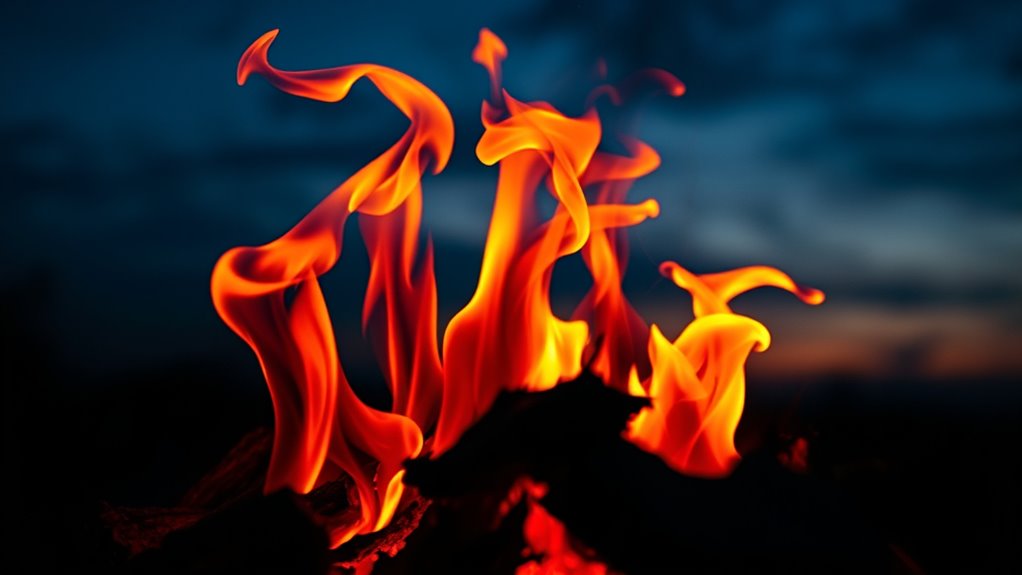
Have you ever wondered what fire truly symbolizes across different cultures and contexts? It’s more than just a source of heat or light; fire embodies deep, complex meanings that resonate on a spiritual and cultural level. In many traditions, fire is seen as a spiritual purifier, a force that cleanses both the body and soul. Think about how ancient societies used fire in rituals to rid themselves of negative energies, impurities, or sins. They believed that fire had the power to transform, burning away the old to make way for renewal. When you witness a sacred fire, you’re observing a symbolic act of purification—an act that signifies letting go of what no longer serves you, whether it’s guilt, fear, or stagnation. Fire’s role as a spiritual purifier isn’t just symbolic; it’s a powerful ritual that helps individuals and communities reset, refresh, and start anew. It’s a reminder that destruction isn’t always negative; sometimes, it’s necessary for growth and rebirth.
Throughout history, fire has played an essential role in ancient rituals. Cultures around the world have incorporated fire into their ceremonies, seeing it as a bridge to the divine or a means of communication with higher powers. In some traditions, fire is considered sacred because it’s seen as an intermediary that carries prayers to the heavens. You might think of the sacred fires of the Zoroastrians, who believe that fire is a divine symbol representing truth and righteousness. Similarly, in Hindu rituals, fire is used in yajnas—sacrificial offerings where flames symbolize divine presence and the destruction of evil. These rituals often involve offerings into the fire, symbolizing surrender and a desire for spiritual cleansing. Fire’s role in ancient rituals underscores its significance as a catalyst for transformation, a force that purifies and elevates the spirit. Moreover, the symbolism of fire is reflected in its presence in current news in Indonesia, highlighting its importance in both cultural traditions and contemporary life.
When you understand how fire is woven into these practices, you begin to see it as more than just a destructive element. It’s a sacred tool for renewal, a symbol of life’s constant cycle of destruction and rebirth. Fire’s symbolism in rituals and spiritual purification reminds us that, while fire can destroy, it also has the power to renew and purify. It’s this dual nature—destructive yet life-giving—that makes fire such a potent symbol across cultures. Whether in sacred ceremonies or personal rituals, fire invites us to embrace change, confront our shadows, and emerge renewed. Its fiery glow is a timeless reminder that sometimes, destruction is necessary to make way for a new beginning.
Frequently Asked Questions
How Does Fire Symbolize Transformation Across Different Cultures?
You see fire symbolize transformation across cultures through fire rituals that mark change or renewal. In some traditions, like Native American ceremonies, fire signifies purification and new beginnings. In Hindu rituals, fire represents divine energy and spiritual awakening. Across cultures, fire’s cultural meanings often involve destruction that clears the way for growth, showing its role as a powerful agent of transformation that encourages renewal and rebirth.
What Are Lesser-Known Mythological Stories Involving Fire Symbolism?
Did you know that in Greek mythology, the fire as a divine instrument creates the mythological phoenix, symbolizing rebirth? Lesser-known stories reveal how fire represents divine power and renewal beyond popular tales. For example, in Chinese legends, the fire deity Zhurong embodies transformative energy. These stories show fire as a sacred force for destruction and renewal, inspiring you to see flames as more than just destruction—they’re a symbol of divine transformation.
How Is Fire Used Metaphorically in Modern Literature?
In modern literature, you see fire used as a metaphor for rebellion and transformation. You might notice fire symbolizing a character’s defiance, igniting change or breaking free from constraints. Poets often use fire in poetry to evoke intense emotions, highlighting inner struggles or passions. It’s a powerful image that represents both destruction and renewal, urging you to see the fire’s dual role in inspiring growth amid chaos.
What Psychological Effects Does Fire Symbolism Have on Individuals?
Fire symbolism can evoke strong psychological effects on you, like boosting emotional resilience when you see it as a symbol of renewal. It also taps into your subconscious fears of destruction and loss, making you confront these emotions. This imagery encourages introspection, helping you process deep-seated anxieties while inspiring hope for transformation. Overall, fire symbolism pushes you to embrace change, fostering growth amid fears of chaos or endings.
Are There Environmental Considerations Linked to Fire Symbolism?
You should consider that fire symbolism links closely to environmental concerns like forest preservation and climate change. Fire represents both destruction of ecosystems and renewal through controlled burns. Recognizing this, you realize the importance of sustainable fire management to prevent wildfires, protect habitats, and combat climate change. Fire’s symbolism reminds you of the delicate balance needed to use fire responsibly, ensuring it benefits nature rather than causing irreversible damage.
Conclusion
As you reflect on fire’s symbolism of passion, destruction, and renewal, remember that its true power lies in what it reveals and what it consumes. Just when you think you’ve understood its meaning, fire shifts, sparks new questions, and challenges your perceptions. Will you harness its energy to create or risk being consumed by it? The answer hangs in the flickering shadows—waiting for you to decide whether to embrace its transformative fire or be left in the ashes.