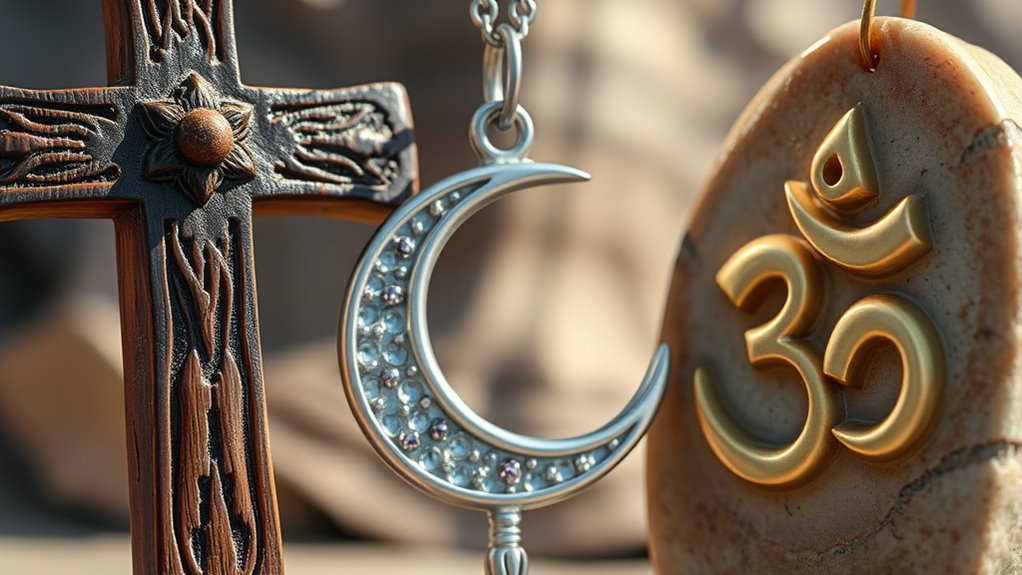

Sacred symbols like the cross, crescent, and Om hold deep spiritual meaning rooted in their cultural history. The cross signifies sacrifice, hope, and salvation in Christianity, while the crescent is linked to Islam, representing faith and lunar cycles. Om embodies universal sound and unity across Hinduism, Buddhism, and Jainism. Understanding these symbols reveals how they express core beliefs and cultural identities, offering a glimpse into their rich spiritual legacies—if you explore further, you’ll uncover even more.
Key Takeaways
- The cross symbolizes suffering, salvation, and hope, primarily in Christianity, with origins dating back to ancient times.
- The crescent represents faith, lunar cycles, and spiritual guidance, closely associated with Islam and its cultural heritage.
- Om is a sacred sound symbolizing universal consciousness, used in meditation and rituals across Hinduism, Buddhism, and Jainism.
- These symbols serve as visual anchors connecting believers to their faith, cultural identity, and spiritual beliefs.
- Their historical roots and cultural significance influence art, architecture, and societal values across various communities.
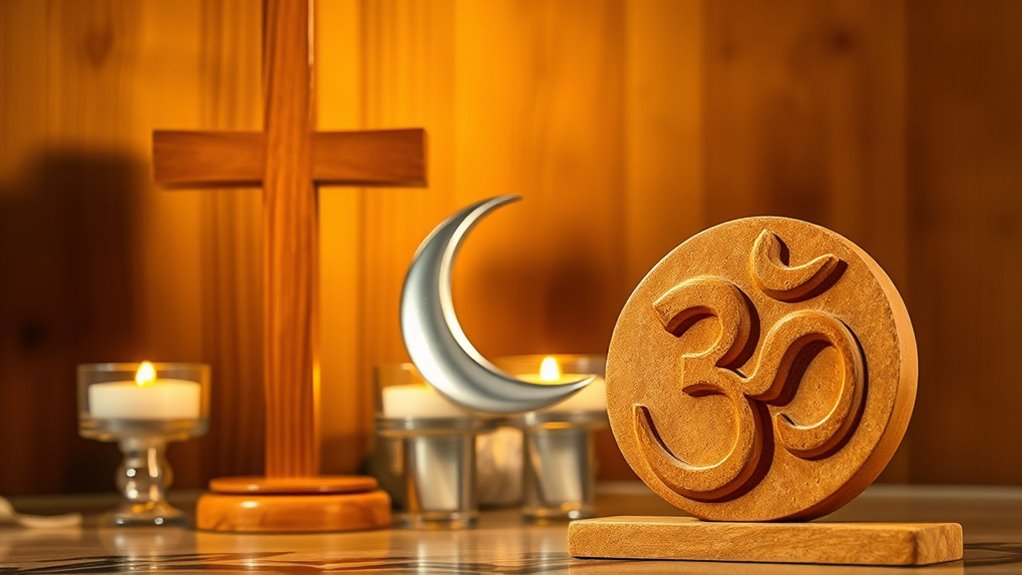
Have you ever wondered why certain symbols hold such profound significance in religious traditions? Symbols like the cross, crescent, and Om serve as powerful visual representations of faith, belief, and spiritual identity. Their origins are deeply rooted in history and culture, shaping their meanings and the way they’re perceived across different societies. By understanding the symbol origins, you can gain insight into their cultural significance, revealing how these images encapsulate complex theological ideas and cultural values that have persisted for centuries.
The cross, for example, is one of the most recognizable symbols in Christianity. Its origins trace back to ancient times, but it became a central emblem after the crucifixion of Jesus Christ. The shape itself—two intersecting lines—represents the intersection of divine and human worlds, sacrifice, and salvation. Culturally, the cross has taken on various forms and meanings, from a symbol of suffering and redemption to a sign of hope and resurrection. In many societies, it’s more than just a religious icon; it’s a cultural artifact that influences art, architecture, and even national identities. Its widespread use underscores its profound cultural significance, serving as a reminder of faith’s enduring power and the values it promotes. Additionally, the cross’s integration into cultural practices highlights how religious symbols can shape societal identity beyond spiritual contexts.
The crescent moon is another symbol with rich origins and cultural significance, especially within Islam. Its appearance dates back to ancient civilizations, where celestial bodies often signified divine approval or celestial power. The crescent became associated with Islam during the Ottoman Empire, symbolizing the lunar calendar used to determine Islamic months and festivals. Today, it’s a universal emblem of Islamic identity, appearing on flags, mosques, and religious literature. Its cultural significance extends beyond mere symbolism; it embodies faith, spiritual guidance, and the Islamic community’s unity. The crescent’s connection to lunar cycles also emphasizes the importance of the natural world and its rhythms in religious practice.
The Om symbol, rooted in Hinduism, Buddhism, and Jainism, carries a different kind of cultural significance. Its origins are ancient, found in sacred texts like the Upanishads and the Vedas. Om represents the universal sound, the essence of the ultimate reality, and the interconnectedness of all existence. Its simple yet profound shape captures the spiritual concept of unity and consciousness. In cultural contexts, Om is used during meditation, prayer, and rituals, serving as a reminder of spiritual awakening and inner peace. Its significance extends beyond religious practice, influencing art, music, and philosophy across South Asia and beyond, symbolizing the universal pursuit of enlightenment. Understanding the cultural significance of Om helps appreciate its role in shaping spiritual and philosophical traditions across multiple religions.
In all these cases, understanding the symbol origins and cultural significance of the cross, crescent, and Om reveals how symbols transcend mere images—they embody the core beliefs and values of entire communities. They act as visual anchors, connecting believers to their faith and cultural heritage, and serve as enduring symbols that continue to inspire and unite across generations.

Qtaikong Large Metal Cross Wall Art with Scripture – Christian Religious Wall Decor, Jesus Home Church Wall Hanging, Scripture-Inspired Christian Gift for Christians(golden)
Exquisite Metal Cross Wall Art with Scripture: This 15-inch wall-mounted cross, crafted from durable metal and adorned with…
As an affiliate, we earn on qualifying purchases.
As an affiliate, we earn on qualifying purchases.
Frequently Asked Questions
What Are the Historical Origins of the Sacred Symbols?
You might find that the symbol origins of the cross, crescent, and Om have deep historical significance. The cross originates from ancient crucifixion practices and early Christian symbolism, representing sacrifice. The crescent moon’s origins trace back to Mesopotamian and Islamic traditions, symbolizing growth and divine power. Om’s roots lie in ancient Indian spiritual texts, embodying universal sound and consciousness. These symbols hold profound historical significance, shaping religious identities and cultural practices worldwide.
How Do Symbols Influence Religious Practices Today?
Imagine holding a cross during prayer; it’s a powerful reminder of faith, strengthening your beliefs. Symbols like these guide religious practices today by serving as focal points for symbolic rituals, reinforcing faith and community identity. They help believers connect deeply with spiritual traditions, making abstract beliefs tangible. Their presence in ceremonies, art, and daily life keeps faith alive and meaningful, fostering a shared sense of devotion and purpose.
Are There Variations of These Symbols Across Different Cultures?
Yes, there are cultural interpretations and symbolism variations of these symbols across different cultures. You’ll find that the cross, crescent, and Om are adapted to reflect local beliefs, practices, and artistic styles. These variations influence how people understand and use them in rituals, emphasizing different meanings. By recognizing these differences, you deepen your appreciation for the rich diversity and significance these sacred symbols hold worldwide.
What Psychological Effects Do These Symbols Have on Believers?
You experience symbolic reassurance and subconscious influence when you see these symbols. They evoke feelings of faith, belonging, and spiritual comfort, often calming anxieties and strengthening your connection to your beliefs. These symbols serve as powerful reminders of divine presence and moral values, subtly shaping your thoughts and actions. Their familiarity provides emotional stability, helping you navigate life’s challenges with a sense of purpose rooted in your spiritual identity.
How Do Symbols Evolve With Changing Religious Doctrines?
You’d think symbols are set in stone, but nope, they actually dance to doctrinal shifts like a chameleon at a paint store. Symbol adaptation happens as beliefs evolve, twisting and turning to fit new doctrines. So, as your religion’s doctrines shift, its symbols morph too—sometimes subtly, sometimes dramatically—ensuring your sacred icons stay relevant, even if their original meanings get a little lost in translation.
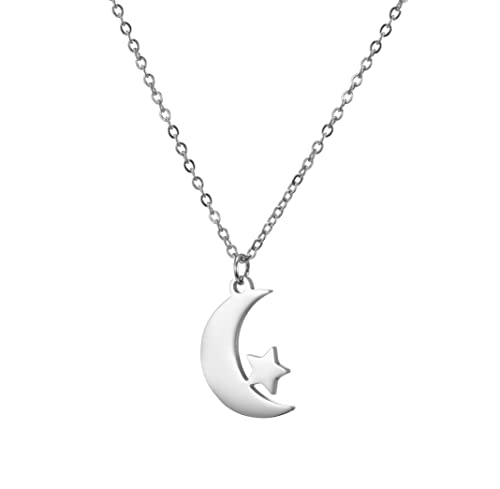
EUEAVAN Islamic Crescent Symbol Necklace for Women Moon Star Pendant Fashion Refined Minimalist Islamic Religion Jewelry for Women
🌝Moon Star Necklace – A star is looped through a moon to form this whimsical lariat necklace for…
As an affiliate, we earn on qualifying purchases.
As an affiliate, we earn on qualifying purchases.
Conclusion
Just as the ancient symbols of the cross, crescent, and Om have guided millions through faith and tradition, they remind you that symbols serve as bridges to the divine. Like sacred keys to spiritual dimensions, they connect you to deeper truths and shared histories. Embrace these symbols, for in their simple forms lies profound power—your own gateway to understanding the eternal, echoing the timeless dance of belief that unites us all beneath the canvas of the cosmos.

Stainless Steel Om Necklace for Men Women, gold plated/Silver/Black Yoga Charm Pendant Necklaces Aum Om Ohm Sanskrit Symbol Hindu Meditation Chain Necklace,Mens Womens Jewelry Gifts
🕉【Om Symbol Necklace】Ohm or aum is a holy meditation symbol of Hinduism, Buddhism, and Jainism with a profusion…
As an affiliate, we earn on qualifying purchases.
As an affiliate, we earn on qualifying purchases.
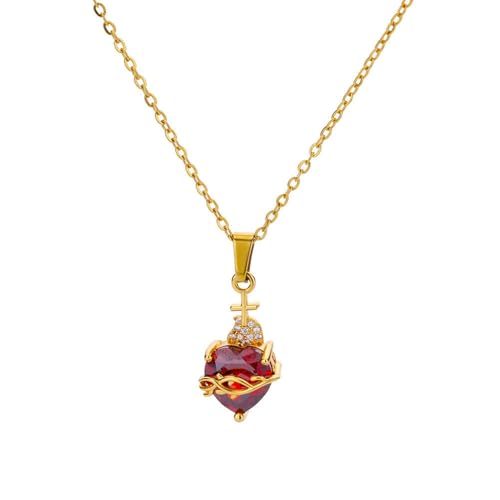
CHUQIU Gold Sacred Heart of Jesus Pink Heart of Mary Necklace for Women with Cubic Zirconia Gemstone Religious Jewelry Mother's Day Birthday Gift
【Design Inspiration】The sacred Heart of Jesus necklaces is a stunning piece that reflect symbolizes God's redeeming love,faith and…
As an affiliate, we earn on qualifying purchases.
As an affiliate, we earn on qualifying purchases.