Trees symbolize your life’s continuous cycles of growth, renewal, and deep connection. They embody much more than just plants; they represent strength, endurance, and transformation across various cultures. Through seasonal changes, trees teach you about resilience and letting go. As symbols of interconnectedness, they remind you that life is ever-changing and that embracing these shifts leads to growth. Exploring their meanings further reveals how they mirror your own journey of renewal and connection.
Key Takeaways
- Trees symbolize life’s interconnectedness and spiritual connection across cultures, exemplified by myths like Yggdrasil.
- They represent growth and renewal through seasonal changes, illustrating cycles of rebirth, transformation, and resilience.
- Shedding leaves signifies letting go of the past, making way for new beginnings and personal development.
- Trees embody strength and endurance, serving as metaphors for overcoming challenges and embracing change.
- Observing natural cycles fosters appreciation for life’s ongoing evolution and the importance of patience and adaptation.
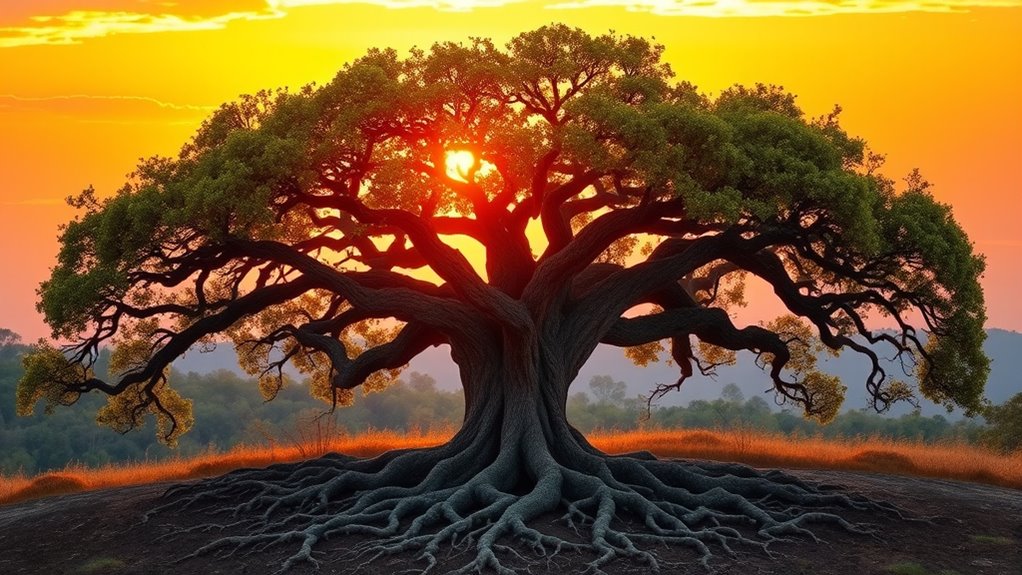
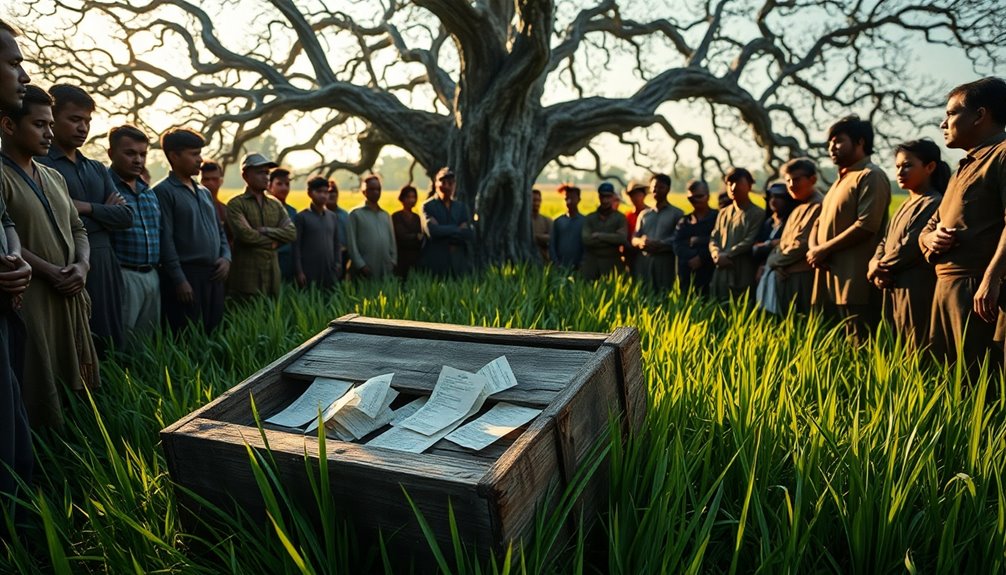
Have you ever wondered why trees hold such powerful symbolism across cultures? It’s because they embody more than just their physical presence; they represent life’s deeper meanings—growth, renewal, and interconnectedness. Throughout history, tree mythology has played a significant role in shaping these perceptions. Many cultures see trees as sacred beings, bridging the earthly and spiritual domains. In Norse mythology, the mighty Yggdrasil, the world tree, connects the nine worlds, symbolizing the universe’s interconnectedness. Similarly, in Celtic traditions, trees like the oak and ash are revered as sacred symbols of strength and endurance. These stories elevate trees from mere plants to divine symbols, emphasizing their importance in cultural narratives about life and existence.
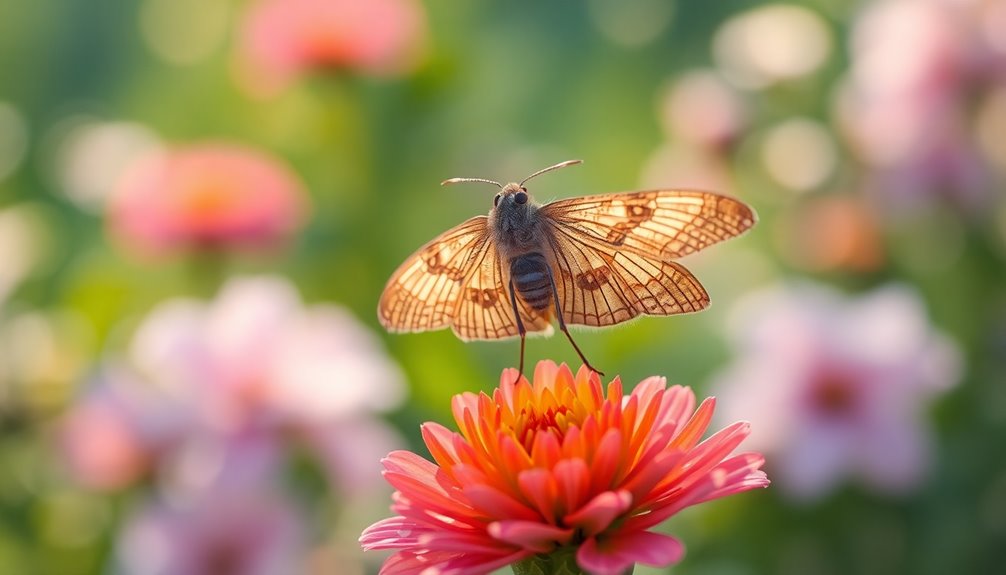
As you observe a tree through the seasons, you witness a living example of change and renewal. Seasonal changes highlight the tree’s ability to adapt and flourish in different environments, reinforcing the idea that growth involves cycles of rest and renewal. In spring, trees burst into new life with fresh leaves and blossoms, signaling rebirth and hope. Summer brings lush foliage, representing vitality and abundance. In fall, leaves change color and fall away, illustrating the natural process of letting go and preparing for renewal. Winter’s dormancy shows resilience, as trees conserve energy and prepare for the cycle to begin again. These seasonal transformations are more than just biological processes—they symbolize the ongoing cycles of life, death, and rebirth that every living being experiences. You can see how nature’s rhythms mirror human experiences, reinforcing the universal themes of renewal and resilience.
Understanding the symbolism of trees in relation to seasonal changes helps you appreciate their deeper significance. Trees are enduring symbols of life’s constant evolution, reminding you that change is inevitable and necessary for growth. When you see a tree shedding its leaves in autumn, it’s a visual reminder that sometimes, letting go is essential for new beginnings. When spring arrives and the tree begins to bud again, it symbolizes hope and the promise of renewal. This natural cycle teaches resilience and patience, qualities that are essential in your personal journey. Trees, through their mythology and seasonal transformations, serve as powerful metaphors for human life—full of transitions, challenges, and rebirths. They remind you that, no matter how tough times may seem, growth and renewal are always possible, rooted in the natural cycles that sustain life itself.

Large Gold Tree of Life Canvas Wall Art Retro Abstract Tree Decor painting Picture Nordic Golden Plant Flowers Posters Prints for living room Bathroom Bedroom Office Hallway Home Decoration
Modern Abstract Tree Wall Art : 12×24 in, 16×32 in,20×40 in, 24×48 in,product comes with hanging accessories. Multiple…
As an affiliate, we earn on qualifying purchases.
As an affiliate, we earn on qualifying purchases.
Frequently Asked Questions
How Do Different Cultures Interpret Tree Symbolism Uniquely?
You see that different cultures interpret tree symbolism uniquely. In art, trees often represent life and growth, but their meanings vary—some see them as sacred, others as symbols of strength. Cultural tree festivals celebrate these differences, like Japan’s Cherry Blossom festivals or Ireland’s Druids’ oak ceremonies. These events highlight how trees symbolize connection, renewal, and heritage across cultures, enriching your understanding of their diverse and profound significance worldwide.
What Are the Spiritual Meanings of Specific Tree Species?
When you explore specific tree species, you’ll find they carry powerful spiritual meanings. For example, oak trees symbolize strength and endurance, while sacred groves connect you to divine energies and ancestral roots. Trees like the cedar represent purification and protection. These sacred groves and tree species offer a bridge to spiritual domains, reminding you that nature’s wisdom is often rooted in the very trees standing quietly around you.
How Has Tree Symbolism Evolved Over Centuries?
Over centuries, tree symbolism has evolved from simple spiritual meanings to complex cultural icons. You see historical interpretations in ancient texts, where trees represented wisdom and endurance. Artistic representations, like paintings and sculptures, have deepened this symbolism, emphasizing growth, connection, and life. As societies change, so does the meaning of trees, reflecting new values and beliefs. This evolution helps you understand how deeply rooted trees are in human history and culture.
Can Trees Influence Human Emotions and Behavior?
Trees can definitely influence your emotions and behavior. When you participate in tree planting, you often feel more connected and uplifted, which boosts emotional well-being. Spending time around trees reduces stress, enhances your mood, and inspires mindfulness. Their presence creates a calming environment, encouraging positive behaviors. So, by engaging with trees, you’re likely to experience improved mental health and a greater sense of connection to nature.
What Role Do Trees Play in Mythology and Folklore Worldwide?
Ever wonder why trees hold such mystical importance worldwide? You’ll find that in mythology and folklore, trees are often seen as sacred, housing tree spirits or serving as sacred groves. These elements symbolize divine connection, protection, or wisdom. Across cultures, such as Norse, African, or Asian traditions, trees represent life’s cycle and spiritual guardianship, reminding us of nature’s sacred role in human stories and beliefs.

MALLMALL6 198Pcs Classroom Tree Bulletin Board Decor Seasonal Tree Summer Autumn Winter Spring Cutouts Border Set Four Seasons Chalkboard Wall Decorations for Kindergarten Elementary School Home
[Classroom Tree Bulletin Board Decor] Seasonal classroom tree bulletin board decor set is designed in spring, summer, autumn…
As an affiliate, we earn on qualifying purchases.
As an affiliate, we earn on qualifying purchases.
Conclusion
As you stand beneath the canopy of a mighty tree, feel its sturdy trunk support you, its leaves whispering stories of life and growth. Remember, just like these trees, your connections and progress weave a beautiful tapestry of strength and renewal. Let the rustling branches remind you that every season brings new beginnings. Embrace the symbolism of trees—your roots, your journey, and your endless potential to flourish amidst life’s ever-changing landscape.

Chakra Tree of Life Birthday Gifts for Women, Sister, Friends, Handcrafted Healing Crystal Tree Bring Money, Luck to Home and Office Decor | Spiritual Gifts for Mom, Unique Gifts for Anniversary
CRYSTAL DECOR & GIFT: Handcrafted Tree of Life with 300 natural crystal beads, measuring 25 to 27 cm in…
As an affiliate, we earn on qualifying purchases.
As an affiliate, we earn on qualifying purchases.

Small silver tree of life dangle earrings
Design: Silver tree of life dangle earrings with intricate branch and leaf details
As an affiliate, we earn on qualifying purchases.
As an affiliate, we earn on qualifying purchases.