
Emotional intelligence books range from practical exercises to workplace advice and broader accounts of how emotions shape decisions. I rank Emotional Intelligence 2.0 as the best overall choice for readers who want an actionable starting point, while Emotional Agility stands out for handling difficult feelings without getting stuck, and Working with Emotional Intelligence focuses on applying EQ at work. The main tradeoff is between a structured, skill-building guide and a more reflective book that explores the ideas in greater depth. Some titles also target a specific setting, so a workplace reader may want something different from someone focused on close relationships or emotional regulation. Read on for the full breakdown and guidance on choosing a book that fits your goals.

Get art and craft supplies delivered free with Prime
- Fast, free delivery on millions of items
- Prime Video, Amazon Music and more included
- Member-only deals all year
Key Takeaways
- Emotional Intelligence 2.0 leads for readers who want a direct, skills-oriented entry point; Emotional Intelligence: Why It Can Matter More Than IQ is better suited to readers seeking the foundational case for EQ.
- The two HBR boxed sets serve different needs: the 14-book set offers a wider reading library, while the 6-book set is a more focused collection for readers who want less breadth.
- Emotional Agility stands apart by centering on how to respond to difficult thoughts and feelings, rather than presenting EQ mainly as a set of interpersonal skills.
- Workplace application has its own lane: Working with Emotional Intelligence is more relevant to professional interactions than books focused mainly on personal habits or relationships.
- The list spans broad introductions and targeted guides, including Emotional Intelligence Habits for routine-building and The Day I Stopped Reacting for emotional regulation; matching the book to the skill you want to practice matters more than choosing the broadest title.
| HBR Emotional Intelligence Ultimate Boxed Set (14 Books) |  | Best for Workplace Depth | Series: HBR Emotional Intelligence Series | Format: Boxed set | Book count: 14 | VIEW ON AMAZON | See Our Full Breakdown |
| Building Emotional Intelligence: The Key to Harnessing Self-Awareness, Personal Growth, and Fulfillment |  | Best for Personal Growth Beginners | Subject: Emotional intelligence | Focus: Self-awareness and personal growth | Topics: Empathy and relationship skills | VIEW ON AMAZON | See Our Full Breakdown |
| The New Emotional Intelligence |  | Best for Relationship-Focused Readers | Subject: Emotional intelligence | Focus: Understanding and managing emotions | Applications: Personal and professional relationships | VIEW ON AMAZON | See Our Full Breakdown |
| Emotional Intelligence 2.0: A Practical Guide to Master Your Emotions |  | Best for Self-Discipline and Leadership | Subject: Emotional intelligence | Subtitle: A Practical Guide to Master Your Emotions | Focus: Emotional management and overthinking | VIEW ON AMAZON | See Our Full Breakdown |
| Emotional Intelligence 2.0 |  | Best for Practical Exercises | Subject: Emotional intelligence | Approach: Practical strategies | Exercises: Self-assessment and growth exercises | VIEW ON AMAZON | See Our Full Breakdown |
| Working with Emotional Intelligence |  | Best for Workplace Leadership | Author: Daniel Goleman | Format: Paperback | Subject: Emotional intelligence | VIEW ON AMAZON | See Our Full Breakdown |
| The Power of Emotional Intelligence: Upgrade Your Mindset to Boost Self-Awareness, Develop Empathy, Nurture Social Skills & Lead with Confidence |  | Best for Personal and Professional Growth | Author: Not specified | Format: Not specified | Subject: Emotional intelligence | VIEW ON AMAZON | See Our Full Breakdown |
| Emotional Intelligence Habits |  | Best for Habit-Focused Relationship Skills | Author: Not specified | Format: Not specified | Subject: Emotional intelligence | VIEW ON AMAZON | See Our Full Breakdown |
| Emotional Intelligence: Why It Can Matter More Than IQ |  | Best Foundational Read | Author: Daniel Goleman | Format: Paperback | Subject: Emotional intelligence | VIEW ON AMAZON | See Our Full Breakdown |
| HBR Emotional Intelligence Boxed Set (6 Books) |  | Best Multi-Book Professional Collection | Publisher/series: Harvard Business Review Emotional Intelligence Series | Format: Boxed set | Number of books: 6 | VIEW ON AMAZON | See Our Full Breakdown |
| Emotional Agility: Get Unstuck, Embrace Change, and Thrive in Work and Life |  | Best for Adapting to Change | Title: Emotional Agility: Get Unstuck, Embrace Change, and Thrive in Work and Life | ASIN: 1592409490 | Subject: Emotional agility | VIEW ON AMAZON | See Our Full Breakdown |
| Emotional Intelligence: How to Master Relationships, Raise Your EQ, and Develop Strong Social Skills |  | Best for Relationship and Social Skills | Title: Emotional Intelligence: How to Master Relationships, Raise Your EQ, and Develop Strong Social Skills | ASIN: 1998352196 | Subject: Emotional intelligence | VIEW ON AMAZON | See Our Full Breakdown |
| The Day I Stopped Reacting: Emotional Regulation for Adults | 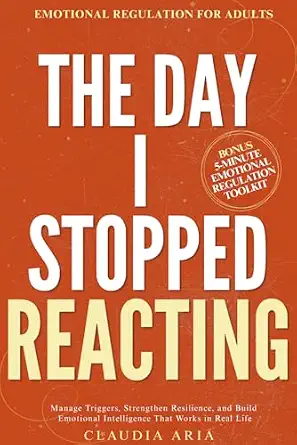 | Best for Managing Emotional Triggers | Title: The Day I Stopped Reacting: Emotional Regulation for Adults | ASIN: B0G3XMVPGB | Topic: Emotional regulation | VIEW ON AMAZON | See Our Full Breakdown |
| emotional intelligence book | ASIN | Subject | Application | Format |
|---|---|---|---|---|
| HBR Emotional Intelligence Ult | 1633699412 | Emotional intelligence | — | Boxed set |
| Building Emotional Intelligenc | B0FC6MNKLS | Emotional intelligence | — | — |
| The New Emotional Intelligence | B0DVRGB979 | Emotional intelligence | — | — |
| Emotional Intelligence 2.0: A | B08HGTJLVQ | Emotional intelligence | Leadership | — |
| Emotional Intelligence 2.0 | 0974320625 | Emotional intelligence | — | Book |
| Working with Emotional Intelli | 0553378589 | Emotional intelligence | Workplace performance and interpersonal relationships | Paperback |
| The Power of Emotional Intelli | B0G4SVGT2M | Emotional intelligence | Personal and professional growth | Not specified |
| Emotional Intelligence Habits | B0C8QH9351 | Emotional intelligence | Personal and professional relationships | Not specified |
| Emotional Intelligence: Why It | 055338371X | Emotional intelligence | Personal and professional outcomes | Paperback |
| HBR Emotional Intelligence Box | 1633696219 | Emotional intelligence | Leadership and interpersonal skills | Boxed set |
| Emotional Agility: Get Unstuck | 1592409490 | Emotional agility | Personal and professional life | — |
| Emotional Intelligence: How to | 1998352196 | Emotional intelligence | Personal and professional development | — |
| The Day I Stopped Reacting: Em | B0G3XMVPGB | — | — | — |
More Details on Our Top Picks
HBR Emotional Intelligence Ultimate Boxed Set (14 Books)
I’d choose this 14-book collection when emotional intelligence is a sustained professional-development goal, not a topic I want to cover in a single sitting. Its HBR series format gives readers multiple angles on applying emotional intelligence at work and in personal relationships, making it a broader resource than Emotional Intelligence 2.0, which is presented as a more focused guide with exercises. That breadth can help managers and experienced readers follow several themes rather than rely on one framework. The tradeoff is scale: a large boxed set can feel like too much for beginners who need a clear starting point, and it takes more shelf space than an individual book. I’d pick it for depth and range, but not for a quick introduction.
Pros:- Fourteen books offer broader coverage than a single-volume guide.
- HBR series content focuses on applying emotional intelligence in professional and personal settings.
- Useful as a reference collection for readers revisiting different topics over time.
Cons:- The volume of material can overwhelm readers who need a simple starting point.
- A boxed set of 14 books requires considerable shelf space and reading time.
Best for: Managers, HR professionals, and experienced readers who want a multi-volume resource for developing emotional intelligence across workplace situations.
Not ideal for: First-time readers seeking a short, guided introduction or anyone with limited storage space; the 14-book set is a substantial commitment.
- Series:HBR Emotional Intelligence Series
- Format:Boxed set
- Book count:14
- Subject:Emotional intelligence
- Applications:Professional and personal settings
- ASIN:1633699412
Our verdict“Choose this set if you want a broad HBR workplace-focused library; pick Emotional Intelligence 2.0 instead for a more compact, exercise-oriented starting point.”
Building Emotional Intelligence: The Key to Harnessing Self-Awareness, Personal Growth, and Fulfillment
This is the most approachable-sounding choice for readers who want emotional intelligence tied to self-awareness and personal growth, with practical techniques, examples, and exercises described in its product information. Compared with the HBR 14-book set, it offers a more focused route into the subject rather than a large collection aimed at several aspects of emotional intelligence. Its stated coverage of empathy and relationship skills also gives beginners a bridge from understanding their own reactions to communicating with other people. The limitation is breadth without much specialization: readers seeking advanced, narrowly targeted guidance may find its scope too general. I’d favor this over a workplace-centered collection for an accessible personal-development entry point, but the available details don’t establish a particular method or technical framework.
Pros:- Describes clear, actionable techniques for developing emotional intelligence.
- Uses an accessible style and relatable examples.
- Includes exercises that give readers ways to apply ideas.
- Connects emotional skills with resilience, confidence, and relationships.
Cons:- Its broad scope may not satisfy readers seeking specialized or advanced guidance.
- The supplied product details do not identify a specific model or structured program.
Best for: New readers seeking accessible exercises and examples for building self-awareness, empathy, and relationship skills in everyday life.
Not ideal for: Experienced readers looking for advanced, specialized instruction or a clearly identified technical framework.
- Subject:Emotional intelligence
- Focus:Self-awareness and personal growth
- Topics:Empathy and relationship skills
- Approach:Practical strategies and real-world examples
- Exercises:Included, according to the product description
- ASIN:B0FC6MNKLS
Our verdict“Choose this for an accessible personal-growth introduction with exercises, but select the HBR set if you need broader workplace coverage.”
The New Emotional Intelligence
I’d consider this title for readers whose main goal is improving how they understand and manage emotions in relationships. Its stated emphasis on personal and professional relationships distinguishes it from Building Emotional Intelligence, which more explicitly connects the subject with self-awareness, personal growth, and exercises. The New Emotional Intelligence promises practical strategies, so it may suit someone looking for usable guidance rather than a purely theoretical overview. However, the description provides little detail about its methods, technical depth, author, or edition. That makes it harder to judge how much substance sits behind the promise of practical tools. Compared with Emotional Intelligence 2.0, which is described as including exercises, this is a less clearly specified choice for readers who want a defined practice routine.
Pros:- Targets emotional understanding and management in relationships.
- Addresses both personal and professional situations.
- Promises practical strategies for emotional development.
Cons:- The supplied description does not explain its methods in detail.
- Technical depth is described as limited.
- Author and edition information are not provided in the product data.
Best for: Readers focused on applying emotional skills to communication and relationships at work and in their personal lives.
Not ideal for: Buyers who want detailed technical coverage, clearly described exercises, or more information about the author and edition before choosing.
- Subject:Emotional intelligence
- Focus:Understanding and managing emotions
- Applications:Personal and professional relationships
- Approach:Practical strategies
- Technical detail:Description notes limited detail
- ASIN:B0DVRGB979
Our verdict“Choose this if relationship application is your main priority, but favor Emotional Intelligence 2.0 if you want exercises specified in the product details.”
Emotional Intelligence 2.0: A Practical Guide to Master Your Emotions
This listing is framed around mastering emotions, reducing overthinking, and building self-discipline, giving it a more self-management and leadership-oriented angle than The New Emotional Intelligence, whose description centers more directly on relationships. That makes it a plausible fit for readers who want emotional skills connected to mental toughness and leading others. The tradeoff is limited bibliographic detail: the supplied information does not name an author or clarify an edition, and it does not describe a specific exercise system. By comparison, the other Emotional Intelligence 2.0 listing explicitly mentions self-assessment and growth exercises, so readers seeking a clearly documented practice component may prefer that entry. I’d choose this version for its stated emphasis, while checking the listing details closely before buying.
Pros:- Focuses on practical application of emotional intelligence.
- Connects emotional skills with self-discipline and mental toughness.
- Explicitly targets leadership development.
Cons:- The supplied product data does not identify an author or edition.
- Specific exercises and methods are not described.
- Its broad promise may be less useful to readers seeking a clearly defined skills program.
Best for: Readers who want emotional intelligence guidance framed around managing overthinking, developing self-discipline, and strengthening leadership.
Not ideal for: Buyers who require clear author and edition information or want a detailed account of the book’s exercises before purchase.
- Subject:Emotional intelligence
- Subtitle:A Practical Guide to Master Your Emotions
- Focus:Emotional management and overthinking
- Related goals:Mental toughness and self-discipline
- Application:Leadership
- ASIN:B08HGTJLVQ
Our verdict“Choose this listing for its self-discipline and leadership emphasis, but favor the other Emotional Intelligence 2.0 entry if documented exercises are your priority.”
Emotional Intelligence 2.0
Of these five options, this is the clearest fit for readers who want to practice emotional intelligence skills rather than only read about them: the supplied description specifically mentions exercises and self-assessment. That gives it a more concrete self-guided angle than The New Emotional Intelligence, whose product details promise practical strategies but provide less information about a practice routine. It also avoids the commitment of the HBR 14-book set, making it a more focused single-title choice. The tradeoff is that the available information says little about the exercises, chapter structure, or edition, so buyers cannot tell how extensive or current the material is from these details alone. I’d choose this for a compact personal or professional skills resource, while checking the specific listing for edition information.
Pros:- Includes exercises for self-assessment and growth, according to the product description.
- Offers practical strategies for managing and understanding emotions.
- Applies to both personal and professional development.
Cons:- The supplied information does not specify the edition or detail the exercise format.
- Its content coverage is less fully described than the 14-book HBR collection.
Best for: Readers seeking a single book with self-assessment and exercises for improving emotional skills in personal or professional life.
Not ideal for: Buyers who need detailed edition information, a broad multi-book reference collection, or a fully described exercise program before choosing.
- Subject:Emotional intelligence
- Approach:Practical strategies
- Exercises:Self-assessment and growth exercises
- Applications:Personal and professional development
- Format:Book
- ASIN:0974320625
Our verdict“Choose this for a focused, exercise-oriented introduction, and choose the HBR set if you want a much broader reference library.”
Working with Emotional Intelligence
Working with Emotional Intelligence is the most workplace-focused choice in this group. Daniel Goleman connects emotional skills to leadership, performance, and professional relationships, making the ideas easier to apply to team dynamics than the broader life-success case in Emotional Intelligence: Why It Can Matter More Than IQ. Its practical strategies suit readers who want to develop how they lead and collaborate, rather than start with a general introduction to the subject. The tradeoff is that some framing may feel dated to readers seeking a newer take on workplace culture, and sections can repeat ideas. Compared with the HBR Emotional Intelligence Boxed Set, this is a single, more focused read, but it offers less breadth across specialized topics.
Pros:- Applies emotional intelligence directly to leadership and professional performance
- Offers practical strategies for workplace relationships
- Clearly explains core emotional intelligence concepts
- A focused single-book alternative to the broader HBR Emotional Intelligence Boxed Set
Cons:- Some concepts may feel dated to readers looking for a contemporary workplace lens
- Repeated points can make parts of the book feel less concise
Best for: Managers, team leads, and professionals seeking practical ways to strengthen leadership and workplace relationships
Not ideal for: Readers seeking current workplace examples, a concise introduction, or coverage across multiple specialized emotional intelligence topics
- Author:Daniel Goleman
- Format:Paperback
- Subject:Emotional intelligence
- Primary focus:Leadership and professional success
- Application:Workplace performance and interpersonal relationships
- Approach:Practical strategies
- ASIN:0553378589
Our verdict“Choose this if your main goal is to apply emotional intelligence to leadership and day-to-day professional relationships.”
The Power of Emotional Intelligence: Upgrade Your Mindset to Boost Self-Awareness, Develop Empathy, Nurture Social Skills & Lead with Confidence
The Power of Emotional Intelligence links self-awareness, empathy, and social skills to growth across work and personal life. That dual setting gives it a wider day-to-day remit than Working with Emotional Intelligence, which concentrates more directly on workplace performance and leadership. The described examples and actionable techniques may suit readers who want emotional intelligence framed as an ongoing mindset practice, including confidence in leadership. The tradeoff is that its broad promise may cover familiar ground for readers who already know the basics; the supplied details do not identify a distinct framework or format to help experienced readers judge its depth. Choose it for a general growth focus, not as a substitute for a specifically workplace-centered or foundational text such as Emotional Intelligence: Why It Can Matter More Than IQ.
Pros:- Connects self-awareness, empathy, and social skills to both work and personal life
- Includes actionable techniques according to the product description
- Addresses confidence and leadership alongside interpersonal growth
- Frames emotional intelligence as a mindset that can be developed over time
Cons:- May repeat familiar ideas for readers who already know emotional intelligence basics
- The supplied information does not specify a distinct method or format
- Its broad scope may offer less depth on workplace leadership than Working with Emotional Intelligence
Best for: Readers who want to build self-awareness and empathy for use in both personal relationships and professional settings
Not ideal for: Experienced readers seeking a clearly differentiated framework or a specialized, workplace-only treatment of emotional intelligence
- Author:Not specified
- Format:Not specified
- Subject:Emotional intelligence
- Primary focus:Self-awareness, empathy, and social skills
- Application:Personal and professional growth
- Leadership focus:Leading with confidence
- Approach:Practical strategies and mindset development
- ASIN:B0G4SVGT2M
Our verdict“Pick this for a broad personal-and-work growth guide centered on self-awareness, empathy, and social skills.”
Emotional Intelligence Habits
Emotional Intelligence Habits is the most explicitly habit-centered option in this batch, with attention to self-awareness, self-regulation, and empathy. That emphasis makes it a potential fit for readers who want to connect emotional intelligence with repeated behaviors in relationships, rather than focus primarily on leadership as in Working with Emotional Intelligence. Its stated relationship focus also separates it from The Power of Emotional Intelligence, which describes a broader personal and professional growth agenda. The main limitation is the lack of specific implementation details in the supplied description: buyers cannot tell what exercises, routines, or step-by-step guidance the book provides. I would choose it when the habits framing is appealing, but readers who need a clearly described method may prefer a better-documented practical guide.
Pros:- Centers emotional intelligence on habits rather than concepts alone
- Covers self-awareness and self-regulation
- Includes empathy as a relationship skill
- A more relationship-oriented focus than Working with Emotional Intelligence
Cons:- The supplied description gives few details about how to put its strategies into practice
- The available information does not clarify its format or a specific framework
- Its relationship focus is less directly tailored to professional leadership than Working with Emotional Intelligence
Best for: Readers who want to focus on building emotional awareness, self-regulation, and empathy into their relationship habits
Not ideal for: Buyers who need detailed exercises, a clearly laid-out implementation plan, or a strong workplace leadership focus
- Author:Not specified
- Format:Not specified
- Subject:Emotional intelligence
- Primary focus:Developing emotional intelligence habits
- Skills covered:Self-awareness, self-regulation, and empathy
- Application:Personal and professional relationships
- ASIN:B0C8QH9351
Our verdict“Consider this if you want a habit-oriented approach to emotional awareness and relationships and do not require a clearly specified action plan.”
Emotional Intelligence: Why It Can Matter More Than IQ
Emotional Intelligence: Why It Can Matter More Than IQ is the best fit here for readers who want the case for why emotional skills matter across life, before choosing a narrower application. Its focus on how emotional abilities shape personal and professional outcomes gives it a broader conceptual starting point than Working with Emotional Intelligence, which directs attention toward leadership and work. It also serves a different purpose from The Power of Emotional Intelligence, whose description emphasizes growth strategies rather than the core argument about emotional intelligence’s importance. The book offers practical insights, though readers seeking only a concise how-to may find its anecdotes repetitive. I rank it as a foundation rather than the most targeted choice: useful for understanding the subject’s reach, less suited to readers who want a specialized habit or workplace plan.
Pros:- Makes a clear case for the role of emotional intelligence alongside traditional measures of ability
- Connects emotional skills to personal and professional outcomes
- Provides practical insights into improving emotional skills
- Offers a broader foundation than the workplace-specific Working with Emotional Intelligence
Cons:- Anecdotes may feel repetitive to some readers
- Its broad argument is less targeted than a guide centered on leadership or habit-building
- Readers seeking only step-by-step exercises may prefer a more directly instructional option
Best for: Readers new to emotional intelligence who want to understand how emotional skills may affect personal and professional outcomes
Not ideal for: Readers who already know the core argument and want a concise, specialized action guide for workplace leadership or daily habits
- Author:Daniel Goleman
- Format:Paperback
- Subject:Emotional intelligence
- Primary focus:The importance of emotional intelligence relative to IQ
- Application:Personal and professional outcomes
- Approach:Explanatory argument with practical insights
- ASIN:055338371X
Our verdict“Start here if you want the broad argument for emotional intelligence before moving to a focused practical guide.”
HBR Emotional Intelligence Boxed Set (6 Books)
HBR Emotional Intelligence Boxed Set (6 Books) offers the broadest professional collection in this group, bringing together six books from the Harvard Business Review Emotional Intelligence Series. That range is its main distinction from the single-volume Working with Emotional Intelligence: the boxed set can serve readers who want several perspectives and strategies, while Goleman’s book keeps the focus on workplace performance and leadership in one continuous read. It is also more work-oriented than The Power of Emotional Intelligence, which spans personal as well as professional growth. The tradeoff is practical: six volumes take more room, and overlapping material may make the collection feel less cohesive or efficient. Choose it for breadth and reference value, not for the lightest introduction or one tightly unified argument.
Pros:- Includes six books in the HBR Emotional Intelligence Series
- Offers a wider range of professional perspectives than a single-volume guide
- Published as a Harvard Business Review series
- Addresses leadership and interpersonal skills
Cons:- The boxed set can be bulky and harder to store
- Topics may overlap across the individual books
- Less convenient than a single focused read such as Working with Emotional Intelligence
Best for: Professionals, managers, and leadership learners who want a multi-volume collection of emotional intelligence perspectives for work
Not ideal for: Readers with limited shelf space or those who prefer one concise, unified book without possible overlap
- Publisher/series:Harvard Business Review Emotional Intelligence Series
- Format:Boxed set
- Number of books:6
- Subject:Emotional intelligence
- Primary focus:Professional and personal contexts
- Application:Leadership and interpersonal skills
- ASIN:1633696219
Our verdict“Choose the set if you want broad, work-oriented coverage across multiple books and have room for a collection.”
Emotional Agility: Get Unstuck, Embrace Change, and Thrive in Work and Life
Emotional Agility is the strongest fit here for readers whose main challenge is getting stuck in difficult feelings or life changes. Its focus on adaptability and resilience gives emotional intelligence a practical direction: rather than just naming emotions, readers are encouraged to respond to them in ways that support personal and professional growth. Compared with The Day I Stopped Reacting, which centers on triggers and regulation, this book has a broader emphasis on adapting to change. That wider scope may suit readers facing shifting priorities, though it may feel less targeted if they want a narrow guide to managing specific reactions. The supplied description promises practical strategies but gives no detail on exercises, structure, or depth, so readers seeking a clearly specified step-by-step program may prefer a more explicitly skills-focused title such as Emotional Intelligence: How to Master Relationships, Raise Your EQ, and Develop Strong Social Skills.
Pros:- Centers on practical emotional resilience strategies
- Connects adaptability with challenges in both work and personal life
- Encourages a constructive response to change
Cons:- The supplied description does not identify specific exercises or a step-by-step method
- Its broad focus may be less targeted than a book devoted to emotional regulation
- The available product information does not clarify the book’s structure or level of detail
Best for: Readers dealing with personal or workplace change who want to build emotional flexibility and resilience.
Not ideal for: Readers seeking a detailed, narrowly focused program for managing emotional triggers or practicing social skills.
- Title:Emotional Agility: Get Unstuck, Embrace Change, and Thrive in Work and Life
- ASIN:1592409490
- Subject:Emotional agility
- Focus:Adapting to life’s challenges
- Key themes:Adaptability and resilience
- Application:Personal and professional life
Our verdict“Choose this if adapting to change is your main emotional intelligence goal, but look elsewhere for a narrowly defined trigger-management program.”
Emotional Intelligence: How to Master Relationships, Raise Your EQ, and Develop Strong Social Skills
For readers who want emotional intelligence to show up in everyday conversations, Emotional Intelligence: How to Master Relationships, Raise Your EQ, and Develop Strong Social Skills has the clearest relationship-centered promise in this group. Its emphasis on understanding and managing emotions is tied directly to stronger social skills and relationships, making it a more interpersonal choice than Emotional Agility, which centers on flexibility through change. That focus also makes this a sensible starting point for personal development, but the available description does not specify exercises, examples, or a learning framework. Readers who already know the basics may find the advice too introductory; those wanting to work on emotional triggers may get a more focused fit from The Day I Stopped Reacting. I would choose this title for broad relationship skill-building, not for a specialist-level or highly structured course.
Pros:- Directly links emotional intelligence with relationship skills
- Covers understanding and managing emotions
- Aims to support both personal and professional development
- Offers a broad entry point for readers building social skills
Cons:- The available description suggests the material may be basic for advanced readers
- No specific exercises or teaching framework are identified
- The product information does not clarify how the advice is organized
Best for: Readers who want approachable guidance for improving communication, relationships, and social confidence in personal or work settings.
Not ideal for: Advanced readers seeking technical depth, or buyers who want a clearly described workbook or structured practice plan.
- Title:Emotional Intelligence: How to Master Relationships, Raise Your EQ, and Develop Strong Social Skills
- ASIN:1998352196
- Subject:Emotional intelligence
- Focus:Relationships and social skills
- Key themes:Understanding and managing emotions
- Application:Personal and professional development
Our verdict“Pick this for broad, practical relationship and social-skill development, but choose a more specialized title if you already have a strong EQ foundation.”
The Day I Stopped Reacting: Emotional Regulation for Adults
The Day I Stopped Reacting takes the most focused approach in this trio: it targets emotional triggers and regulation for adults, with real-life application and resilience as its stated aims. That makes it a closer match for readers who want to pause reactive patterns than Emotional Agility, whose broader focus is adapting to change. It is also narrower than Emotional Intelligence: How to Master Relationships, Raise Your EQ, and Develop Strong Social Skills, which addresses social and relationship skills. This specificity is useful when emotional reactions are the immediate problem, but the supplied information does not describe the techniques, exercises, or situations covered. Readers seeking a wider foundation in EQ may find its emphasis restrictive, while those who want detailed, verifiable guidance may need more information before choosing it.
Pros:- Focuses directly on emotional triggers and regulation
- Frames skills around real-life situations for adults
- Connects emotional regulation with long-term resilience
Cons:- The supplied description does not identify specific techniques or exercises
- Its narrow focus may not cover broader social or relationship skills
- The available product information provides little detail about the book’s structure
Best for: Adults who want practical guidance for recognizing emotional triggers, regulating reactions, and building resilience in daily situations.
Not ideal for: Readers seeking a broad introduction to emotional intelligence, relationship skills, or a book with a clearly described practice framework.
- Title:The Day I Stopped Reacting: Emotional Regulation for Adults
- ASIN:B0G3XMVPGB
- Topic:Emotional regulation
- Target audience:Adults
- Focus:Managing emotional triggers
- Key themes:Practical application and resilience
Our verdict“Choose this when managing adult emotional triggers is your main goal, rather than building a broad foundation in EQ or social skills.”

How We Picked
I compared these 13 titles by their main purpose, the reader they appear to serve, and how directly their subject fits emotional intelligence. I gave more weight to books with a clear route from understanding emotions to practicing a skill, while also recognizing that research-oriented explanations, workplace guidance, and focused emotional-regulation approaches meet different needs. I treated the HBR collections as reference-style options rather than single, linear guides.
The ranking reflects usefulness across common reader goals, clarity of audience, and how distinct each book is from the rest of the lineup. A practical general-purpose guide ranks ahead of a narrower title for most readers, but a specialized book may be the better pick for someone with a specific goal. The list includes titles with similar names; I distinguish them by their stated focus and avoid assuming that similar titles offer identical content. Readers should check the edition and contents before buying, particularly for boxed sets.
| emotional intelligence book | Format | Subject |
|---|---|---|
| HBR Emotional Intelligence Ult | Boxed set | Emotional intelligence |
| Building Emotional Intelligenc | — | Emotional intelligence |
| The New Emotional Intelligence | — | Emotional intelligence |
| Emotional Intelligence 2.0: A | — | Emotional intelligence |
| Emotional Intelligence 2.0 | Book | Emotional intelligence |
| Working with Emotional Intelli | Paperback | Emotional intelligence |
| The Power of Emotional Intelli | Not specified | Emotional intelligence |
| Emotional Intelligence Habits | Not specified | Emotional intelligence |
| Emotional Intelligence: Why It | Paperback | Emotional intelligence |
| HBR Emotional Intelligence Box | Boxed set | Emotional intelligence |
| Emotional Agility: Get Unstuck | — | Emotional agility |
| Emotional Intelligence: How to | — | Emotional intelligence |
| The Day I Stopped Reacting: Em | — | — |
Factors to Consider When Choosing Emotional Intelligence Books
Before choosing among emotional intelligence books, I would pin down the change you want to make. The category includes theory, workplace skills, relationship guidance, and emotional regulation, and those approaches are not interchangeable. These factors can help you choose a useful reading experience rather than simply a book with a familiar title.
Start With the Skill You Want to Build
Name the situation that prompted your search: recognizing your feelings, managing reactions, reading other people, or communicating more effectively. Broad EQ books can introduce several skills, but they may give less attention to the one issue you most want to address. A focused book can be more useful when a recurring challenge is clear, while a general guide makes sense when you are still learning the vocabulary. Avoid choosing a title solely because it promises better relationships or confidence; check whether its stated focus matches your goal. If several needs matter, pick the one causing the most friction now and use it as your first reading lens.
Choose Between Frameworks and Practice
Some readers want a model for understanding emotional intelligence; others want prompts, exercises, or habits they can try. A framework can help you make sense of feelings and behavior, but it may not offer a ready-made routine for practice. A hands-on guide can provide action steps, though those steps may feel limited if you first need a fuller explanation of the subject. Check the sample pages or table of contents for reflection questions, exercises, and the balance between explanation and application. A useful match is the format you are likely to return to, not the one that sounds most ambitious.
Check Whether the Advice Fits Your Setting
Emotional intelligence at work can involve feedback, leadership, conflict, and collaboration, while personal relationships call for attention to listening, boundaries, and communication. A workplace-centered book may use examples that feel remote from family or friendship challenges. A relationship-focused guide may not offer enough help with team dynamics or professional judgment. Readers who want skills that transfer across settings should look for principles that are explained beyond one narrow context. One common mismatch is buying a workplace title for a personal concern simply because both mention empathy or social skills.
Decide How Much Depth You Want
A single book is easier to approach and follow from start to finish; a boxed set offers more viewpoints but asks for more time and a clearer reading plan. Collections can suit readers who want several related topics or a reference shelf, yet their breadth does not automatically make them the best starting point. If you are new to EQ, begin with one accessible guide and add a collection once you know which areas deserve more attention. If you already have a specific professional or personal interest, a larger set may provide useful range. Confirm the included titles and editions before selecting a boxed set.
Look for Advice You Can Put Into Practice
Emotional intelligence is easier to develop when ideas connect to actions you can observe in daily life. Look for prompts that help you notice triggers, pause before responding, or review how a conversation went. Broad inspiration can be appealing, but it may leave you unsure what to do the next time a familiar situation occurs. At the same time, do not treat a short checklist as proof that a book covers every aspect of EQ. A sound choice offers a manageable next step while respecting that emotional habits develop through repeated practice.
Match the Reading Style to Your Patience
Some books are organized for quick reference, while others build an argument through explanation and examples. If you prefer to read in short sessions, a clear structure with compact sections may help you keep returning to the material. If you enjoy a sustained argument, a more reflective or research-oriented approach may hold your attention better. Do not confuse brevity with ease: a concise book can still ask for serious self-reflection. When possible, preview the opening pages and chapter layout so the book’s pace fits how you actually read.
Frequently Asked Questions
Which emotional intelligence book should I start with if I have never read one?
I would start with a practical, general guide rather than a large collection or a title focused on a single setting. A book with a clear structure and exercises can help you identify which EQ skills you want to develop next. If you mainly want to understand the concept before trying techniques, choose a more explanatory introduction instead. Check the contents for a balance of self-awareness, emotional regulation, and social skills, since a book that covers only one area may feel incomplete as a first read. You can then move to a specialist title based on what you find most relevant.
Should I choose a single book or one of the HBR boxed sets?
Choose one book when you want a guided path through a particular topic or a manageable first step. A boxed set makes more sense if you want multiple perspectives and expect to consult its books over time. The larger collection offers more breadth, while the smaller one may be easier to approach when you do not need a wide library. Before buying either set, verify the included titles and editions and consider whether you will read several of them. A collection is less useful if you already know the specific skill you need and only want one focused guide.
Are workplace emotional intelligence books useful for personal relationships?
They can offer transferable ideas about listening, empathy, and managing reactions, but their examples may be shaped by teams, leadership, or professional feedback. If your main concern is conflict with a partner, family member, or friend, a relationship-oriented book may speak more directly to that setting. Look at the chapter topics and examples rather than assuming that EQ advice applies equally everywhere. A workplace book may still help if you want general communication skills, but it is a less direct fit for intimate relationship patterns. Choose based on the situations where you want to use the advice most.
Do I need an emotional intelligence book with exercises?
Exercises are helpful if you want prompts that turn ideas into regular reflection or practice. They are not required if your immediate goal is to understand the concepts or compare different approaches to EQ. Before choosing an exercise-heavy book, check whether the activities match your comfort level and the time you can set aside. A long workbook-style routine may be hard to maintain, while a small number of repeatable prompts may fit more naturally into daily life. The best format is one you are likely to use after the initial read.
Can an emotional intelligence book help with strong reactions, or should I choose a general EQ guide?
If managing intense reactions is your main concern, a book explicitly focused on emotional regulation may offer a closer match than a broad EQ introduction. General guides can still help by building self-awareness and communication skills, but they may spread attention across several topics. Consider whether you want help understanding a reaction, changing what you do in the moment, or improving the conversation that follows; these are related but distinct goals. If the problem is persistent or seriously affecting daily life, a book can support reflection but may not replace professional guidance. Choose a focused title when the specific pattern is already clear.
Conclusion
For most readers, I recommend Emotional Intelligence 2.0 as the best overall starting point because its practical orientation gives EQ a clear route into everyday skill-building. For value in breadth, the HBR Emotional Intelligence Boxed Set (6 Books) offers a focused collection, while the 14-book HBR set is my best premium-style choice for readers who want a broader library. Beginners who would rather start with an explanation of why EQ matters can choose Emotional Intelligence: Why It Can Matter More Than IQ. For specific needs, pick Emotional Agility for working with difficult feelings, Working with Emotional Intelligence for professional situations, or The Day I Stopped Reacting for a focused look at emotional regulation. The right choice is the one that addresses the setting and skill you want to work on now.
Halloween Picks
halloween
As an affiliate, we earn on qualifying purchases.