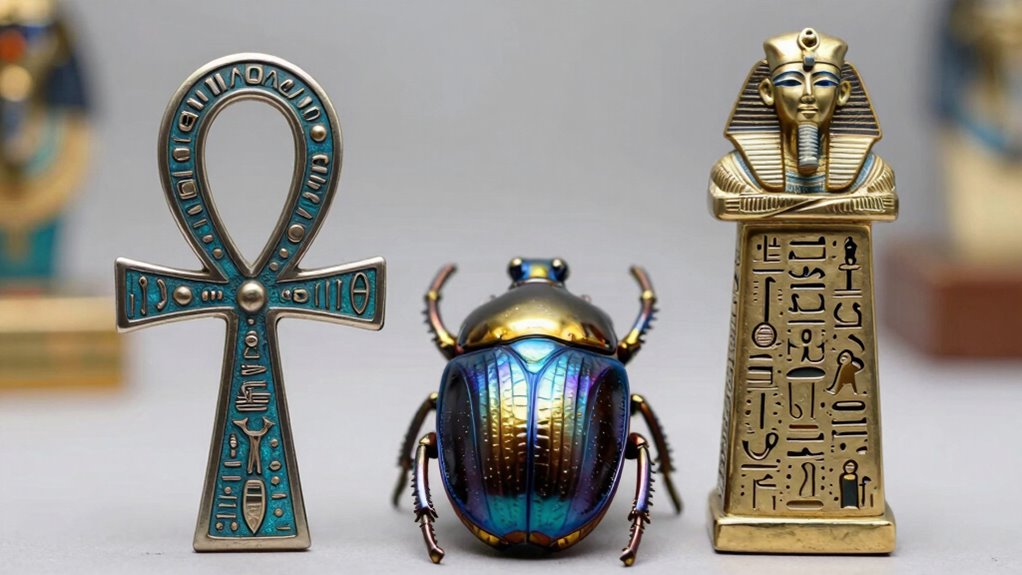

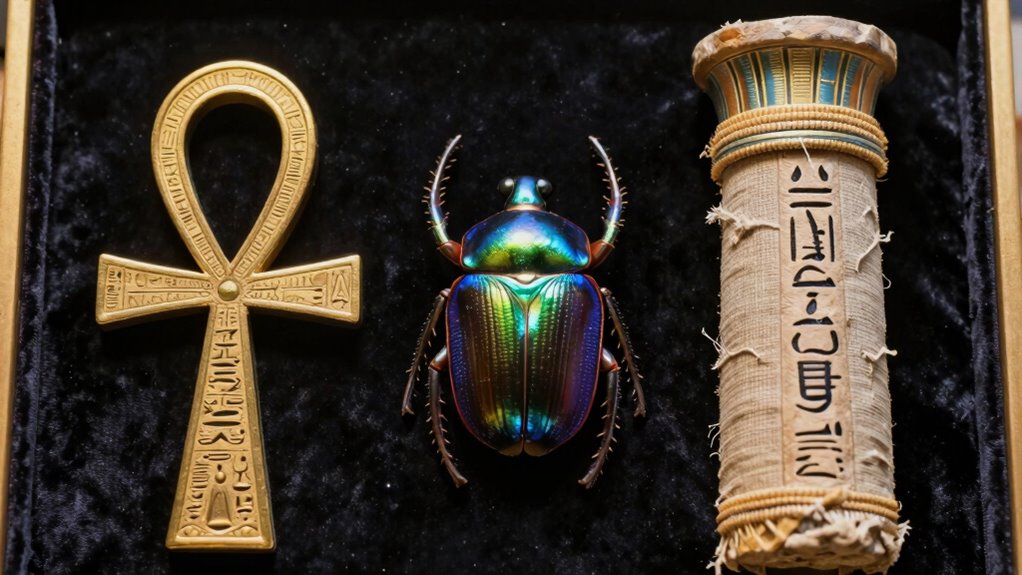
The Ankh, Scarab, and Djed are iconic symbols of ancient Egypt, each representing life, rebirth, and stability. The Ankh symbolizes eternal life and divine power, often held by gods and pharaohs. The Scarab stands for transformation and protection, linked to the sun god and rebirth. The Djed signifies strength and endurance, associated with resurrection. Understanding these symbols helps you appreciate their spiritual significance and how they shaped Egyptian culture—exploring further reveals their timeless influence today.

Get art and craft supplies delivered free with Prime
- Fast, free delivery on millions of items
- Prime Video, Amazon Music and more included
- Member-only deals all year
Key Takeaways
- The Ankh symbolizes life, immortality, and divine power, often depicted in the hands of gods and pharaohs.
- The Scarab represents rebirth, transformation, and protection, inspired by the dung beetle’s role in nature.
- The Djed signifies stability, strength, and resurrection, depicting a stylized backbone associated with Osiris.
- These symbols played vital roles in Egyptian religion, funerary practices, daily life, and modern cultural revival.
- Their imagery and meanings continue to inspire contemporary jewelry, art, and spiritual symbolism worldwide.
As an affiliate, we earn on qualifying purchases.
What Are the Main Symbols of Ancient Egypt and Why Do They Matter?
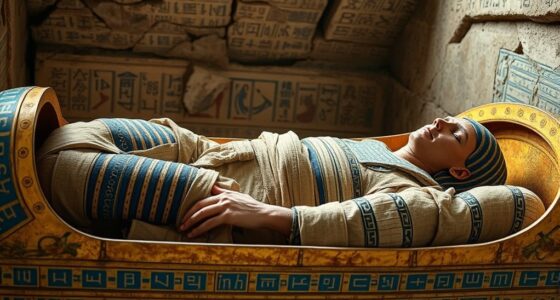
Ancient Egypt’s symbols are more than simple images; they embody the core beliefs and values of the civilization. These symbols carry deep symbolic meanings that reveal how Egyptians viewed life, death, and the divine. For example, many symbols represented concepts like fertility, protection, and eternal life, giving them significant cultural importance. They weren’t just decorative; they served as spiritual tools and expressions of identity. Understanding these symbols helps you grasp the Egyptians’ worldview and their reverence for gods and the afterlife. Each symbol’s cultural significance made it essential in rituals, burials, and daily life. Additionally, these icons often served as protective symbols to ward off evil and ensure safety. Recognizing the symbolic meanings behind these icons enhances appreciation for their role in ancient Egyptian spirituality and daily practices. In essence, these icons encapsulate Egypt’s rich spiritual and cultural heritage, making them key to comprehending the civilization’s enduring legacy.
What Is the Ankh Symbol and What Does It Mean?
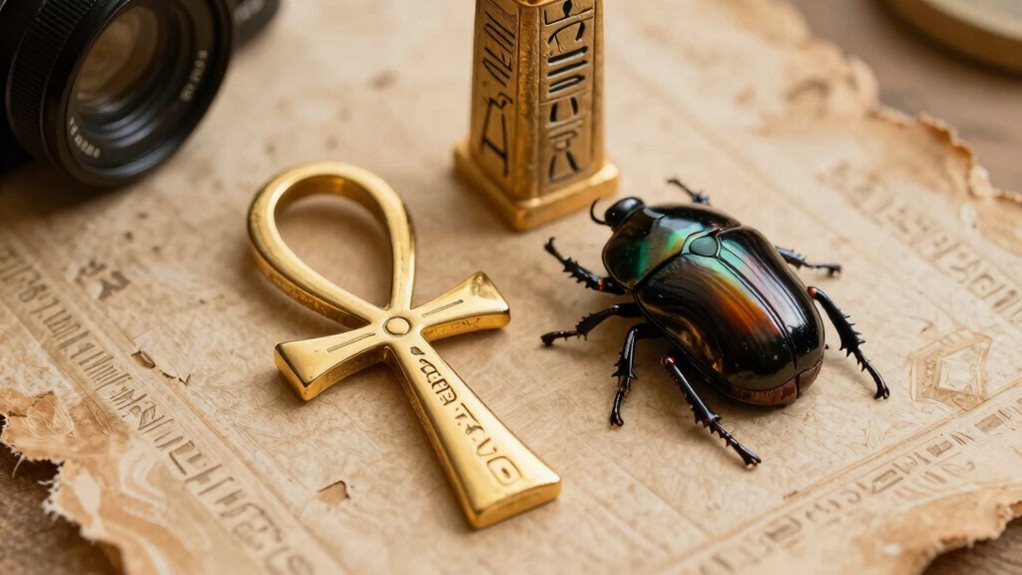
The ankh is one of the most recognizable symbols from Egypt, often seen in the hands of gods, pharaohs, and tomb artwork. It represents ancient symbolism of life, immortality, and eternal renewal. Its shape, combining a loop and cross, is thought to symbolize the union of heaven and earth, emphasizing its cultural significance in Egyptian beliefs. When you see the ankh in ancient art, it’s more than just decoration; it’s a powerful emblem of spiritual life and divine power. Egyptians believed the symbol held protective qualities and could grant everlasting life. Its frequent depiction in sacred contexts shows its importance in their worldview—an essential icon that embodies their understanding of existence and the afterlife.
Why Was the Scarab Beetle So Important in Egyptian Culture?
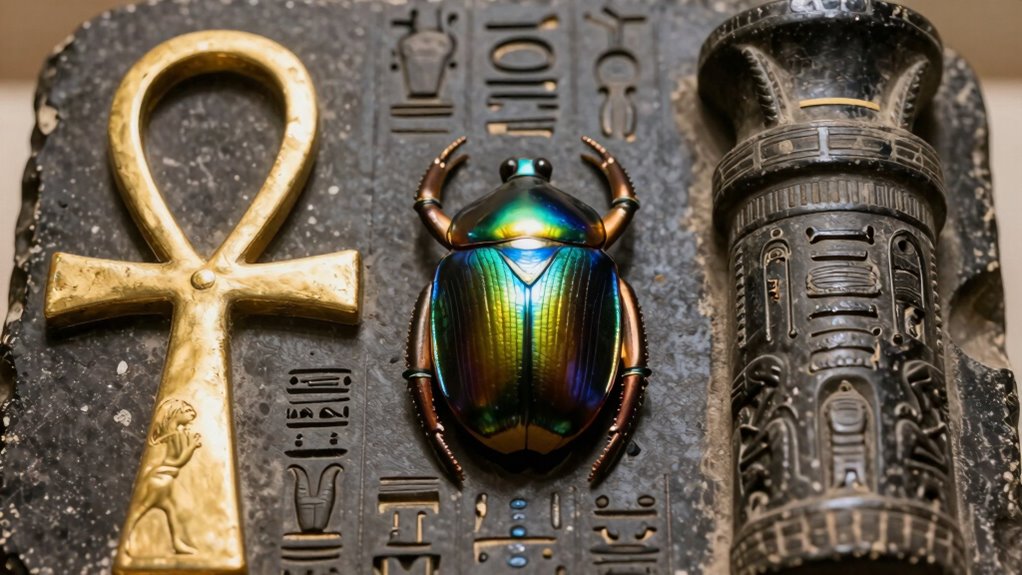
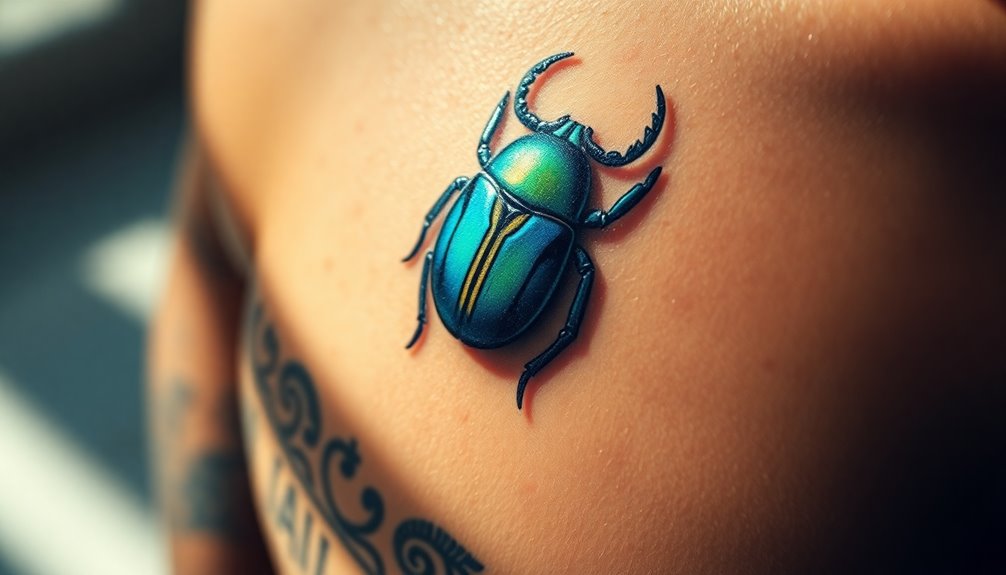
The scarab beetle held a central place in Egyptian culture because it symbolized rebirth, transformation, and protection. During ancient burial rituals, scarab amulets were placed with the dead to ensure safe passage into the afterlife and renewal of the soul. The beetle’s behavior of rolling dung balls linked it to the sun god Khepri, representing creation and renewal. Additionally, the scarab became a key element in Egyptian crown symbolism, signifying divine authority and eternal power. Its image was often inscribed on seals and jewelry to invoke protection and rebirth. The scarab’s significance extended beyond life, serving as a powerful emblem of continuity and the cycle of life and death in Egyptian beliefs. Moreover, the 16PF personality traits can help us understand the symbolic importance placed on such creatures in ancient Egyptian society.
How Does the Djed Pillar Represent Stability and Eternal Power?
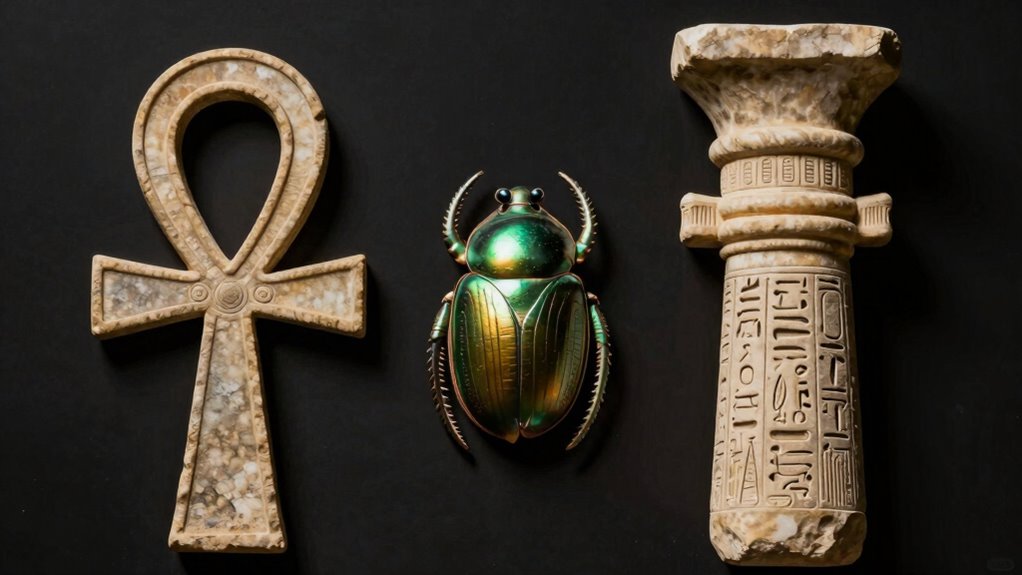
The Djed pillar symbolizes enduring power and strength that lasts through ages. Its sturdy structure represents the foundations of stability vital for maintaining order. You can see its connection to eternal life, as it embodies a lasting link between the mortal world and the divine. Additionally, the Djed’s contrast ratio enhances its visual impact, emphasizing its significance in Egyptian iconography and ensuring its message remains prominent across various representations. Its symbolic significance underscores the importance of resilience and continuity in ancient Egyptian belief systems. Recognizing the artistic techniques used to depict the Djed also highlights its enduring importance in both religious and cultural contexts. The use of visual symbolism in its design further reinforces its role as a symbol of stability and eternal power.
Symbol of Enduring Power
Have you ever wondered how ancient symbols convey concepts like strength and permanence? The Djed pillar, rooted in ancient hieroglyphs, stands as a powerful symbol of enduring power in Egyptian mythology. Its vertical form suggests stability, representing a backbone that sustains life and order. The Egyptians believed this icon embodied resilience, eternal strength, and the unshakable foundation of the universe. The Djed was often associated with Osiris, the god of rebirth, highlighting its connection to everlasting life. Its presence in temples and tombs underscores its role as a symbol that transcends time, embodying the unyielding strength of divine authority and eternal endurance. Exploring symbolic representations in Egyptian art reveals how these icons communicated complex ideas about power and stability to their society.
Foundations of Stability
To understand how the Djed pillar symbolizes stability, consider its sturdy, upright structure that visually resembles a backbone. This design reflects strength, resilience, and support, fundamental to Egyptian beliefs. The ancient craftsmanship involved precise carving, making the Djed a durable emblem of enduring power. Its form is a symbolic hieroglyph representing stability, rooted in the idea of a firm foundation. The Djed’s verticality suggests eternal endurance and the unshakeable nature of cosmic order. It was often linked to Osiris, emphasizing divine stability. The pillar’s balanced proportions and detailed carvings reinforce its role as a visual anchor of strength and continuity, reminding you of the importance of a solid base in both life and spiritual domains. Additionally, the Djed’s significance is underscored by its symbolic hieroglyphs, which convey concepts of stability and eternal life. Recognizing the Djed’s role in Egyptian religion highlights its importance as a symbol of divine stability, further emphasizing its connection to cosmic order and everlasting power. Its durability and craftsmanship showcase the Egyptians’ dedication to creating enduring symbols of stability.
Connection to Eternal Life
Because the Djed pillar symbolizes stability, it also embodies the eternal power that sustains the universe and life itself. Its symbolic representations highlight its mythological significance as a foundation of creation and rebirth. The Djed is linked to Osiris, the god of the afterlife and resurrection, reinforcing its role in eternal life. The vertical form signifies unwavering strength and endurance, qualities essential for everlasting existence. In Egyptian mythology, the Djed acts as a bridge between the mortal world and the divine, emphasizing continuity beyond death. Its presence in temples and burial sites underscores its importance in spiritual renewal. Understanding the symbolic significance of the Djed can deepen our appreciation of its role in Egyptian religion and culture. Overall, the Djed’s symbolic representations reveal its deep connection to eternal life, power, and the unending cycle of renewal.
How Were These Symbols Used in Egyptian Religion and Daily Life?
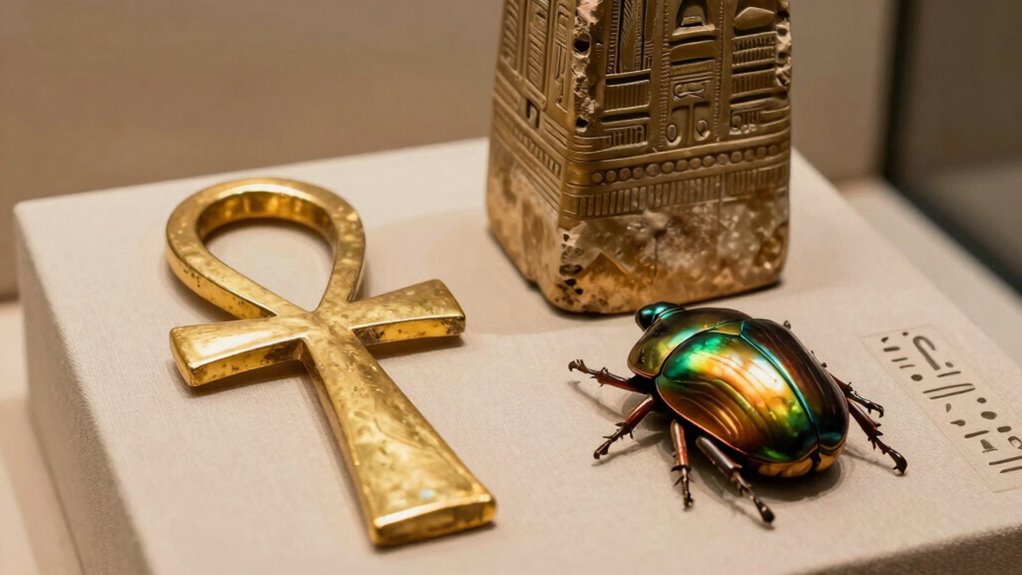
Egyptian symbols like the Ankh, Scarab, and Djed played essential roles in both religious rituals and everyday life, serving as powerful tools to communicate beliefs and protect individuals. In religious ceremonies, these symbols appeared in temple art, amulets, and offerings, reinforcing divine power and eternal life. They were believed to hold protective qualities, warding off evil and ensuring a safe journey in the afterlife. You’d see them carried during festivals or worn daily as amulets. They also appeared in ancient mythology to symbolize key concepts like rebirth, stability, and life force. These icons helped connect people to their gods and spiritual world, making them integral to personal and communal practices. Additionally, these symbols often represented eternal life and the cyclical nature of existence, reflecting core aspects of Egyptian spirituality. Their iconography conveyed complex spiritual ideas that transcended mere decoration, embodying profound religious significance.
What Do the Ankh, Scarab, and Djed Mean Today?
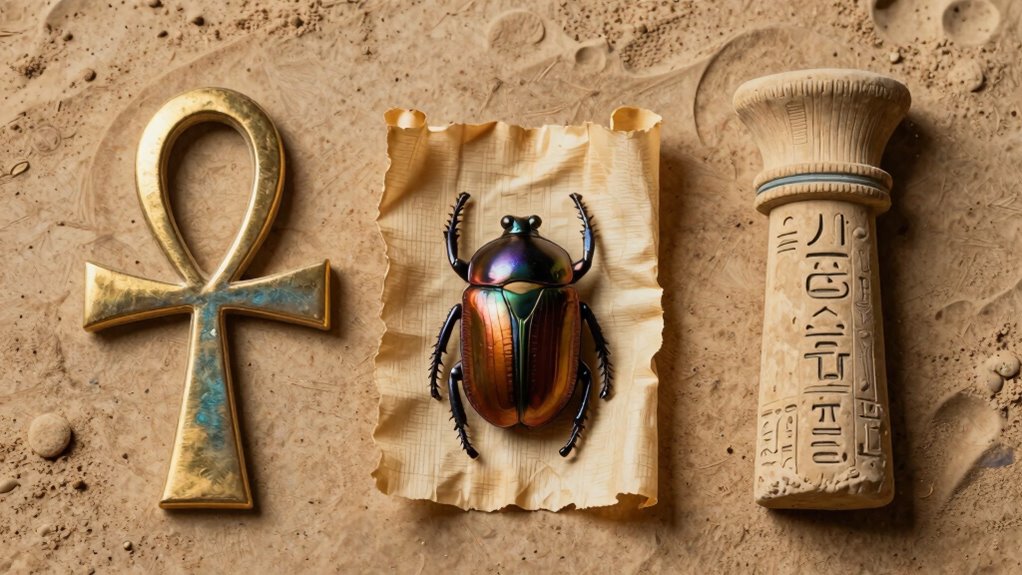
Today, you might see the Ankh, Scarab, and Djed symbolizing renewal, protection, or eternal life in modern culture. Many people embrace these icons as expressions of personal identity or spiritual beliefs. Their meanings continue to evolve, blending ancient significance with contemporary interpretations.
Symbolic Significance Today
The symbols of the Ankh, Scarab, and Djed continue to resonate in modern times, embodying ideas that extend beyond ancient Egypt. They’re embraced in contemporary culture as symbols of life, renewal, and stability, reflecting their roots in ancient symbolism. Today, you’ll find these icons in jewelry, tattoos, and spiritual practices, representing personal growth and resilience. Their meanings have evolved into modern interpretations that connect past and present.
- Personal symbols of life and vigor
- Emblems of rebirth and transformation
- Inspiration in wellness and healing practices
- Popular motifs in fashion and art
- Symbols of spiritual strength and endurance
Additionally, these symbols often serve as dream symbols that encourage reflection on time, life, and personal destiny.
Cultural Revival Trends
As interest in ancient Egyptian culture continues to grow, the Ankh, Scarab, and Djed symbols are experiencing a vibrant revival across various cultural scenes. Modern designers, artists, and enthusiasts draw inspiration from ancient mythology, integrating these icons into jewelry, fashion, and art. Archaeological discoveries continue to shed light on their significance, fueling curiosity and appreciation. The symbols symbolize life, rebirth, and stability, resonating with contemporary spiritual and wellness movements. You’ll see them on tattoos, home décor, and even corporate logos, reflecting a desire to connect with Egypt’s rich heritage. This revival not only celebrates history but also underscores the enduring power of these icons to inspire and unify across cultures today. The symbolic meanings behind these icons deepen their relevance in today’s quest for identity and spiritual connection.
Personal Meaning and Use
The symbols of ancient Egypt have taken on personal significance that resonates deeply in contemporary life. Many see these icons as more than historical artifacts—they serve as symbols of protection, renewal, and spirituality. Today, you might find the ankh in modern jewelry, representing life and vigor. The scarab often appears in contemporary art, symbolizing transformation and rebirth. The djed stands for stability and strength, inspiring personal resilience. These symbols are also used in meditation and spiritual practices, offering connection to ancient wisdom. Wearing or displaying these icons allows you to carry a piece of history and meaning with you daily. Whether in jewelry, art, or personal rituals, these symbols continue to inspire and empower.
- Modern jewelry featuring Egyptian icons as talismans
- Symbols incorporated into contemporary art and design
- Personal reminders of resilience and renewal
- Spiritual tools for meditation and mindfulness
- Expressions of cultural connection and identity
How Are These Symbols Depicted in Egyptian Art and Jewelry?
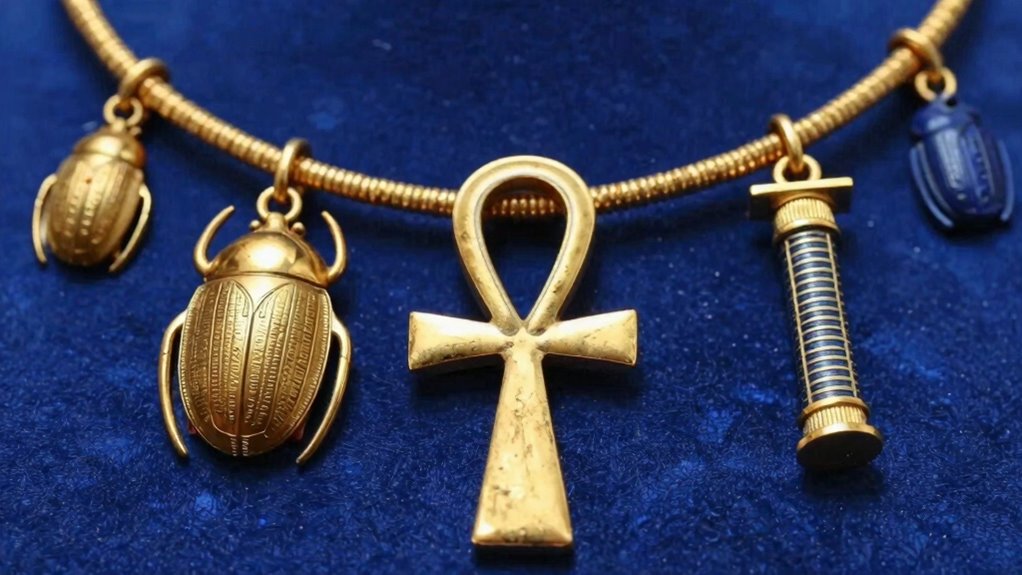
Egyptian symbols like the Ankh, Scarab, and Djed frequently appear in art and jewelry, where they are depicted with striking clarity and symbolic detail. In ancient craftsmanship, artisans meticulously carved or molded these symbols into amulets, pendants, and wall carvings, emphasizing their spiritual significance. The symbols often feature bold lines, intricate hieroglyphic patterns, and vibrant colors that highlight their importance. Today, modern adaptations preserve these designs but incorporate contemporary materials like gold, silver, and gemstones, making the symbols accessible in everyday jewelry. Whether displayed as a pendant or woven into decorative objects, these depictions reflect both the timeless nature of Egyptian iconography and its enduring appeal, connecting past spiritual beliefs with modern aesthetic appreciation. Additionally, the symbolic meanings embedded in these designs help convey complex concepts like life, rebirth, and stability, further enhancing their cultural significance. The detailed craftsmanship of these symbols reveals the artistic techniques used by ancient Egyptian artisans, which continue to influence modern jewelry design. The use of symbolic motifs in design can also serve as a form of cultural expression, linking contemporary pieces to their ancient roots. Moreover, understanding these symbols allows for a deeper appreciation of the cultural context in which they were created, enriching their significance beyond mere decoration.
How Can You Recognize and Interpret Egyptian Symbols Today?
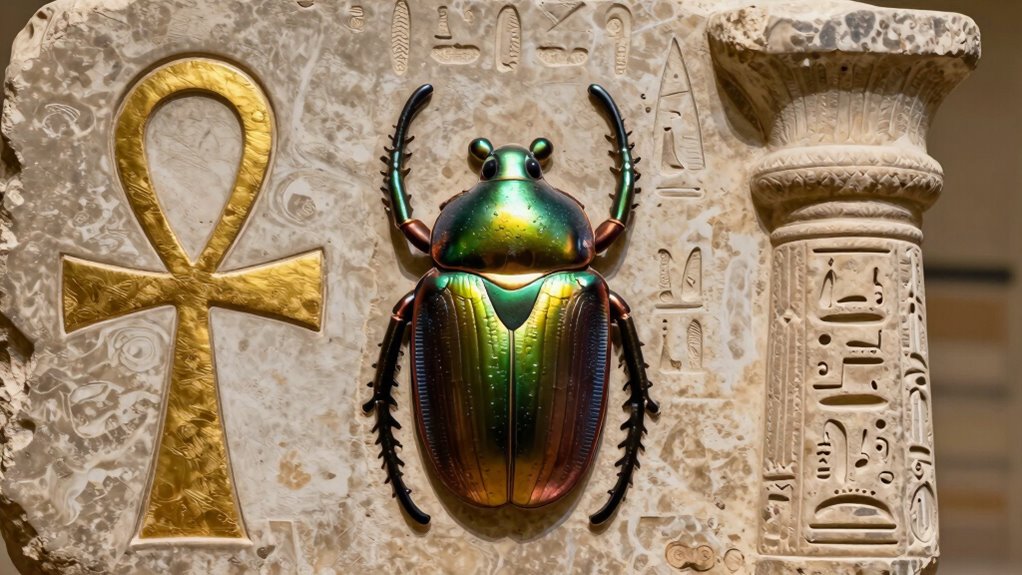
Recognizing Egyptian symbols today involves paying attention to their distinctive shapes, patterns, and contexts. Modern interpretations often blend ancient symbolism with contemporary design, making these icons relevant now. To interpret them effectively, look for key elements such as the Ankh’s loop, the Scarab’s beetle shape, or the Djed’s pillar form. Cultural symbolism remains strong, with these symbols representing life, rebirth, and stability. Keep in mind that their meanings can vary depending on usage—whether in jewelry, tattoos, or art. Additionally, understanding their cultural significance helps deepen appreciation for their enduring relevance in modern contexts. Recognizing how their symbolic meanings are incorporated into various modern designs also enhances our understanding of their ongoing importance. Paying attention to the visual motifs associated with these symbols can also reveal how ancient Egyptian themes are adapted into today’s fashion and decoration.
Why Have These Symbols Endured as Icons of Life, Rebirth, and Stability?
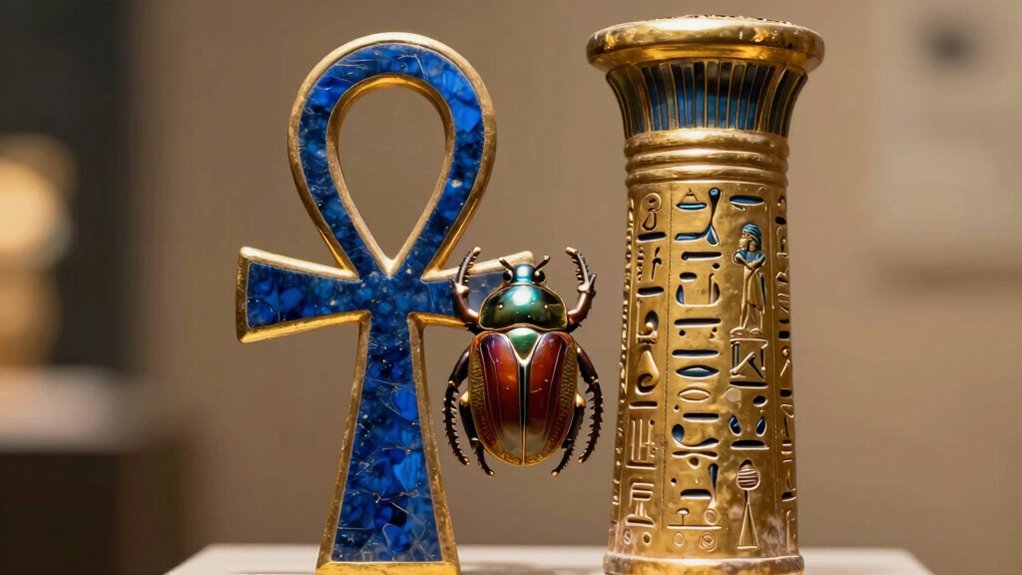
These symbols have endured because they embody universal themes that resonate across cultures and eras. They represent core ideas like life, rebirth, and stability, which remain relevant today. Their power lies in their simplicity and deep symbolism, making them adaptable to modern symbolism and design. Archaeological discoveries continue to reveal their significance, reaffirming their timeless appeal. For example, the Ankh’s shape symbolizes eternal life, while the Djed’s structure signifies stability and strength. These symbols transcend ancient Egypt, inspiring contemporary art, jewelry, and cultural expressions. Their enduring presence shows how powerful visual icons can connect us to universal human experiences, fostering a sense of continuity. You can see their influence everywhere, proving their lasting importance as symbols of life and renewal.
Frequently Asked Questions
Are These Symbols Still Used in Modern Egyptian Culture or Religion?
Yes, these symbols still play a role in modern Egyptian culture and religion. You’ll find the Ankh, Scarab, and Djed used in cultural symbolism, representing life, rebirth, and stability. Although they’re rooted in ancient traditions, they’ve been incorporated into modern religious practices, jewelry, and art. These icons connect Egypt’s rich history to contemporary identity, reminding you of the enduring power of ancient symbols in today’s spiritual and cultural expressions.
How Did Artisans Create and Carve These Symbols in Ancient Times?
You step into the ancient workshop where artisans breathe life into symbols, their tools singing on stone and gold. Using ancient carving techniques, they skillfully chiseled and engraved with precision, transforming raw materials into timeless icons. Artisan craftsmanship shines through as they carefully detail each symbol, blending artistry with spiritual meaning. Their mastery creates enduring masterpieces that echo Egypt’s rich history, anchoring their sacred symbols in eternity.
Did Different Egyptian Dynasties Alter the Meanings of These Symbols?
Yes, different Egyptian dynasties altered the meanings of these symbols through dynastic symbolism and cultural reinterpretations. You’ll find that each era emphasizes certain aspects or attributes, reflecting their unique beliefs and political agendas. For example, the scarab’s significance shifted from rebirth to protection, and the Djed’s association with stability grew stronger over time. These changes show how evolving cultural narratives influenced the enduring symbolism of these iconic Egyptian symbols.
Can These Symbols Be Found Outside Egypt in Archaeological Sites Worldwide?
Yes, you can find these symbols outside Egypt in archaeological findings worldwide. Their widespread symbol distribution reflects their cultural significance and influence beyond Egypt’s borders. Archaeological sites across Africa, Europe, and the Middle East reveal ancient artifacts featuring the Ankh, Scarab, and Djed, indicating trade, cultural exchange, or reverence for Egyptian traditions. These findings highlight how these iconic symbols traveled and persisted across different civilizations over centuries.
What Materials Were Commonly Used to Craft Jewelry Featuring These Symbols?
You’ll find that jewelry featuring these symbols often used precious metals like gold and silver, along with semi-precious stones such as carnelian or turquoise. Notably, ancient artisans highly valued these materials for their durability and symbolic meanings, making the jewelry not just beautiful but spiritually significant. These materials helped create timeless pieces that reflected both personal belief and social status, ensuring their survival across millennia.
Conclusion
Just as ancient Egypt’s symbols served as timeless keys to life’s mysteries, they continue to open understanding today. Like sacred gateways carved into stone, the ankh, scarab, and djed stand as enduring guardians of rebirth, vitality, and stability. Embrace these icons as your own personal hieroglyphs, guiding you through the eternal dance of life’s cycles. In recognizing their meaning, you become part of a story that spans millennia, forever connecting past and present.
Halloween Picks
halloween
As an affiliate, we earn on qualifying purchases.