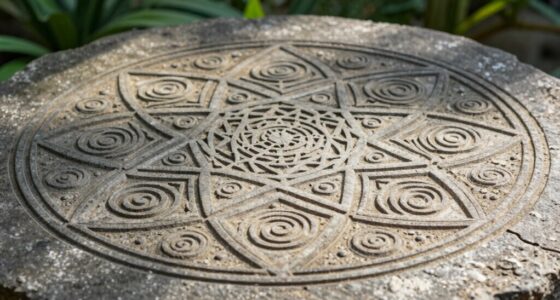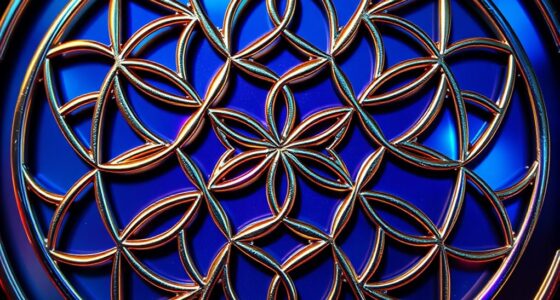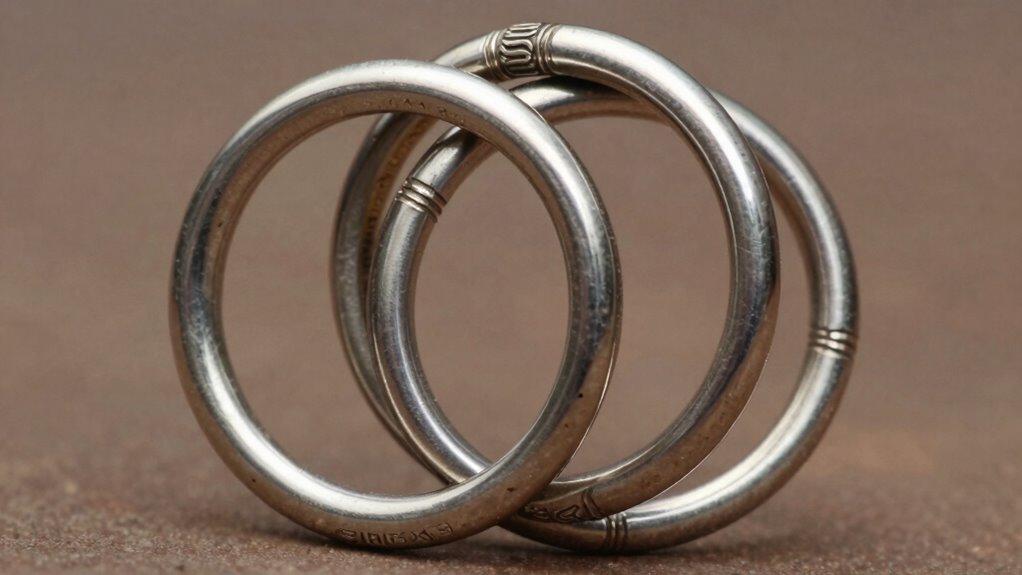

Interlocking circles symbolize interconnectedness, unity, and eternity across many cultures. They often represent harmony, balance, and community bonds, reflecting shared values across civilizations. In Celtic knotwork, they embody life’s endless cycle, while in Hindu and Buddhist traditions, they signify spiritual unity. Ancient Greeks used them to denote harmony, and indigenous art highlights nature and ancestral connections. If you explore further, you’ll uncover how these symbols continue to inspire concepts of connection and sustainability today.

Get art and craft supplies delivered free with Prime
- Fast, free delivery on millions of items
- Prime Video, Amazon Music and more included
- Member-only deals all year
Key Takeaways
- Interlocking circles symbolize unity, interconnectedness, and eternal bonds in various cultural and spiritual contexts.
- They are used in religious symbols like mandalas, representing the interconnectedness of the universe and spiritual harmony.
- Celtic knotwork and Greek designs incorporate interlocking circles to signify eternal life and harmony.
- Indigenous and ritual art depict interlocking circles to emphasize community bonds, relationships, and cultural continuity.
- In contemporary settings, they highlight ecological balance, social connections, and shared human values across cultures.
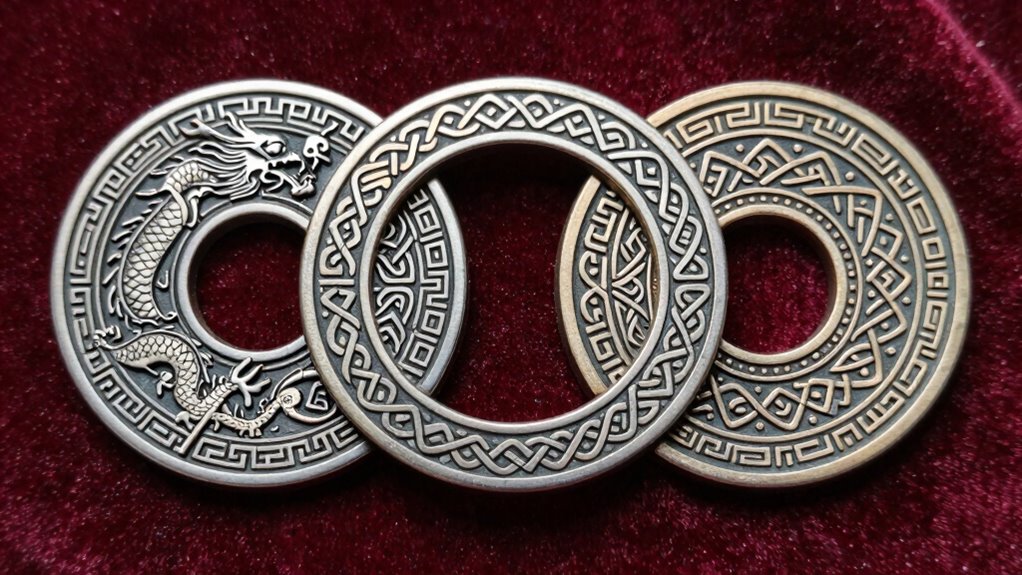
Interlocking circles are a universal symbol that appears across many cultures, representing concepts like unity, connection, and eternity. When you see these overlapping shapes, you’re witnessing a visual language that conveys deep meaning, often rooted in symbolism in art that dates back thousands of years. Their historical origins trace to ancient civilizations, where they were used in religious, philosophical, and decorative contexts. For example, in Celtic art, interlocking circles are prominent in knotwork, symbolizing the interconnectedness of life and eternity. Similarly, the ancient Greeks used them in jewelry and pottery to signify unity and harmony. The significance of these shapes isn’t limited to one culture or era; instead, their recurring presence highlights a universal understanding of interconnectedness.
In many ancient societies, the symbolism in art involving interlocking circles served as a visual reminder of the endless cycle of life, death, and rebirth. Their continuous, unbroken lines embody eternity and the idea that everything is linked in an unbreakable chain. When you look at artwork from different cultures, you’ll notice that interlocking circles often appear in sacred symbols, mandalas, and religious iconography, emphasizing spiritual unity and the interconnected nature of existence. These shapes also carry practical meanings, representing relationships, partnerships, or community bonds. In some traditions, overlapping circles symbolize dualities—such as life and death or physical and spiritual planes—highlighting the balance and harmony that these concepts bring to human understanding. Additionally, the recurring appearance of interlocking circles in various cultural contexts underscores their role in expressing universal human values.
The historical origins of interlocking circles reveal their importance in rituals and spiritual practices. In Hindu and Buddhist traditions, circles are fundamental in mandalas, which serve as tools for meditation and spiritual focus. Their symmetrical interconnection signifies the unity of the universe and the interconnectedness of all beings. You can also find similar motifs in indigenous art around the world, where interwoven circles depict the interconnectedness of nature, ancestors, and community. Furthermore, the use of interlocking circles often reflects a shared understanding of the interconnectedness of life, emphasizing the importance of harmony in both spiritual and communal contexts. Over time, the use of interlocking circles in art has evolved but consistently retained its core symbolism—reminding us of our shared bonds, eternal cycles, and the unity that underpins all aspects of life. Additionally, these shapes can serve as a visual metaphor for sustainable living and the importance of maintaining ecological balance, reflecting our interconnected relationship with the environment.
As an affiliate, we earn on qualifying purchases.
Frequently Asked Questions
How Do Interlocking Circles Relate to Modern Digital Symbols?
Interlocking circles in modern digital symbols represent digital connectivity and symbol integration. You see this in icons like the Wi-Fi or Bluetooth symbols, where overlapping circles convey seamless communication and connection. These symbols visually communicate the idea of interconnected systems, making complex digital functions easier to understand. By using interlocking circles, designers emphasize unity, collaboration, and integrated technology, helping users quickly grasp the purpose behind the symbols in today’s interconnected digital world.
Are There Any Historical Origins of Interlocking Circles in Ancient Artifacts?
You’ll find interlocking circles in ancient jewelry and ceremonial motifs, dating back thousands of years. For example, the Sumerians used similar patterns in their artifacts, symbolizing unity and eternity. These designs served as powerful symbols of interconnectedness, much like a chain linking lives and beliefs. Their presence in ancient artifacts reveals how cultures used interlocking circles to embody timeless concepts of harmony and continuity.
Do Interlocking Circles Have Different Meanings in Specific Regional Traditions?
Interlocking circles do have different meanings in regional traditions through cultural symbolism. In some cultures, they represent unity and interconnectedness, while in others, they symbolize eternity or the cycle of life. These regional variations reflect unique beliefs and values, making the symbol versatile across cultures. When you see interlocking circles, remember that their significance can shift depending on the cultural context, emphasizing themes like harmony, continuity, or spiritual connection.
How Are Interlocking Circles Used in Contemporary Art and Design?
Imagine you’re browsing modern galleries, where interlocking circles symbolize unity and interconnectedness, much like the iconic peace symbol. In contemporary art and design, these geometric patterns hold significant symbolism, representing harmony and balance. Artists incorporate interlocking circles to evoke feelings of connection and inclusivity, making them a powerful visual tool. Their timeless geometric pattern significance helps communicate complex ideas simply, resonating across diverse audiences and styles.
Are Interlocking Circles Associated With Any Specific Spiritual or Religious Practices?
Yes, you’ll find interlocking circles associated with spiritual connection and symbolic unity in many practices. They often represent the interconnectedness of life, unity of mind and spirit, or divine relationships. In various traditions, these circles symbolize wholeness, eternity, and harmony, reminding you of the deep spiritual bonds that unite individuals or communities. Their simple yet profound design encourages reflection on the interconnectedness that underpins many spiritual beliefs.
Conclusion
Just like interlocking circles weave a tapestry of connection across cultures, understanding their meanings helps you see the bigger picture of shared values and beliefs. These symbols are threads that bind diverse backgrounds into a vibrant mosaic. By embracing their universal significance, you become a bridge—an essential link—bringing harmony and insight into a world rich with different traditions. Keep exploring, and you’ll find that unity often lies just beneath the surface, waiting for you to discover it.
Halloween Picks
halloween
As an affiliate, we earn on qualifying purchases.