
TL;DR
The Carmelite Monks say they use Prussiani CNC machines and a digital design workflow to carve detailed stone elements for Gothic church construction. Their account describes potential time savings and the roles of artists and programmers, but it does not provide independently verified production figures or a project timeline.
The Carmelite Monks say they use computer-controlled stone-cutting machines to carve detailed Gothic elements for church construction, including pinnacles and foliage-covered pieces. Their account describes a workflow that pairs digital 3D design and machine programming with stone carving, offering a practical example of how modern manufacturing tools are being applied to traditional architectural forms.

Get art and craft supplies delivered free with Prime
- Fast, free delivery on millions of items
- Prime Video, Amazon Music and more included
- Member-only deals all year
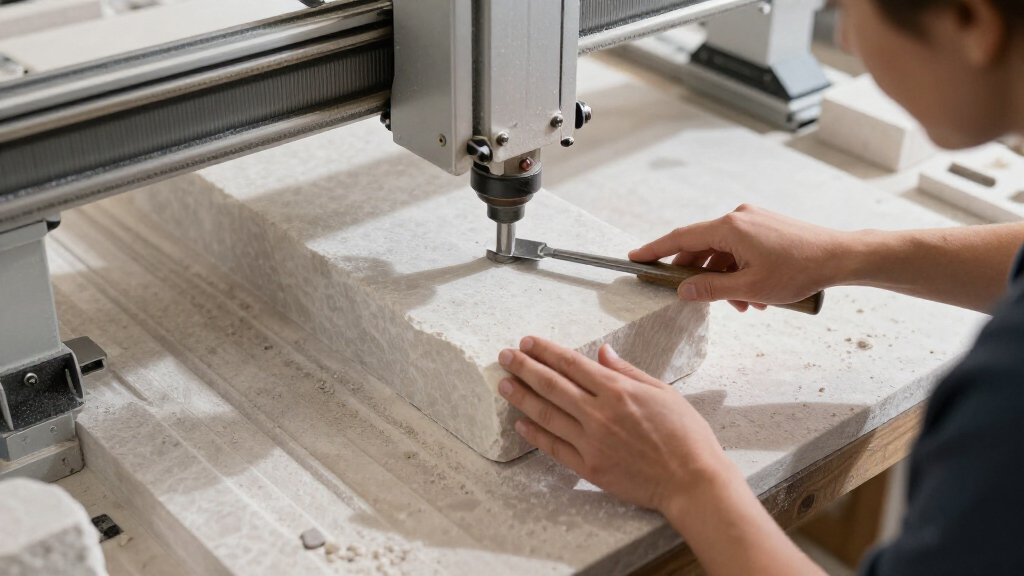
The monks identify their equipment as machines made by Prussiani Engineering, a stone-machine manufacturer based in Bergamo, Italy. They describe CNC as “computer numerically controlled”: software directs the machine along programmed coordinates. According to the report, stone-carving machines generally use diamond-tipped blades and milling bits to grind material away. Water cools the tools and washes off stone residue; it is not described as the cutting method.
The report outlines a digital production process with distinct creative and technical stages. An artist creates a sculpture or architectural detail in 3D modeling software, where designs can be tested and viewed in a model of the church. CNC programmers then use computer-aided manufacturing software to convert the model into toolpaths for the machine. The account stresses that the digital steps still depend on artistic judgment and programming skill.
For intricate work, the monks describe machines with five axes of movement, allowing the cutting head to move in several directions and rotate. Some setups add a sixth axis, such as a lathe or turntable, for taller pieces. The report says machines can run unattended for extended periods, including overnight, and claims that work taking a skilled carver months may be completed by machine in days. It does not provide a measured comparison, named sample project, or independent evaluation for that time estimate.
Digital Tools for Gothic Stonework
The account matters because it shows how computer-controlled fabrication can support the production of ornate stone architecture that requires precise, repeated shaping. If the reported time savings hold for particular projects, machinery could reduce the labor time needed for some components and make elaborate designs more feasible within a construction schedule. The source does not provide cost data, so it does not establish whether CNC carving lowers overall project budgets.
The method also changes how craft skills are organized. The report presents design, machine programming, and operation as connected jobs rather than suggesting that software replaces artistic work. A digital model can help a team inspect details before cutting stone, while the physical result still depends on material handling, tool selection, and quality control. For readers interested in historic architecture, the example shows one route for building in a traditional style using contemporary processes.
Popular right now

Philips 5500 Series Fully Automatic Espresso Machine with LatteGo Milk System

Dyson V8 Cyclone Cordless Vacuum

Vitamix 5200 Professional-Grade Blender with 64 oz Container, Black
As an affiliate, we earn on qualifying purchases.
From Digital Model to Cut Stone
CNC machines are not unique to stonework. The source says the first CNC equipment was developed for manufacturing airplane parts, while stone-cutting machines are a more recent application. In the monks’ description, a computer coordinates movement across several axes so the tool can reach different surfaces and produce detailed shapes. Diamond tools remove stone through grinding, with water managing heat and debris.
The report places the technology within the Carmelite community’s church-building work and frames it as a way to realize Gothic designs rather than simplify them for ease of construction. It also recounts an incident in which a coding error caused heavy window-sill stones to be struck repeatedly and broken during an overnight run. The monks say the machine involved continues to operate, but the episode illustrates that automation still depends on correct programming and supervision.
““CNC stands for ‘computer numerically controlled’””
— Carmelite Gothic report
Project Costs and Output Undisclosed
The supplied report does not state when it was published or give a current construction update. It is not clear how many CNC machines are in use, how much stonework they have completed, or what the church project’s schedule and budget are. The claimed comparison between months of hand carving and days of machine work is not supported by specific measurements, comparable examples, or an outside assessment.
The account also does not detail how much hand finishing is required after machining, how the team checks dimensions and surface quality, or how frequently machines run unattended under current procedures. Its description of a destructive code error makes clear that programming mistakes can carry material risks, but it gives no information on safeguards adopted afterward.
Further Project Details Needed
The next useful update would identify the church’s construction stage and explain which components have been produced with CNC equipment. Details on costs, production times, machine use, and hand finishing would help readers assess the practical effect of the process. The source provides no announced milestone or publication date for a follow-up, so the project’s immediate next steps are not specified.
Key Questions
What does CNC mean?
CNC means “computer numerically controlled.” A computer directs a machine’s movements according to programmed coordinates.
How does the machine carve stone?
The monks’ report says the machines use diamond-tipped blades and milling bits to grind stone away. Water cools the tool and carries off residue.
Does CNC replace the artist or stone carver?
The described workflow still involves an artist creating the 3D design and programmers preparing machine instructions. The source does not say that CNC eliminates hand finishing or other craft work.
How much faster is CNC carving?
The report claims that work which could take a skilled carver months may be completed in days. It does not provide project measurements or an independent comparison, so the time savings cannot be verified from the supplied material.
What is known about the church project’s current status?
The report connects the machines to the monks’ Gothic church construction, but the supplied material gives no current schedule, completion estimate, or construction-stage update.
Source: carmelitegothic.com