
TL;DR

Get art and craft supplies delivered free with Prime
- Fast, free delivery on millions of items
- Prime Video, Amazon Music and more included
- Member-only deals all year
Sculptor Ursula von Rydingsvard died at her Manhattan home on October 27, aged 84, according to Hyperallergic’s obituary. Over a career spanning more than five decades, she became known for large, hand-worked sculptures, especially works made from cedar, and for an artistic practice connected to her childhood as a refugee.
Ursula von Rydingsvard, the sculptor known for monumental works assembled and carved from cedar, died at her Manhattan home on October 27, aged 84, Hyperallergic reported. Her death marks the end of a career spanning more than five decades, during which she made large, tactile abstract sculptures shaped in part by memories of war, displacement and refugee life.
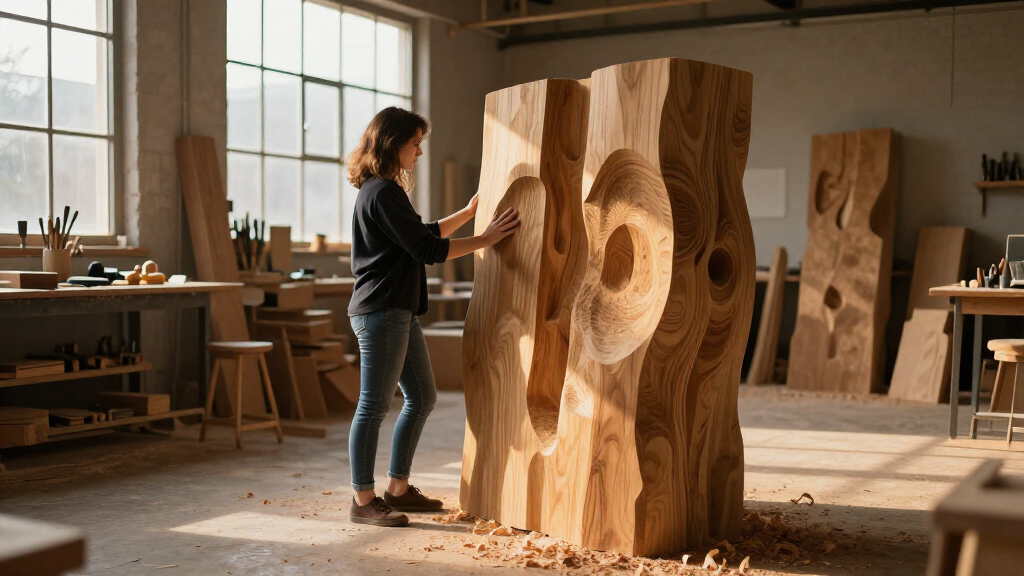
Von Rydingsvard worked across several materials, but her best-known sculptures were made from cedar beams. She chipped away at the wood and assembled it into imposing forms, including cones and other shapes that evoke natural structures without depicting them literally. The scale and visible labor of the work became defining features of her practice.
One example cited in Hyperallergic’s obituary was a 17-foot-tall, tornado-shaped sculpture made from about 15,000 pounds of wood. She also worked with bronze, textiles and animal intestines, moving among materials while maintaining an interest in organic forms and the traces of making.
The artist was born in Germany to Polish and Ukrainian parents. Her family moved among displacement camps for Polish refugees after World War II and immigrated to the United States in 1950. Hyperallergic’s account connects that childhood experience to the themes of loss and the possibility of life that recur in her work, while describing her practice as closely attuned to the natural world.
A Refugee Childhood in Cedar
Von Rydingsvard’s biography gives added weight to the scale and physical character of her sculptures. Her family’s movement through refugee camps was part of her early life, and Hyperallergic describes her work as bearing the trace of that experience. The sculptures are abstract, but their monumental presence and rough, layered surfaces can be understood alongside a history marked by instability and loss.
Her career also shows how sculpture can make the process of labor visible. The cedar pieces were not simply smooth objects formed from a single block: she worked through large beams, chipping and assembling them into structures that preserve the marks of their construction. That approach linked the material itself to the finished form, while her use of bronze, textiles and other materials broadened the range of her work.
Her death at 84 is a moment to take stock of a body of work built over more than five decades. The obituary’s focus on her life as both a refugee and an artist offers readers a way to understand why memory, organic form and the possibility of renewal have been associated with her monumental sculptures.
Popular right now

De'Longhi Magnifica Evo Automatic Espresso Machine with Milk Frother – Silver

Dyson Ball Animal 3 Corded Upright Vacuum

Bose QuietComfort Wireless Noise-Cancelling Over-Ear Headphones, Black
As an affiliate, we earn on qualifying purchases.
From Displacement to Monumental Forms
Von Rydingsvard was born in Germany to Polish and Ukrainian parents during the upheaval surrounding World War II. According to Hyperallergic, she and her family spent time in displacement camps for Polish refugees before arriving in the United States in 1950. The available report does not give a fuller account of her early education or the stages through which she established her career.
Over a career of more than 50 years, she became especially associated with large cedar works. Hyperallergic describes her as working by chipping away at enormous beams, then building them into forms that could reach several metres in height and weigh thousands of pounds. Her work was not limited to wood: she also used bronze, textiles and animal intestines.
The article frames her legacy through the relationship between those materials, the natural world and the artist’s history of displacement. It does not identify a single exhibition or sculpture as the definitive account of her career, instead pointing to a practice that developed across materials and decades.
“Her monumental, organic sculptures bear the heavy trace of loss and the ever-present possibility of life.”
— Hyperallergic’s obituary
Details of Her Final Years
The report says von Rydingsvard died at home in Manhattan on October 27, aged 84, but it does not state a cause of death. It also provides no information about funeral arrangements, memorial events or plans for her studio and estate.
The source gives selected examples of her work and a brief account of her biography, rather than a complete exhibition history or a full catalogue of her sculptures. Further details about how her work will be preserved, displayed or represented after her death have not been reported in the supplied material.
How Her Work Will Be Remembered
The immediate record is an obituary that places von Rydingsvard’s death within the story of her artistic career and her family’s migration to the United States. The supplied report does not announce a memorial, retrospective or other upcoming public event.
Future information may clarify arrangements for commemorating the artist and the status of her works and papers. For now, the confirmed account centers on her death in Manhattan at 84 and on a five-decade practice best known for monumental cedar sculpture.
Key Questions
Who was Ursula von Rydingsvard?
Ursula von Rydingsvard was a sculptor whose career spanned more than five decades. She was particularly known for large abstract works made from cedar, and also worked with bronze, textiles and animal intestines.
When and where did von Rydingsvard die?
Hyperallergic reported that she died at her Manhattan home on October 27, aged 84. The supplied report does not give a cause of death.
What are her sculptures best known for?
Her work is especially associated with monumental cedar sculptures, made by chipping away at large beams and assembling the wood into organic, abstract forms. One example described in the obituary was a 17-foot-tall, tornado-shaped work made from about 15,000 pounds of wood.
How did her childhood shape her work?
Von Rydingsvard was born in Germany to Polish and Ukrainian parents. Her family moved among refugee displacement camps after World War II and immigrated to the United States in 1950. Hyperallergic connects her work to themes of loss, memory and the possibility of life.
Have memorial plans been announced?
The supplied report does not mention funeral arrangements, memorial events or plans for a retrospective. Those details remain unreported.
Source: hyperallergic.com