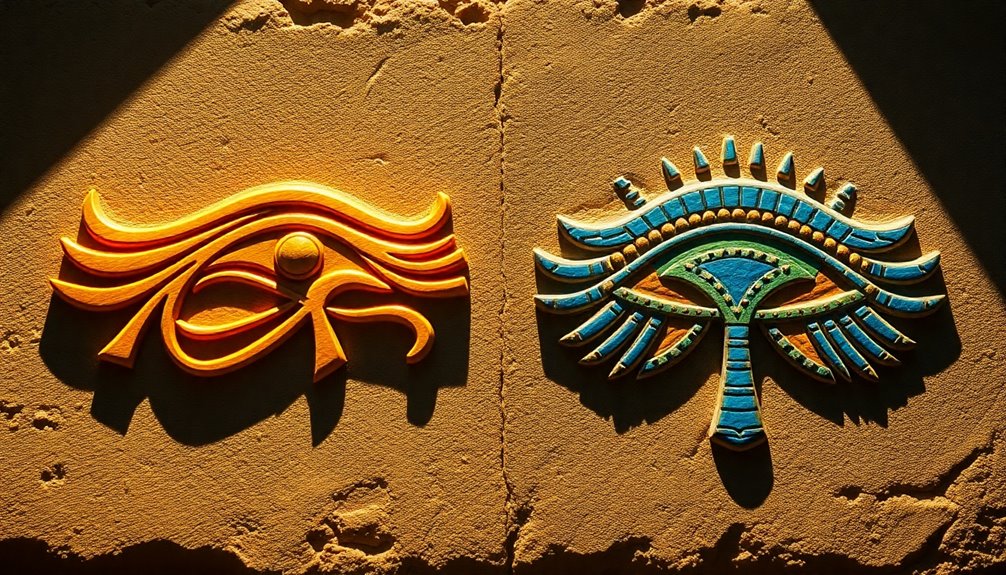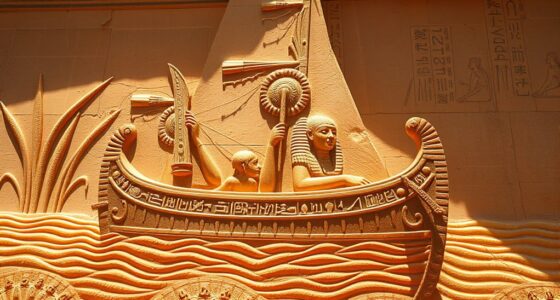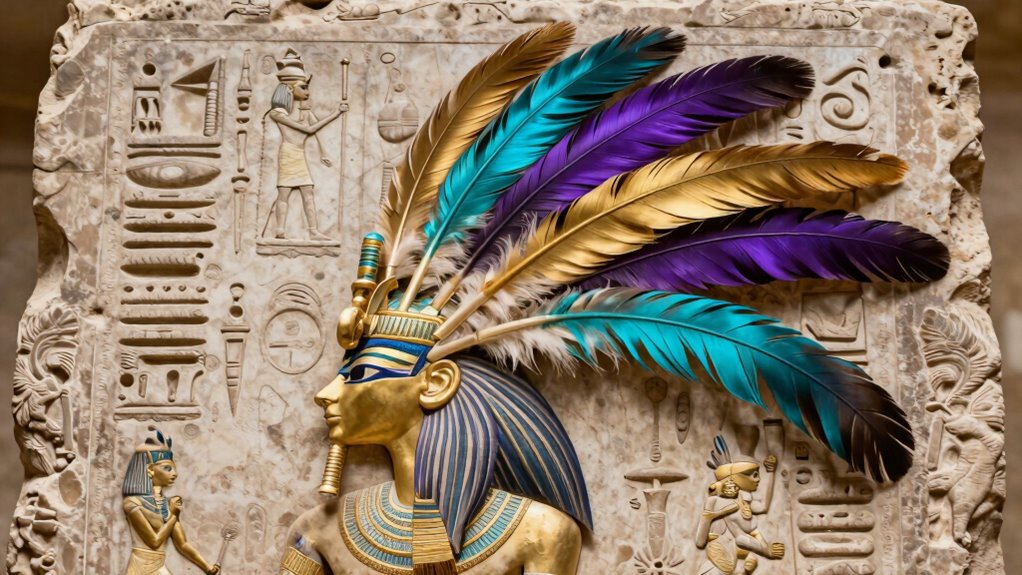

In ancient Egypt, feathers symbolize divine authority, spiritual truth, and cosmic order. You’ll see them in jewelry, headdresses, and funerary objects, often linked to gods and royal power. They represent justice in the weighing of the heart ceremony and serve as divine tokens of protection and eternal life. Many symbols connect feathers with divine beings, highlighting their role in religion and society. Keep exploring to discover more about these fascinating symbols and their deeper meanings.
Open a free Amazon Business account
Business pricing, bulk buying and tax-exempt orders.
As an affiliate, we earn on qualifying purchases.
Key Takeaways
- Feathers symbolize divine authority, spiritual protection, and the cosmic order in Egyptian art and artifacts.
- The Feather of Ma’at represents truth, justice, and moral purity, crucial in the “Weighing of the Heart” judgment.
- Feathers are associated with gods and mythological beings, symbolizing divine power and cosmic significance.
- Used in funerary objects, feathers signify eternal life and serve as links between mortals and the divine realm.
- Incorporation of feathers in royal regalia indicates social status and emphasizes divine right and authority.
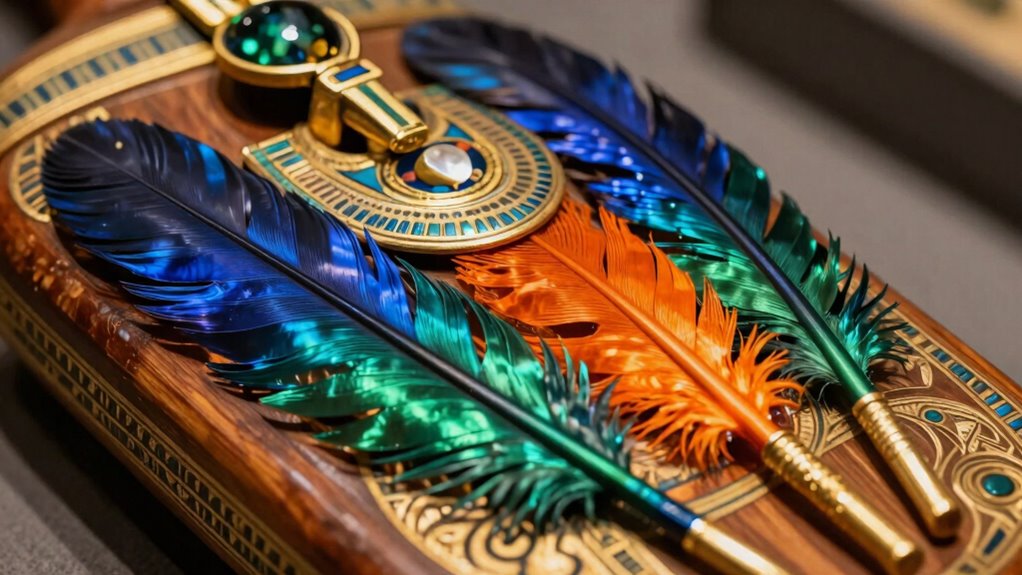
Feathers held a special significance in Ancient Egypt, symbolizing both spiritual and social meanings. When you see feathers in Egyptian art and artifacts, you’re witnessing symbols that go far beyond their simple appearance. Feather symbolism in Egypt often conveyed ideas of truth, justice, and divine authority. The most notable example is the feather of Ma’at, the goddess of truth and cosmic order. This feather represented the principle of justice and was used in the famous “Weighing of the Heart” ceremony, where a deceased person’s heart was weighed against the feather to determine their worthiness for the afterlife. If your heart was lighter than the feather, you were deemed pure and could continue your journey into eternity. This act of judgment highlights how integral feather symbolism was to their concept of morality and divine justice. The mythological significance of feathers in Egyptian culture extends into stories of gods and legendary beings. You might find it fascinating that many deities, especially those associated with the sky and creation, are depicted with feathered attributes. You can see how feathers serve as symbols of divine authority and protection, connecting mortals to the divine domain. Additionally, the use of feathers in religious and funerary objects highlights their role as divine symbols of eternal life and cosmic order. These symbols often appeared in mythological stories that explained the origins and roles of the gods, reinforcing their sacred significance. You can see how mythology and feather symbolism intertwine, reinforcing the idea that feathers are divine tokens, representing the gods’ power and their role as cosmic judges. Moreover, the presence of feathers in Egyptian art often reflects the spiritual hierarchy and the divine order that governed their society. In your exploration of Egyptian art, you’ll notice that feathers are often woven into jewelry, headdresses, and ceremonial items, indicating their importance in social hierarchy and religious rituals. The use of feathers in royal regalia and funerary objects underscores their role as symbols of divine right and eternal life. The association of feathers with specific gods and their attributes also emphasizes their connection to divine authority. When you understand the mythological significance behind these symbols, you see how deeply woven feathers are into the fabric of Egyptian spirituality and worldview. They’re not just decorative elements but powerful symbols representing truth, divine authority, and the divine order. Whether in myth, religion, or daily life, feathers served as a tangible link between the mortal and divine, embodying the core values and beliefs that shaped Ancient Egyptian civilization.
Ancient Egyptian feather jewelry
As an affiliate, we earn on qualifying purchases.
As an affiliate, we earn on qualifying purchases.
Frequently Asked Questions
Were Feathers Used in Everyday Egyptian Clothing?
Feathers weren’t commonly used in everyday Egyptian clothing, but they played a significant role in feather fashion for special occasions. You’d find feathers incorporated into ceremonial attire, symbolizing divine connection and status. Their ritual significance meant they were reserved for priests, royalty, or religious events rather than daily wear. So, while feathers held deep symbolic meaning, they mostly adorned clothing during important rituals or ceremonies in ancient Egypt.
How Did Feather Symbolism Evolve Over Different Dynasties?
Ever wonder how feathers’ meanings changed over time? You see, during different dynasties, the feather hierarchy and divine associations shifted, reflecting evolving beliefs and power structures. In early periods, feathers symbolized divine authority, especially in the context of gods like Ma’at. Later, they represented purity and truth, maintaining their sacred status. These changes deepen your understanding of how Egyptian spirituality and social hierarchy intertwined through symbolism.
Did Non-Royal Egyptians Wear Feather Accessories?
Yes, non-royal Egyptians wore feather accessories, often for everyday or ritual purposes. You might notice feathers in jewelry or headdresses, symbolizing divine connection and protection. The feather’s ritual significance is rooted in its symbolism in mythology, representing truth and Ma’at, the concept of cosmic order. Such adornments helped ordinary people connect with divine forces, emphasizing the spiritual importance of feathers beyond royal or priestly circles.
Were Certain Bird Species Preferred for Specific Feathers?
When it comes to feather choices, certain bird species were indeed preferred for specific feathers, guided by bird symbolism and feather hierarchy. You can’t just pick any bird’s feather; the sacred ibis, falcon, and ostrich feathers held special significance. These feathers weren’t random but carefully selected to convey status, divine connection, or protection. Knowing this, it’s clear that Egyptians believed different bird feathers carried unique spiritual meanings.
How Did Feather Symbolism Influence Egyptian Jewelry Design?
Feather symbolism deeply influenced Egyptian jewelry design by inspiring motifs that highlight mythological significance. You’ll notice artisans used intricate artistic techniques to craft pendants, amulets, and earrings featuring feathers, symbolizing divine protection and honor. These designs often incorporated gold and precious stones, emphasizing their spiritual importance. As you explore these pieces, you’ll see how the symbolism of feathers connects to both the mythological beliefs and the craftsmanship that elevates Egyptian jewelry into sacred art.
Conclusion
You now hold the incredible power of feathers in ancient Egypt’s mythic world—more than just bird plumes, they’re symbols of divine authority, cosmic order, and eternal life! Wielding a feather could tip the scales of your soul’s destiny or reveal secrets of the universe itself. So next time you see a simple feather, remember, it’s not just a bird’s gift—it’s a tiny, magical universe packed with the weight of eternity!
Fall Picks
fall essentials
As an affiliate, we earn on qualifying purchases.