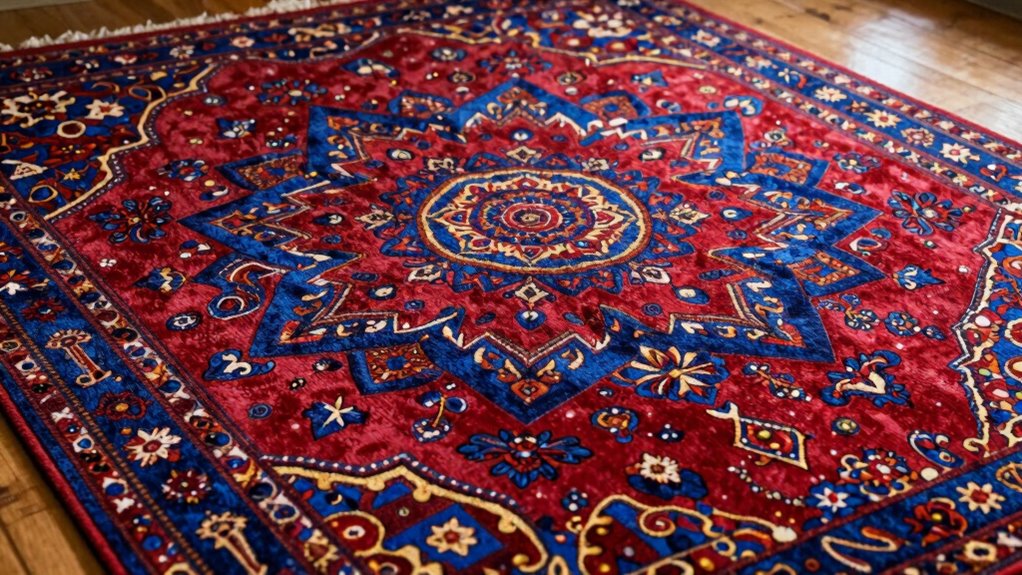

Mandala rugs influence your space’s mood by creating a sense of harmony and balance through their intricate patterns. The colors and designs evoke specific emotions—bright hues energize, while softer shades promote calmness. These patterns aren’t just decorative; they shape how you feel when you enter a room, fostering peace or energy. By understanding the cultural meanings behind mandalas, you can choose designs that deepen your connection to your environment—more insights await if you explore further.

Get art and craft supplies delivered free with Prime
- Fast, free delivery on millions of items
- Prime Video, Amazon Music and more included
- Member-only deals all year
Key Takeaways
- Floor patterns like mandala rugs create emotional atmospheres by promoting harmony and balance in a space.
- Mandala designs evoke cultural symbolism that deepens emotional and spiritual connections within the environment.
- Color choices in mandala rugs influence mood, with vibrant colors energizing and softer hues promoting calmness.
- Thoughtful pattern selection can transform a room into a peaceful, positive space aligned with desired emotional states.
- Incorporating meaningful cultural motifs enhances aesthetic appeal and supports emotional well-being in interior design.
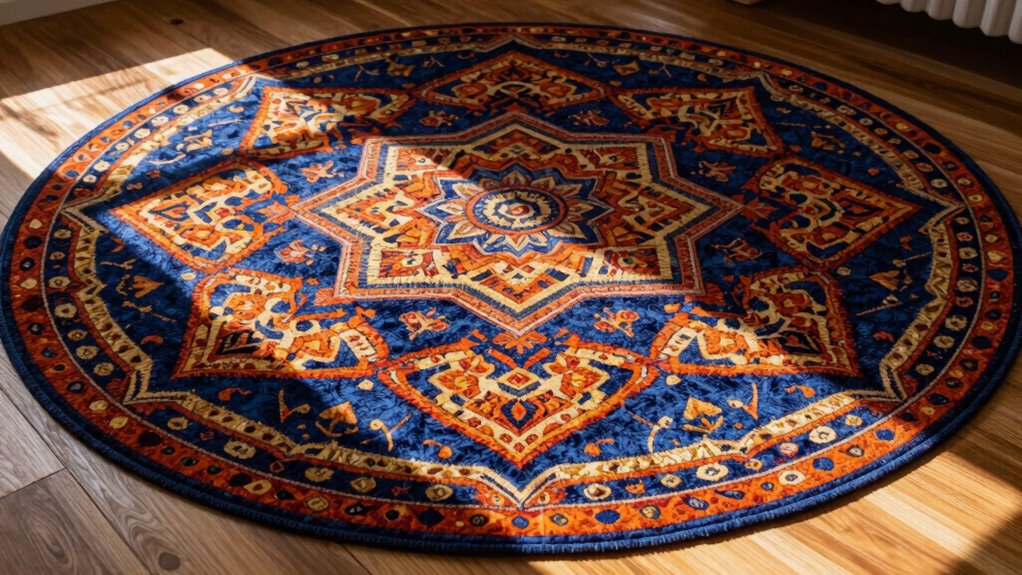
Your choice of floor patterns can profoundly influence the mood of a space, shaping how you feel when you walk into a room. One particularly mesmerizing option is a mandala rug, whose intricate design can evoke a sense of harmony and balance. These patterns are more than just decorative; they serve as visual anchors that influence your emotional state. When you select a mandala rug, you’re not only choosing a beautiful piece but also engaging with the deeper meanings embedded in its design, rooted in both color psychology and cultural symbolism.
Color psychology plays a significant role in how mandala rugs impact your mood. Bright, vibrant colors like reds and oranges can energize a space, fostering feelings of warmth and enthusiasm. Conversely, softer hues such as blues and greens promote calmness and relaxation, making your environment feel more serene. The specific colors used in the mandala pattern can subtly influence your emotional responses, helping you create a space that aligns with your desired mood. For example, a mandala rug with earthy tones like browns and ochres can ground a room, providing a sense of stability and comfort. Additionally, understanding the cultural symbolism behind these designs can deepen your connection to the space and enhance its overall impact, especially when the motifs carry meaningful cultural significance**. Recognizing these cultural elements can also foster a greater appreciation for the craftsmanship and history behind each piece, enriching your overall experience. Incorporating these patterns thoughtfully can transform a room into a harmonious environment**, promoting positive emotional well-being.
Popular right now

Sony BRAVIA 5 85-Inch Mini LED 4K HDR Smart TV (K-85XR50)

TCL T7 Series 85-Inch 4K 144Hz QLED Smart Google TV

Vitamix 5200 Professional-Grade Blender, 64 oz. Container, Black
As an affiliate, we earn on qualifying purchases.
Frequently Asked Questions
What Are the Origins of Mandala Rug Designs?
You’ll find that mandala rug designs originate from ancient spiritual symbolism, especially in Buddhist and Hindu traditions. These intricate patterns hold deep cultural significance, representing unity, harmony, and the universe. As you incorporate a mandala rug into your space, you connect with centuries of spiritual practices and cultural expressions, creating a calming, balanced atmosphere. The design’s origins highlight its role in fostering mindfulness and spiritual reflection in your environment.
How Do Different Colors in Mandala Rugs Influence Mood?
Bright blues boost your calm, creating a cool, collected atmosphere. Warm reds and oranges ignite energy, evoking excitement and enthusiasm. Soft greens promote serenity, supporting relaxation and renewal. Deep purples inspire luxury, luxury, and introspection. Color psychology guides your mood enhancement, as vibrant hues invigorate, soothing shades relax, and balanced tones bring harmony. By choosing colors thoughtfully, you influence your space’s vibe, making your environment more engaging, peaceful, or invigorating.
Can Mandala Rugs Improve Focus in a Workspace?
Yes, mandala rugs can improve focus in your workspace by leveraging color psychology and visual focus. The intricate patterns naturally draw your attention, helping you concentrate and stay engaged. Using calming colors like blues or greens enhances relaxation, while bold hues like reds stimulate energy. The balanced symmetry of mandala designs also reduces visual clutter, promoting mental clarity and making it easier to maintain focus throughout your workday.
What Materials Are Commonly Used in Making Mandala Rugs?
You might be surprised to learn that mandala rugs are crafted from a variety of materials, often combining traditional textile techniques with dyeing methods. Wool, cotton, and silk are common, chosen for their durability and softness. Natural dyes like indigo, madder, or turmeric are frequently used, giving vibrant, lasting colors. These materials and techniques come together to create intricate designs that not only beautify your space but also inspire calm and focus.
How to Choose the Right Mandala Rug for Small Spaces?
To choose the right mandala rug for small spaces, focus on color pairing and pattern complexity. Opt for lighter colors and subtle patterns to make the space feel open and airy. Avoid overly complex designs that can overwhelm the room. Instead, select a rug with a balanced pattern and harmonious colors that add visual interest without cluttering the space, creating a calming and inviting atmosphere.
Conclusion
Ultimately, your choice of mandala rugs and mesmerizing floor patterns can make a mighty mood. By blending bold, beautiful designs with calming colors, you craft a space that feels peaceful and playful. When you select patterns that pop and colors that calm, you create a cozy, enchanting corner. So, step softly into your space, and let your floor’s fancy patterns foster a fabulous, feel-good atmosphere — transforming your home into a haven of happiness.