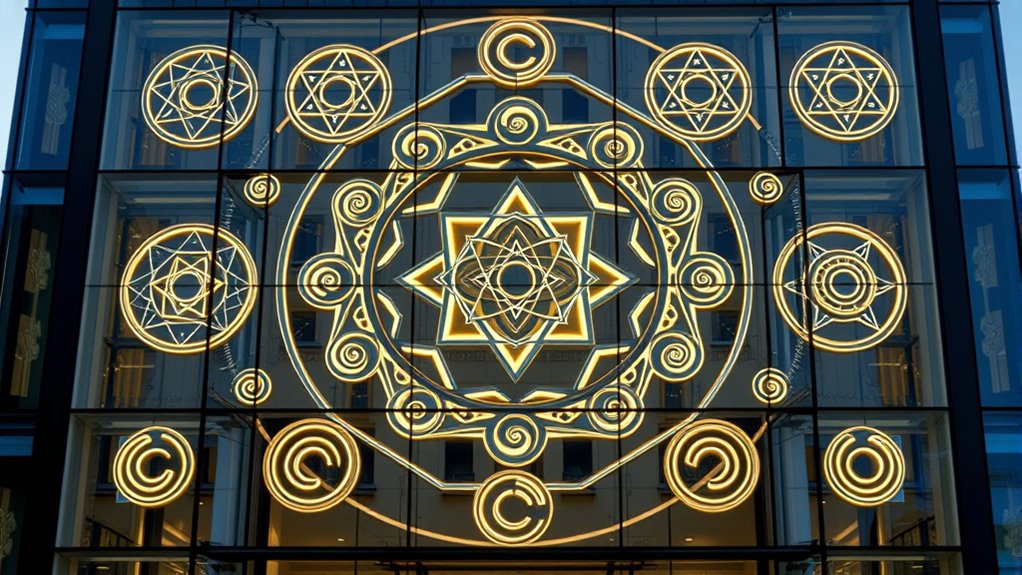

Sacred geometry influences modern architecture and design by incorporating ancient patterns and proportions that evoke harmony, balance, and spiritual connection. You’ll notice geometric motifs like spirals, mandalas, and tessellations shaping facades and interior spaces, creating environments that resonate on a subconscious level. These timeless principles foster stability, serenity, and universal symbolism in structures. If you explore further, you’ll discover how architects skillfully blend past wisdom with contemporary aesthetics to craft meaningful spaces.
Key Takeaways
- Sacred geometry shapes are integrated into modern architecture to symbolize universal harmony and divine order.
- Architectural designs incorporate patterns like spirals and mandalas to evoke spiritual and emotional resonance.
- Ancient geometric principles are used to create aesthetically balanced and harmonious structures today.
- Sacred geometry bridges cultural traditions, fostering a sense of unity and collective consciousness in design.
- Incorporating these patterns enhances the spiritual and philosophical significance of contemporary architectural spaces.
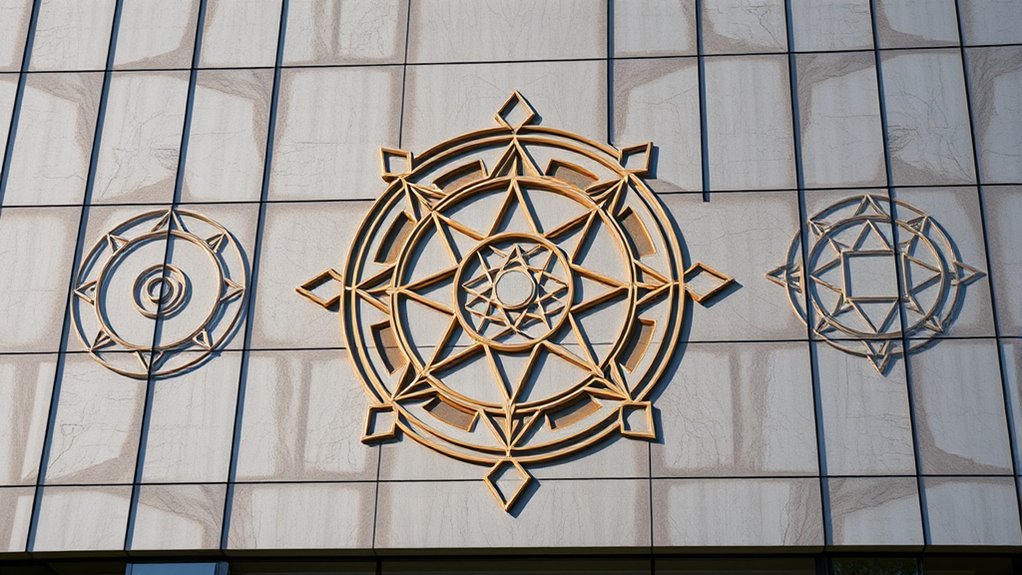
Have you ever noticed the recurring patterns and shapes that define modern architecture and design? These patterns aren’t just decorative; they often carry deep significance rooted in ancient symbolism. Sacred geometry, with its emphasis on geometric patterns, influences contemporary structures in subtle but profound ways. When you observe buildings today, you might see a harmony that echoes the spiritual and philosophical ideas of centuries past. These geometric patterns serve as a bridge between the past and present, reminding us that many modern designs draw inspiration from timeless symbols of unity and balance.
Ancient civilizations, from the Egyptians to the Greeks, used sacred geometry to communicate spiritual truths and universal principles. They believed that certain shapes and proportions reflected the divine order of the universe. These ideas have persisted through the ages, and today, architects and designers incorporate them to evoke a sense of harmony and purpose. For example, the Fibonacci sequence and the golden ratio are often embedded in the proportions of buildings, subtly guiding the eye and creating a feeling of natural balance. This connection to ancient symbolism reinforces the idea that architecture can be a reflection of deeper truths, not just functional spaces.
Ancient shapes and proportions reflect divine order, inspiring modern designs rooted in harmony and universal truths.
Geometric patterns are the visual language of sacred geometry. You’ll find them in the facades of buildings, in the layout of interior spaces, and even in decorative elements. These patterns—spirals, mandalas, tessellations—aren’t arbitrary; they encode concepts of wholeness, interconnectedness, and the divine order. When you stand in a space that employs these patterns, you might feel an intuitive sense of stability and serenity. The use of symmetry and proportion in design taps into the subconscious recognition of these patterns, creating environments that resonate on a deeper level.
Modern architects often incorporate sacred geometry to create spaces that feel both aesthetically pleasing and spiritually meaningful. By aligning structures with these ancient patterns, they tap into a collective consciousness that spans cultures and eras. It’s not just about making a building look beautiful; it’s about embedding a sense of harmony and purpose into the very fabric of the design. Whether consciously or intuitively, the use of geometric patterns rooted in ancient symbolism helps forge a connection between the built environment and the universal truths it seeks to embody. In doing so, modern architecture becomes a continuation of a timeless dialogue—one that links us to the divine through the language of sacred geometry.
Frequently Asked Questions
How Is Sacred Geometry Integrated Into Sustainable Building Practices?
You integrate sacred geometry into sustainable building practices by designing bio-inspired structures that mimic natural forms, enhancing energy flow optimization. These designs guarantee efficient use of resources, reduce waste, and promote natural ventilation and lighting. Sacred geometric principles guide the placement of elements, creating harmony and balance, which improves overall energy efficiency and sustainability. This approach aligns with eco-friendly goals while connecting structures to universal patterns found in nature.
What Are the Psychological Effects of Sacred Geometry in Architecture?
They say, “Beauty is in the eye of the beholder,” and sacred geometry in architecture influences your mind by fostering mindfulness impact and emotional resonance. You might feel more calm, centered, and connected when surrounded by these harmonious designs. Such structures help reduce stress, enhance focus, and evoke a sense of awe. Your subconscious responds positively, making spaces feel more welcoming, inspiring, and spiritually uplifting.
Which Cultures Historically Influenced Sacred Geometry’s Role in Design?
You see, ancient civilizations like the Egyptians, Greeks, and Indians heavily influenced sacred geometry’s role in design. They used geometric patterns as cultural symbolism, reflecting spiritual beliefs and cosmology. These cultures believed in the divine nature of geometric ratios, integrating them into temples, monuments, and art. Their legacy continues to shape modern architecture, highlighting the timeless importance of sacred geometry in expressing cultural identity and spiritual values.
How Do Architects Ensure Geometric Precision in Sacred Design Elements?
You double down on precision by using advanced measurement tools like laser scanners and digital calipers. These tools help you achieve meticulous accuracy, ensuring sacred design elements align perfectly. Precision techniques, including geometric algorithms and computer-aided design (CAD), are your trusty sidekicks. By combining tradition with technology, you avoid cutting corners and keep your work on point—showing that even in sacred geometry, the devil’s in the details.
Are There Modern Technologies That Enhance Sacred Geometry Application?
Yes, modern technologies like digital fabrication and augmented reality greatly enhance sacred geometry application. You can use digital fabrication to precisely create complex geometric forms, ensuring accuracy and consistency. Augmented reality allows you to visualize sacred design elements in real-world settings before construction, helping refine proportions and alignments. These tools enable you to experiment with intricate geometric patterns efficiently, ensuring your sacred designs are both precise and spiritually resonant.
Conclusion
As you explore modern architecture, remember that sacred geometry remains the silent architect guiding harmony and balance—just as it did in ancient temples and sacred sites. By incorporating these timeless principles, you’re part of a continuum that connects past and future. Like the sacred spiral of the cosmos, your designs can inspire awe and reflect a deeper order. Embrace these patterns, and let them elevate your creations beyond mere structures into symbols of universal unity.