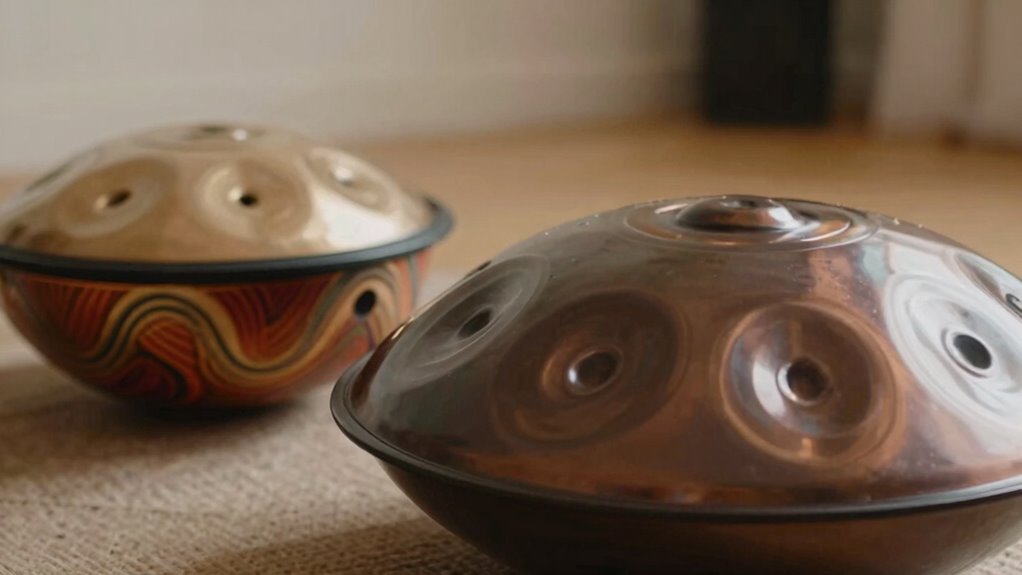

If you’re choosing between a handpan and a steel tongue drum for meditation, consider your priorities. A handpan offers richer tonal colors and evolving harmonics, perfect for creating deep, expressive soundscapes, but it’s heavier and less portable. A steel tongue drum, on the other hand, is lightweight, easy to transport, and great for quick setups. Both can promote calmness, but understanding their differences helps you find the best fit. Keep exploring to discover more about each instrument’s unique qualities.

Get art and craft supplies delivered free with Prime
- Fast, free delivery on millions of items
- Prime Video, Amazon Music and more included
- Member-only deals all year
Key Takeaways
- Handpans offer a wider tonal palette and richer harmonics, creating more expressive and evolving meditative soundscapes.
- Steel tongue drums are lightweight, portable, and easy to transport, ideal for quick setup during meditation sessions.
- Handpans are heavier and more delicate, requiring careful handling, while steel tongue drums are more durable and suitable for outdoor use.
- The complex construction of handpans allows for nuanced improvisation, enhancing deep meditative experiences.
- Steel tongue drums provide straightforward, calming tones that are easy for beginners and quick to produce relaxing music.
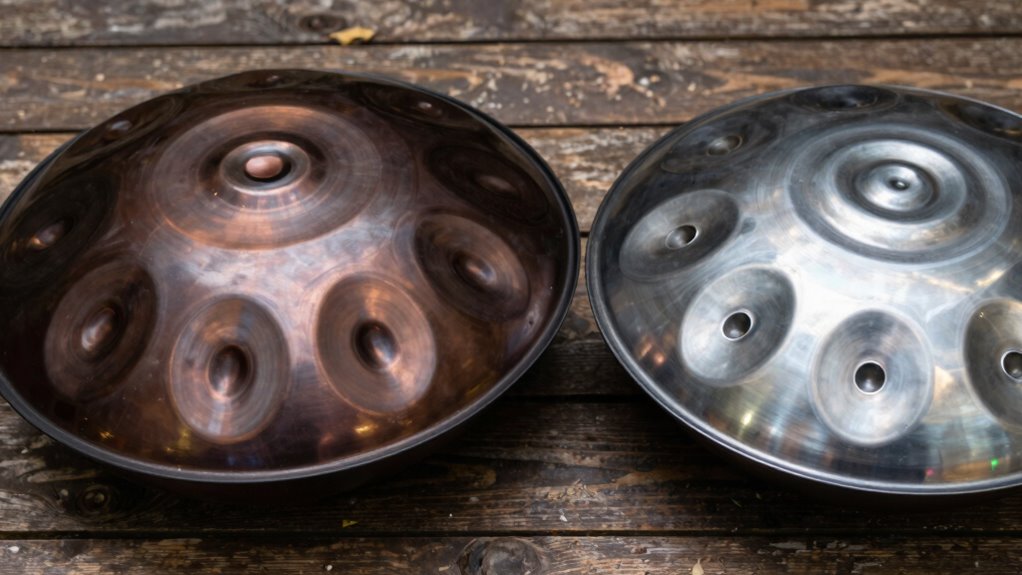
When it comes to creating meditative music, choosing the right instrument can considerably enhance your experience. Both the handpan and the steel tongue drum offer unique qualities that can shape your soundscape, but understanding their differences helps you make a more informed decision. One key aspect to consider is tonal diversity. The handpan typically provides a broader range of tonal colors, thanks to its complex construction and multiple tone fields. Its rich harmonics and varied overtones enable you to produce deeply resonant, evolving sounds that can deepen your meditation sessions. In contrast, the steel tongue drum often offers a more straightforward, melodic tone with less tonal variability. Its simpler tuning and fewer notes make it easier to learn but might limit the range of emotions you can evoke. If tonal diversity is a priority, the handpan’s layered soundscape allows for more expressive improvisation and nuanced performances, which can be especially beneficial when exploring different meditative states. Additionally, the instrument’s construction plays a significant role in its durability and sound quality, affecting how it performs over time. The material quality also influences the instrument’s resonance and longevity, making it an important factor to consider. Proper care and maintenance are essential to preserve the sound and condition of these instruments, ensuring they remain in optimal shape for years to come. The manufacturing process can also impact the consistency and tuning stability of the instruments, which is vital for maintaining a desired sound. Moreover, understanding the climate considerations can help you choose an instrument that remains stable and sounds great in your environment. Portability features are another vital factor, especially if you plan to take your instrument on the go or use it in various environments. Steel tongue drums are generally more lightweight and compact, designed with portability in mind. They often come with a sturdy carrying case, making it easy to transport without much fuss. This convenience is ideal if you want an instrument you can quickly set up outdoors or at different locations. Handpans, while beautiful and complex, tend to be heavier and more delicate. Their size and construction make them less portable, requiring careful handling and sometimes protective cases to prevent damage. If you frequently move between spaces or prefer a more travel-friendly instrument, the steel tongue drum’s portability features could be the decisive factor. Ultimately, your choice depends on your priorities. If you desire a wide tonal palette to explore deep, evolving sounds and don’t mind a heavier instrument, a handpan might suit you best. However, if portability and ease of transport are more important, the steel tongue drum offers a practical, accessible option. Both instruments can produce calming, meditative music, but your preferred features will determine which aligns better with your practice. Whichever you choose, understanding these core differences will help you connect more deeply with your music, enriching your meditative journey.
As an affiliate, we earn on qualifying purchases.
Frequently Asked Questions
Which Instrument Is More Beginner-Friendly for Meditation?
The steel tongue drum is more beginner-friendly for meditation because of its simple design and ease of play. Its musical versatility allows you to produce calming sounds quickly, making it ideal for beginners. Plus, its cultural origins are rooted in various traditional practices, which can deepen your meditation experience. You’ll find it easier to create soothing melodies without extensive training, helping you focus and relax faster.
How Do Durability and Maintenance Compare Between the Two?
Durability and maintenance depend on material resilience and cleaning. Handpans, often crafted from sturdy steel, withstand wear and weather, making them relatively resilient with proper upkeep. Steel tongue drums, typically made from similar metals, also offer durability but may require gentler handling to prevent dents. Regular cleaning and careful handling keep both instruments pristine, ensuring they play beautifully for years. With mindful maintenance, both promise lasting, lively soundscapes.
Are There Notable Differences in Sound Projection?
You’ll notice that handpans generally have better sound projection strength, filling a space more effectively with rich, resonant tones. Their sound clarity tends to be smoother and more harmonious, creating a more immersive experience. Steel tongue drums, while still capable of projecting sound, often have a more focused and localized projection. If you want a instrument with broader sound projection and clearer tones for meditation, a handpan might be the better choice.
Which Instrument Offers More Tonal Variety?
You’ll find that the handpan offers more tonal variety due to its tonal complexity and the way its different notes blend and resonate. Its instrument versatility allows for a richer array of sounds, from mellow hums to bright chimes. Steel tongue drums tend to produce more uniform tones, making them simpler for meditative music. If you seek a broader spectrum of sound, the handpan’s tonal richness makes it the better choice.
What Are the Typical Price Ranges for Each?
Are you curious about the price comparison? Handpans typically range from $1,000 to $3,500, depending on craftsmanship and material differences, while steel tongue drums are more affordable, often between $100 and $600. Material differences greatly influence costs; handpans use high-quality, hand-hammered steel, making them pricier. Steel tongue drums, usually mass-produced with simpler materials, offer a budget-friendly option for those seeking meditative sounds without breaking the bank.
Conclusion
As you close your eyes and let the gentle sounds wash over you, both the handpan and steel tongue drum create a calming oasis. Imagine the soft hum of the handpan’s resonant notes or the crisp clarity of the tongue drum’s melodies echoing through your mind. Whether you’re drawn to the soulful depth or the bright, shimmering tones, these instruments invite you to drift into a peaceful state, turning your meditative space into a serene, musical sanctuary.
Fall Picks
fall essentials
As an affiliate, we earn on qualifying purchases.