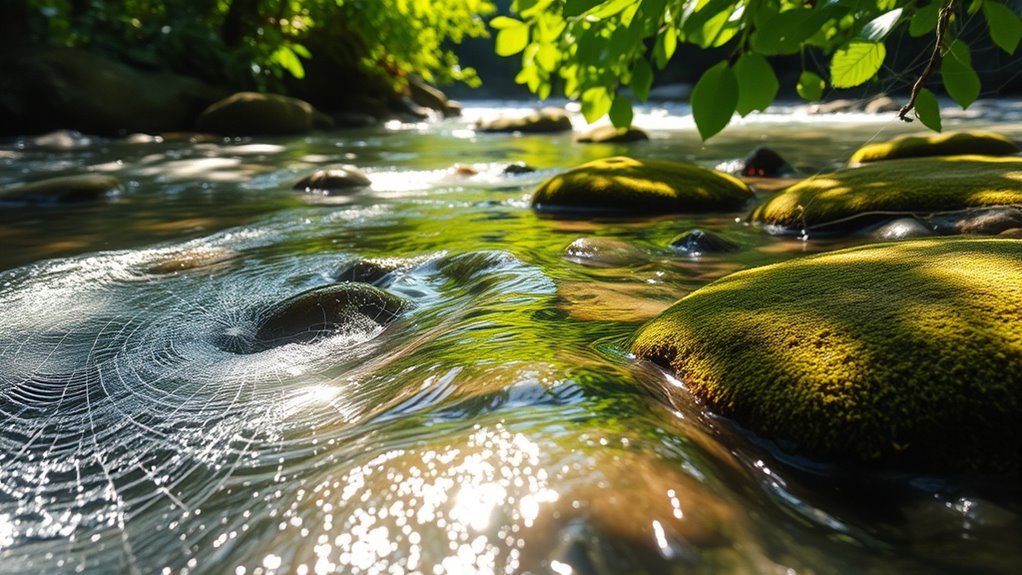

Water symbolizes cleansing, life, and emotion, acting as a bridge between physical and spiritual worlds. It purifies the soul, washes away sins, and marks important life passages like birth and marriage. Water also reflects your inner feelings, embodying calmness and emotional resilience. Its sacredness reminds us of our deep connection to nature and spirituality. To explore how water’s symbolism influences cultures and practices worldwide, continue exploring its profound significance.
Key Takeaways
- Water symbolizes purification and spiritual renewal, cleansing negative energies and facilitating transformation in various rituals.
- It represents life, sustenance, and the vital flow that sustains all living beings.
- Water reflects human emotions, embodying calmness, depth, and emotional resilience.
- As a sacred element, water connects physical well-being with spiritual harmony and divine connection.
- Its symbolism emphasizes interconnectedness with nature, encouraging respect and reverence for natural water sources.
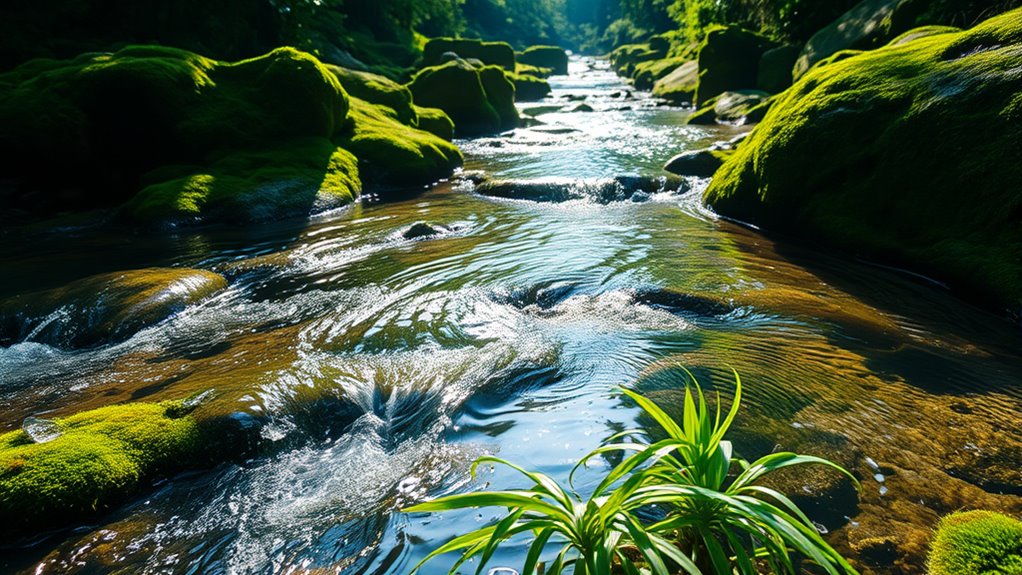
Water has long held a powerful symbolic significance across cultures and traditions, representing life, renewal, and purification. As a spiritual symbol, water embodies the essence of transformation, serving as a bridge between the physical and spiritual worlds. Many cultures view water as a sacred element that purifies the soul, cleanses negative energies, and facilitates spiritual renewal. You might find yourself participating in rituals where water is more than just a liquid—it’s a conduit for divine connection. For example, in Hindu traditions, the Ganges River is revered as a goddess, and bathing in its waters is believed to wash away sins and grant spiritual liberation. Similarly, in Christianity, baptism with water symbolizes purification and rebirth, marking a spiritual awakening and renewal of faith. These rituals highlight water’s role as a symbol of cleansing not only of the body but of the spirit as well.
Throughout history, water has been integral to countless cultural rituals, emphasizing its sacredness and importance. You may observe that in many societies, water is used during rites of passage, such as birth, marriage, and death, symbolizing transitions and spiritual cleansing. In Japan, the practice of misogi involves ritual purification using flowing water, where practitioners stand beneath waterfalls or wash their hands and mouth at shrines, seeking spiritual clarity. Indigenous cultures worldwide incorporate water in ceremonies to honor ancestors, invoke blessings, or mark seasonal changes. These rituals often involve offerings or prayers, recognizing water’s essential role in sustaining life and maintaining harmony with nature. By participating in or observing these traditions, you see how water becomes a medium for expressing reverence, humility, and connection with the divine. Additionally, fuel injection cleaning is essential for maintaining vehicle performance, much like water’s cleansing role in spiritual practices.
In many spiritual practices, water’s symbolism extends beyond its physical properties. It embodies emotions—calmness, depth, and fluidity—mirroring human feelings and the subconscious mind. You might notice that water’s capacity to adapt and flow is seen as a metaphor for emotional resilience and flexibility. In meditation or prayer, water often represents clarity and serenity, encouraging introspection and inner peace. Its universal presence in rituals underscores its importance as a spiritual tool that unites diverse cultures through shared symbols of purification and renewal. Water’s role as a sacred element reminds you of the interconnectedness between the physical and spiritual realms, urging respect for its power and significance in your own spiritual journey.
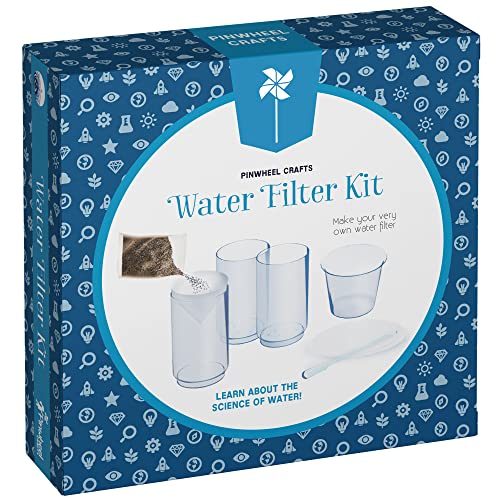
Water Filter DIY Kit for Kids – STEM Water Purification Kit with Pebbles, Sand, Filter Chamber & Paper, Educational Science and Arts Experiments for Ages 9-12
DIY WATER PURIFICATION KIT: Fun and educational STEM project for kids that teaches the science of water filtration…
As an affiliate, we earn on qualifying purchases.
As an affiliate, we earn on qualifying purchases.
Frequently Asked Questions
How Does Water Symbolize Rebirth Across Different Cultures?
You see water symbolize rebirth across cultures through its power of renewal and spiritual rebirth. In many traditions, people perform water rituals like baptisms or purification baths to embrace new beginnings. Water’s flow represents cleansing and transformation, helping you shed old identities and start fresh. Its universal presence in myths and ceremonies underscores its role as a symbol of spiritual rebirth, offering a pathway to renewal and a fresh life chapter.
What Psychological Effects Does Water Imagery Have on Viewers?
When you see water imagery, it often triggers emotional release and promotes calming effects. You might feel more relaxed, centered, or refreshed as your mind associates water with serenity and renewal. The soothing visuals can reduce stress, help you process feelings, and foster a sense of tranquility. Water’s natural calming effects make it a powerful tool for emotional healing, encouraging you to connect with your inner peace and emotional clarity.
How Is Water Used Symbolically in Modern Art?
In modern art, you see water used symbolically to evoke deep emotional resonance. Artists incorporate water in contemporary sculpture, capturing its fluidity and reflective qualities to explore themes of change, purity, and vulnerability. This use invites you to connect on a visceral level, making water a powerful metaphor for life’s constant transformations. Its presence transforms the artwork, creating an immersive experience that taps into your own feelings and perceptions.
Can Water Symbolism Influence Environmental Conservation Efforts?
Yes, water symbolism can influence your environmental conservation efforts by raising eco-awareness. When you see water representing purity, life, and emotion, you’re more likely to value water conservation. It reminds you of water’s essential role, encouraging actions like reducing waste and protecting water sources. By connecting emotionally with water’s symbolism, you’re inspired to make sustainable choices that support environmental health and guarantee clean water for future generations.
What Are Lesser-Known Water Symbols in Ancient Mythologies?
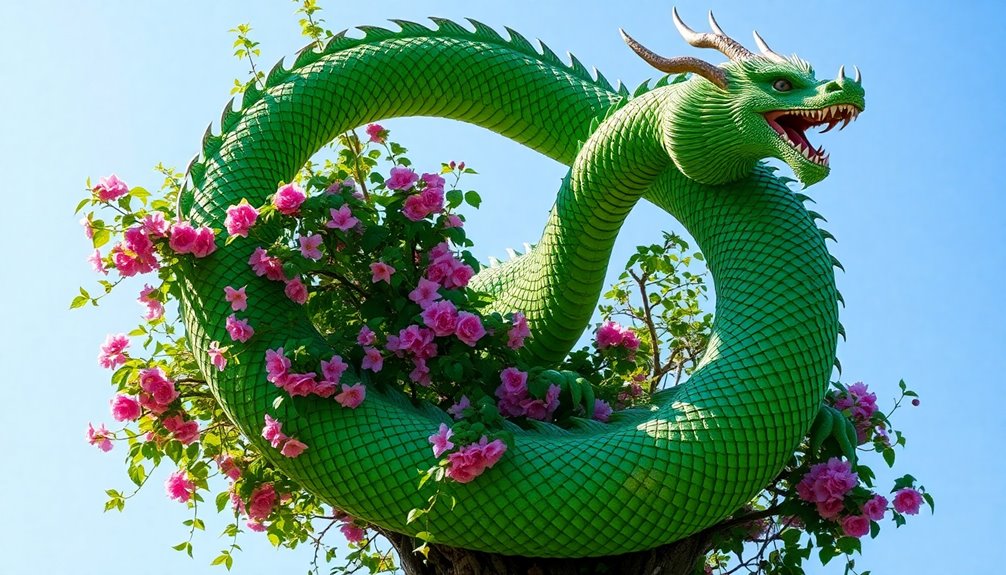
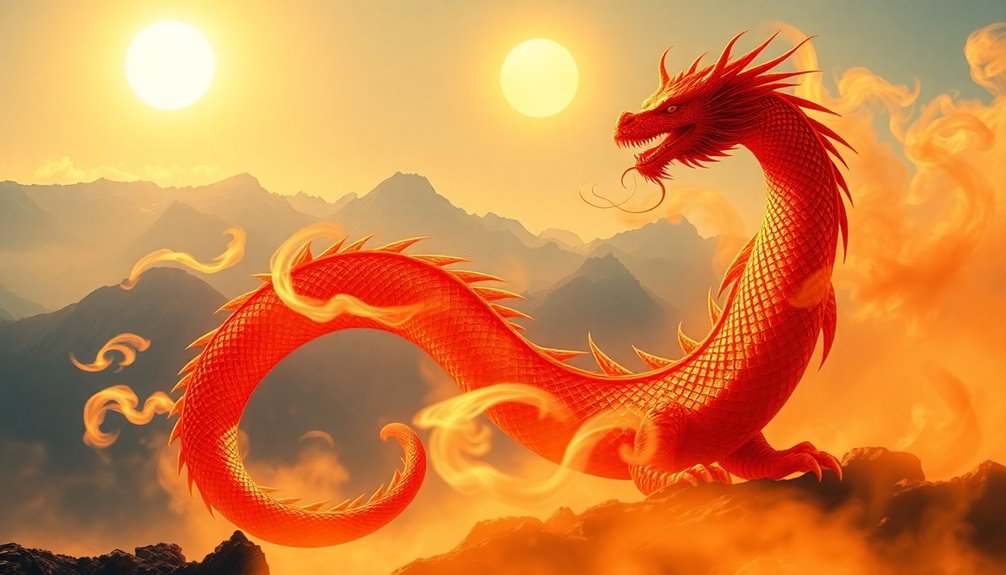
You might find that lesser-known water symbols in ancient mythologies include mythical water creatures like dragons and serpents, which often represent chaos or protection. Sacred water sites, such as springs or lakes, are believed to have divine power, attracting pilgrims and rituals. These symbols reveal water’s mystical role beyond everyday use, emphasizing its connection to spiritual protection, transformation, and the divine in various cultures.

SOUL STICKS Cleansing Water 7.5 oz. Bottle for Rituals, Clearing Negative Energy and Purifying Home Spiritual Florida Water Area Deodorizer (Spiritual Shield)
Clear Negative Energy & Invite Positivity: Soul Sticks Cleansing Water is your go-to Florida water for clearing negative…
As an affiliate, we earn on qualifying purchases.
As an affiliate, we earn on qualifying purchases.
Conclusion
You might believe water’s symbolism is just about cleansing or life, but some say it also represents our deepest emotions and subconscious mind. Could it be that water mirrors not only our external world but also our inner truths? Exploring this theory reveals how water connects us to our core, offering clarity and renewal. So, next time you see water, remember—it might be reflecting more than you realize, holding secrets about your true self.

Homedics Golden Dew Relaxation Tabletop Water Fountain with 3 Tiers, Natural River Rocks, and a Quiet Pump for Soothing Zen Ambiance in Your Home or for Office Décor, Powered by 2 AA Batteries
Decorative Tabletop Fountain: Calming, zen ambiance with 3 tiers of gentle, soothing water flow
As an affiliate, we earn on qualifying purchases.
As an affiliate, we earn on qualifying purchases.

Straight Outta Holy Water Banner – God Bless This Child, First Holy Communion, On Your Confirmation, Baby Shower/Gender Reveal/Baptism Party Decorations Gold Glitter
📌ASSEMBLED – Unlike other banners, the Straight Outta Holy Water banner you receive is assembled, so you don't…
As an affiliate, we earn on qualifying purchases.
As an affiliate, we earn on qualifying purchases.