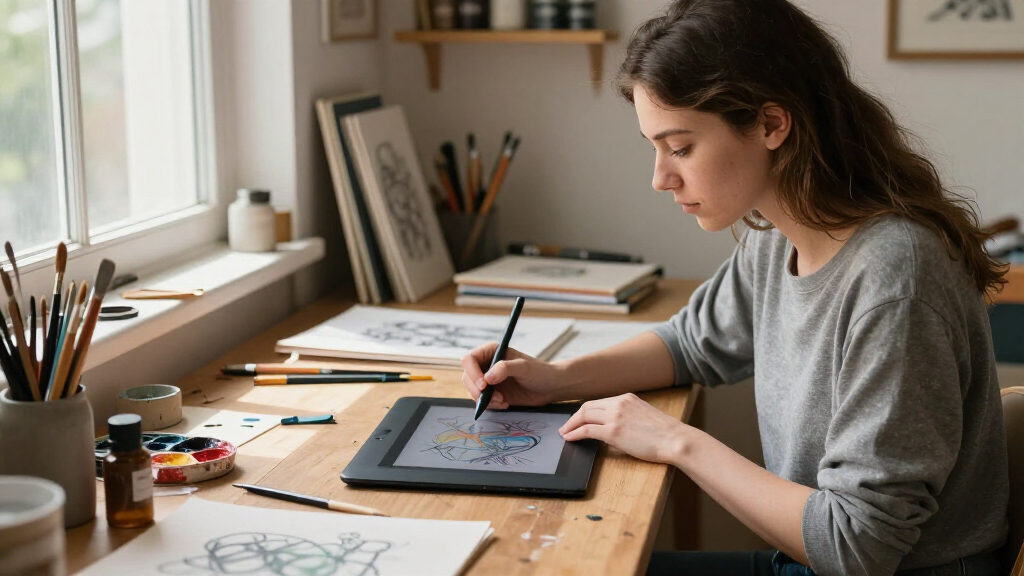

Creative drawing tablets split into three camps: affordable screenless slates that need a computer, pen displays you draw on directly, and standalone tablets that work without any PC at all. For most artists, the HUION Kamvas 13 (Gen 3) takes the top spot because its 13.3-inch display and dual dials deliver a genuine studio experience at a mid-range price. If budget leads your decision, the XPPen Deco 01 V3 offers a spacious 10×6 inch surface and a battery-free stylus for very little money, while the XPPen Magic Drawing Pad 12.2 suits creators who want to sketch anywhere without a laptop. The main tradeoff to weigh is portability and cost against drawing-on-screen precision. Read on for the full breakdown of all twelve options.

Get art and craft supplies delivered free with Prime
- Fast, free delivery on millions of items
- Prime Video, Amazon Music and more included
- Member-only deals all year
Key Takeaways
- Screenless slates like the UGEE M708, XPPen Deco 01 V3, and GAOMON M10K deliver nearly identical core performance (8192 pressure levels, battery-free pens), so your choice between them should come down to shortcut layout and driver reliability rather than raw specs.
- The HUION Kamvas 13 (Gen 3) won best overall because it is the least expensive pen display that doesn’t compromise on color accuracy, tilt support, or dial-based workflow — the three areas where cheaper displays falter.
- Standalone options split sharply: the XPPen Magic Drawing Pad 12.2 with its paper-like screen and 16384 pressure levels targets serious artists, while the PicassoTab X10 is better treated as a beginner sketchpad than a professional tool.
- Small-format tablets (Wacom Intuos Small, XPPen StarG640, Huion H640P) are not just cheaper versions of the 10×6 class — the smaller active area changes muscle memory and suits note-takers and annotators more than illustrators.
- Two generations of the same UGEE M708 made the list because the V2 adds Android phone support and refined hotkeys; if you never draw on a phone, the original remains the stronger value.
| UGEE M708 Drawing Tablet, 10×6 inch Large Space for Digital Drawing |  | Best Value for a Full-Size Drawing Surface | Active Drawing Space: 10 x 6 inches | Pressure Sensitivity: 16,384 levels | Stylus Technology: Passive (battery-free) | VIEW LATEST PRICE | See Our Full Breakdown |
| UGEE M708 V2 Drawing Tablet with 10×6 Inch Active Area, Battery-Free Stylus, 8 Hot Keys, Android & PC Compatibility |  | Best for Android Phone and Tablet Artists | Active Drawing Area: 10 x 6.25 inches | Pressure Sensitivity: 16,384 levels (8,192-level stylus) | Stylus: Battery-free | VIEW LATEST PRICE | See Our Full Breakdown |
| XPPen Deco 01 V3 10×6 Drawing Tablet with Battery-Free Stylus and 8 Shortcut Keys |  | Best Overall Beginner Tablet | Drawing Area: 10 x 6.25 inches | Pressure Sensitivity: 16,384 levels | Tilt Support: Up to 60 degrees | VIEW LATEST PRICE | See Our Full Breakdown |
| HUION Inspiroy H1060P Graphics Drawing Tablet, 10 x 6.25 inches, 12+16 Hot Keys |  | Best for Workflow Power Users | Working Area: 10 x 6.25 inches | Stylus: Battery-free PW100 with ±60° tilt support | Shortcut Keys: 12 programmable press keys + 16 soft keys | VIEW LATEST PRICE | See Our Full Breakdown |
| XPPen StarG640 6×4 Inch Digital Art Tablet with Battery-Free Stylus for Mac, Windows, Chromebook |  | Best Compact Pick for Notes and Remote Teaching | Active Area: 6 x 4 inches | Stylus: Battery-free PN01 | Thickness: 2 mm | VIEW LATEST PRICE | See Our Full Breakdown |
| Wacom Intuos Small Wired Graphic Drawing Tablet with Pen and Software |  | Best Brand Reliability for Beginners | Size: Small | Connectivity: Wired USB | Technology: EMR (Electromagnetic Resonance) | VIEW LATEST PRICE | See Our Full Breakdown |
| Huion Inspiroy H640P 6×4 inch Drawing Tablet with 8192 Pen Pressure |  | Best Portable Value | Active Area: 6 x 4 inches | Pen Pressure Levels: 8192 | Stylus: Battery-free PW100 | VIEW LATEST PRICE | See Our Full Breakdown |
| XPPen Artist 12 3rd Generation 11.9″ Drawing Tablet with Screen and Pink Stylus |  | Best Display Tablet Under 13 Inches | Display Size: 11.9 inches, full-lamination | Pressure Levels: 16,384 | Color Gamut: 99% sRGB | VIEW LATEST PRICE | See Our Full Breakdown |
| PicassoTab 10″ Standalone Drawing Tablet, No Computer Needed, Portable, A10 |  | Best Computer-Free Option | Display: 10-inch laminated screen | Stylus: 4096-level pressure-sensitive active pen | Processor: Octa-core | VIEW LATEST PRICE | See Our Full Breakdown |
| GAOMON M10K Drawing Tablet, 10×6.25 inch with Touch Ring, 8192 Pressure Levels, Battery-Free Stylus |  | Best Large Workspace on a Budget | Active Area: 10 x 6.25 inches, textured surface | Pressure Sensitivity: 8192 levels | Stylus: Battery-free AP31 | VIEW LATEST PRICE | See Our Full Breakdown |
| HUION Kamvas 13 (Gen 3) Drawing Tablet with Screen, Dual Dial, 13.3″ |  | Best Pen Display for Serious Artists | Screen Size: 13.3 inches | Color Accuracy: Avg. ΔE<1.5, 99% sRGB / Rec.709 | Pressure Sensitivity: 16,384 levels (PenTech 4.0) | VIEW LATEST PRICE | See Our Full Breakdown |
| XPPen Magic Drawing Pad 12.2 Inch Standalone Drawing Tablet |  | Best Standalone Pick | Screen Size: 12.2 inches | Resolution: 2160 x 1440 | Color Support: 97% sRGB, 16.77 million colors | VIEW LATEST PRICE | See Our Full Breakdown |
| creative drawing tablet | Compatibility | Stylus | Connectivity |
|---|---|---|---|
| UGEE M708 Drawing Tablet | Windows 7+, macOS 10.10+, Android 10.0+, Chrome OS 88+, Linux | — | USB to USB-C with adapters |
| UGEE M708 V2 Drawing Tablet wi | Windows 7+, macOS 10.12+, Chrome OS 88+, Linux, Android 6.0+ | Battery-free | — |
| XPPen Deco 01 V3 10×6 Drawing | Windows 7+, macOS 10.13+, Android 10.0+, Chrome OS 88+, Linux | Battery-free, 16K pressure levels | USB-C to USB-C, adapters included |
| HUION Inspiroy H1060P Graphics | Windows 7+, macOS 10.12+, Android 6.0+, Linux (Ubuntu) | Battery-free PW100 with ±60° tilt support | — |
| XPPen StarG640 6×4 Inch Digita | Mac, Windows, Chromebook | Battery-free PN01 | — |
| Wacom Intuos Small Wired Graph | — | Battery-free Wacom pen | Wired USB |
| Huion Inspiroy H640P 6×4 inch | Windows, Mac, Linux, Android 6.0+ | Battery-free PW100 | — |
| XPPen Artist 12 3rd Generation | Windows 7+, macOS 10.13+, Android 10.0+, ChromeOS 88+, Linux, Windows ARM | — | USB-C |
| PicassoTab 10" Standalone Draw | — | 4096-level pressure-sensitive active pen | — |
| GAOMON M10K Drawing Tablet | Windows 7+, macOS 10.12+, Android 11-14 | Battery-free AP31 | USB |
| HUION Kamvas 13 | Windows 10+, macOS 10.12+, Android, Linux Ubuntu 20.04 LTS | — | USB-C |
| XPPen Magic Drawing Pad 12.2 I | — | — | — |
More Details on Our Top Picks
UGEE M708 Drawing Tablet, 10×6 inch Large Space for Digital Drawing
For shoppers who want a full 10 x 6 inch workspace without paying a premium, the UGEE M708 V3 makes the strongest case in this lineup. The 16,384 pressure levels translate into smooth opacity and line-weight control that punches above its price class, and the textured surface gives strokes a more paper-like feel than the slicker XPPen StarG640. Compared with the M708 V2 below, the V3’s broader OS support — including native Linux compatibility — makes it the safer pick for mixed-device households. The tradeoff is polish: with only 8 shortcut keys, it lags behind the HUION H1060P’s 12 physical keys plus 16 soft keys, and some users report finicky driver installations on Windows. The USB-C connection may also demand adapters on older machines. This pick makes sense for budget-conscious artists who prioritize canvas size over workflow refinement.
Pros:- Large 10 x 6 inch active area for detailed artwork
- 16,384 pressure levels for fine line control
- Very broad OS support including Linux and Android
- Textured surface feels closer to paper than budget rivals
Cons:- Only 8 shortcut keys, limiting workflow customization
- Reported driver installation issues on some systems
- USB-C connection may require adapters on older hardware
Best for: Students and hobbyists who want a large drawing surface at a budget-friendly price
Not ideal for: Windows users who want a plug-and-play experience — driver issues can require troubleshooting
- Active Drawing Space:10 x 6 inches
- Pressure Sensitivity:16,384 levels
- Stylus Technology:Passive (battery-free)
- Shortcut Keys:8 customizable express keys
- Connectivity:USB to USB-C with adapters
- Compatibility:Windows 7+, macOS 10.10+, Android 10.0+, Chrome OS 88+, Linux
- Design:Ambidextrous
Our verdict“A smart buy if canvas size matters more to you than shortcut depth or driver polish.”
UGEE M708 V2 Drawing Tablet with 10×6 Inch Active Area, Battery-Free Stylus, 8 Hot Keys, Android & PC Compatibility
What separates the M708 V2 from its sibling, the M708 V3, is Android 6.0+ phone support — a rarity at this screen size that lets you sketch directly from a phone without a computer in sight. The battery-free stylus and 60 degrees of tilt support produce more natural, angled strokes than the tilt-free XPPen StarG640, and the slim frame travels better than the bulkier HUION H1060P. The pressure spec is a slight oddity: the tablet reads 16,384 levels while the stylus resolves 8,192, so the V3 delivers marginally finer gradation on paper. Like every non-screen tablet here, it must stay tethered to a host device — anyone wanting true independence should look at the PicassoTab 10 instead. iPhone users should also look elsewhere, as iOS support is limited. This model is better suited to mobile-first artists than desk-bound professionals.
Pros:- Works with Android 6.0+ phones and tablets without a computer
- Tilt support up to 60 degrees for natural shading
- Slim, lightweight body is easy to carry
- Battery-free stylus needs no charging
Cons:- Cannot operate standalone — always tethered to a host device
- Stylus resolves only 8,192 pressure levels despite the tablet’s 16K rating
- Limited iOS compatibility
Best for: Artists who sketch primarily on Android phones or tablets and want a large canvas
Not ideal for: iPhone and iPad users — iOS support is limited and unreliable here
- Active Drawing Area:10 x 6.25 inches
- Pressure Sensitivity:16,384 levels (8,192-level stylus)
- Stylus:Battery-free
- Tilt Support:Up to 60 degrees
- Hot Keys:8 customizable keys
- Compatibility:Windows 7+, macOS 10.12+, Chrome OS 88+, Linux, Android 6.0+
- Design:Slim, lightweight
Our verdict“The pick for Android-centric creators who want a big drawing area they can drive from a phone.”
XPPen Deco 01 V3 10×6 Drawing Tablet with Battery-Free Stylus and 8 Shortcut Keys
The Deco 01 V3 hits the sweet spot that beginners actually need: a roomy 10 x 6.25 inch canvas, a true 16K-pressure battery-free stylus, and 60-degree tilt support — a combination the UGEE M708 V3 can’t fully match on tilt. At just 8 mm thick, it slides into a backpack far more easily than the HUION H1060P, which matters for students carrying it daily. XPPen’s driver experience also tends to be smoother out of the box than UGEE’s, which is exactly what a first-time buyer wants. Compared with the screen-equipped XPPen Artist 12, you give up the draw-on-display experience but save a substantial amount of money while keeping the same stroke quality. Drawbacks are real: full compatibility demands Windows 11 or macOS 12 or later, and the shortcut keys offer fewer customization options than power users expect. The bundled software situation is also vague.
Pros:- Genuine 16,384-level stylus with 60-degree tilt for expressive strokes
- Ultra-thin 8 mm profile travels easily
- Broad compatibility across Windows, Mac, Android, and Linux
- Battery-free stylus with no charging interruptions
Cons:- Requires Windows 11 or macOS 12+ for full compatibility
- Shortcut keys offer limited customization depth
- Unclear bundled software package
Best for: Beginners and students who want polished hardware and natural tilt response from day one
Not ideal for: Owners of older computers stuck on pre-Windows 11 or pre-macOS 12 systems
- Drawing Area:10 x 6.25 inches
- Pressure Sensitivity:16,384 levels
- Tilt Support:Up to 60 degrees
- Stylus:Battery-free, 16K pressure levels
- Shortcut Keys:8 customizable keys
- Connectivity:USB-C to USB-C, adapters included
- Thickness:8 mm
- Compatibility:Windows 7+, macOS 10.13+, Android 10.0+, Chrome OS 88+, Linux
Our verdict“The most balanced starting point in this roundup for new digital artists who want room to grow.”
HUION Inspiroy H1060P Graphics Drawing Tablet, 10 x 6.25 inches, 12+16 Hot Keys
If you’ve outgrown entry-level tablets and want your hardware to keep pace with your shortcuts, the H1060P is the clear choice. Its 12 physical keys plus 16 soft keys dwarf the 8-key setups on the UGEE M708 line and the XPPen Deco 01 V3, letting serious illustrators map entire brush palettes and layer actions without touching a keyboard. The battery-free PW100 stylus with ±60° tilt holds its own against the Deco’s stroke quality, and the symmetrical design accommodates left-handed artists properly. The catch is connectivity friction: phone use demands an OTG connector, Samsung Galaxy S-series cursor glitches are documented, and Mac connections need a USB adapter. Compared with the Wacom Intuos Small, you trade a polished ecosystem for far more programmable control and a bigger canvas. This model is better suited to intermediate and professional users than casual doodlers, who’d waste the shortcut arsenal.
Pros:- 28 total programmable controls (12 physical + 16 soft keys)
- Battery-free PW100 stylus with ±60° tilt support
- Large 10 x 6.25 inch working area
- Symmetrical design works well for left-handed artists
Cons:- Requires OTG adapter for phones; no iPhone/iPad support
- Cursor may not display on Samsung Galaxy S series devices
- Needs a USB adapter for Mac connections
Best for: Intermediate-to-professional artists who rely heavily on keyboard shortcuts and custom workflows
Not ideal for: Samsung Galaxy S-series phone users — known cursor display issues
- Working Area:10 x 6.25 inches
- Stylus:Battery-free PW100 with ±60° tilt support
- Shortcut Keys:12 programmable press keys + 16 soft keys
- Compatibility:Windows 7+, macOS 10.12+, Android 6.0+, Linux (Ubuntu)
- Design:Symmetrical, adjustable for left-handed use
Our verdict“The shortcut-heavy workhorse for artists whose workflow lives on programmable keys.”
XPPen StarG640 6×4 Inch Digital Art Tablet with Battery-Free Stylus for Mac, Windows, Chromebook
Not everyone needs a big canvas — and that’s exactly the StarG640’s strength. Its 6 x 4 inch footprint and 2 mm-thin body make it the most portable option in this entire roundup, slipping into a laptop sleeve where the Deco 01 V3 or HUION H1060P would never fit. This option stands out for Chromebook compatibility, which makes it a natural fit for students annotating documents, whiteboarding in online classes, or marking up slides — tasks where a 10-inch tablet is overkill. The battery-free PN01 stylus handles handwriting and light sketching smoothly, but serious artists will hit its ceiling fast: there’s no tilt support, no shortcut keys, and the small active area forces zoom-heavy workflows. Compared with the similarly sized Huion Inspiroy H640P, the StarG640 leans simpler and lighter rather than feature-rich. Treat it as a precision input device, not a full artist’s tool.
Pros:- Extremely compact 2 mm-thin design travels anywhere
- Native Chromebook support alongside Mac and Windows
- Battery-free stylus works without charging
- Excellent for note-taking, annotation, and online teaching
Cons:- Small 6 x 4 inch drawing area restricts detailed artwork
- No tilt support or shortcut keys
- Requires compatible software for full functionality
Best for: Students, teachers, and remote workers who need portable digital handwriting and annotation on a Chromebook or laptop
Not ideal for: Illustrators producing detailed artwork — the small surface and lack of tilt support are limiting
- Active Area:6 x 4 inches
- Stylus:Battery-free PN01
- Thickness:2 mm
- Compatibility:Mac, Windows, Chromebook
- Primary Use Cases:Digital drawing, note-taking, online teaching
Our verdict“A lightweight annotation and teaching tool, not a primary tablet for committed artists.”
Wacom Intuos Small Wired Graphic Drawing Tablet with Pen and Software
Wacom’s EMR pen technology remains the benchmark other manufacturers chase, and the Intuos Small is the most affordable way into that ecosystem. The pen requires no charging and delivers a pen-on-paper feel that budget rivals like the GAOMON M10K approximate but rarely match in consistency. Compared with the Huion Inspiroy H640P, the Intuos Small trades raw spec-sheet numbers for polished drivers and software bundles, including creative apps and online training that genuinely shorten the learning curve for newcomers. The tradeoffs are real, though: the wired-only connection tethers you to a desk, and the small active area will feel cramped for anyone accustomed to larger surfaces like the 10×6-inch UGEE M708. This model makes the most sense for buyers who prioritize dependable hardware and driver stability over maximum drawing space.
Pros:- Industry-leading EMR pen technology with no charging needed
- Exceptionally reliable drivers across virtually all creative software
- Includes creative software and online training
- Natural pen-on-paper drawing feel
Cons:- Wired connection limits portability and desk flexibility
- Small active area restricts arm movement and large strokes
Best for: Beginners and students who want proven, hassle-free hardware with bundled software and training
Not ideal for: Artists working on detailed, large-format pieces — the small active area and wired design will feel restrictive
- Size:Small
- Connectivity:Wired USB
- Technology:EMR (Electromagnetic Resonance)
- Stylus:Battery-free Wacom pen
- Includes:Pen, software, online training
- Compatible Uses:Drawing, painting, photo editing, document markup
Our verdict“Buy the Intuos Small if you want the safest, most dependable entry point into digital art and don’t need a large drawing surface.”
Huion Inspiroy H640P 6×4 inch Drawing Tablet with 8192 Pen Pressure
The H640P punches well above its weight by pairing 8192 pressure levels with a body that slips into a laptop sleeve at just 0.3 inches thick. Where the Wacom Intuos Small holds the edge in driver polish, the Huion counters with Android phone support, letting you sketch from a phone without a computer anywhere in sight. Its six customizable shortcut keys keep essential tools close at hand despite the compact frame. Compared with the similarly sized XPPen StarG640, the H640P is the better pick for artists because of those programmable keys and broader OS flexibility — the StarG640 strips those away for a leaner design. The compromises: a 6×4-inch active area forces zoom-heavy workflows for detailed work, and iPhone/iPad users are left out entirely. This pick makes the most sense for mobile creators and note-takers.
Pros:- 8192 pressure levels for nuanced line control
- Slim 0.3-inch profile at 0.61 lbs for true portability
- Works with Windows, Mac, Linux, and Android 6.0+
- Six customizable shortcut keys in a compact frame
Cons:- Small active area constrains large or detailed compositions
- Driver setup required to customize keys and profiles
- No iOS support
Best for: Students and traveling artists who sketch on laptops or Android phones and need a slim, affordable tablet
Not ideal for: iPad or iPhone users — the tablet does not support iOS devices at all
- Active Area:6 x 4 inches
- Pen Pressure Levels:8192
- Stylus:Battery-free PW100
- Shortcut Keys:6 customizable
- Compatibility:Windows, Mac, Linux, Android 6.0+
- Weight:0.61 lbs
- Thickness:0.3 inches
- Report Rate:233 PPS
Our verdict“Choose the H640P if you draw on the go and want maximum capability in a sleeve-friendly, budget-conscious package.”
XPPen Artist 12 3rd Generation 11.9″ Drawing Tablet with Screen and Pink Stylus
Drawing directly on a screen changes everything, and the Artist 12 3rd Gen is the most accessible on-screen experience in this lineup. Its full-lamination display eliminates the parallax gap between pen tip and cursor that plagues non-screen tablets like the GAOMON M10K, while 16,384 pressure levels and 99% sRGB coverage deliver sensitivity and color depth most screenless rivals can’t touch. Compared with the larger Huion Kamvas 13, the Artist 12 gives up screen real estate but gains portability and a lower barrier to entry, with an included stand, glove, and replacement nibs rounding out a complete starter kit. The dual rollers are a genuine workflow upgrade for zoom and brush resizing. Tradeoffs: it still requires a computer or phone to drive it — unlike the standalone PicassoTab A10 — and 11.9 inches will feel tight for illustrators used to dual-monitor setups.
Pros:- Full-lamination screen eliminates parallax for natural hand-eye drawing
- 16,384 pressure levels for extremely fine control
- 99% sRGB color accuracy for reliable color work
- Complete accessory bundle including stand, glove, and spare nibs
Cons:- Premium display features place it above basic screenless tablets in cost
- Requires a connected computer or Android device to function
- 11.9-inch screen limits workspace for complex compositions
Best for: Digital artists ready to graduate from screenless tablets to drawing directly on a display without a huge investment
Not ideal for: Artists wanting a fully independent device — this display tablet still needs to be connected to a computer or phone
- Display Size:11.9 inches, full-lamination
- Pressure Levels:16,384
- Color Gamut:99% sRGB
- Connectivity:USB-C
- Compatibility:Windows 7+, macOS 10.13+, Android 10.0+, ChromeOS 88+, Linux, Windows ARM
- Controls:Dual rollers
- Included Accessories:Stylus, stand, replacement nibs, glove, cables
Our verdict“Pick the Artist 12 3rd Gen if seeing your work under the pen matters more to you than screen size or standalone operation.”
PicassoTab 10″ Standalone Drawing Tablet, No Computer Needed, Portable, A10
The PicassoTab A10 answers a question most tablets in this roundup can’t: what if you want to draw with no computer at all? Unlike the XPPen Artist 12, which needs a laptop or phone driving it, this is a self-contained Android device with five preloaded creative apps and a laminated, paper-like 10-inch screen. The 4096-level stylus is a step down in sensitivity from the Huion H640P’s 8192 levels, but for sketching, coloring, and student projects the difference rarely shows. Its 6GB of RAM and octa-core processor handle drawing apps smoothly, and storage expands to 1TB for large project libraries. Compared with the more powerful XPPen Magic Drawing Pad, the A10 is positioned as the approachable entry into standalone drawing rather than a pro machine. Battery life details are thin, and demanding apps will expose its hardware limits.
Pros:- Fully standalone operation with no computer required
- Preloaded creative apps with lifetime PRO and VIP upgrades
- Paper-like laminated display for natural drawing feel
- Expandable storage up to 1TB
Cons:- 4096 pressure levels trail most dedicated drawing tablets
- Octa-core processor may lag on complex or layered artwork
- Battery life is not clearly documented
Best for: Beginners, kids, and casual artists who want to draw anywhere without owning or carrying a computer
Not ideal for: Professional illustrators running heavyweight apps like full Photoshop — the hardware isn’t built for intensive workloads
- Display:10-inch laminated screen
- Stylus:4096-level pressure-sensitive active pen
- Processor:Octa-core
- RAM:6GB
- Storage:64GB, expandable to 1TB
- Apps Included:5 preloaded creative apps with lifetime PRO and VIP upgrades
- Accessories:Tablet case, drawing glove, power adapter, screen protector
Our verdict“Buy the PicassoTab A10 if your priority is grab-and-go drawing without any computer dependency, and skip it if you need professional-grade power.”
GAOMON M10K Drawing Tablet, 10×6.25 inch with Touch Ring, 8192 Pressure Levels, Battery-Free Stylus
Screenless tablets live or die by their drawing surface, and the M10K’s 10×6.25-inch textured active area is the standout here — it invites full-arm strokes the way the compact Huion H640P simply cannot. The touch ring sets it apart from similarly sized rivals like the XPPen Deco 01 V3, letting you cycle zoom and brush size without breaking your drawing rhythm, and ten programmable keys mean your most-used tools are always one tap away. The textured finish gives the battery-free stylus a convincing paper-like drag that many slicker surfaces lack. This option stands out for artists who want a big, responsive workspace at an entry-level price point. The tradeoffs mirror its class: it’s USB-tethered only, so it’s a desk tool rather than a travel companion, and getting the most from the shortcuts means investing time in GAOMON’s driver software, which demands more management than Wacom’s.
Pros:- Large 10×6.25-inch textured surface for natural full-arm drawing
- Touch ring for fast zoom and brush-size control
- Ten customizable shortcut keys for efficient workflows
- 8192 pressure levels with a battery-free stylus
Cons:- Wired USB only, with no wireless option
- Driver installation and ongoing management needed for best performance
- Shortcut customization involves a real learning curve
Best for: Hobbyists and art students who want a spacious drawing surface and workflow shortcuts without paying display-tablet prices
Not ideal for: Mobile creators — the USB-only connection and full-size footprint make this strictly a desk setup
- Active Area:10 x 6.25 inches, textured surface
- Pressure Sensitivity:8192 levels
- Stylus:Battery-free AP31
- Shortcut Keys:10 customizable
- Touch Ring:Yes
- Connectivity:USB
- Compatibility:Windows 7+, macOS 10.12+, Android 11-14
Our verdict“The M10K is the smart pick if you draw at a desk and want maximum active area and control per dollar spent.”
HUION Kamvas 13 (Gen 3) Drawing Tablet with Screen, Dual Dial, 13.3″
This option stands out as the most color-accurate drawing surface in the entire lineup, with factory calibration delivering an average Delta-E under 1.5 and 99% sRGB coverage. That matters if your work ends up in print or client deliverables where color drift is unacceptable. Compared with the XPPen Artist 12 (3rd Gen), the Kamvas 13 gives you a larger fully laminated screen plus a dual dial and five programmable keys, which means less reaching for your keyboard mid-illustration. The PenTech 4.0 stylus at 16,384 pressure levels feels comparable to the XPPen Magic Drawing Pad’s precision, but here you’re tethered to a computer. The tradeoff is straightforward: unlike the standalone PicassoTab or XPPen Magic Pad, this is a display, not a computer — you supply the processing power, and beginners coming from a simple tablet like the Huion Inspiroy H640P will face an adjustment period.
Pros:- Factory-calibrated screen with average Delta-E under 1.5 for professional color work
- Dual dial plus five shortcut keys keep common commands at your fingertips
- 16,384-level PenTech 4.0 stylus with a fully laminated, anti-glare display
- Broad OS support including Windows, Mac, Android, and Linux
Cons:- Not standalone — always needs a connected computer or compatible device
- Steeper learning curve than screenless tablets like the Inspiroy H640P
- Less portable than dedicated standalone tablets in the roundup
Best for: Illustrators and designers who already own a capable computer and need professional color accuracy on a screen they draw directly on
Not ideal for: Artists who want to sketch away from a desk — this display requires a wired connection to a PC, Mac, or Android device at all times
- Screen Size:13.3 inches
- Color Accuracy:Avg. ΔE<1.5, 99% sRGB / Rec.709
- Pressure Sensitivity:16,384 levels (PenTech 4.0)
- Shortcut Controls:Dual dial, 5 programmable keys
- Connectivity:USB-C
- Stand:Adjustable ST300
- Compatibility:Windows 10+, macOS 10.12+, Android, Linux Ubuntu 20.04 LTS
Our verdict“If you draw professionally and color fidelity is non-negotiable, this is the display to get — provided you don’t need to work untethered.”
XPPen Magic Drawing Pad 12.2 Inch Standalone Drawing Tablet
This model makes the most sense for artists who want to draw anywhere without a computer — a genuine advantage over both the HUION Kamvas 13 and every screenless option like the UGEE M708. Running full Android 14, it installs the same apps you’d use on a phone, so SketchBook, Clip Studio, or Ibis Paint run natively on the device. The paper-like textured screen gives the stylus a toothier feel than the slick glass on the Kamvas 13, which many artists prefer for sketching, and the eye-comfort certification helps on long sessions. With 8 GB of RAM, 256 GB of expandable storage, and a 13-hour battery in a 6.9 mm chassis, it outclasses the PicassoTab on raw hardware. The compromises: a 12.2-inch canvas is tight for detailed professional work, and you pay a premium over tethered tablets while being locked into the Android app ecosystem.
Pros:- Fully standalone Android 14 device — no computer required anywhere
- Paper-like screen texture with eye comfort certification
- 13-hour battery and 6.9 mm thin body at just 599 g
- 256 GB storage expandable to 1 TB for large project files
Cons:- Premium price compared with tethered tablets in the roundup
- 12.2-inch screen limits workspace for complex compositions
- Workflow depends on Android app versions of creative software
Best for: Mobile artists and hobbyists who want a slim, do-everything device for sketching in cafes, on transit, or on the couch without carrying a laptop
Not ideal for: Studio professionals who need a large canvas and full desktop software — the 12.2-inch screen and Android-only apps will feel limiting
- Screen Size:12.2 inches
- Resolution:2160 x 1440
- Color Support:97% sRGB, 16.77 million colors
- Stylus Pressure Levels:16,384
- Operating System:Android 14
- Memory / Storage:8 GB RAM, 256 GB (expandable to 1 TB)
- Battery:8000 mAh, up to 13 hours
- Weight / Thickness:599 g, 6.9 mm
Our verdict“This is the pick for creators who value freedom over desk-bound power — a true sketch-anywhere tablet, as long as Android apps cover your needs.”

How We Picked
I judged every tablet through one lens: how well it serves creative work specifically — illustration, concept art, photo editing, and animation — rather than casual annotation or signing documents. The criteria that separated winners from the rest were pen performance (pressure levels, tilt recognition, and how natural the stroke feels), driver stability across Windows, macOS, and Android, shortcut customization that actually speeds up a drawing workflow, and build quality of both the surface and the stylus. For the display-based and standalone picks, color accuracy, anti-glare treatment, and parallax between pen tip and cursor carried extra weight.
Ranking followed a simple logic: tablets that give artists room to grow — larger active areas, better drivers, more capable pens — placed higher than tablets that merely hit a low price. Entry-level picks earned their positions by being genuinely good first tablets, not by being cheap. Where two tablets performed nearly identically on paper, the tiebreakers were software bundle value, Android compatibility, and reports of long-term durability.
| creative drawing tablet | Connectivity |
|---|---|
| UGEE M708 Drawing Tablet | USB to USB-C with adapters |
| UGEE M708 V2 Drawing Tablet wi | — |
| XPPen Deco 01 V3 10×6 Drawing | USB-C to USB-C, adapters included |
| HUION Inspiroy H1060P Graphics | — |
| XPPen StarG640 6×4 Inch Digita | — |
| Wacom Intuos Small Wired Graph | Wired USB |
| Huion Inspiroy H640P 6×4 inch | — |
| XPPen Artist 12 3rd Generation | USB-C |
| PicassoTab 10" Standalone Draw | — |
| GAOMON M10K Drawing Tablet | USB |
| HUION Kamvas 13 | USB-C |
| XPPen Magic Drawing Pad 12.2 I | — |
Factors to Consider When Choosing Creative Drawing Tablets
Before choosing a tablet from the list above, it helps to understand the structural decisions that shape this entire category. Getting these right matters more than any individual spec sheet.Screenless, Pen Display, or Standalone?
This is the single biggest decision, and it dictates everything else. Screenless tablets (UGEE M708, XPPen Deco, Huion Inspiroy) force you to draw on a desk surface while watching a separate monitor — awkward for a week, natural within a month, and by far the cheapest per square inch of active area. Pen displays like the Kamvas 13 and Artist 12 let you draw directly on the image, which most artists find faster for detailed linework, but they demand a connected computer and careful color calibration. Standalone tablets remove the computer entirely, which sounds ideal until you realize you’re also managing a mobile operating system, app limitations, and battery life. A common mistake is assuming beginners need a screen to start — most art instructors actually recommend learning hand-eye separation on a screenless slate first, because it builds cheaper skills and costs a third as much.
Active Area Size — and Why Bigger Isn’t Always Better
The 10×6 inch class (M708, Deco 01 V3, H1060P, M10K) suits full illustrations because long, sweeping arm strokes translate into smoother curves than wrist-only movement on a 6×4 tablet. But a large tablet maps its entire surface to your monitor, which means every physical inch covers more screen — fine cursor control actually gets harder, and the tablet demands permanent desk space. Small formats like the H640P and StarG640 shine for photo retouching, online teaching, and travel, where precision beats canvas size. If you work on a laptop in cramped spaces, a mid-size tablet often wins over the biggest one on the shelf. Match the tablet proportions to your monitor’s aspect ratio where possible, or your circles will come out as ovals.
Pressure, Tilt, and the Specs That Actually Matter
Pressure sensitivity numbers have become marketing noise — the difference between 8192 and 16384 levels is imperceptible to nearly every human hand. What matters is pressure curve consistency: does a light touch produce a whisper-thin line every time, or does the initial activation force feel scratchy? Tilt support matters more than pressure counts for anyone using brush-based techniques, airbrush shading, or wide marker strokes, and it’s absent on several budget models in this list. Pen technology has also converged: battery-free EMR-style pens are now standard across every pick here, so don’t pay extra for that feature. Driver quality ultimately decides whether good hardware feels good — a perfectly specced tablet with flaky drivers will lose strokes and randomly reset pressure curves.
Shortcut Keys and Workflow Customization
Express keys and touch rings look like checkboxes until you work without them. Programmable buttons for undo, brush resize, and zoom keep your drawing hand on the pen instead of darting to a keyboard — the H1060P’s 12+16 key layout exists because heavy Photoshop users asked for exactly this. Touch rings (GAOMON M10K, Kamvas 13’s dual dials) suit zoom-and-rotate-heavy workflows like sculpting and photo editing more than pure illustration. If you use Android heavily, check which shortcuts actually function on mobile, since many tablets neuter their key functions outside desktop mode. Beginners routinely buy maximum buttons and then never program them; if you’re new, four to eight keys is plenty, and you can always add a cheap macro keypad later.
Software Compatibility and the Hidden Costs
Every tablet here works with the major creative apps, but compatibility has edges worth checking. Chromebook support is genuinely limited — the StarG640 and Intuos are among the few reliable options — and Linux users will find Wacom and Huion better documented than most. Bundled software can offset real cost: Wacom’s included creative apps and XPPen’s drawing app ecosystem carry value that a bare-bones competitor doesn’t match at the same hardware level. For pen displays, remember the hidden requirement of an HDMI-equipped computer or a USB-C port with DisplayPort Alt Mode; budget laptops without these simply can’t drive a drawing screen. Standalone tablets shift the cost into apps and storage, so factor a stylus case and a microSD card into the real price.
When to Pay More — and When Not To
Paying more in this category buys three things: a screen, color accuracy, and build refinement — not better lines. If your artwork lives on social media at web resolution, a screenless slate under the mid-range will produce work indistinguishable from a premium display tablet. Step up to a pen display when you sell commissions, work long hours on detailed pieces, or find yourself fighting the hand-eye gap; the Kamvas 13 is the natural first upgrade. Standalone tablets justify their cost only through mobility — if your computer never leaves the desk, you’re paying a premium for a feature you won’t use. The most expensive mistake is buying premium hardware before your skills demand it; the second most expensive is buying three cheap tablets in a row while avoiding the one purchase that would have lasted.
Frequently Asked Questions
Is a drawing tablet with a screen really better for learning to draw digitally?
Not necessarily, and this is one of the most common overspending traps for beginners. A screenless tablet like the XPPen Deco 01 V3 or Huion H640P forces you to build hand-eye coordination where your hand and eyes work separately — a skill that transfers to every digital tool afterward. Most artists adapt within two to four weeks, and the money saved can go toward software or courses, which improve your art far more than hardware. Screens help most with precise linework and tracing reference material, so if you do detailed ink-style work, a display like the XPPen Artist 12 earns its premium. For general learning, though, a screenless slate plus patience beats a screen plus an empty wallet.
Can I use these tablets with an Android phone or Chromebook?
Compatibility varies more within this list than most buyers expect. The UGEE M708 V2 explicitly adds Android support that the original lacks, and most modern Huion and XPPen screenless tablets work with Android via USB-OTG — but hotkeys frequently stop functioning on mobile. On Android you’ll also be limited to apps like Infinite Painter or ibisPaint rather than full Photoshop, which changes what kind of work you can realistically do. Chromebook support is narrower still: the XPPen StarG640 and Wacom Intuos are the safest picks, and Chrome OS pressure sensitivity works best in Android apps running on the device. Check the manufacturer’s specific compatibility page before buying if phone or Chromebook use is your main plan.
Do I need a computer for the PicassoTab and XPPen Magic Drawing Pad?
No — that’s their entire selling point, and it’s what separates them from everything else in this roundup. Both run as self-contained devices with their own operating systems, storage, and app stores, so you can sketch on a train or in bed without tethering to a laptop. The tradeoffs are real, though: mobile creative apps are less capable than desktop Photoshop or Clip Studio Paint, file management is clunkier when you move work to a PC, and the hardware will age like a tablet rather than like a simple input device. The XPPen Magic Drawing Pad with its paper-like surface and 16384-level pen targets artists who want near-display quality untethered, while the PicassoTab X10 leans beginner-casual. If you already own a capable computer, a tethered display tablet gives you more power per dollar.
How much difference is there between 8192 and 16384 pressure levels?
In practice, almost none that a human hand can detect. Pressure levels describe how finely the tablet divides the force range between your lightest and heaviest stroke — beyond a few thousand divisions, the increments become smaller than the variation in how consistently you personally press. The XPPen Magic Drawing Pad’s 16384 levels matter more as an indicator of its newer pen architecture than as a number you’ll feel. Pen initial activation force, stroke consistency, and tilt recognition affect how a line looks far more than the pressure count on the box. Don’t upgrade from an 8192-level tablet expecting visible improvement from pressure alone; upgrade for a screen, better drivers, or a larger surface instead.
Which tablet in this list is the best second purchase after outgrowing a starter tablet?
For most people, the HUION Kamvas 13 (Gen 3) is the natural step up, because it moves you onto a screen with accurate color and dual dials without demanding a professional budget or a new computer — any laptop with USB-C DisplayPort Alt Mode or HDMI drives it. If your upgrade motive is portability rather than a screen, the XPPen Magic Drawing Pad makes more sense as a standalone companion to an existing desktop setup. Artists who are happy drawing screenless but want more room and shortcut control should consider the Huion H1060P’s 12+16 key layout instead of jumping to a display. The wrong upgrade path is buying a slightly larger screenless tablet — that’s a sidegrade, not a step up. Decide whether your bottleneck is hand-eye coordination, desk-bound hardware, or canvas size, and let that answer pick the product.
Conclusion
Matching the right tablet to the right buyer is what this list comes down to. For the best overall, the HUION Kamvas 13 (Gen 3) pairs a 13.3-inch drawing display with dual dials and dependable drivers, making it the most complete creative tool here. The best value goes to the XPPen Deco 01 V3, which delivers a full 10×6 inch workspace and a solid battery-free pen at an entry price. Beginners get the most honest start with the Huion H640P or the UGEE M708 — compact, forgiving, and cheap enough that quitting costs little. On the premium end, the XPPen Magic Drawing Pad 12.2 justifies its price with a paper-like screen and untethered operation for working artists. Specific needs round out the field: the PicassoTab X10 for kids and casual sketchers who need no computer, the Wacom Intuos Small for Chromebook users, the GAOMON M10K for touch-ring-driven photo editing, the H1060P for shortcut-heavy Photoshop workflows, and the Artist 12 for anyone wanting the smallest capable pen display. Buy for the work you actually do today, with one level of headroom — not for the artist you imagine being someday.
Halloween Picks
halloween
As an affiliate, we earn on qualifying purchases.