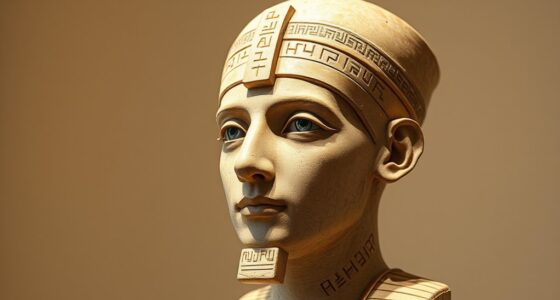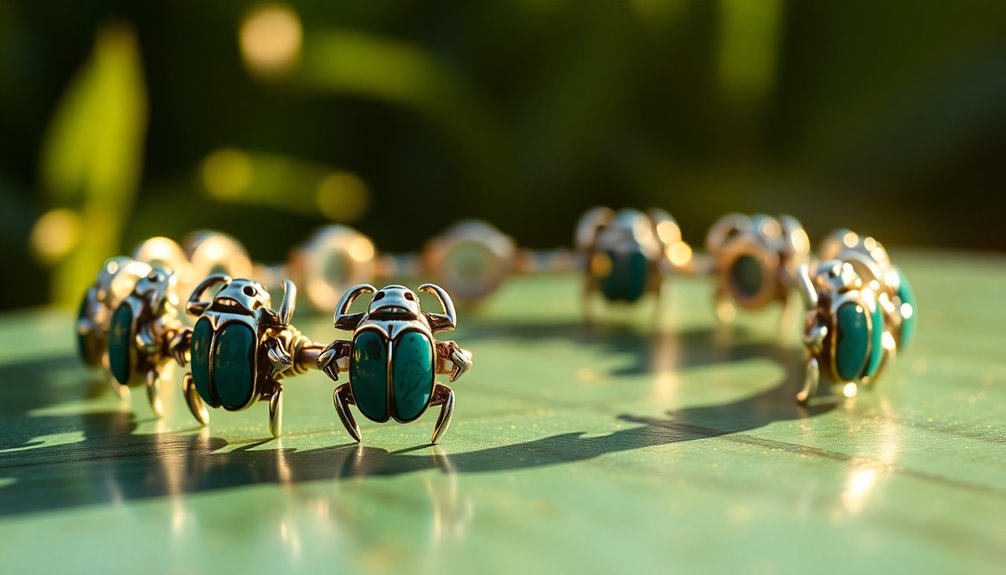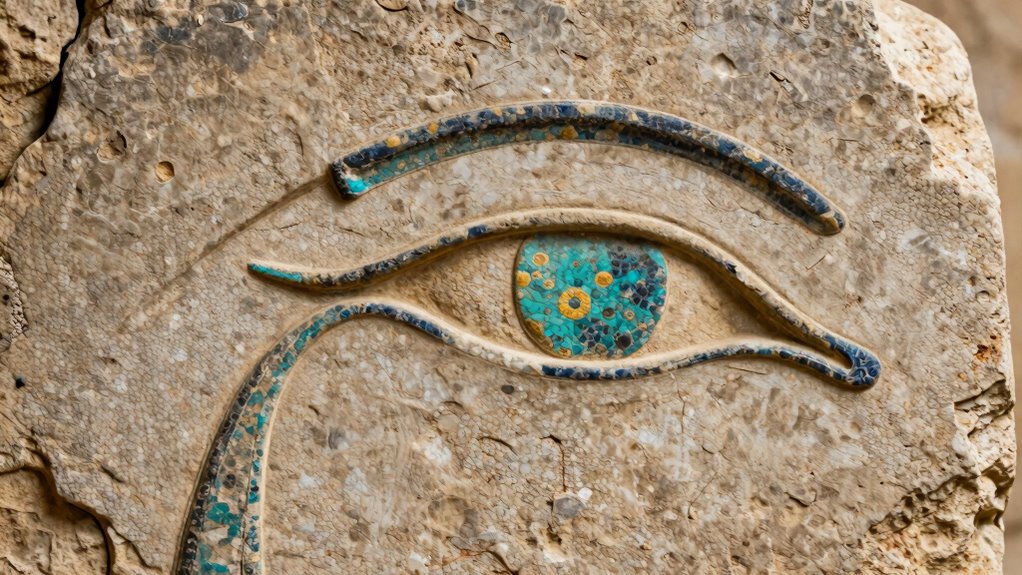

The Eye of Horus became a timeless symbol because of its origins in ancient Egyptian mythology, representing protection, health, and divine power. Its distinctive design made it easy to recognize and adapt, allowing it to transcend cultures and eras through trade and cultural exchange. The symbol’s deep spiritual meaning and visual simplicity helped it stay relevant in jewelry, art, and popular culture today. If you continue exploring, you’ll discover even more about its enduring significance.
Open a free Amazon Business account
Business pricing, bulk buying and tax-exempt orders.
As an affiliate, we earn on qualifying purchases.
Key Takeaways
- Its mythological roots in healing, protection, and divine authority made it a powerful symbol in ancient Egypt.
- The distinctive, easily recognizable design contributed to its widespread use and enduring appeal.
- Its spiritual significance for safeguarding health and warding off evil ensured its continued relevance.
- Cultural exchanges and adaptations across eras expanded its symbolism beyond Egypt.
- Its association with universal themes of resilience and protection maintains its timeless presence today.

The Eye of Horus symbol is a powerful ancient Egyptian emblem representing protection, health, and royal authority. Its roots run deep in ancient symbolism, and its mythological origins tell a story that’s both fascinating and enduring. You might wonder how this symbol, with its striking design, managed to remain relevant through thousands of years and across cultures. The answer lies in its profound meaning and the way it has been woven into human history.
In ancient Egypt, the Eye of Horus wasn’t just a decorative motif; it was a symbol of divine power and protection. The Egyptians believed that the eye possessed magical properties that could ward off evil and bring good health. They used it extensively in amulets, jewelry, and funerary rites, trusting that it would safeguard the wearer in both life and the afterlife. This deep connection to health and safety made it an essential part of their spiritual and daily lives. Its significance grew because it represented more than just physical protection; it embodied the idea of restoring wholeness after injury or loss, rooted in the mythological origins of the story. According to myth, Horus, the sky god and protector of the pharaoh, lost his eye in a battle with Set, the god of chaos. The eye was later restored by the goddess Hathor, symbolizing healing and renewal. This mythological origin highlights the eye’s association with healing, resilience, and divine authority, which resonated deeply within Egyptian culture and beyond. Additionally, the symbol’s meaning evolved over time, allowing it to adapt and resonate across different cultures and eras. Its widespread use in various symbolic contexts demonstrates its versatility and universal appeal. The symbol’s visual design also contributed to its enduring popularity, as its distinctive shape made it easily recognizable and adaptable.
Over time, the symbol’s power transcended Egypt’s borders and became a universal emblem of protection. Its distinctive design — a stylized eye with markings — was easy to recognize and carried potent meanings. As the symbol spread through trade, conquest, and cultural exchanges, it retained its sacred significance while also gaining new interpretations. Today, the Eye of Horus continues to symbolize vigilance, protection, and spiritual insight. Its enduring appeal lies in its ability to connect us with ancient wisdom and mythological stories that continue to inspire. You can see it embedded in modern jewelry, artwork, and even popular culture, testament to its timeless nature. The resilience of this symbol shows how cultural exchange helped preserve and adapt its significance for contemporary audiences. Its ability to adapt to new contexts and maintain its relevance across millennia underscores its cultural significance, which continues to resonate today. The Eye of Horus remains a potent reminder of ancient symbolism’s power to communicate universal truths and enduring values, bridging the past and present with a symbol rooted in mythological origins that still holds meaning today.
As an affiliate, we earn on qualifying purchases.
Frequently Asked Questions
How Did the Eye of Horus Influence Modern Jewelry Designs?
You’ll notice how the eye of Horus influences modern jewelry designs through its ancient symbolism and cultural significance. Jewelers often incorporate the eye to evoke protection, health, and power, making pieces meaningful beyond aesthetics. Its iconic shape and history inspire contemporary styles, blending timeless tradition with modern fashion. By wearing such jewelry, you connect with a powerful symbol that’s endured centuries, adding depth and cultural richness to your accessories.
Are There Any Specific Rituals Associated With the Eye of Horus?
You might be surprised to learn that ancient Egyptian rituals often involved wearing the Eye of Horus as a protective amulet, believed to ward off evil. These rituals symbolized the eye’s protective and healing powers, reflecting its deep symbolic meanings. People used the symbol in ceremonies to invoke divine protection, making it an essential part of their spiritual practices, and its significance endures in modern jewelry and cultural expressions.
How Has the Symbol Been Used in Contemporary Pop Culture?
You see the Eye of Horus in contemporary pop culture, where it symbolizes protection, wisdom, and spiritual significance. It appears in fashion, tattoos, and jewelry, often representing ancient symbolism in modern life. You might notice it in music videos or movies, emphasizing its mystical qualities. Its enduring appeal connects you to its rich history, reminding you of its spiritual significance and timeless power as a symbol of protection and insight.
What Variations of the Eye of Horus Exist Across Different Regions?
You’ll notice that the Eye of Horus varies across regions, reflecting different interpretations of ancient Egyptian symbolism. In Nubia, the eye appears more stylized with unique markings, while in broader African artifacts, it takes on more abstract forms. These regional artifact variations show how cultures adapt symbols, blending their own beliefs and artistry. So, the eye’s design becomes a mirror of local traditions, enriching its timeless symbolism.
Can the Eye of Horus Be Considered a Protective Amulet Today?
Yes, you can consider the Eye of Horus a protective amulet today. This ancient symbolism still holds cultural significance, often believed to ward off evil and bring good fortune. Many people wear it as jewelry or keep it in their homes, trusting its power to safeguard. Its enduring symbolism connects modern users to ancient traditions, making it a meaningful talisman for protection and spiritual well-being.
Conclusion
Today, the Eye of Horus still watches over us, a symbol of protection and power. As you scroll through your social media feed, imagine it glowing like a neon sign in Times Square, reminding us of its ancient magic. Its timeless appeal isn’t just about history; it’s about connection—linking past and present in a single glance. So next time you see it, remember, you’re holding a piece of history that’s more relevant than ever.
Flea & tick season Picks
flea and tick prevention
As an affiliate, we earn on qualifying purchases.