
When choosing between steam sauna units and infrared saunas for home use, consider your preferences for heat and space. Steam saunas offer moist heat that helps open pores, soothe muscles, and improve circulation but require more energy, maintenance, and space. Infrared saunas provide gentle, penetrating heat that promotes detox, pain relief, and are easier to install, operate, and maintain. To find the best fit for your lifestyle and wellness goals, explore what each option offers in more detail.
Key Takeaways
- Infrared saunas are more energy-efficient and cost-effective due to lower operating temperatures and quicker heat-up times.
- Steam saunas provide moist heat that can help with congestion and skin pore opening, while infrared offers deep tissue penetration.
- Infrared units are easier to install, maintain, and fit into smaller spaces, ideal for home use.
- Steam saunas require more space and higher energy consumption but deliver intense, humid heat.
- Personal preferences for moist versus dry heat influence the choice between steam and infrared sauna systems.
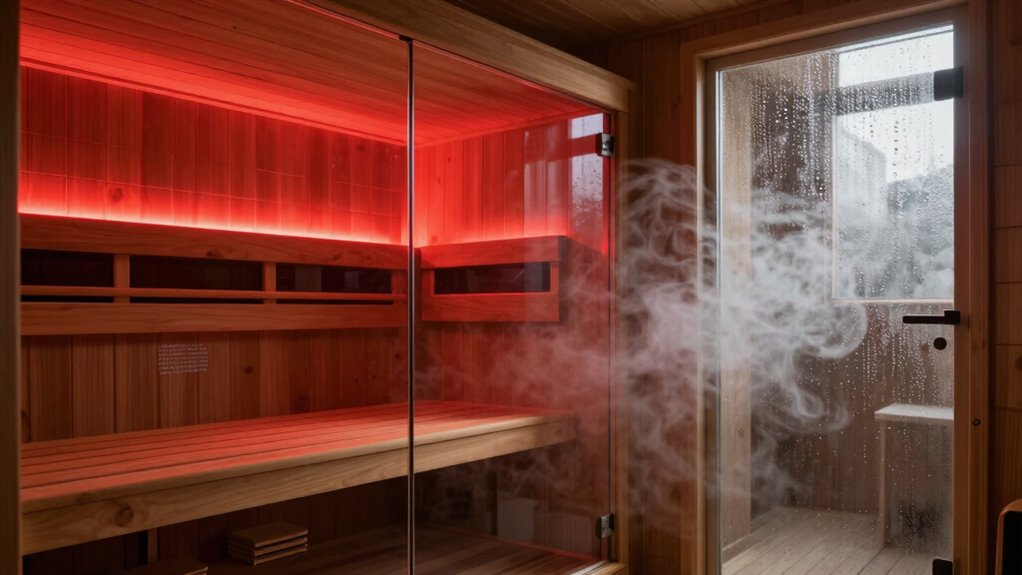
When choosing a sauna for your home, understanding the key differences between steam sauna units and infrared saunas can help you make an informed decision. Both options offer unique benefits, but their design, health impacts, and energy use vary considerably. Knowing these differences allows you to select the one that best fits your lifestyle and wellness goals. For example, some saunas incorporate child-friendly features to enhance safety and usability for families.
Steam saunas generate moist heat by producing steam inside a sealed cabin, creating a traditional sauna experience. This type of sauna is known for its ability to open pores, improve circulation, and promote relaxation through moist heat. Many people find steam saunas beneficial for clearing congestion, soothing muscles, and enhancing skin health. However, they tend to consume more energy because they require a boiler to produce steam continuously and often need higher temperatures to achieve the desired effect. This can lead to increased electricity or water usage, making steam saunas less energy-efficient compared to infrared models. It’s also important to consider that steam saunas typically require more maintenance due to their moisture levels, which can impact their longevity. Additionally, the moist environment can foster mold if not properly maintained, which is something to keep in mind. Incorporating proper ventilation can help mitigate these maintenance concerns and prolong the lifespan of your sauna. Proper ventilation is also crucial for maintaining a healthy indoor environment and preventing humidity buildup that could affect other areas of your home.
Steam saunas provide moist heat that opens pores, improves circulation, and promotes relaxation, but they consume more energy.
Infrared saunas, on the other hand, use infrared heaters to emit radiant heat that penetrates the skin directly. They operate at lower temperatures, usually between 120°F and 150°F, which many users find more comfortable and easier to tolerate for longer sessions. Because they don’t need to heat the air or produce steam, infrared saunas generally consume less energy. This makes them a more cost-effective option in the long run, especially if you plan to use your sauna frequently. The direct heat penetration in infrared saunas can also promote detoxification, improve circulation, and provide pain relief, supporting various health benefits without the high energy demands of steam units. Additionally, infrared saunas often have a smaller footprint and are easier to incorporate into existing home spaces. They often feature advanced safety systems, such as automatic shut-off and temperature controls, to ensure a secure experience.
When it comes to health benefits, both types of saunas offer advantages, but your personal needs might influence your choice. If you prefer moist heat with a traditional feel, a steam sauna could be more appealing. If you’re looking for a more energy-efficient solution that heats up quickly and offers gentle, penetrating heat, infrared saunas might be better suited for you. Furthermore, some infrared models include health monitoring features that can help track your wellness progress during sessions. Additionally, infrared models are often easier to install and maintain, making them a convenient choice for many homeowners. Ultimately, considering energy consumption and how it aligns with your sustainability goals can further help you decide which sauna type fits your lifestyle best.
Both options can significantly enhance your wellness routine, but understanding their differences ensures you make a choice that supports your health and household needs.
As an affiliate, we earn on qualifying purchases.
Frequently Asked Questions
Which Type of Sauna Is More Energy-Efficient for Home Use?
Infrared saunas are generally more energy-efficient for home use because they consume less power, which lowers your overall cost comparison. They heat up quickly and allow precise temperature control, so you don’t waste energy maintaining high heat levels. Steam sauna units typically use more energy due to their larger water heating requirements and slower heating process. If energy efficiency is your priority, infrared saunas are the smarter choice.
Are There Health Conditions That Favor One Sauna Type Over the Other?
If you have respiratory issues or skin conditions, infrared saunas might be better because they operate at lower temperatures and promote gentle detox benefits and skin health. Steam sauna units, with their high humidity, can help clear congestion and improve skin moisture, making them suitable for those with respiratory problems. Always consult a healthcare professional to determine which sauna type aligns best with your health needs.
How Long Is the Typical Installation Process for Each Sauna?
Most home sauna setups take between 4 to 8 hours, depending on the model and your setup complexity. Infrared saunas typically install faster, often within a day, thanks to straightforward wiring and fewer components. Steam sauna units, with their more complex setup involving plumbing and ventilation, can take a full day or more. Planning ahead guarantees a smooth installation process, regardless of your sauna choice.
Do Infrared Saunas Emit Any Harmful Radiation?
Infrared saunas emit very low levels of radiation, which are generally considered safe. Their emission levels are well within radiation safety standards, so you don’t need to worry about harmful effects. Most experts agree that infrared radiation is non-ionizing, meaning it doesn’t damage your cells or DNA. As long as you buy from reputable brands, you can enjoy the benefits of infrared saunas without concern about harmful radiation exposure.
Which Sauna Type Requires Less Maintenance and Cleaning?
Coincidentally, infrared saunas usually demand less maintenance and cleaning because they don’t produce high humidity, unlike steam sauna units, which require frequent wipe-downs due to moisture buildup. With temperature regulation being more straightforward, you’ll find infrared models easier to care for. You avoid mold or mildew issues that stem from sauna humidity, making infrared saunas a more convenient choice for regular use and simpler upkeep.
Conclusion
Choosing between steam sauna units and infrared saunas depends on your personal preferences and health goals. Do you prefer the intense heat and moisture of a traditional steam experience, or the gentle warmth and efficiency of infrared? Ultimately, both options offer relaxing benefits and health perks. Consider what environment feels most inviting to you. After all, isn’t your home wellness space meant to enhance your comfort and well-being in the way that suits you best?