
TL;DR

Get art and craft supplies delivered free with Prime
- Fast, free delivery on millions of items
- Prime Video, Amazon Music and more included
- Member-only deals all year
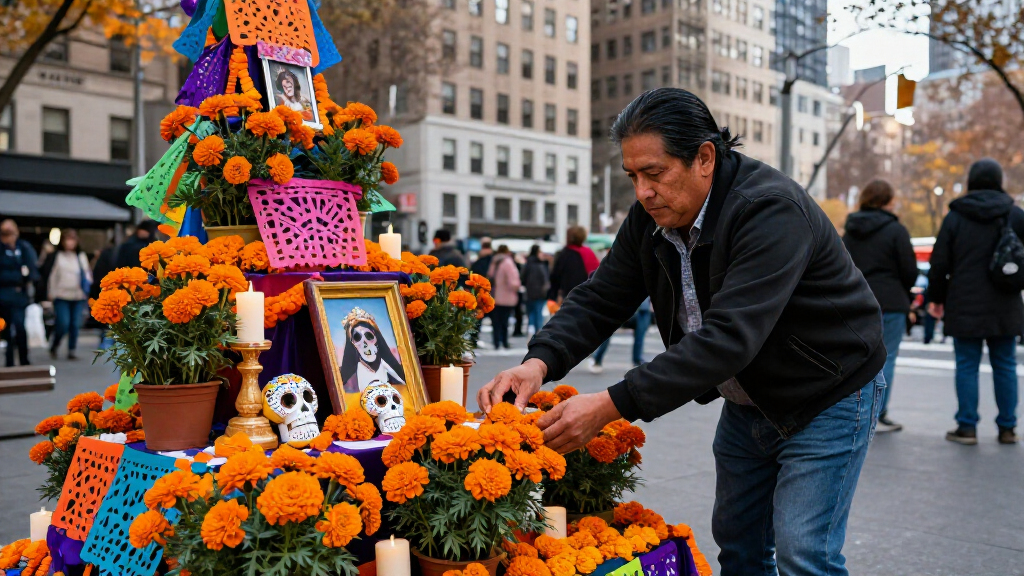
A large public ofrenda called “Twenty Petal Flower” begins appearing at Manhattan’s Flatiron North Plaza on October 26, ahead of Día de Muertos. Created by artisans from Mestiz Studio in partnership with Brooklyn’s Powerhouse Arts, it welcomes visitors to leave offerings and mementos through November 3.
A large public Día de Muertos ofrenda titled “Twenty Petal Flower” opens at Flatiron North Plaza in Manhattan on October 26, inviting passersby to leave offerings, candles, gifts and mementos for deceased loved ones through November 3. Artisans from Mexico’s Mestiz Studio created the tiered altar in partnership with Brooklyn-based Powerhouse Arts, placing the installation in the plaza six days before Día de Muertos begins.
The installation is shaped as a cluster of oversized cempasúchil marigolds. Its name, “Twenty Petal Flower,” refers to the Nahuatl name for the flower, cempōhualxōchitl, and its Spanish name, cempasúchil, according to the report by Hyperallergic. The structure is intended to function as a community altar, rather than solely as a sculpture to view: visitors can leave items honoring people who have died.
Mestiz Studio artisans in San Miguel de Allende, Mexico, wove the altar’s tiered structure into the flower forms. The project was made in partnership with Powerhouse Arts in Brooklyn. The installation is scheduled to remain open for offerings through November 3; the source report does not specify daily access hours or whether visitors need to register.
Marigolds are associated with guiding the deceased back to their living families during the annual observance, according to the source report. The altar’s invitation to leave personal mementos gives the public a way to participate in that remembrance. The precise dimensions and materials of the completed work are not stated in the supplied reporting.
A Public Space for Remembrance
Putting a participatory altar in Flatiron North Plaza brings a Día de Muertos practice into a shared Manhattan public space, where people can encounter it outside a private home or organized ceremony. Its open invitation makes remembrance a visitor contribution: passersby may add objects for loved ones, making the altar’s contents part of the public installation.
The project also foregrounds the people who make and sustain the tradition’s visual elements. Mestiz founder and creative director Daniel Valero told Hyperallergic that the project was meant to honor those involved in the marigold’s journey, from cultivation to the ofrenda. That focus connects the finished artwork to the labor and materials behind the flower, while keeping the altar’s central purpose—honoring the dead—clear.
The public setting may also make the observance more visible to people who are unfamiliar with it. That is a reasonable potential effect of the location and format, not a measured outcome: the source provides no visitor estimates, audience research or information on how many people are expected to participate.
Popular right now

Dyson Ball Animal Total Clean Upright Vacuum

Sony WH-1000XM6 Wireless Noise-Canceling Over-Ear Headphones, Blue, Bundle

Ninja Luxe Café Mini Plus Espresso and Drip Coffee Machine with AutoFroth, Stainless Steel, ES351
As an affiliate, we earn on qualifying purchases.
Marigolds and the Altar Tradition
Día de Muertos, or Day of the Dead, is an annual observance that honors deceased loved ones. Ofrendas are altars made for remembrance, and the supplied report describes cempasúchil flowers as part of the tradition because they are believed to help guide the souls of the dead back to their families. “Twenty Petal Flower” draws on that association through its oversized flower forms and the invitation to leave personal offerings.
The artwork was designed by Mestiz Studio artisans in San Miguel de Allende and developed with Powerhouse Arts, a Brooklyn partner. The installation’s October 26 opening comes six days before Día de Muertos begins, and its offering period runs through November 3. The source does not provide further details about the production schedule, funding or the organizations’ roles beyond the stated partnership.
““A Día de Muertos altar is traditionally a tribute to someone we love who is no longer with us.””
— Daniel Valero, founder and creative director of Mestiz, speaking to Hyperallergic
Access and Installation Details
The supplied report identifies the opening date and the period during which visitors may leave offerings, but it does not state daily hours, access arrangements or whether the plaza will be open to visitors at all times. It also does not give the installation’s exact dimensions, list the materials used, or explain how offerings will be managed or removed after November 3.
The source describes the work as beginning to “blossom” at the plaza on October 26 and includes a digital rendering. It does not confirm in the supplied material whether every component was already installed at the time of publication. Visitor numbers and any planned public events have not been reported.
Offerings Continue Through November 3
Visitors are invited to leave offerings, candles, gifts and mementos at “Twenty Petal Flower” through November 3. The next confirmed milestone is the end of that offering period; the supplied report does not say when the installation will be dismantled or whether it will move to another location.
People planning to visit may need to check with the Flatiron NoMad Partnership or the project partners for current access information, since hours and visitor arrangements are not included in the source report. No additional programming or later exhibition dates are confirmed in the material provided.
Key Questions
Where is the “Twenty Petal Flower” ofrenda?
It is at Flatiron North Plaza in Manhattan, according to the source report.
When can visitors leave offerings?
The invitation to leave offerings, candles, gifts and mementos runs from the installation’s October 26 opening through November 3.
Who created the altar?
Artisans from Mestiz Studio in San Miguel de Allende, Mexico, designed and wove the installation in partnership with Powerhouse Arts in Brooklyn.
What does the installation represent?
The oversized marigold forms refer to cempasúchil flowers, which the report says are believed to help guide the deceased back to their living families during Día de Muertos. The work also serves as a public altar for remembrance.
Are hours or access rules available?
The supplied report does not list daily hours, registration requirements or other access rules. Check with the plaza or project partners for current visitor information.
Source: hyperallergic.com