
TL;DR

Get art and craft supplies delivered free with Prime
- Fast, free delivery on millions of items
- Prime Video, Amazon Music and more included
- Member-only deals all year
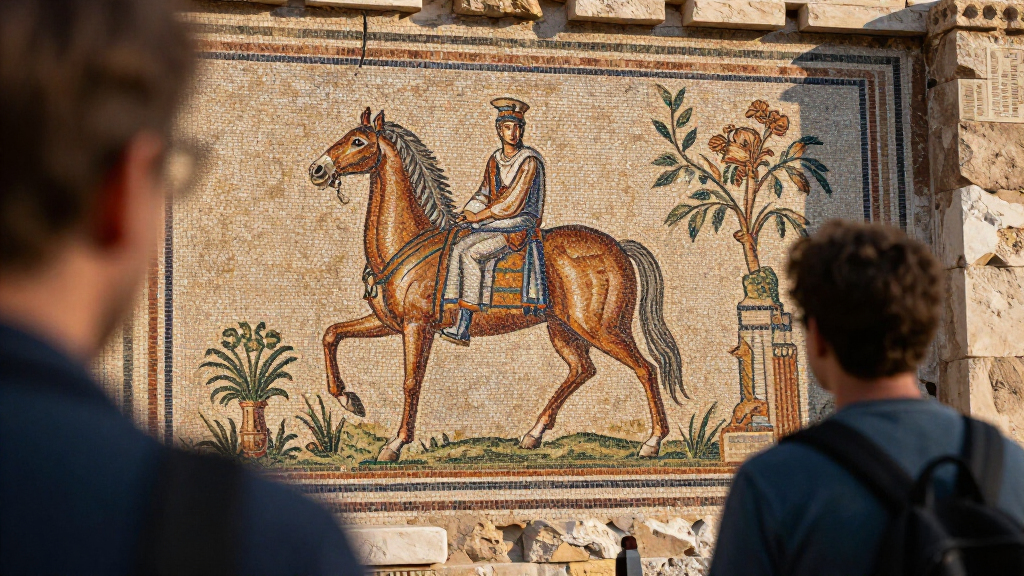
Rome has opened a 230-foot underground gallery beneath the Baths of Trajan as the Museo delle Terme di Traiano. Its main displays include what the report identifies as the largest surviving wall mosaic in the Roman world, preserved in place alongside an unusual fresco.
Rome has opened an underground gallery beneath the Baths of Trajan as the Museo delle Terme di Traiano, giving visitors access to what the report identifies as the largest surviving wall mosaic in the Roman world. The mosaic is displayed in place in a vaulted space on the Oppian Hill, where it shares the gallery with an unusual fresco.
The gallery extends for about 230 feet (70 meters) beneath the remains of the Baths of Trajan. The buildings underground were uncovered during excavations between 1997 and 1999. The city has now opened that space to visitors as a museum, placing the ancient artwork in the setting where it survived rather than presenting it as a detached object.
According to the Hyperallergic report, the main gallery is devoted largely to two distinctive works: the large wall mosaic and an unusual fresco. The report says the works have no clear relationship to one another and have no comparable examples in the Roman Mediterranean. It does not provide further details about their subjects, dates, makers or original purpose.
At the entrance, a separate room contains eight large lead pipes associated with the Baths. The words “THERM TRAIANI” are cast in relief on them. The report describes the pipes as notable for their size and survival, while observing that they are the museum’s only objects pertaining directly to the Baths; the main gallery instead presents art from buildings buried beneath the complex.
A Mosaic Preserved Beneath Trajan’s Baths
The opening makes an otherwise buried archaeological space accessible to visitors and puts large-scale Roman wall decoration at the center of the experience. The mosaic’s significance here rests on the report’s specific description of it as the largest surviving wall mosaic in the Roman world, a claim that distinguishes it from the smaller, portable objects commonly encountered in museum displays.
Its location also helps explain how layers of Rome’s history occupy the same site. The gallery lies beneath a bath complex built over earlier structures, and the art is presented within that underground setting. Visitors can therefore see both an artwork and the architectural space in which it remained hidden. The report calls the mosaic and fresco unique, but provides no comparative survey or technical measurements to establish how their scale or style relates to other surviving works.
Top picks for "breathtak sight ancient"
As an affiliate, we earn on qualifying purchases.
From Buried Buildings to Public Gallery
The Oppian Hill, across from the Colosseum, was a densely built neighborhood in antiquity and is now a park. Emperor Trajan’s public baths were inaugurated in 109 CE. Their construction involved leveling the area and creating a platform, which buried a series of buildings beneath the complex.
Those buried rooms are separate from the better-known remains of Emperor Nero’s Domus Aurea, or Golden House, also beneath the Baths of Trajan, according to the report. The underground gallery that now houses the museum was found during excavations carried out from 1997 to 1999. Its opening gives the public access to this previously excavated space and the art displayed there.
The museum’s name can suggest a collection devoted to the baths themselves. The report describes a more limited group of objects directly tied to the bath complex: the eight inscribed pipes near the entrance. Most of the gallery instead presents the mosaic and fresco from the buried buildings, whose relationship to each other and to the Baths is not established in the available account.
Questions About the Mosaic’s Origins
The available report does not state when the mosaic was made, who created it, what it depicts, or which building or room it originally belonged to. It also gives no dimensions for the mosaic itself, so readers cannot independently assess its scale from the report alone. The description of it as the largest surviving wall mosaic in the Roman world is attributed to the report; no supporting comparison or measurement is included in the supplied material.
The report also leaves the fresco’s subject and date unspecified. It says the two works have no clear relationship and lack comparable examples in the Roman Mediterranean, but does not explain the basis for those assessments. Further information about conservation, visitor access arrangements and the museum’s hours is not provided.
Visitor Access and Further Research
The immediate change is that visitors can now enter the newly opened gallery beneath the Baths of Trajan and view the mosaic and fresco in place. The supplied report does not identify a future exhibition, research announcement or additional opening date. Practical details such as ticketing and operating hours will need to be checked with the museum or city before a visit.
Further reporting or museum materials could clarify the works’ dates, subjects, original settings and conservation history. Those details would help explain how the art relates to the buildings buried during construction of Trajan’s Baths and how specialists compare the mosaic with other surviving Roman wall mosaics.
Key Questions
Where can visitors see the mosaic?
It is displayed in place in the underground gallery of the Museo delle Terme di Traiano, beneath the Baths of Trajan on Rome’s Oppian Hill.
Why is this mosaic notable?
The Hyperallergic report identifies it as the largest surviving wall mosaic in the Roman world. The supplied account does not give its measurements or explain the comparison behind that description.
When were the underground buildings uncovered?
The buildings came to light during excavations conducted between 1997 and 1999, according to the report.
What else is on display in the gallery?
The main gallery also displays an unusual fresco. Near the entrance, a room contains eight large lead pipes bearing the cast words “THERM TRAIANI.”
Source: rss
Halloween Picks
halloween
As an affiliate, we earn on qualifying purchases.