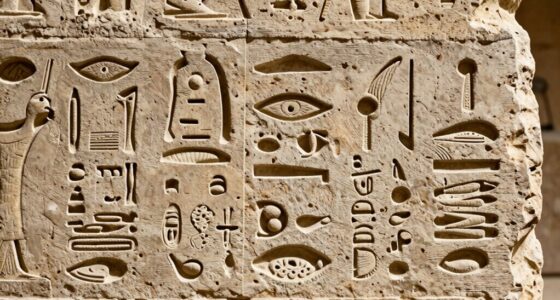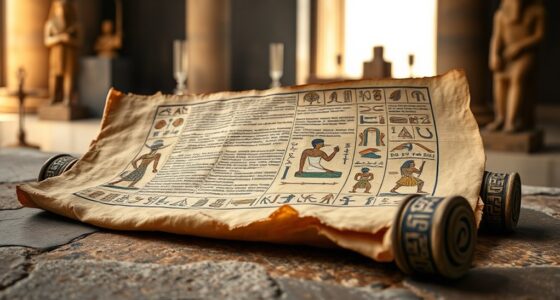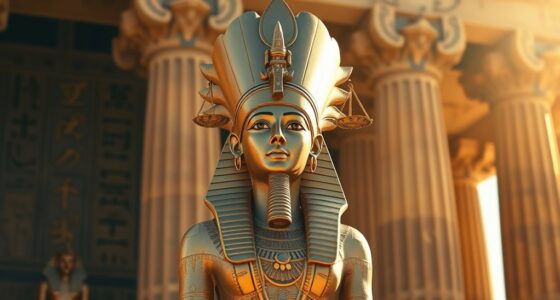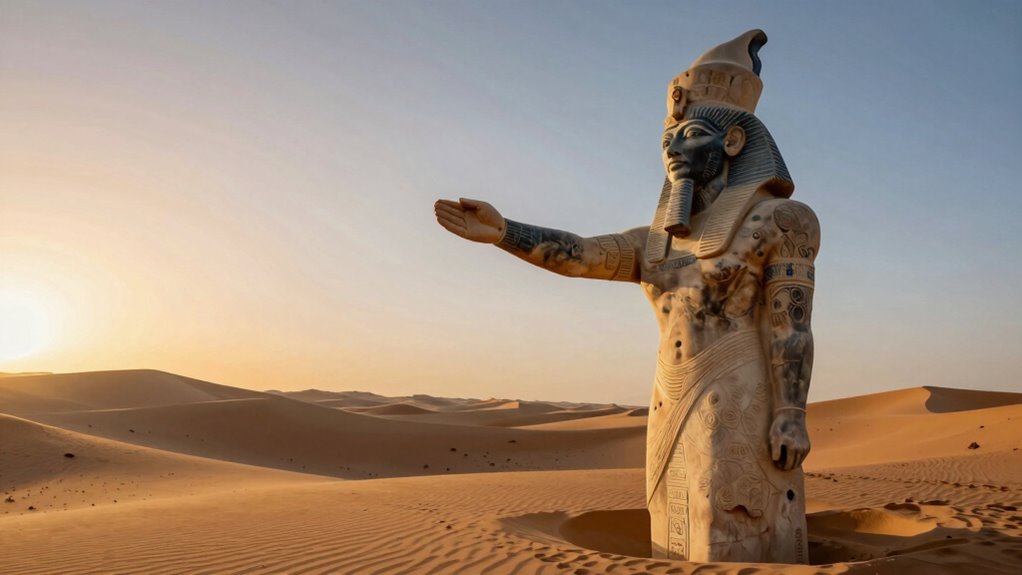

Osiris became a symbol of renewal because his myth highlights death, resurrection, and eternal life, which inspire hope and transformation. His story shows that even after being betrayed and dismembered, he’s restored, symbolizing the natural cycles of life, death, and rebirth. This idea reinforces the belief in ongoing renewal beyond mortal life, making Osiris a universal emblem of resilience. To discover more about how his myth influenced culture and spirituality, keep exploring.

Get art and craft supplies delivered free with Prime
- Fast, free delivery on millions of items
- Prime Video, Amazon Music and more included
- Member-only deals all year
Key Takeaways
- Osiris’s resurrection by Isis symbolizes cyclical renewal and eternal life, reflecting natural and spiritual rebirths.
- His myth demonstrates death as a passage, emphasizing hope and transformation beyond mortal existence.
- As the divine judge of the dead, Osiris embodies justice, renewal, and spiritual rebirth in the afterlife.
- His story reinforces the Egyptian belief in continuous life cycles and the possibility of renewal after death.
- Osiris’s enduring myth inspires broader ideas of resilience, hope, and ongoing spiritual transformation across cultures.
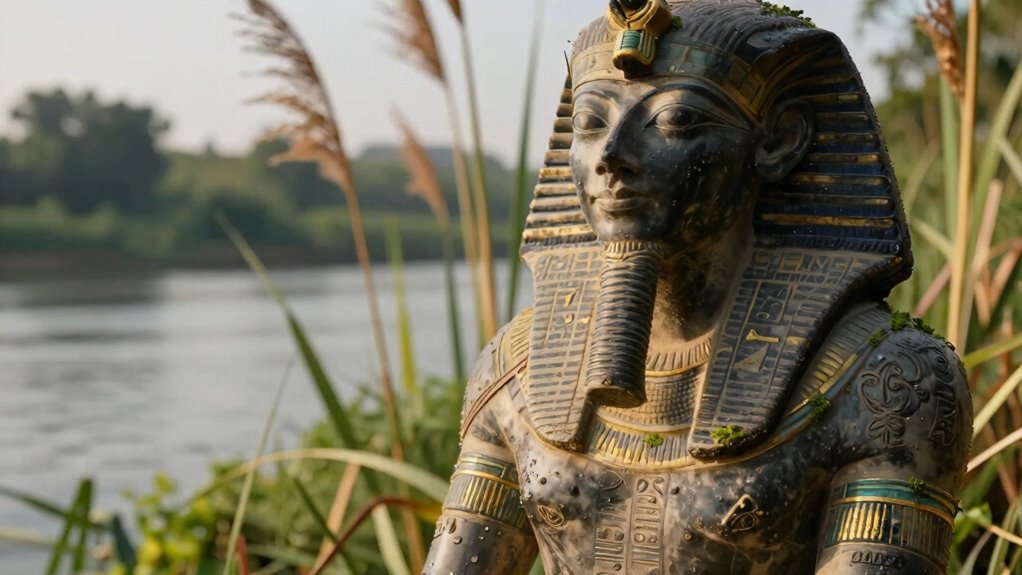
Have you ever wondered why Osiris is widely regarded as a symbol of renewal? In ancient Egyptian mythology, Osiris’s story embodies the concept of mythological resurrection, which has cemented his status as a powerful emblem of rebirth and eternal life. His mythological resurrection wasn’t just a tale of dying and coming back; it symbolized hope, cyclical nature, and the promise of renewal after death. This narrative has deeply influenced ancient symbolism, making Osiris an enduring figure representing the perpetual cycle of life, death, and rebirth that resonates across cultures and eras.
Osiris symbolizes hope, rebirth, and the eternal cycle of life, death, and renewal across cultures and eras.
The story begins with Osiris as a just and benevolent king who rules over Egypt. His brother, Set, envies him and conspires to kill him. Osiris is betrayed, murdered, and dismembered, but his wife and sister, Isis, gathers the pieces and reassembles his body. Through her magic, she brings Osiris back to life long enough to conceive their son, Horus. This mythological resurrection is not a permanent return from death but a symbol of cyclical renewal, emphasizing that death is not the end but a passage. The narrative highlights the hope that life persists beyond mortal existence, reinforcing the idea that renewal is possible even after profound loss.
This story’s significance extends into the domain of ancient symbolism, where Osiris’s resurrection becomes a metaphor for the natural cycles observed in nature—seasons, flooding, and rebirth. The ancient Egyptians viewed Osiris as a divine judge of the dead, guiding souls through the afterlife. His resurrection underscores the belief that the soul undergoes transformation and renewal, aligning with their view of life as a continuous, cyclical process. Temples, rituals, and funerary practices centered around Osiris aimed to guarantee that individuals could partake in this cycle of renewal, emphasizing rebirth in the afterlife. Mythological resurrection also served as a powerful reminder of hope and renewal in the face of mortality, inspiring spiritual philosophies that emphasize the importance of renewal. Recognizing the natural cycles of the environment reinforced their understanding of life’s ongoing renewal and spiritual rebirth. The symbolism of Osiris became a universal representation of hope, renewal, and the resilience of life, inspiring spiritual philosophies across different cultures. In this way, the myth of Osiris reinforced the importance of renewal and spiritual rebirth in Egyptian culture and beyond.
Because of this, Osiris’s mythological resurrection transcended mere storytelling; it became a universal symbol of hope and regeneration. It reassures that even in the face of death or despair, renewal is possible. His story embodies the idea that life is an ongoing cycle, and through death, there is the potential for rebirth. This powerful symbolism has persisted, influencing not only Egyptian culture but also broader spiritual and philosophical ideas about life, death, and renewal. That’s why Osiris continues to stand as a timeless emblem of hope, transformation, and the eternal cycle of life.
Osiris Egyptian mythology figurine
As an affiliate, we earn on qualifying purchases.
As an affiliate, we earn on qualifying purchases.
Frequently Asked Questions
How Did Osiris’s Myth Influence Modern Ideas of Rebirth?
Your understanding of Osiris’s myth shows how it influenced modern ideas of rebirth through the concept of mythical resurrection and divine renewal. You see that his story symbolizes the cycle of death and rebirth, inspiring beliefs in renewal beyond life. This myth’s themes encourage you to view renewal as a divine process, emphasizing hope and continuity. Osiris’s myth continues to shape how you perceive life’s ongoing cycles of transformation and renewal.
Are There Specific Rituals Symbolizing Osiris’s Renewal Today?
Yes, modern renewal rituals often incorporate Osiris’s mythological symbolism, blending ancient beliefs with contemporary practices. You might participate in ceremonies that symbolize rebirth, like spring festivals or spiritual cleansing, echoing Osiris’s resurrection. These rituals serve as a reminder of renewal’s power, combining symbolic actions—such as planting seeds or renewal rites—with modern spirituality. They create a rhythm of death and rebirth, honoring Osiris’s enduring influence on renewal today.
What Is Osiris’s Role in Egyptian Funerary Practices?
In Egyptian funerary practices, Osiris symbolizes rebirth and the afterlife. You’d find him central to ancient burial rituals, where ritual offerings are made to guarantee safe passage and renewal of the soul. His role involves guiding the deceased through the judgment process, embodying the hope of eternal life. These rituals reflect the deep belief that Osiris’s power grants renewal and sustenance beyond death, reinforcing his significance in Egyptian spirituality.
How Did Osiris’s Symbolism Spread Beyond Egypt?
You might think Osiris’s influence stayed within Egypt, but his depiction in art spread far beyond through trade routes. Ironically, as traders exchanged goods, they also shared stories and symbols, making Osiris a symbol of renewal across Mediterranean cultures. His image appeared on artifacts and in rituals, inspiring gods and myths worldwide. Trade not only transported commodities but also ideas, cementing Osiris’s role as a universal symbol of rebirth.
Why Is Osiris Associated With Agriculture and Fertility?
You see, Osiris is associated with agriculture and fertility because he embodies the agricultural cycles and fertility rites essential to Egypt’s survival. His myth symbolizes death and rebirth, mirroring seasonal planting and harvesting. During fertility rites, people honor Osiris to guarantee bountiful crops. His role as a god of renewal reinforces the idea that life continually cycles, making him a fundamental figure in sustaining life and prosperity in ancient Egypt.
Conclusion
In the story of Osiris, you see the rebirth of hope rising from the ashes like a phoenix. His journey from death to renewal isn’t just a myth; it’s a reminder that even in our darkest moments, renewal is possible, like a fresh dawn breaking through the night. Osiris embodies the eternal cycle of life, death, and rebirth, inspiring you to believe that no matter how heavy the darkness, the light of renewal always awaits just beyond the horizon.
Halloween Picks
halloween
As an affiliate, we earn on qualifying purchases.