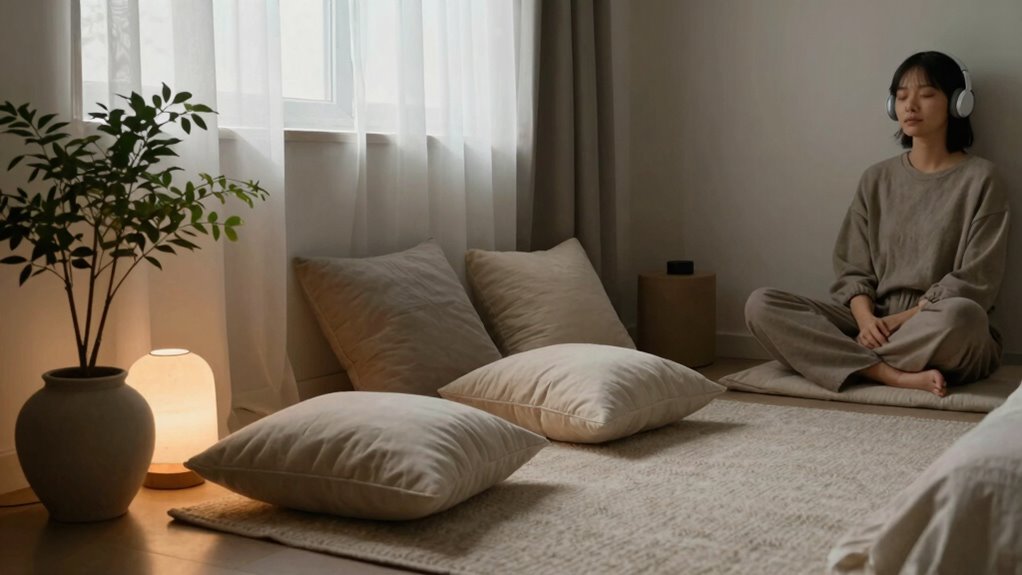

To reduce sensory overload daily, create calming environments by minimizing clutter, using soft lighting, and playing gentle sounds or white noise. Practice mindfulness techniques like deep breathing to stay grounded and calm your nervous system. Recognize your triggers and set boundaries by taking breaks in quiet spaces when needed. Communicate your needs clearly and develop a toolkit of strategies to manage overwhelm. Keep exploring ways to fine-tune your approach for lasting relief.

Get art and craft supplies delivered free with Prime
- Fast, free delivery on millions of items
- Prime Video, Amazon Music and more included
- Member-only deals all year
Key Takeaways
- Practice mindful breathing and grounding techniques to stay calm amid overwhelming stimuli.
- Create calming environments with soft lighting, minimal clutter, and soothing sounds.
- Recognize personal sensory triggers and plan routines with regular breaks in quiet spaces.
- Use noise-canceling headphones or eye masks to block out disruptive sensory input.
- Communicate your needs and set boundaries to prevent sensory overload in social or busy settings.

Sensory overload can quickly become overwhelming, especially when daily environments are filled with bright lights, loud noises, and busy settings. When your senses are overstimulated, it’s easy to feel anxious, exhausted, or even irritable. The key to managing this overload is to create strategies that help you regain control and find moments of calm. One effective approach involves using mindfulness techniques, which can help you stay grounded amid chaos. By focusing on your breath or paying close attention to your surroundings without judgment, you can reduce feelings of overwhelm and bring a sense of clarity. Practicing mindful breathing, such as inhaling deeply through your nose and exhaling slowly through your mouth, can calm your nervous system and lessen sensory input’s impact.
In addition to mindfulness, designing calming environments plays a significant role in reducing sensory overload. When you’re at home or work, try to create spaces that minimize excessive stimuli. Soft lighting, comfortable furniture, and a clutter-free area can make a huge difference. Incorporating calming elements like gentle music or white noise can drown out disruptive sounds and provide a soothing backdrop. If you’re in a particularly noisy or bright environment, using noise-canceling headphones or an eye mask can help you temporarily block out overwhelming stimuli. These tools serve as immediate relief, giving you a moment to breathe and reset. Additionally, indoor air quality improvements can help create a healthier environment that supports calmness and reduces discomfort caused by irritants. Maintaining good air quality is linked to overall well-being and can contribute to a more comfortable sensory experience. Increasing awareness about sensory sensitivities can also help you identify specific triggers and develop personalized coping strategies. Recognizing how your environment influences your sensory experience can empower you to make better choices for your comfort.
It’s also helpful to develop routines that allow for regular breaks, especially in busy or stimulating places. When you notice signs of sensory overload creeping in, such as increased heart rate or difficulty concentrating, take a step back. Find a quiet spot, close your eyes, and focus on your breath or a calming image. Engaging in calming environments doesn’t mean you have to escape entirely; instead, it’s about creating small pockets of peace within your day. Regularly scheduling moments for relaxation allows you to build resilience against sensory overload and maintain better emotional balance. Understanding your personal limits can help prevent overstimulation and promote healthier interactions with your environment. Moreover, being aware of potential sensory triggers can help you plan ahead and avoid unnecessary stressors in your daily routine.
Finally, being mindful of your personal limits is crucial. Recognize when your senses are becoming too much to handle and don’t hesitate to remove yourself from the situation if possible. Communicate your needs to others so they understand when you need space or quiet. Practicing these strategies consistently will help you develop a toolkit to manage sensory overload effectively. Over time, you’ll learn to identify triggers early and implement calming techniques that restore your sense of control and well-being in daily life.
noise-canceling headphones for sensory overload
As an affiliate, we earn on qualifying purchases.
As an affiliate, we earn on qualifying purchases.
Frequently Asked Questions
Can Sensory Overload Be a Sign of an Underlying Condition?
Yes, sensory overload can be a sign of underlying disorders. You might notice your sensory processing is unusually reactive or overwhelmed, which could indicate conditions like autism, ADHD, or sensory processing disorder. Recognizing these signs helps you understand that sensory overload isn’t just temporary but may be linked to an underlying disorder. Consulting a healthcare professional can clarify the cause and guide appropriate strategies to manage your sensory sensitivities effectively.
Are There Specific Foods That Help Reduce Sensory Sensitivity?
Certain calming foods can help reduce sensory sensitivity. Incorporate diet modifications like omega-3-rich fish, nuts, and seeds, which support brain health and soothe nerves. Herbal teas such as chamomile or peppermint can promote relaxation. Staying hydrated and avoiding processed foods or caffeine also helps prevent overstimulation. By choosing calming foods, you support your nervous system and make sensory overload more manageable in daily life.
How Long Does It Typically Take to See Improvements?
Patience is your guiding star—improvements from mindfulness techniques and environmental modifications typically appear within a few weeks to a couple of months. As you consistently practice, you’ll notice sensory sensitivities easing, like a fog lifting. Keep engaging in mindful breathing and adjusting your surroundings; these small steps are like turning dials to calm your senses. With dedication, your daily life will become more manageable and peaceful.
Can Sensory Overload Affect Mental Health Over Time?
Yes, sensory overload can affect your mental health over time, leading to increased stress, anxiety, or depression. Sensory adaptation helps your brain adjust to stimuli, but if overload persists, it can strain your mental well-being. Environmental modifications, like reducing noise or bright lights, support sensory regulation. By managing your surroundings and allowing your senses to adapt, you can protect your mental health and reduce long-term negative effects.
Are There Effective Medications for Managing Sensory Overload?
Yes, there are medication options that can help manage sensory overload, especially if it’s linked to conditions like autism or anxiety. These medications, such as antidepressants or antianxiety drugs, can reduce your overall sensory sensitivity. However, they should be used alongside sensory management strategies. Always consult a healthcare professional to determine the best approach for your specific needs, ensuring safe and effective relief from sensory overload.
Conclusion
Remember, sometimes less is more when it comes to managing sensory overload. By setting boundaries, taking regular breaks, and creating calm environments, you can regain control and find balance in your daily life. Don’t forget, Rome wasn’t built in a day—small, consistent steps make a big difference. Keep experimenting with these strategies, and over time, you’ll find what helps you feel more grounded and less overwhelmed. Stay patient and gentle with yourself along the way.
Halloween Picks
halloween
As an affiliate, we earn on qualifying purchases.